Quick answer: Communal garden maintenance in Yorkshire is usually arranged and paid for by the property management company or freeholder through the service charge. For self-managed blocks, leaseholders split the cost. For rental developments, the landlord is responsible. Yorkshire has a large stock of Victorian flat conversions in Leeds, Sheffield, and Bradford where shared gardens can be genuinely beautiful with proper care. Standard contracts cover lawns, hedges, borders, litter, and leaves. Neglect causes disputes, affects resale values, and leads to restoration costs that dwarf what regular maintenance would have cost.
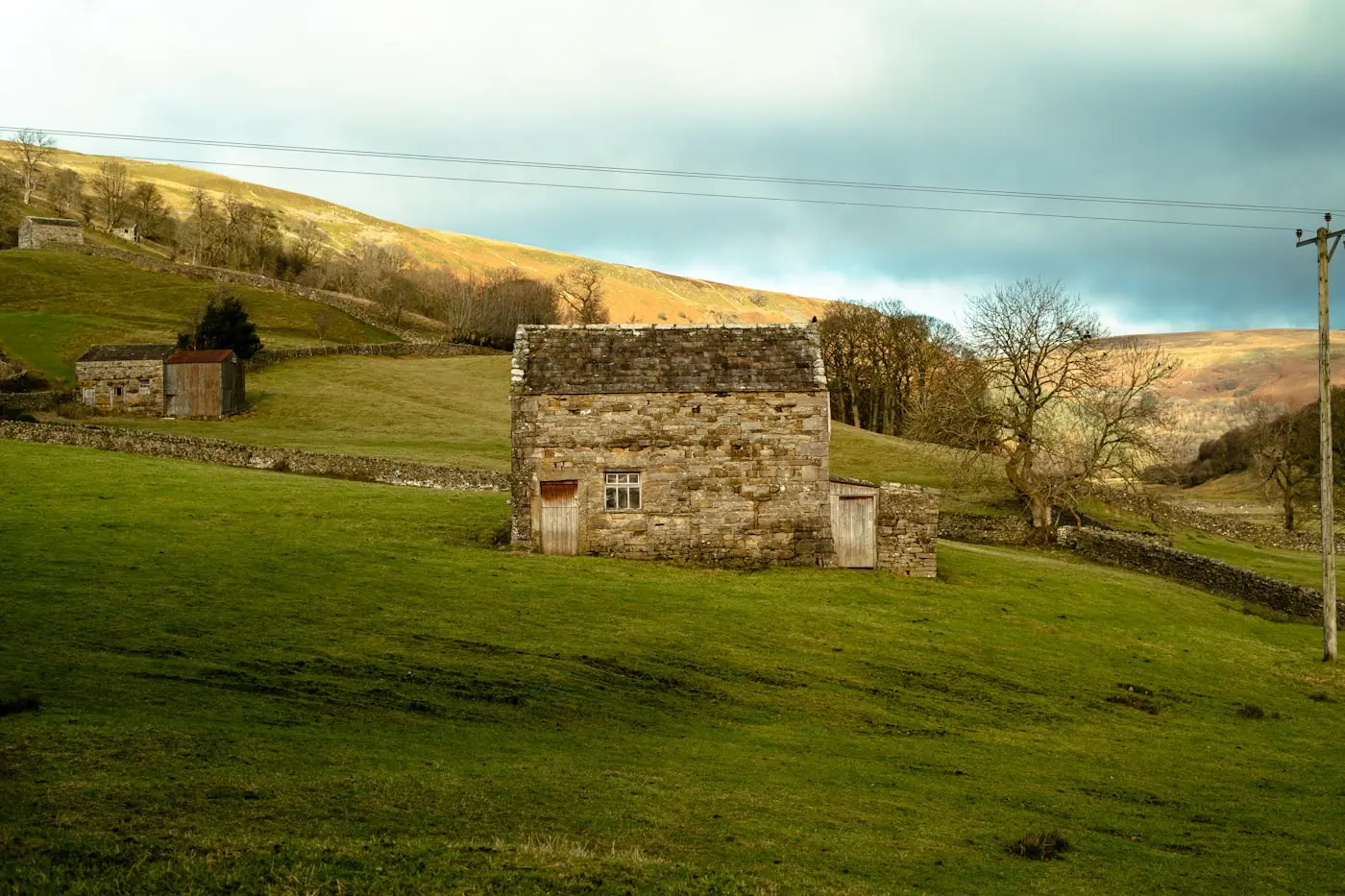
The Communal Garden Problem in Yorkshire
Yorkshire has a substantial and growing stock of flats, converted Victorian terraces, and purpose-built apartment developments. Every one of these properties with an outdoor space that more than one resident shares has the same potential problem: nobody is individually responsible for it, so nobody takes ownership, and the garden deteriorates until it becomes a visible problem or a source of conflict between neighbours.
The issue is not usually unwillingness to maintain the space - it is unclear responsibility. In a converted Victorian terrace in Headingley or Broomhill, the original house had one owner who looked after the garden. Converted into four flats, that clarity evaporates. Is the garden the ground-floor flat's responsibility? Is it shared equally? What happens when one occupant moves? These questions need answers in the lease or tenancy agreement, and in practice, they often are not clearly addressed.
The solution is straightforward: professional communal garden maintenance, contracted, paid for, and managed by whoever is responsible for the common parts of the building. This removes ambiguity, removes conflict, and - once you price it per unit - is almost always less expensive than people assume.
Who Is Responsible for a Communal Garden in Yorkshire?
Leasehold Flats with a Management Company
The most common arrangement for communal gardens in Yorkshire is leasehold flats managed by a property management company (PMC). The freeholder owns the building and the land, the PMC administers the building on the freeholder's behalf, and the cost of maintaining communal areas - including gardens - is recovered through the annual service charge paid by leaseholders.
The service charge should cover all communal garden maintenance. If your building has a garden that is never maintained despite a service charge that includes grounds maintenance, you have grounds to challenge the managing agent. Request an itemised breakdown of service charge expenditure, which you are legally entitled to receive. If the PMC cannot demonstrate that garden maintenance funds have been spent on actual maintenance, that is a service charge dispute you can take to the First-tier Tribunal.
Self-Managed Leasehold Buildings (Right to Manage)
Many Yorkshire leasehold blocks have exercised Right to Manage (RTM), which transfers management responsibilities from the freeholder's managing agent to a residents' management company controlled by the leaseholders themselves. This gives residents control over service charge spending but also puts responsibility for arranging communal garden maintenance squarely on the RTM company directors - usually volunteer leaseholders.
Self-managed blocks often struggle with garden maintenance not because of lack of funds but because of lack of time. Volunteer directors are busy people who do not want to spend evenings chasing up a contractor. Setting up a simple annual contract with a reliable local gardener, with consolidated invoicing to the RTM company and a clear specification, takes the friction out of the process entirely. The garden maintenance service we connect clients with is experienced in working with RTM companies and managing agents.
Rented Flats and Houses in Multiple Occupation
In rented flats and HMOs in Yorkshire, communal garden maintenance is a landlord responsibility unless the tenancy agreement explicitly assigns it to tenants - which is unusual for shared spaces. Relying on multiple tenants to collaboratively maintain a shared garden in an HMO almost never works in practice. The professional solution is for the landlord to contract a maintenance service and incorporate the cost into the overall property management budget.
For a portfolio landlord in Leeds, Bradford, or Sheffield managing multiple HMOs, a single contractor covering all sites with one monthly invoice significantly reduces the administrative overhead of running multiple separate arrangements. Read our guide to commercial garden maintenance in Yorkshire for more on the landlord perspective.
Yorkshire's Victorian Conversions: Hidden Garden Gems
Yorkshire has an exceptional stock of large Victorian and Edwardian terraced and semi-detached houses that have been converted into flats. In Leeds inner suburbs (Headingley, Hyde Park, Chapel Allerton, Roundhay), Sheffield (Broomhill, Nether Edge, Fulwood), and Bradford (Shipley, Saltaire, Manningham), these conversions often have original walled rear gardens of substantial size - sometimes 10 to 20 metres long - that would be considered a significant asset if they were properly maintained.
Many of these gardens have been left to deteriorate through the diffusion of responsibility between flat occupants and managing agents. But the bones are good: original stone walls, mature trees and shrubs, interesting Victorian planting inherited from the house's single-occupancy days. A proper restoration clearance followed by a regular maintenance contract can transform these spaces from liability to asset - one that adds real value to every flat in the building at the time of resale.
If your communal garden is currently an overgrown problem, a garden clearance is the starting point, followed by regular maintenance to keep it in condition. The clearance cost is typically spread across all leaseholders through the service charge.
Signs your communal garden needs professional attention
- Lawns have not been mowed for more than four weeks during the growing season
- Hedges are exceeding the boundary or overhanging footpaths
- Paths are becoming overgrown with weeds and moss
- Litter has accumulated in corners or against walls
- Border plants have died back and not been replaced for more than two years
- Leaseholders or tenants have started raising the garden in building group messages or to the managing agent
- The garden came up as a concern on a recent EWS1 or condition report
What a Communal Garden Maintenance Contract Should Cover
A communal garden maintenance contract in Yorkshire should be written as a specification document before any contractor is appointed. Verbal agreements do not work for shared properties where multiple stakeholders have different expectations. The specification should state clearly what is included, how often each task is carried out, and what the standard is.
Core maintenance tasks
- Lawn mowing: frequency (fortnightly April to October, monthly November to March is typical), cutting height, edging of borders and hard surfaces
- Hedge trimming: number of cuts per year (twice is minimum for most hedges), timing, and whether the contractor removes the arisings
- Border maintenance: hand weeding or herbicide treatment, cutting back of perennials in autumn and late winter, mulching if specified
- Litter picking: frequency (typically with every visit), disposal of waste
- Leaf clearance: autumn leaf removal, whether leaves are composted on site or removed
- Path and hard surface maintenance: weed control on paths, clearing of moss and algae if specified
Optional additions
- Seasonal planting for entrance planters or borders (spring and autumn change)
- Tree safety inspection and minor pruning (major tree work is usually a separate instruction)
- Watering of planted areas in dry periods
- One-off clearance or restoration of neglected areas
The contractor's hedge trimming schedule needs to respect the species being cut. Most formal hedges in Yorkshire (privet, laurel, leylandii) can be cut twice a year safely. Wildlife hedgerows and mixed hedges benefit from only one cut per year, in late summer or early autumn, to allow nesting birds and fruiting.
The Cost of Communal Garden Maintenance in Yorkshire
Communal garden maintenance costs in Yorkshire are determined by the size of the space, the scope of the specification, and the visit frequency required. For a typical converted Victorian terrace with a rear garden shared by four to six flats, a seasonal maintenance contract covering all core tasks might cost between 900 and 1,600 pounds per year. Split across four flats, that is 225 to 400 pounds per leaseholder per year - less than 35 pounds per month each.
For a purpose-built apartment block with larger shared grounds and more extensive borders, annual contracts of 2,000 to 5,000 pounds are typical. For a large development with significant grounds, car parking areas, and seasonal planting, costs can be considerably higher, but the per-unit cost usually remains manageable when spread across all residents through the service charge.
The comparison to consider is not the cost of maintenance versus zero - it is the cost of regular maintenance versus the cost of a restoration clearance after five years of neglect. A garden that would cost 1,200 pounds per year to maintain regularly might require a 2,500 to 4,000 pound clearance after five years of neglect, plus the accumulated cost of reduced resale values and leaseholder disputes in the interim.
Preventing and Resolving Communal Garden Disputes
Disputes about communal gardens in Yorkshire leasehold buildings are among the most common causes of friction between residents. They typically follow a predictable pattern: one leaseholder feels the garden is not being maintained, raises it with the managing agent, nothing happens, the leaseholder escalates to other residents, sides form, the managing agent receives conflicting instructions, and the whole situation becomes disproportionately time-consuming relative to the actual issue.
The cure is prevention: a clear maintenance specification, a contracted and reliable provider, and transparent reporting to all leaseholders on what has been done and when. Many managing agents now include simple monthly maintenance logs accessible to leaseholders via a property management portal. If yours does not, asking for a quarterly report summarising what has been carried out is reasonable.
If a dispute has already arisen, the first step is to clarify what the lease says about communal garden maintenance and whether the managing agent has fulfilled their obligations. If the garden has been neglected and there is clear evidence of this, the First-tier Tribunal (Property Chamber) can resolve service charge disputes. Before that point, a letter before action to the freeholder or managing agent, setting out the complaint and giving a reasonable deadline for a response, often produces a resolution without the need for formal proceedings.
Improving a Communal Garden: Beyond Basic Maintenance
If your communal garden in Yorkshire is currently functional but uninspiring, there are cost-effective improvements that add both amenity and value without requiring a full redesign.
Planting quality shrubs in borders - evergreen structural plants like Viburnum tinus, Mahonia, or Pittosporum that require minimal maintenance once established - replaces dead or weedy borders with something genuinely attractive. A one-off investment in good-quality planting, done as a service charge capital expenditure, can transform the appearance of a communal garden at a cost of 500 to 1,500 pounds and requires very little additional maintenance afterwards.
In Leeds, Sheffield, and Bradford's Victorian conversions, original features worth restoring may include stone boundary walls, brick paths, and mature tree specimens. Restoring rather than removing these features preserves the character that makes these properties distinctive and valuable. Our borders and planting service is well suited to this kind of restorative communal garden improvement.
Finding a Communal Garden Maintenance Contractor in Yorkshire
Finding a contractor willing to take on a communal garden contract in Yorkshire is not difficult. Finding one who will maintain the same standard and show up reliably every fortnight for the next three years is harder. The key questions to ask before appointing:
- Do you have experience maintaining communal or managed properties (not just residential gardens)?
- Can you provide references from current communal or managed property clients?
- What is your public liability insurance level and can I see the certificate?
- How do you handle visit records - can you provide a monthly maintenance log?
- What happens if you are unavailable on a scheduled visit day?
- Will you provide a written specification before the contract starts?
A contractor who answers all of these questions clearly and confidently is worth paying slightly more than the cheapest quote. Communal garden maintenance is a relationship that needs to work reliably over years, not a one-off transaction.
Communal garden in Yorkshire needs sorting?
Find a local gardener experienced with managed properties and shared spaces. Free quote, no obligation.
Get a free quote →Frequently Asked Questions
Who is responsible for communal garden maintenance in a block of flats?
In a leasehold development managed by a property management company, the freeholder or managing agent arranges maintenance and recovers the cost through the service charge. In a self-managed block (RTM company), the residents' management company is responsible. In a rented block, the landlord is usually responsible. The lease or tenancy agreement specifies this.
How much does communal garden maintenance cost in Yorkshire?
For a small block of four to six flats with a modest shared garden, costs typically run from 800 to 1,500 pounds per year for a seasonal service. Larger developments spend more, but the per-unit cost split across leaseholders through the service charge is usually modest - often under 35 pounds per flat per month for a basic contract.
What happens if a communal garden is neglected?
Neglect creates disputes between leaseholders, reduces resale values, and eventually requires costly restoration clearance that dwarfs what regular maintenance would have cost. A genuinely neglected communal garden in a Yorkshire converted terrace can require a 2,000 to 4,000 pound clearance before maintenance can resume. Ongoing regular maintenance prevents this entirely.
Can I challenge communal garden maintenance charges in my service charge?
Yes. Service charge demands must be reasonable and supported by the lease terms. You can request a summary of service charge costs and receipts. If you are not satisfied with the response, the First-tier Tribunal (Property Chamber) can adjudicate on service charge disputes. Most issues can be resolved by engaging the managing agent directly with a clear written complaint before escalating formally.
What is included in communal garden maintenance in Yorkshire?
Standard communal garden maintenance covers lawn mowing and edging, hedge trimming to agreed schedules, border weeding and maintenance, litter picking of communal areas, and leaf clearance in autumn. It may also include seasonal planting, weed control on pathways, and occasional one-off tasks like border replanting. The exact scope is agreed in a written specification before the contract starts.