Privet Hedge Pruning Yorkshire: When, How and What to Expect (2026)
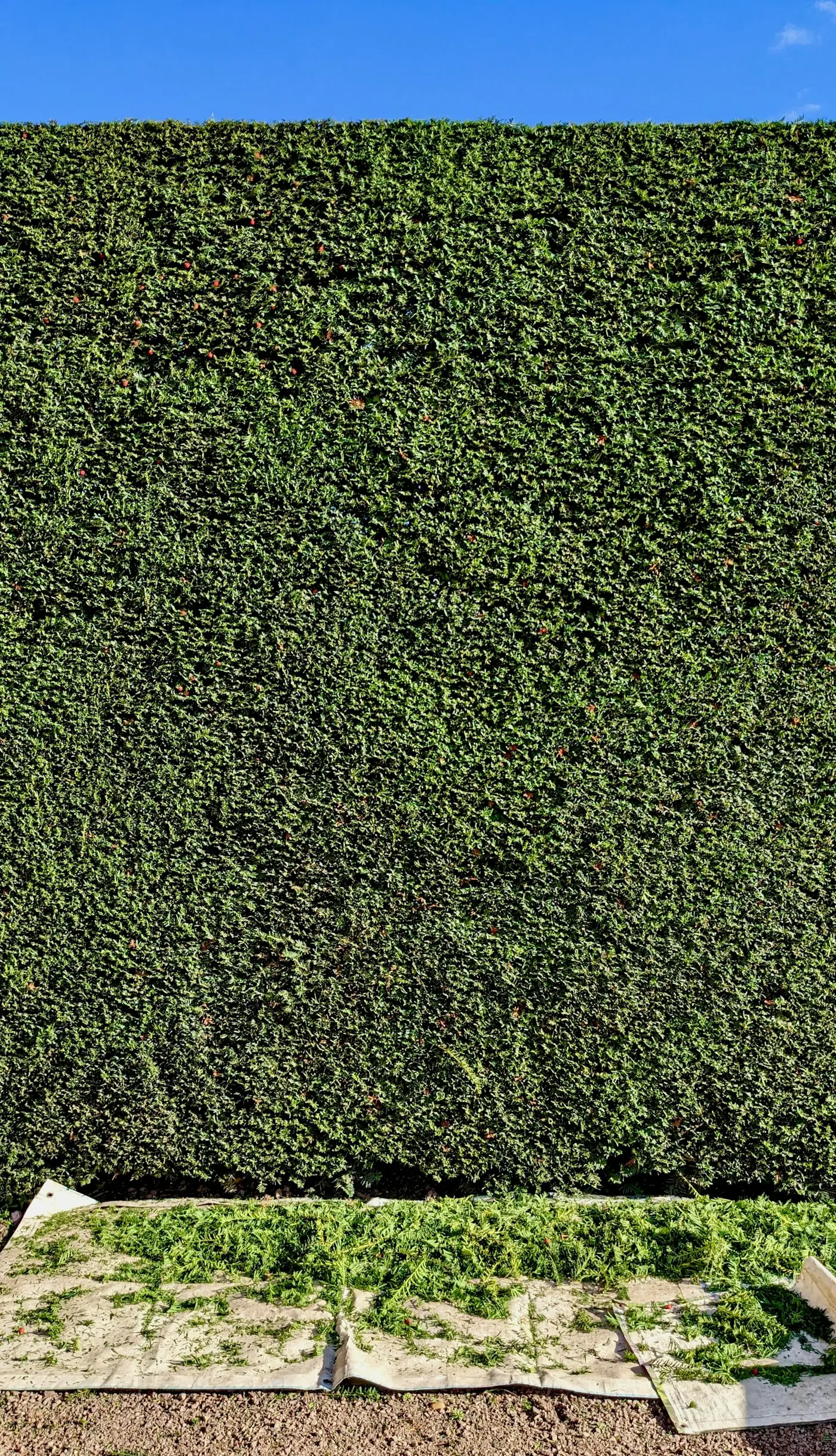
Privet is one of the most common hedging plants in Yorkshire. It lines the front gardens of terraced streets in Leeds, Sheffield, Bradford, and Wakefield in their hundreds of thousands. It tolerates urban pollution, clay soil, semi-shade, and the kind of neglect that would kill most other hedging plants. For all its resilience, though, privet does need cutting regularly to stay dense, healthy, and a manageable height.
This guide covers when to cut privet hedges in Yorkshire, what the work involves, what it costs to hire someone, and how to deal with the most common problems: rust, die-back, and gaps.
Quick cost answer: Removing a privet hedge in Yorkshire typically costs £200-£800 depending on length, height, and whether roots need digging out. Above-ground removal only: £150-£500. Including root extraction: £300-£800. Pruning an established privet hedge runs £40-£120 for most gardens.
About Privet in Yorkshire
The privet most commonly found in Yorkshire gardens is oval-leaved privet (Ligustrum ovalifolium), usually in its standard green form or occasionally as golden privet (Ligustrum ovalifolium 'Aureum'). It is semi-evergreen, which means it holds its leaves through most Yorkshire winters but may shed some or all of them in a particularly cold spell. The hedge structure remains intact either way, and growth resumes reliably from late March when temperatures rise.
Privet is not a native British plant, but it has naturalised widely and is widely tolerated. Unlike some other hedging species, it has no legal restrictions on trimming or removal and has no particular status in Conservation Areas (though if the hedge is part of a listed building's setting, your local planning authority may have an interest).
In the context of Yorkshire's climate, privet is well suited. It handles winter lows down to -15C, copes with the acidic rainfall common in upland areas, and tolerates the heavy clay soil found across much of West and South Yorkshire without the waterlogging sensitivity you see in some Mediterranean hedging plants. Where privet struggles is in prolonged drought combined with a south or south-west aspect - exactly the situation you get on the dry side of terrace houses in a dry summer.
Privet gained its foothold in Yorkshire during the inter-war period, when council housing estates and private terraces were built across West Yorkshire's mill towns: Batley, Dewsbury, Morley, Ossett, Normanton, and dozens of similar settlements where low-cost, fast-growing hedging was planted to separate the new front gardens from the pavement. Many of those hedges are now 60-80 years old. They have become wide and woody at the base, the root systems have matured significantly, and they often need more than a standard trim. Root balls on hedges of this age are proportionally larger than on newer plantings, which is worth bearing in mind when pricing removal work.
When to Cut Privet in Yorkshire
Privet is a fast grower in the active season. A neglected hedge can put on 30-40cm of soft growth between May and August. The goal with timing is to keep the hedge dense and tidy without removing so much growth at once that you stress the plant or cut away the structure it needs to produce next year's growth.
Late May or early June
The first cut of the year comes once the main flush of spring growth has hardened slightly. In Yorkshire this is typically late May, though in a cold spring (common in North Yorkshire and higher-elevation West Yorkshire) you may be waiting until the first week of June before the soft growth is ready to trim without tearing. This cut removes 10-20cm of new growth and re-establishes the shape. It stimulates a second flush of growth that will need attention in summer.
August
The August cut is the most important one of the year. By late July the second flush of growth has firmed up and the hedge needs bringing back into shape. Cutting in August rather than late September means the hedge has time to harden before autumn frosts but the cut face does not look bare for long before autumn leaf retention kicks in. In Yorkshire, aim for the first two weeks of August as a target.
If your privet hedge flowers (white, heavily scented flowers in late June or July), the August timing works against this slightly - trimming just before flowering removes the flower buds. Many homeowners in Yorkshire prefer to cut before flowering or just after, depending on whether they want the scent. Privet flowers are attractive to pollinators, so leaving the hedge slightly shaggier in June-July and cutting in August is a reasonable compromise.
Late September or October
A light tidy in late September or early October removes any straggly new growth from after the August cut and leaves the hedge looking clean through winter. This is not always necessary - if the August cut was clean and thorough, the October tidy may be optional. Avoid cutting in October if a frost is forecast within a week, as frost on freshly cut privet can brown the cut edges.
What to avoid
Do not cut privet in hard frost. The frozen stems will shatter rather than cut cleanly, leaving ragged wounds. Do not cut in prolonged drought unless you can water the hedge immediately afterwards. Avoid cutting in mid to late September in North Yorkshire and exposed upland areas, where early frosts can arrive before the hedge has hardened from the cut.
Tools and Technique
Tools
For a typical residential privet hedge, you need hedging shears or a hedge trimmer. For a hedge under 1 metre tall and under 6 metres long, hand shears are perfectly adequate and give a slightly cleaner cut than a powered trimmer, with less chance of catching and tearing stems. For anything longer or taller, a powered hedge trimmer (petrol or electric) saves significant time and effort.
Blades need to be sharp. Blunt shears or trimmer blades crush and tear stems rather than cutting cleanly, leaving brown wound marks that take weeks to go green again. For powered trimmers, have the blades serviced at the start of the season or use a new set. For hand shears, a quick pass with a sharpening stone before starting makes a visible difference to the cut quality.
Technique
Cut privet with the cutting blade parallel to the face of the hedge. Work upward from the base, removing the new growth back to roughly the outline of the previous cut. The top of the hedge should be cut slightly narrower than the base (a slight A-shape in cross-section), which allows light to reach the lower sections and keeps the base dense. A hedge with straight vertical sides will gradually thin out at the base as the upper growth shades the lower stems.
For tall hedges (over 1.5 metres), use a step or platform rather than stretching. Stretching to trim above your comfortable reach produces an uneven top and risks poor cuts or injury. Professional gardeners trimming tall privet hedges typically work from a combination of steps and a scaffold board or hired platform for longer runs.
Collect and remove clippings. Leaving privet clippings against the base of the hedge creates a mat that holds moisture and encourages fungal disease in the stems at ground level. If you compost them, avoid adding berried material (mildly toxic) to heaps used for food growing.
Costs for Professional Privet Hedge Trimming in Yorkshire
Most gardeners in Yorkshire quote privet hedge trimming by the job rather than by the hour. The key variables are length, height, accessibility, and whether clippings disposal is included.
| Hedge size | Typical cost (2026) |
|---|---|
| Small front hedge (6-8m, up to 1.2m tall) | £40-65 |
| Medium front hedge (8-15m, up to 1.5m tall) | £60-90 |
| Larger boundary hedge (15-25m, up to 1.5m tall) | £80-120 |
| Tall hedge (1.5-2m high, any length) | Add £15-30 to above |
| Overgrown hedge (significant reduction needed) | £80-180 depending on scale |
These prices assume a gardener who arrives with their own tools, does the trim, and takes clippings away. If you ask them to leave the clippings for home composting, expect a small reduction. If access is difficult (e.g., the hedge runs between two properties with no easy access on both sides), expect a small premium.
See our detailed guide to hedge cutting costs in Yorkshire for a fuller breakdown across different hedge types and sizes. To book professional trimming, see our hedge trimming service page.
Cost to Remove a Privet Hedge
How much you pay to remove a privet hedge depends on its length, how established it is, and whether you need the roots dug out as well as the above-ground growth cleared. Most Yorkshire gardeners price removal by the run rather than by the hour.
| Run length | Typical cost (2026) |
|---|---|
| Short run (under 5m) | £150-£250 |
| Medium run (5-15m) | £200-£500 |
| Long run (15m+) | £450-£800+ |
| Root extraction (add-on) | Add £100-£350 (short run: £100-£150; medium/long run: £200-£350) |
These prices cover cutting the above-ground growth and removing arisings. Root extraction is priced as an add-on because it adds 1-3 hours of digging labour depending on the run length and how deep the root system goes. If you plan to lay paving or turf where the hedge stood, root removal is usually worth including - roots left in place can cause uneven ground as they decompose over 2-5 years.
Yorkshire labour rates run £25-£35 per hour for garden work. A gardener spending half a day on a medium privet run is in the £100-£140 range for labour alone before disposal is added. Most quotes combine labour and disposal into a single job price, so always confirm what is included when comparing quotes.
Above-ground removal vs full removal including roots
The total cost to remove a privet hedge depends on whether you need the root system cleared as well as the above-ground growth. Many Yorkshire gardens contain mature privet established for 20 or more years, often at 2-3m tall with root systems proportionally larger than newer plantings. Here is how the costs break down:
| Scope of work | Short run (under 5m) | Long run (10-20m) |
|---|---|---|
| Above-ground removal only (cut stems, clear arisings) | £80-200 | £150-400 |
| Root removal add-on (grinding or excavation) | +£100-200 | +£150-350 |
| Full removal including roots | £200-400 | £300-800 |
Mature Yorkshire privet - hedges planted in the 1950s to 1970s terrace-building era across West and South Yorkshire - often has a substantial root mass at the base. Professional root grinding is the most cost-effective way to clear it cleanly before laying turf, paving, or erecting fencing. For garden clearance that includes privet removal alongside other vegetation, see our garden clearance service. For hedge trimming costs instead of removal, see our hedge trimming cost guide.
Privet Hedge Cutting Cost Per Metre
Per-metre rates are useful when you have a longer run and want to estimate before a quote arrives. These reflect the range across Yorkshire in 2026 for a standard cut-and-collect visit.
| Hedge height | Cost per metre |
|---|---|
| Under 1m tall | £1.50-£2.50/m |
| 1-1.5m tall | £2.00-£3.00/m |
| 1.5-2m tall | £3.00-£4.00/m |
| Over 2m tall | £4.00/m+ |
Per-metre pricing is most useful for longer boundary hedges where job-based pricing would otherwise vary significantly. Anything over 1.5 metres typically needs a step or platform to trim the top safely, which accounts for the higher rate at that height band. If the hedge needs both sides cut (i.e., it fronts a path or borders a shared boundary you can access both sides of), the rate generally doubles.
Common Privet Problems in Yorkshire
Privet rust
Privet rust is a fungal disease (Puccinia ligustri) that produces orange-brown pustules on the undersides of leaves. It is primarily cosmetic and does not kill the plant, but a bad outbreak can cause premature leaf drop and make the hedge look unhealthy. It is most common in humid summers, in hedges with poor airflow through the interior, and in gardens where the hedge has not been trimmed regularly enough to let light and air into the structure.
Management: trim the hedge to improve airflow, remove and dispose of (not compost) heavily affected leaves, and avoid overhead watering. There are no amateur fungicides licensed specifically for privet rust in the UK. Most hedges recover when conditions change.
Drought die-back
Privet has shallow, fibrous roots and can suffer surprisingly quickly in a prolonged dry period. This is most common on south or south-west facing hedges in gardens where the hedge base competes with hard paving that sheds rather than absorbs water. Die-back usually appears as sections of the hedge turning brown from the tips inward, starting in mid to late summer.
Where die-back is limited to tips and outer growth, recovery is usually good: hard prune the affected section back to firm live wood and water well. Where main stems have died at the base, recovery requires new plants. Water hedges during dry spells in May to August, particularly in their first 3 years of establishment.
Gapping
Gaps in established privet hedges are almost always caused by one of the above problems: a section dies back from drought or disease and a hole opens in the hedge. Small gaps (under 30cm wide) sometimes fill back in if you stimulate dense growth with hard cutting and feeding. Larger gaps need new plants.
Plant bare-root privet in November or December for cheapest establishment. Pot-grown plants from a garden centre can go in at any time the soil is workable. Set plants 30-40cm apart for a dense infill, water in well, and mulch the base to retain moisture through the first summer. A gap planted in autumn should show reasonable infill by the following August.
Renovating an Overgrown Privet Hedge
Privet hedges that have been neglected for several years typically become wide, leggy, and thin in the lower sections where light has been excluded. The good news is that privet responds well to hard cutting - unlike conifers, it will push new growth from old wood.
The approach for a seriously overgrown privet hedge is staged renovation over two years. In year one, cut one side of the hedge very hard (to 15-20cm inside the surface you want to achieve), leave the other side and the top. The hard-cut side regenerates through the summer. In year two, cut the other side and the top similarly hard. By end of year two the hedge has a new, dense structure at a manageable size.
The best time to do this in Yorkshire is March or April, before growth begins but after the worst of the winter frosts. Hard cutting in late summer or autumn leaves the cut surfaces exposed to frost damage before the hedge has hardened.
Need your privet hedge trimmed in Yorkshire?
60-second assessment. If a local gardener takes your enquiry, they call you with a price.
Start the assessmentFrequently Asked Questions
When should I cut a privet hedge in Yorkshire?
Privet hedges in Yorkshire should be cut at least twice a year: late May or early June after the spring growth flush has firmed up, and again in August. A light tidy in late September or early October is optional but keeps the hedge looking clean through winter. Avoid cutting in hard frost or during prolonged drought.
How much does privet hedge trimming cost in Yorkshire?
A typical front garden privet hedge (6-8 metres long, up to 1.2 metres tall) costs £40-65 for professional hedge trimming including clippings removal. A longer hedge (8-15 metres) costs £60-90. Tall hedges over 1.5 metres add £15-30 to the price. Significantly overgrown hedges that need a hard reduction are priced separately at £80-180 depending on size.
Why is my privet hedge going brown?
The most common causes of brown patches in Yorkshire privet hedges are privet rust (orange-brown fungal spots), drought die-back (especially on south-facing hedges in dry summers), and cold damage to soft new growth after a late frost. Rust is cosmetic; drought die-back may need hard pruning and watering; frost damage usually grows out.
How do I fix gaps in a privet hedge?
Small gaps may fill in with hard pruning and feeding to stimulate dense new growth. Larger gaps need new plants inserted - bare-root privet (Ligustrum ovalifolium) planted in autumn is cheapest. Set plants 30-40cm apart and water well through the first summer. A gap planted in autumn should show good infill by the following August.
Can I cut privet back hard?
Yes. Unlike conifers, privet regenerates readily from old wood. A leggy or overgrown hedge can be cut back by one third to one half and will recover in a single growing season. The best time in Yorkshire is March or April, before growth begins but after the worst winter frosts have passed.
Does privet hedge trimming need to include disposal?
Most professional gardeners in Yorkshire include clippings removal in the quoted price or offer it as an add-on. Privet clippings can be home-composted if they are not berried. Confirm what is included before work starts, as some gardeners quote for trimming only and price disposal separately.
How much does it cost to remove a privet hedge?
Privet hedge removal costs £200-800 in Yorkshire in 2026, depending on length, height, and whether root extraction is included. A small run under 5m costs £100-250. A medium hedge of 5-15m costs £200-500. A large run of 15m or more costs £400-1,000+. Root removal adds 20-40%; skip hire adds £150-250 if the volume warrants it. Privet is one of the cheaper hedging species to remove because the wood is soft and the roots are shallower than leylandii or hawthorn.
How do you remove an old privet hedge?
Cut the above-ground stems back as far as possible with a bowsaw or loppers, section by section. Then use a spade or mattock to lever the root balls out of the ground. Dig a trench alongside the hedge line before pulling. For runs above 10m, a mini-digger makes root extraction significantly faster. After clearing, fill the trench and level before laying turf or fencing. Waste disposal is the main challenge: a 10m privet hedge generates 1-2 cubic metres of material, typically requiring skip hire.
How much does privet hedge removal cost per metre?
Privet hedge removal costs £20-60 per linear metre in Yorkshire in 2026. Low privet under 1m costs £15-25/m for above-ground removal only. Standard garden privet at 1-1.5m costs £20-35/m. Taller or older privet with an established root system costs £30-60/m including root clearance and disposal. Always confirm whether the quoted rate includes waste disposal and root extraction before agreeing a price.
Is it worth removing or cutting back a privet hedge?
If your hedge is still alive and structurally sound, cutting back is almost always worth trying first. Privet regenerates well from hard pruning - you can reduce a wide, leggy hedge by a third to a half and it will reshoot within one growing season. Removal only makes sense if the hedge has died, if you want to replace it with fencing, or if the roots are causing a specific problem. A professional hard reduction cut on a 10-15m hedge costs £150-£280 in Yorkshire; removal of the same hedge costs £400-£800+.
Can I remove a privet hedge myself?
Yes. Privet is one of the more manageable species to remove without professional help. The above-ground growth cuts back with a bowsaw or loppers. The roots are fibrous and typically spread 30-50cm from the base, and can be levered out with a spade and mattock on runs up to 10 metres. For longer runs or heavy clay soil, a hired mini-digger (around £180-£250 per day in Yorkshire) speeds the root extraction significantly. The main challenge is waste disposal: a 10m hedge generates 1-2 cubic metres of material, which needs skip hire or multiple tip runs.
How long does privet hedge removal take?
A two-person team can typically remove and clear a 10m privet hedge in half a day to a full day, including root extraction and waste loading. A longer run of 15-20 metres is a full day's work for two people. Cutting the above-ground stems takes 1-2 hours on a 10m run; digging and removing root balls takes 3-5 hours depending on soil conditions. On Yorkshire's heavy clay soils, allow at the upper end of these estimates.
Do I need permission to remove a privet hedge in Yorkshire?
In most cases, no. Privet has no protected status in the UK. If your property is in a conservation area, check with your local council before removing a street boundary hedge. If the hedge is covered by a planning condition (common in some newer developments), removal may need prior consent. In all standard domestic cases, privet removal is freely permitted without planning permission.
What does privet hedge removal cost in Yorkshire?
Privet hedge removal in Yorkshire costs £200-800 for a typical domestic run in 2026. A short run under 5m costs £100-250. A medium run of 5-15m costs £200-500 including basic root clearance. A large run of 15m+ costs £400-1,000 or more. Root extraction adds 20-40% to the base cost. Yorkshire rates sit 10-20% below the national average. Most privet removal jobs are completed in one to two working days by a two-person team.
Is it cheaper to trim or remove a privet hedge?
Trimming is almost always cheaper in the short term. A 15m privet hedge cut costs £100-160 in Yorkshire; the same hedge removed costs £400-900 or more once extraction, disposal, and stump treatment are included. Removal only makes sense over the long term if you are replacing with lower-maintenance fencing, or if the hedge has died back and cannot be restored. If the reason you are considering removal is that the hedge is overgrown, a hard reduction cut at £150-280 will usually bring it back to a manageable shape at a fraction of the removal cost.
How much does it cost to remove a privet hedge completely?
Complete privet hedge removal - above-ground cutting plus root extraction - costs £200-800 in Yorkshire in 2026 for a typical domestic run. Above-ground removal only costs £80-200 for a short run under 5m and £150-400 for a longer run. Root grinding or excavation adds £100-350 on top. Yorkshire gardens often contain mature privet 2-3m tall established for 20 or more years, with root balls significantly larger than newer plantings - factor this in when getting quotes.
Can I remove privet hedge roots myself?
Yes for newer or smaller hedges, but mature privet roots require significant effort. Privet established for fewer than 5 years has fibrous roots that a spade and mattock can handle on runs up to 5-8m. Privet established for 20 or more years - common in Yorkshire's terrace-era front gardens - develops a much denser, deeper root system where professional root grinding saves days of digging. For runs over 8m with mature root systems, a mini-digger hired for the day (around £180-250 in Yorkshire) is usually worth the cost rather than attempting extraction by hand.
How much does it cost to remove a privet hedge in Yorkshire?
Removing a privet hedge in Yorkshire costs £150-300 for a small run under 5m, £300-600 for a medium run of 5-10m, and £500-1,200 or more for a long run over 10m. Stump removal adds £50-150 per stump on top of the above-ground felling cost. Most gardeners price removal by the run rather than per metre, but where a per-metre rate is quoted expect £20-40/m for standard garden privet at 1-1.5m tall including basic root clearance. Always confirm whether the quote includes waste disposal and root extraction before agreeing a price.
How much does it cost to remove garden bushes in Yorkshire?
Bush and shrub removal in Yorkshire typically costs £30-100 per plant depending on size and root depth. Small ornamental shrubs under 1m tall cost £30-60 each including the root ball. Larger established bushes - overgrown shrub roses, old forsythia, mature lilac - cost £60-150 each. For a full border or garden clearance involving several bushes, most gardeners price the whole job at £150-350 for a half-day or £300-500 for a full day rather than per plant. Stump grinding on a woody shrub with deep roots adds £50-100 per plant if required. See our garden clearance service for help with multiple bushes and overgrown shrubs.