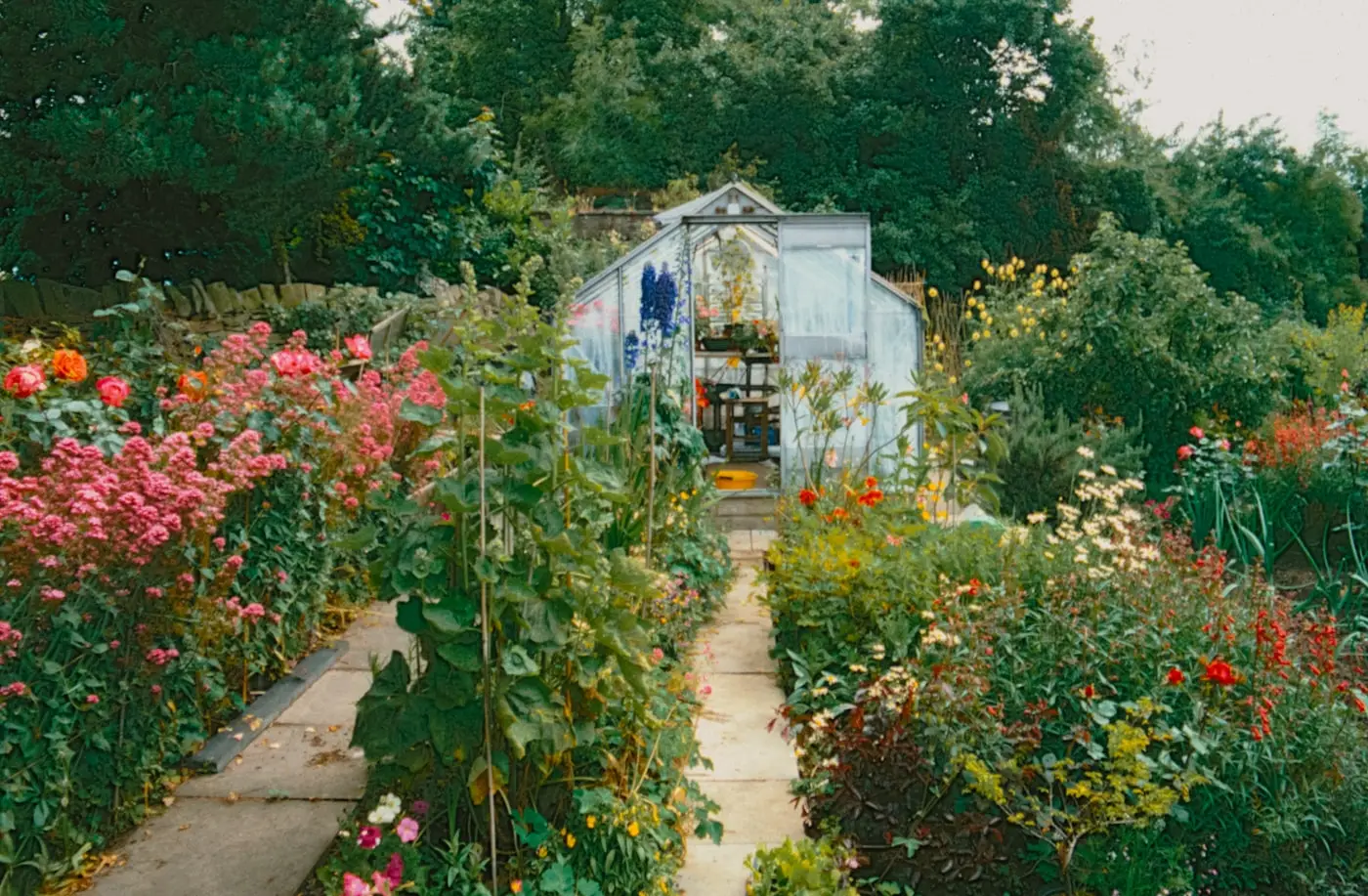
What garden design looks like in Honley
Honley is a Holme Valley village about four miles south of Huddersfield, sitting at the point where the Holme Valley narrows and the Pennine character becomes more pronounced. The village has a strong textile mill history - the stone-built mill workers' terraces and mill buildings still define the character of the settlement. The valley sides rise steeply above and below the village, giving many gardens a slope that makes design both challenging and visually interesting. The soil is acidic gritstone throughout the valley - the characteristic geology of the South Pennine foothills. This free-draining, acidic ground suits a specific plant palette and creates opportunities unavailable to gardeners on alkaline or clay-based soils elsewhere in Yorkshire.
Mill town garden character
The older properties in Honley - the stone terraces, mill workers' cottages, and Victorian houses on the valley sides - have garden character shaped by the stone-built setting. Dry stone walls, stone paths, and the warm golden-grey gritstone of the buildings set a palette that good garden design respects. Planting that softens the stone without overwhelming it - climbing roses on gritstone walls, ferns in shaded corners, structural shrubs that echo the valley's native flora - creates gardens that feel right for the setting. A designer who knows Holme Valley character will give you something that feels authentic rather than incongruous.
Acid gritstone plant opportunities
The acidic gritstone throughout the Holme Valley opens the ericaceous plant palette: rhododendrons, azaleas, pieris, camellias, and heathers all thrive here. These are the plants that most of Yorkshire's clay and limestone gardeners cannot reliably grow. In a shaded or partially shaded valley-side garden, woodland plants including hostas, ferns, astilbe, and epimedium also perform exceptionally well on the acidic, moisture-retentive gritstone. A designer will help you exploit this palette rather than defaulting to the generic suburban plant list that ignores the soil opportunity.
Sloped garden design on gritstone
Many Honley gardens are on the valley sides, and slope is a design challenge that requires practical solutions. Natural gritstone retaining walls are the most appropriate and visually harmonious solution for Honley - they use material that is already part of the local character and they handle the acidic soil around their foundations better than imported materials. Terracing creates usable flat areas within a sloped garden. Planting on slopes helps bind the soil and adds seasonal interest. A garden that manages its slope well is often more interesting than a flat garden of the same area.
Cost ranges for Honley garden design
| Service | Cost range |
|---|
| Planting plan only | £300-800 |
| Planting plan with implementation | £600-1,500 |
| Full design and project management | £800-3,000+ |
| Border replant (up to 10 sqm) | £150-400 |
| Patio design and installation | £2,000-8,000 |
| Full garden makeover (50-100 sqm) | £5,000-15,000+ |
Garden design consultations in Yorkshire run £50-120 per hour. A site visit costs around £150-250. See our garden design service page for full detail.
Get a free Honley garden estimate
Tell us what you want from the garden and we will connect you with local designers who quote directly.
Get a design estimate
The full local guide
Plants that perform in Honley gardens
Acidic gritstone in Honley suits rhododendrons, azaleas, pieris, heathers, and camellias. Ferns (soft shield, male fern, lady fern) thrive in shaded valley positions. Hostas perform exceptionally well on moisture-retentive acid gritstone. Ornamental grasses including molinia and deschampsia suit the Pennine character. Native planting for valley-side gardens includes hawthorn, rowan, silver birch, and wildflower mixes appropriate to upland conditions. Climbing roses and clematis on gritstone walls are a classic element that suits the mill-town character.
How the process works
- Initial brief. Tell us what you want from the garden.
- Site visit and assessment. The designer visits, assesses your soil, drainage, and existing planting.
- Design proposal. A scaled plan with planting list, materials specification, and cost estimate.
- Coordination and installation. For full project management, the designer coordinates contractors for paving, fencing, and planting.
- Establishment. Planting in autumn or early spring with advice on maintenance through the first season.
Frequently asked questions
What soil does Honley have?
Honley sits on acidic Pennine gritstone in the Holme Valley. The soil is acidic, reasonably free-draining, and supports ericaceous plants that cannot grow on alkaline or clay soils elsewhere in Yorkshire. High rainfall in the valley keeps moisture levels good for most of the year.
Can I grow rhododendrons in Honley?
Yes. The acidic gritstone throughout the Holme Valley is ideal for rhododendrons, azaleas, pieris, and camellias. These plants that struggle or fail on alkaline or clay soils thrive here and can become spectacular mature specimens over time.
How much does garden design cost in Honley?
A planting plan only costs £300-800. Full design and project management is £800-3,000. For valley-side gardens with slope and retaining work, hard landscaping costs may be higher. Hourly rates for a Yorkshire designer run £50-120.
How do you design a sloped Honley garden?
Natural gritstone retaining walls hold soil appropriately for the local character. Terracing creates flat usable areas. Sloped planting with valley-appropriate species binds the soil and adds seasonal interest. A designer will use the slope as an asset rather than treating it as a problem.
Do you cover the wider Holme Valley from Honley?
Yes. We connect homeowners with designers across HD9 and the wider Holme Valley including Kirkburton and Denby Dale. Designers quote directly.
Seasonal interest in a Holme Valley gritstone garden
A well-designed Honley garden on acid gritstone has exceptional seasonal interest, with a planting sequence that begins earlier and runs later than most Yorkshire gardens. The acid soil and moisture in the Holme Valley supports a plant palette that produces colour from late winter through to late autumn.
The season opens with late winter bulbs - snowdrops and early narcissus - and early-flowering shrubs that benefit from the valley's relative shelter. Spring is dominated by rhododendrons and azaleas if the design includes them: the flowering period in April and May on well-chosen varieties creates a colour display that is simply not achievable on neutral or alkaline soils. Spring-flowering acid plants including pieris (with its vivid red new growth in March) and Japanese maples (emerging with delicate early leaf) extend the spring interest alongside the standard flowering shrubs.
Summer brings the woodland plant performance: hostas at their best in July and August, astilbe flowering in shaded positions, ornamental grasses reaching their full height. Roses and climbing plants on gritstone walls peak in June and July. Late summer sees the Holme Valley at its most lush - the high rainfall keeps the valley gardens looking fresh when lowland gardens are starting to look tired.
Autumn in Honley is a second high season. Japanese maples (Acer palmatum varieties) give spectacular autumn colour on acid gritstone. Ornamental grasses develop seed heads that catch the low autumnal light. Deciduous azaleas colour brightly in October. A garden designed with autumn interest in mind is genuinely rewarding to be in until November in a sheltered Holme Valley position. A designer will sequence the planting to give this extended season of interest rather than planning for a single peak moment.
For garden design in Honley on a more modest budget, a planting plan targeting the most visible areas of the garden is the best value starting point. The front garden, the main rear border visible from the house, and the boundary planting closest to the main outdoor seating area have the highest visual impact. A designer who focuses on these key areas first creates a garden that looks substantially different and better from the most-used vantage points, without the cost of redesigning the whole space at once. This targeted approach is also appropriate for Holme Valley gardens where the existing structure - mature trees, gritstone walls, established boundary planting - provides a framework that needs updating rather than replacing entirely.
Areas around Honley we also cover
We match homeowners with designers in Kirkburton and Denby Dale and Hoyland. For general gardening services in Honley, visit the local gardeners in Honley page. See also our guide to finding a gardener in Honley.