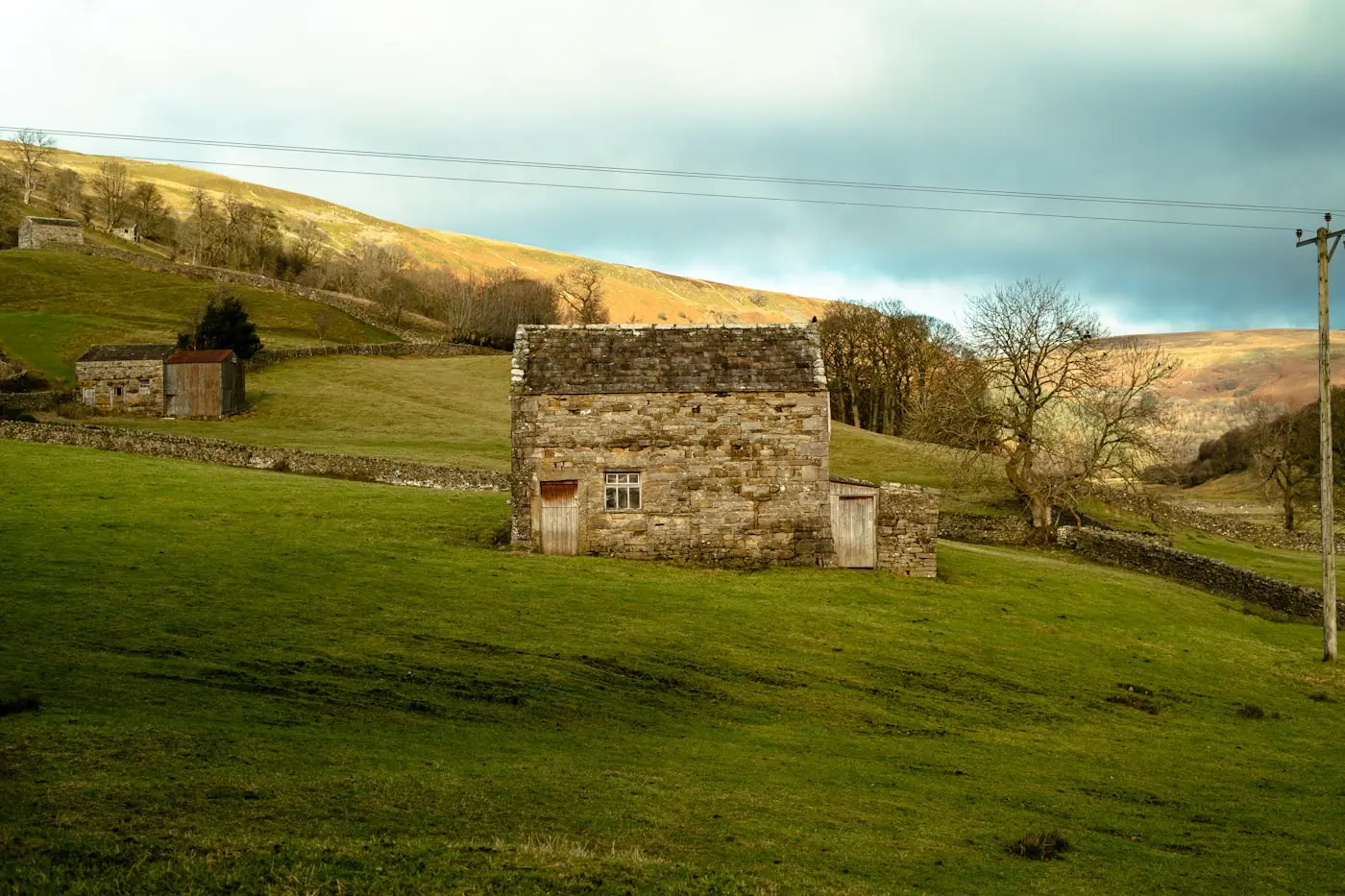
What garden design looks like in Kirkbymoorside
Kirkbymoorside is a stone market town set in the Ryedale Valley where the River Dove runs down from the moors. The town sits at the junction of two very different gardening worlds: the fertile valley floor where clay-loam soil holds moisture, and the thin limestone and shale slopes above the town where the North York Moors begin. That contrast shapes every planting decision in this postcode.
Castlegate and West End have some of the most characterful properties in the town, with Georgian and Victorian stone-built houses that typically come with walled rear gardens. The walling material throughout the area is Jurassic sandstone and limestone, the same stone the moors are made of, and it weathers beautifully to an amber-gold that gives Ryedale gardens their distinctive character. If you have a stone walled garden in Kirkbymoorside, you have a design asset that most homeowners elsewhere in Yorkshire cannot buy.
The town also draws a significant number of holiday-let owners and second-home buyers who want gardens that look good to guests arriving from the A170 but need minimal maintenance between visits. Low-maintenance design for holiday properties is a distinct discipline: it means structural planting that holds its form without weekly attention, hard surfaces that do not need weeding, and plant choices that survive without irrigation through July.
Walled cottage gardens and dry-stone walls
The defining feature of most older Kirkbymoorside properties is the walled or stone-bounded garden. Dry-stone boundary walls, sometimes centuries old, are far more valuable than any fence replacement and almost always worth restoring rather than removing. A garden designer working in this area will typically assess the wall structure first: are any sections leaning or collapsed? Are self-seeded sycamores or elder cracking the joints? Wall restoration often runs parallel with the garden redesign rather than being a separate project.
Within the walled enclosure, the classic Ryedale garden uses trained fruit and climbing plants on the stone surfaces, formal hedging (yew and beech are traditional), Yorkshire stone paving underfoot, and cottage-garden planting in the beds. Climbing roses on period sandstone look exceptional, especially older varieties like Madame Alfred Carriere, Veilchenblau and the Alba roses that tolerate the limestone influence. Wisteria and clematis on south-facing walls are reliable and long-lived. Fan-trained pears and apples are traditional and productive but need annual pruning to maintain the structure.
Moors-edge planting for thin soils
On the slopes above Kirkbymoorside toward Bransdale and Farndale, soil depth drops sharply. What looks like productive garden ground in the valley can be 15cm of thin loam over limestone rubble within half a mile of the town centre. This soil warms quickly in spring, which is useful for early planting, but becomes droughty in July without irrigation or heavy mulching.
The native moorland flora points the way for planting choices here: heather (Calluna vulgaris and Erica carnea), bilberry, hard fern, and the hardy geraniums and sedums that colonise the limestone scrub. In garden terms, this translates to lavender, rosemary, hardy Geranium pratense and G. sanguineum, Echinacea, ornamental grasses (Festuca, Stipa), Sedum spectabile, catmint and Alliums. These plants are drought-tolerant, long-lived in thin soil, and attract the pollinators that are noticeably abundant at moors-edge elevation.
For heavier valley floor gardens, the palette widens: roses, peonies, hostas in shade, traditional herbaceous borders with delphiniums and lupins are all realistic in the clay-loam with proper preparation. The wetter soil in winter means raised beds and good drainage are worth investing in for vegetable growing.
Holiday-let garden design
Kirkbymoorside is a popular base for visitors exploring the North York Moors National Park, which means a significant proportion of local gardens need to work hard as first impressions for paying guests while the owners are elsewhere. Holiday-let garden design has specific priorities: low maintenance, year-round structure, easy-access hard surfaces (gravel, stone), and planting that does not require daily watering to stay presentable through summer.
Structural evergreen planting (box (currently best avoided due to blight), yew, pittosporum, sarcococca), ornamental grasses that hold through winter, and ground-covering perennials that suppress weeds are all useful tools. A simple brief for a holiday-let garden might be: looks great in June photography, requires two visits a year to maintain, costs under £8,000 to install. That is achievable in YO62 with the right designer.
Cost ranges for Kirkbymoorside garden design
Garden design pricing depends on the scope of work and whether you want design only or full project management. These are the typical ranges for YO62:
| Service |
Cost range |
| Planting plan only |
£300-800 |
| Planting plan + implementation |
£600-1,500 |
| Full design and project management |
£800-3,000+ |
| Border replant (up to 10 sqm) |
£150-400 |
| Kitchen garden / raised-bed setup |
£400-900 |
| Full garden makeover (50-100 sqm) |
£5,000-15,000+ |
Dry-stone wall restoration in North Yorkshire runs £80-150 per metre depending on the condition and complexity of the section. Jurassic sandstone paving is typically £60-110 per sqm supplied and laid. Both are quoted separately from the design fee. For more detail on what drives the overall cost, see what a garden makeover costs.
Start your free Kirkbymoorside garden estimate
Tell us what you want and we put your enquiry in front of local designers who quote directly. No call centre fees on your side.
Get a design estimate
The full local guide
Plants that work well in Ryedale Valley gardens
The soil variation between valley and slope makes Kirkbymoorside an interesting design challenge. On the valley floor with heavier clay-loam, the full range of traditional Yorkshire garden plants works: roses (especially on the alkaline side of clay), delphiniums, lupins, salvias, astrantia, phlox, and the classic herbaceous border plants. The clay holds moisture through dry spells and is naturally fertile without heavy feeding.
On the slopes toward the moors, drought-tolerant and limestone-tolerant plants come into their own. Hardy geraniums (Geranium pratense is the native species here), lavender, rosemary, catmint, sedums, salvias, verbascum, achillea, and ornamental grasses all handle the thin, free-draining soil. Alliums do exceptionally well in limestone and look spectacular in June. Structural shrubs like Rosa glauca, Viburnum lantana (the native wayfaring tree), and Cotoneaster horizontalis are tough enough for exposed moors-edge positions.
For walled gardens with south or west-facing stone surfaces, the wall acts as a heat store and creates a significantly warmer microclimate than the open garden. This allows plants slightly tender for the area: Ceanothus, Fremontodendron, Carpenteria californica, and Actinidia (kiwi) can all survive on a sheltered south-facing Ryedale wall. The wall also gives you the opportunity for wall-trained fruit, which is both productive and architecturally strong.
Common garden design projects in Kirkbymoorside
Dry-stone wall restoration combined with garden redesign is the most common project in the older parts of town. Many properties have walls that were built to last centuries and need only pointing, re-capping, and some rebuilding of collapsed sections to be fully functional again. The restoration work reveals the bones of the garden and often suggests the layout naturally: walled compartments, paths running to gates, areas against the warm south-facing wall for trained fruit or tender climbers.
Cottage garden makeovers on Castlegate and West End properties typically involve clearing overgrown or neglected planting, assessing what is worth keeping (mature yew, established roses, trained fruit), and creating a new planting scheme that respects the period character. Stone paths, gravel, and Ryedale sandstone paving are the usual hard landscaping choices.
New-build plots on the edges of town need a completely different approach: starting from bare soil, often with little topsoil, requiring soil improvement and a design that builds structure over five years rather than looking finished on day one. A good designer will create a five-year vision rather than planting for immediate effect on poor soil.
Holiday-let garden upgrades are a significant category. The brief is typically: low maintenance, year-round structure, looks good in photographs, nothing that needs daily watering. Stone and gravel surfaces, structural evergreen planting, and a simple lawn or wildflower area often provide the right result within a realistic budget.
Process for a Kirkbymoorside garden designer
- Initial brief. Tell us what you want from the garden and your approximate budget. A planting refresh, a walled-garden restoration, a holiday-let makeover, or a full landscape redesign are all different briefs and suit different designers.
- Site visit and assessment. The designer visits and assesses your soil type, aspect, existing planting, stone walls, and any constraints. On slope sites, drainage assessment is important before any hard landscaping is planned.
- Proposal and design. You receive a scaled design with planting plan, materials specification, and cost estimate. For design-only work this is the deliverable. For full-build projects, the design goes to contractors for quoting.
- Phasing and coordination. For larger projects, the designer coordinates stone work, hard landscaping, and planting in the right sequence. Dry-stone wall restoration goes first; hard paths second; planting last.
- Installation and establishment. Planting is carried out in autumn or early spring for best establishment. The designer advises on watering and mulching, which matters more on thin moors-edge soil than on valley clay-loam.
A planting plan can be produced within one to two weeks of the site visit. A full redesign with installation typically takes four to twelve weeks depending on project scale. For stone work and hard landscaping, lead times for skilled local contractors in North Yorkshire can run to several months, so starting the design process in winter is sensible.
Designers in the Kirkbymoorside area
We connect homeowners across YO62 with local designers who quote directly. They set their own prices and there are no call centre fees on the customer side. The free initial estimate gives you a sense of what your project involves before you commit to the full design. Whether you want a planting plan for a moors-edge border, a walled-garden restoration on a Georgian property, or a low-maintenance redesign for a holiday let, we put your enquiry in front of someone who has done similar work in the Ryedale Valley and understands the soil and stone character of this area.
Frequently asked questions
What soil does Kirkbymoorside have?
Kirkbymoorside gardens vary significantly by position. Valley floor gardens near the River Dove have a heavier clay-loam that holds moisture and is slow to drain in winter. On slopes above the town toward the moors, the soil switches to thin loam over limestone and shale that drains freely and becomes droughty in July. The difference can be dramatic within a short distance. A local designer will assess your specific plot and recommend plants and drainage improvements suited to your actual soil conditions.
How much does garden design cost in Kirkbymoorside?
A planting plan only service costs £300-800. Planting plan with implementation runs £600-1,500. Full design with project management typically costs £800-3,000+. A full garden makeover on a 50-100 sqm plot runs £5,000-15,000+. Dry-stone wall restoration runs £80-150 per metre. Jurassic sandstone paving is typically £60-110 per sqm supplied and laid. Designers quote directly based on your specific brief and site conditions.
Can you design a walled stone garden in Kirkbymoorside?
Yes. Walled garden design in Kirkbymoorside uses Jurassic sandstone and limestone, the natural walling material in Ryedale. A designer will work with existing stone walls, restore dry-stone sections that have shifted or collapsed, and integrate trained climbers and cottage planting within the enclosure. Climbing roses, clematis, pears and apples on period stone walls are classic elements. Wall-trained fruit needs annual pruning to maintain the structure, and a good design brief includes a maintenance plan alongside the planting design.
What plants suit moors-edge conditions in Kirkbymoorside?
On thin, free-draining slopes toward the moors, drought-tolerant plants perform far better than moisture-hungry border perennials. Heather, hardy geraniums, lavender, rosemary, sedums, ornamental grasses and catmint handle the thin limestone and shale soil well. In sheltered valley positions with heavier clay-loam, a wider palette opens up: roses, peonies, hostas in shade, and lush herbaceous borders all become realistic. For holiday-let gardens that need to look good without daily attention, structural planting with low-maintenance ground cover is often the right approach.
Areas around Kirkbymoorside we also cover
We also match homeowners with designers in Helmsley, Pickering, and surrounding Ryedale villages including Hutton-le-Hole, Lastingham, Fadmoor, Gillamoor, and Appleton-le-Moors.
For general garden maintenance, lawn care, and year-round gardening services in Kirkbymoorside, visit our local gardeners in Kirkbymoorside page.