Garden design · Norton, North Yorkshire
Norton garden design and landscaping.
Norton YO17 sits in the Vale of Pickering alongside Malton, with alluvial loam that holds moisture and compact terrace gardens that need careful planning to make the most of every square metre. Slow drainage, moss, and shaded plots are the typical briefs here - and all of them have design solutions. Local designers quote directly. Design from £500.
- Free initial estimates
- Local designers who quote directly
- Design from £500
- No call centres
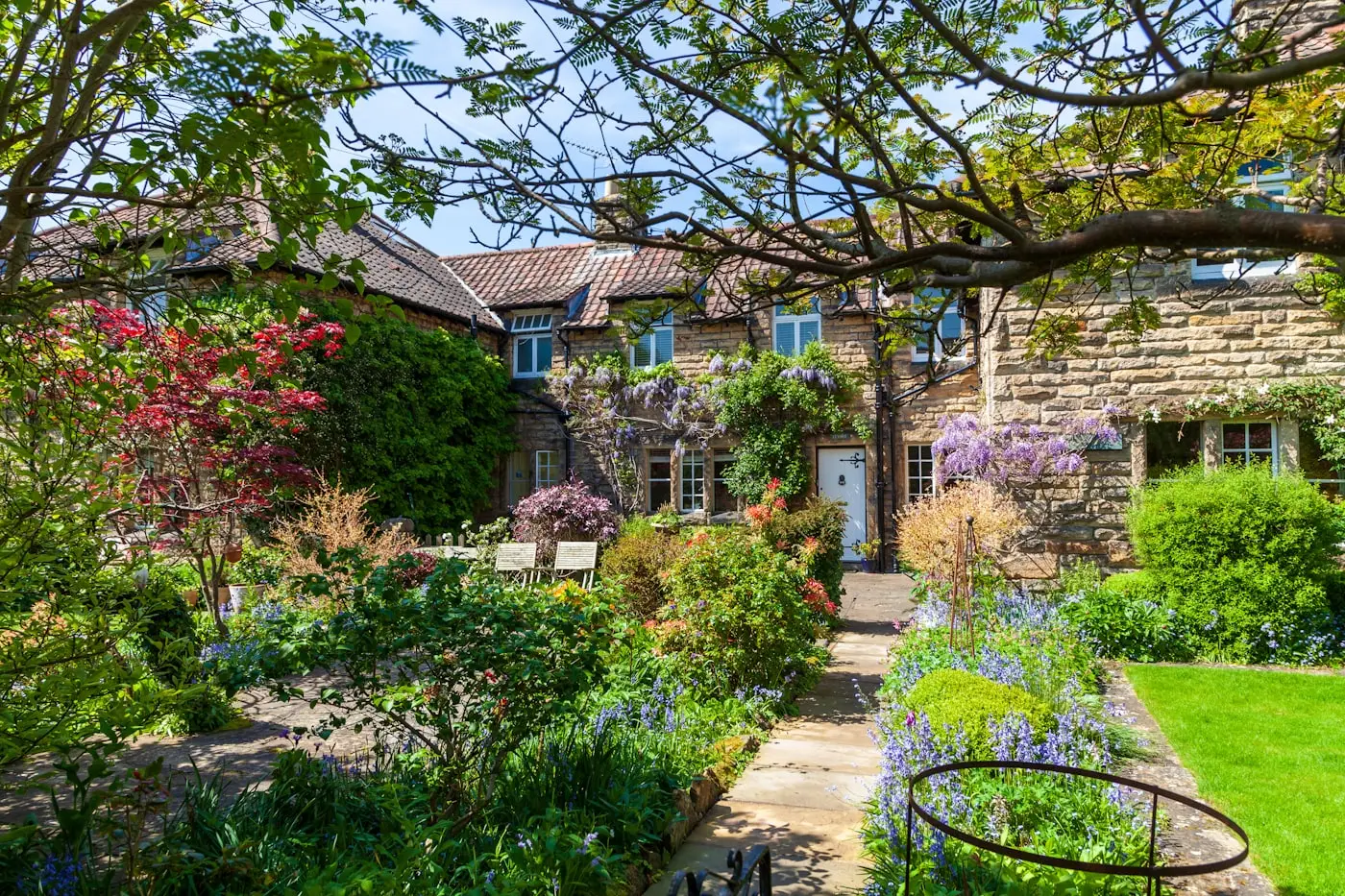
Garden design in Norton - the real brief
Norton and Malton share the Derwent valley between them, connected by the bridge that has made this one settlement in practice for centuries despite the administrative boundary. Norton's garden character is shaped by its housing stock: a high proportion of Victorian and Edwardian terrace housing, post-war semis, and compact modern plots where the garden is often a long narrow strip rather than the spacious suburban plots you find further west or north.
The soil in these gardens is Vale of Pickering alluvial loam - fertile, moisture-retentive, and slow-draining. After a wet autumn and winter, Norton gardens can stay waterlogged well into spring. Lawns develop moss patches, borders stay cold, and the gardening season feels delayed. These are not unique problems: they are consistent features of the Derwent valley soil profile, and a designer who knows this area will factor them into the design from the first site visit rather than discovering them later.
The design opportunities here are substantial. Compact gardens that are well-designed feel larger than their footprint. Raised planting areas above the waterlogging zone grow better than flat beds. Hard surfaces that drain efficiently make the garden usable through the wet months rather than just the dry season. Shaded terrace gardens can be transformed with shade-tolerant planting that is lush and interesting without requiring direct sun.
For general gardening and maintenance support, the local gardeners in Norton page covers what to look for when choosing a gardener for this area. For an overview of the full garden design service across Yorkshire, that page gives the wider context.
Garden design costs in Norton YO17
A planting plan for a Norton terrace garden typically costs £300-800. Full design with project management runs £800-3,000+ depending on scope. Norton's compact plots often mean lower overall build costs than larger suburban gardens - there is simply less ground to cover - but the drainage and soil improvement work can add cost that a flat, well-drained site would not need. Full builds for a typical Norton garden run £4,000-12,000+. Designers quote directly; there is no fee on your side of the enquiry.
For context on what design costs across the county, our Yorkshire garden designer cost guide breaks down fees by project type and scope.
Get your Norton garden sorted this season.
Tell us about your plot, your drainage, and what you want from the space. A local designer comes back with a real figure. No call centres, no subscriptions. Design from £500.
Start your free estimateThe full local guide
Norton's soil and drainage - the design starting point
The Vale of Pickering was an ancient lake bed, and the alluvial soils left behind are deep, fertile, and moisture-retentive. For a kitchen gardener that is good news: the fertility is naturally high and vegetables grow well. For a lawn or ornamental garden, the slow drainage is the persistent challenge. Poorly draining soil is slower to warm in spring, more prone to waterlogging in winter and early spring, and favours moss over grass in lawns.
The good news is that Norton's alluvial loam is generally neutral to slightly acid in pH, which means a wider plant palette than the chalk and limestone towns to the north and west. Rhododendrons, azaleas, and acid-loving woodland plants that would fail in Tadcaster or Cottingham can grow in Norton. The soil is workable and responsive to organic matter improvement. Add compost annually to borders and the soil quality improves noticeably within a few growing seasons.
For gardens close to the Derwent, seasonal flooding is a real consideration. A designer will check flood risk data for your specific plot before specifying planting or hard landscaping, because a garden that floods to ankle depth in January needs a different approach from one that simply drains slowly. Near-flood plots typically benefit from raised beds, permeable hard surfaces, and planting choices that tolerate short-term inundation.
What gets designed in Norton gardens
Compact terrace garden maximisation
A typical Norton terrace plot is a long, narrow strip running behind the house, often three to four metres wide and ten to fifteen metres long. The instinct of many homeowners is to lay lawn down the middle and plant borders either side. This works, but it rarely makes the garden feel as large or as useful as it could. A designer working with the same footprint might instead create two or three distinct zones - a hard-paved area directly off the house for sitting and dining, a middle zone with raised planting and screening for privacy, and a back zone for storage, composting or a small vegetable patch. The result feels like three rooms rather than one corridor.
Drainage improvement and raised planting
Where the soil is persistently wet and compacted, raising the planting level is more effective than trying to drain the ground below. Low raised beds - even a single brick course, 15-20cm above grade - put roots above the worst of the winter waterlogging and dramatically improve what you can grow. Hard surfaces installed over a correctly prepared sub-base drain surface water away rather than letting it pool. These are not expensive interventions but they change the garden's performance through the whole year.
Shade garden design
Terrace gardens with tall fences or adjacent buildings often get shade for significant parts of the day. Many Norton gardens face north or are partially shaded by the house itself. Shade is not a design problem once you know the plants for it. Hostas, astilbes, epimedium, ferns, hellebores, and hardy geraniums all perform well in partial shade, and a well-planted shade garden can be genuinely lush and interesting. The key is not trying to force sun-loving plants into shaded conditions - they will sulk and eventually fail - but embracing the cool palette that shade makes possible.
Horse-country cottage garden style
Norton's proximity to Malton Racecourse and the equestrian world of the Vale of Pickering gives it a particular character that suits cottage-garden and naturalistic planting styles. Roses, alliums, hardy geraniums, foxgloves, and self-seeding annuals create a relaxed, abundant garden that photographs well and requires less fussing than a formal scheme once established. This style suits Norton's mix of Victorian terrace and period semi-detached housing.
Plants that work in Norton's conditions
- Moisture-tolerant perennials: Astilbe (ideal in damp shade), ligularia for dramatic foliage in wet borders, persicaria for ground cover in moist soil, iris sibirica for boggy edges, and rodgersia for large-scale moisture-tolerant planting.
- Shade-tolerant plants: Hostas, epimedium, hellebores, ferns (particularly Dryopteris and Polystichum), and hardy geranium Phaeum (mourning widow) for deep shade.
- Reliable border perennials: Hardy geraniums, salvia, catmint, peonies, and rudbeckia all do well in Norton's neutral alluvial loam once drainage is adequate.
- Grasses for damp conditions: Molinia caerulea and its cultivars thrive in moisture-retentive soil, Deschampsia caespitosa for shade and damp, Carex species for wet edges.
- Structural shrubs: Viburnum opulus (native guelder rose) for damp ground, dogwood (Cornus) for wet borders and winter stem colour, native elder for wildlife value in wetter spots.
See the garden maintenance service for ongoing care once your planting is in place.
Cost guide for Norton garden design
| Service | Typical cost | What it includes |
|---|---|---|
| Initial consultation | Free to £75-150 | Site visit, brief discussion, outline proposal. |
| Planting plan only | £300-800 | Scaled scheme, plant list, spacings. You implement. |
| Full design with project management | £800-3,000+ | Design, contractor coordination, planting oversight. |
| Drainage improvement | £500-2,000 | Sub-surface drainage channels, French drain, raised areas. |
| Compact garden redesign (25-50 sqm) | £4,000-12,000+ | Clearance, hard landscaping, planting, establishment. |
| Raised bed installation | £400-1,000 | 2-3 raised beds with improved soil, timber or stone edging. |
For a full breakdown of what garden work costs, see our gardening cost guide.
Process: what to expect from a Norton garden designer
- Initial brief. You describe your garden size, orientation, current problems (moss, waterlogging, shade), and what you want from the space. Photos of the existing garden help the designer prepare for the visit.
- Site visit and drainage assessment. The designer checks the soil type, drainage behaviour, shade patterns, and which existing plants are worth keeping. On Derwent valley sites, a drainage assessment is standard - it changes what can be specified.
- Proposal and costings. You receive a scaled proposal with planting plan, a plant list, and indicative costs for design and build.
- Phasing for compact plots. Norton terrace garden redesigns are often done in a single phase because the plots are manageable in size. Hard landscaping first, then planting once the surfaces are in.
- Installation. The designer sources plants, oversees installation, and advises on first-season care including mulching and watering while roots establish.
Frequently asked questions about garden design in Norton
What soil does my Norton garden have?
Norton YO17 sits in the Vale of Pickering on alluvial loam - fertile, moisture-retentive, and slow-draining. Plots near the Derwent can waterlog in wet winters. The soil is generally neutral to slightly acid, giving a good plant palette. Moss in lawns and slow spring warm-up are typical. Raised planting and improved drainage make the biggest difference.
How much does garden design cost in Norton, North Yorkshire?
A planting plan for a Norton garden typically costs £300-800. Full design with project management runs £800-3,000+. Compact terrace builds run £4,000-12,000+. Designers quote directly. See our Yorkshire garden designer cost guide for typical ranges.
How do I deal with moss and slow drainage in my Norton garden?
Annual lawn scarification and aeration reduces moss. For borders, raising the planting level by even a single brick course puts roots above the worst waterlogging. Hard surfaces over a properly prepared sub-base drain rather than pool. Selecting moisture-tolerant plants for the wettest spots - astilbes, irises, Molinia grasses - means working with the drainage rather than fighting it.
What is the garden design scene like in Norton compared to Malton?
Norton has a higher proportion of terrace housing and compact plots; Malton has more period market-town properties. Norton garden design typically focuses on maximising compact spaces and improving drainage. The same local designers cover both towns and know the conditions in both.
Related services
Once your design is planted, regular garden maintenance keeps it in good shape. For overgrown plots needing clearance first, see our garden clearance service. For boundary hedging as part of your design, see hedge trimming in North Yorkshire.
Related: find a gardener in Norton
Areas near Norton we also cover
We cover garden design across the wider Ryedale area. For the market town adjacent, see garden design in Malton. For the moors town to the north, see Pickering garden design. For the full service overview, see the garden design service page.