Garden design · Pudsey
Garden design across Pudsey, Stanningley, Farsley, Calverley, Rodley. Planting plans, full redesigns, borders that work on the Bradford-Leeds border soil from Coal Measures clay to sandier Aire-corridor loam, and hard landscaping on plots from Victorian terraces to inter-war and post-war semis. Local designers who quote directly, free initial estimates, design from £500.
Pudsey sits on the Bradford-Leeds border where the soil character varies street by street — Coal Measures clay to the west toward Bradford, and sandier loam closer to the Aire corridor to the east. The western Pudsey streets have heavier clay ground that drains slowly and compacts under foot traffic, while the Farsley and Calverley edge is on better-drained ground where lawns establish more easily and borders respond quickly to consistent care. A designer working in LS28 needs to recognise which conditions they're addressing before proposing a planting scheme or lawn plan.
Most Pudsey garden design enquiries land in three categories: redesigning an established inter-war or post-war semi garden that's been left for a season or two and needs proper attention; first-garden work on plots where the brief is creating structure from bare boundaries; or full makeovers on larger family gardens where the budget exists to do the job comprehensively. The elevated position on the Calverley ridge means wind exposure is a real factor on the upper streets — structural hedging does genuine shelter work here, and a designer who understands that context will propose windbreaks and tougher planting rather than tender schemes imported from sheltered valley catalogues.
The Victorian terrace streets have compact back gardens with established hedging that's been growing since the houses were built. Many of these boundaries are overdue structural reduction — privet and hawthorn that's grown taller and wider than the original setting intended, needing proper cutting back before routine maintenance becomes manageable. If you're thinking about a redesign on one of these plots, the boundary work is often the first investment before the planting can be properly addressed. Check the Pudsey lawn and garden page for context on what the clay soil needs and how established gardens here respond to care.
Design fees are separate from build and planting costs. The ranges below reflect what designers across Yorkshire typically charge. Most quote a fixed fee after seeing the site.
| Service | Typical range |
|---|---|
| Initial consultation | Free to £75–150 |
| Planting plan only | £300–800 |
| Planting plan + implementation | £600–1,500 |
| Full design and project management | £800–3,000+ |
| Border replant (up to 10 sqm) | £150–400 |
| Full garden makeover (50–100 sqm) | £5,000–15,000+ |
Hard landscaping (patios, walls, fencing) is quoted separately and depends on materials and scale. A mid-size patio or retaining wall typically runs £2,000–£12,000. Plants are either trade-priced through the designer or you source them directly — most designers are flexible on this depending on your budget and involvement preference.
Free initial estimate from a Pudsey-area designer. We connect you with local professionals who quote directly.
The full local guide
The inter-war and post-war housing through Stanningley, Farsley and central Pudsey has proper suburban plots — established lawns, mature boundaries, and planting that's had decades to settle. These gardens benefit most from comprehensive redesigns that preserve the structural bones but refresh the planting, improve the lawn care programme, and add hard landscaping (patio extensions, path work) where the space has always needed it. Budget £5,000–£12,000 for a full redesign on a standard semi plot if you want the entire job done properly in one phase.
Gardens on the western side toward Bradford sit on heavier Coal Measures clay that drains slowly and compacts easily. A designer proposing a lawn and border scheme here should factor in drainage interventions, raised beds for vegetables, and moisture-tolerant planting (hostas, astilbes, persicaria, moisture-loving grasses). A clay-garden design that ignores the soil character produces borders that struggle and lawns that mat with moss within two seasons — the designer needs to work with the ground, not pretend it's free-draining loam.
The eastern edge toward Farsley, Calverley and Rodley is on sandier loam closer to the Aire corridor — better drainage, quicker to warm in spring, and more forgiving with a wider range of planting. These gardens suit herbaceous borders, ornamental grasses, drought-tolerant perennials (salvias, sedums, hardy geraniums), and lawn schemes that perform well without heavy aerating programmes. The riverside loam toward Rodley and Kirkstall is genuinely different growing medium from the clay-heavy western streets of the town.
Pudsey's elevated position means gardens on the upper streets and the Calverley ridge face consistent autumn and winter wind exposure. Structural hedging (beech, hornbeam, yew) does genuine shelter work here — a hedge that gaps or thins on the windward side reduces growing conditions for everything behind it. A designer addressing an elevated Pudsey garden should prioritise windbreak planting and tougher structural shrubs over tender species that get found out in the first exposed winter.
The Victorian terrace streets in central Pudsey have compact back gardens with limited light and established hedges or stone boundary features. These spaces want practical, low-maintenance designs — paved surfaces with planting gaps, raised beds, shade-tolerant planting (ferns, ivies, hardy geraniums). A terrace back-yard redesign that tries to pack in a full lawn and herbaceous borders on 20 square metres produces a cramped, high-maintenance space. The right approach is designing for what the plot genuinely offers.
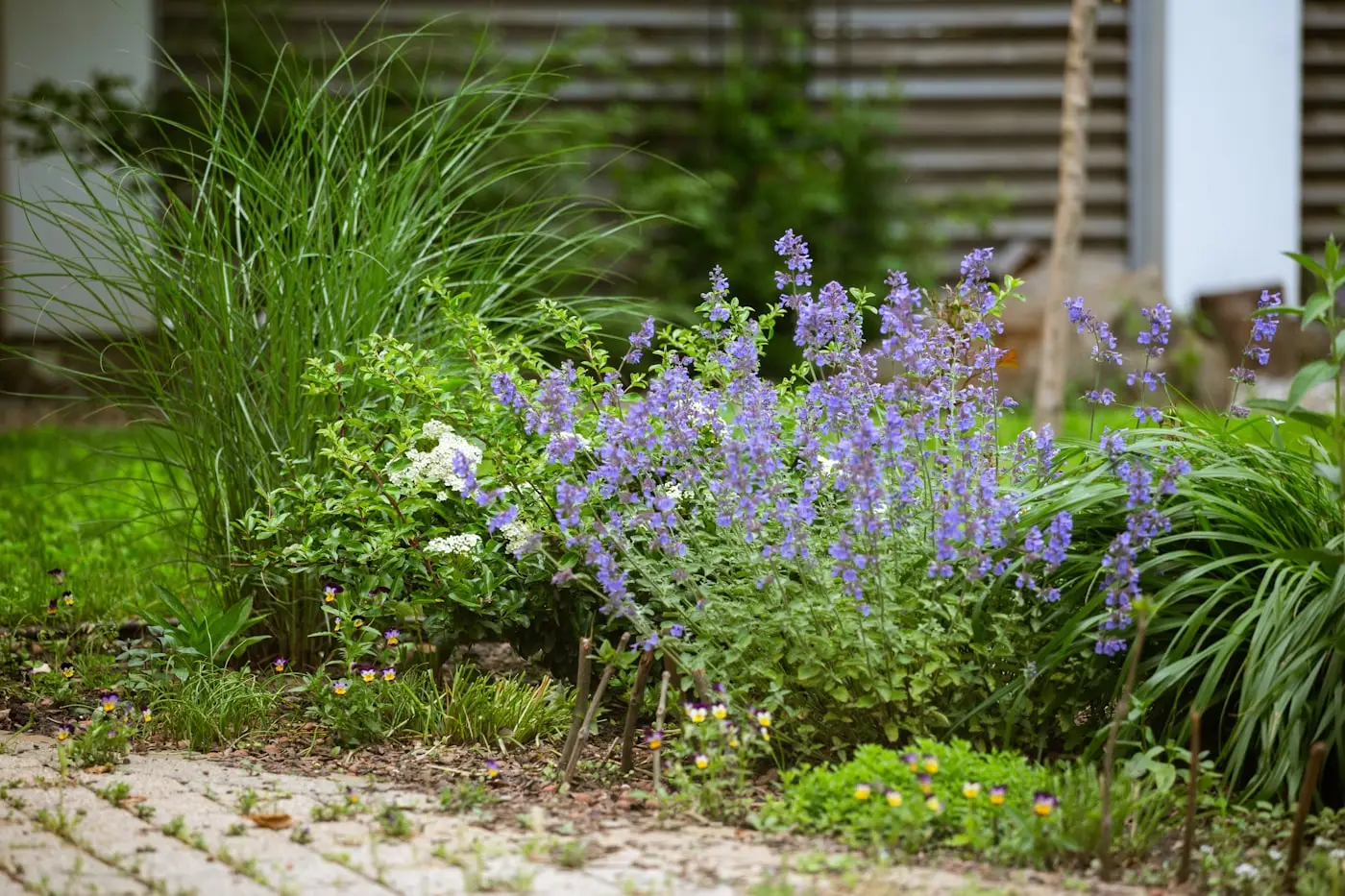
Planting choices depend on which part of Pudsey you're in. The western streets toward Bradford sit on heavier Coal Measures clay that drains slowly and stays moisture-retentive through most of the year. Moisture-loving perennials perform well here — astilbes, hostas, persicaria, ligularia, moisture-tolerant grasses, shrub roses. Drainage intervention (French drains, raised beds, heavy aerating) is often the first step before planting can succeed properly on the heaviest plots.
The eastern edge toward Farsley and Calverley is on lighter, sandier loam that drains faster and suits a broader palette. Herbaceous borders, ornamental grasses (Stipa, Miscanthus, Pennisetum), drought-tolerant perennials (salvias, sedums, hardy geraniums, lavender), and structural shrubs all thrive on the better-drained ground. The Aire Valley corridor toward Rodley and Kirkstall has riverside loam that suits moisture-tolerant planting and thrives in the more sheltered humid microclimate.
Elevated gardens on the Calverley ridge need windbreak hedging and tougher structural planting — beech, hornbeam, yew for formal boundaries, or hawthorn and field maple for less formal edges. Wind exposure on the ridge is significant, and tender planting struggles without proper shelter from established hedging or structural shrubs upwind.
We connect homeowners across Pudsey LS28 with local garden designers who quote directly for your project. There's no middleman fee added on the customer side — you get a direct estimate from the designer, and you decide whether to proceed. The initial estimate is free with most designers. They visit, assess the site, and provide a costed proposal. If you want to explore what a redesign or full landscape job would look like on your plot, the first conversation costs nothing and gives you a realistic picture of scope, cost and timing. See the garden makeover cost guide for broader context on what full redesigns typically involve.
What soil does my Pudsey garden have?
The western Pudsey streets toward Bradford sit on Coal Measures clay — heavy, slow to drain, prone to compaction. The eastern edge toward Farsley and Calverley is on lighter, sandier loam closer to the Aire corridor — better drainage, easier to work, and more forgiving with planting. A designer should assess your specific plot before proposing a scheme — the soil character varies noticeably across LS28 depending on elevation and proximity to the Aire valley.
How long does a garden redesign take in Pudsey?
A planting-plan-only project can be turned around in 2–4 weeks depending on the designer's workload. A full redesign with hard landscaping and comprehensive planting typically takes 6–12 weeks from initial brief to installation, often phased across multiple site visits. Larger projects are phased to match budget or seasonal planting windows — spring and autumn are the best times to plant, so many designs are timed to those windows.
Do I need a full design or just a planting plan?
If your layout is fine but the borders need replanting, a planting plan (£300–800) is usually sufficient. If you want to change the layout, add hard landscaping, or redesign the space from scratch, a full design (£800–3,000+) with project management makes sense. Most designers will advise which approach fits your brief after seeing the site.
What does a designer charge separately from the build cost?
The designer's fee covers the design, drawings, planting plan, and project management. The build cost covers materials, labour, plants, and installation. Most designers quote both separately so you can see what you're paying for design work versus physical implementation. Some bundle it as a single project fee; others prefer to separate it so you can phase the work if budget requires.
Can I get a clay-heavy Pudsey garden to drain properly?
Yes, with proper intervention. French drains, raised beds, heavy aerating, and improving the soil structure with organic matter and grit all help. A designer should assess the drainage before proposing a layout — ignoring the clay character produces gardens that struggle with waterlogging every winter. Designing with the clay (moisture-tolerant planting, raised beds, proper lawn care) is often more cost-effective than fighting it with extensive drainage work.
What's the difference between a garden designer and a landscaper in Pudsey?
A garden designer plans the space, produces drawings, selects plants, and manages the aesthetic and horticultural decisions. A landscaper builds it — hard landscaping, groundwork, installation. Many designers work with a trusted landscaper to deliver the physical work. Some landscapers also offer design as part of a full-service package. If you want a comprehensive project managed from concept to completion, look for a designer who either builds or has established relationships with reliable contractors.
When is the best time to start a garden redesign in Pudsey?
Planting is best in spring (March–May) or autumn (September–November) when the ground is workable and plants establish well. Hard landscaping can be done year-round in dry weather, though winter groundwork on clay soil is harder and slower. Most designers take bookings in January and February for spring installation, or in June and July for autumn planting. If you want the work done in a specific season, start the conversation 8–12 weeks before that window.
Garden design coverage across West Yorkshire and surrounding towns:
Surrounding areas including Stanningley, Farsley, Calverley, Rodley.
For general garden maintenance, lawn care, and year-round gardening services in Pudsey, visit our local gardeners in Pudsey page.