Garden design · Tadcaster, North Yorkshire
Tadcaster garden design and landscaping.
Tadcaster LS24 sits on magnesian limestone in the Wharfe valley between Leeds and York - one of the best soils for gardening in North Yorkshire. Free-draining, alkaline, and quick to warm in spring, it suits roses, lavender, salvias, and a wide range of classic garden plants without the drainage battles you find on Vale of York clay. Local designers quote directly. Design from £500.
- Free initial estimates
- Local designers who quote directly
- Design from £500
- No call centres
What Tadcaster's location means for your garden
Tadcaster occupies a specific and fortunate position in the Yorkshire landscape: it straddles the River Wharfe on magnesian limestone bedrock, putting it in the Magnesian Limestone Belt that runs through this part of the county between the Coal Measures to the west and the Vale of York clay to the east. If you garden in Tadcaster LS24, you are working with one of the most gardener-friendly soil types in the region. The limestone is free-draining, naturally alkaline, and rich in minerals that many plants actively prefer.
The town is known for its brewery heritage - the limestone-filtered water is the same reason the area produces good beer and good garden soil - and its position as a commuter town on the A64 between Leeds and York. The residential character reflects this: established suburban gardens on generous plots, many with mature trees and hedging already in place. These are gardens that have history and structure, and a good redesign works with that maturity rather than stripping it back to bare earth.
Villages around Tadcaster - Stutton, Newton Kyme, Ulleskelf - share the same limestone geology and the same broad soil characteristics. Whether your plot is in the town itself or in one of the surrounding villages, the design starting point is the same: alkaline, free-draining soil that warms quickly and drains reliably, with no remedial drainage work needed in most cases.
For ongoing maintenance once your design is established, the local gardeners in Tadcaster page covers what to look for when choosing a gardener for this area. For the full overview of the garden design service across Yorkshire, that page gives the broader picture.
Garden design costs in Tadcaster LS24
A planting plan for a typical Tadcaster LS24 garden runs £350-900. Full design with project management - where the designer coordinates contractors and oversees the whole project - runs £900-3,500 or more depending on scope. Tadcaster's generous plot sizes mean larger gardens are common, which pushes design and build costs toward the higher end of the range. Full builds including hard landscaping, planting and establishment for a mid-to-large garden typically cost £6,000-20,000+. Designers quote you directly; no fees on your side.
For a full breakdown of what design typically costs across Yorkshire, our Yorkshire garden designer cost guide covers fees by project type and scope.
Get your Tadcaster garden sorted this season.
Tell us about your plot, your soil, and what you want from the space. A local designer comes back with a real figure. No call centres, no subscriptions. Design from £500.
Start your free estimateThe full local guide
Magnesian limestone - the soil that makes Tadcaster gardening different
Magnesian limestone soil deserves a proper explanation because it changes what you can grow more than almost any other soil type. The key characteristics are: alkaline pH (typically 7.4-8.0 in Tadcaster gardens), free-draining structure that never waterlogged, moderate depth (usually 30-50cm of workable topsoil before limestone rock), and high calcium content that is actively beneficial for many plants.
The alkalinity has one significant consequence: acid-loving plants will not thrive. Rhododendrons, azaleas, camellias, pieris, most heathers, and Japanese maples (which prefer slightly acid conditions) are poor investments on limestone soil. The chalk-buffers mean that acidifying the soil with sulphur or ericaceous compost is a temporary fix at best - the soil reverts to alkaline within a season or two. The better approach is to choose from the large range of plants that perform excellently on limestone.
Roses are the standout example. Rose growers and rose breeders historically preferred limestone-based soils, and Tadcaster's magnesian limestone is excellent for roses. The alkaline pH, good drainage, and mineral content all favour strong growth and reliable flowering. A Tadcaster rose garden planted with good varieties on well-prepared soil can be genuinely spectacular. Shrub roses, climbing roses, hybrid teas, and English roses (David Austin types) all do well here. This is worth noting because roses are a relatively high-maintenance choice in heavy clay soils but are genuinely well-matched to the conditions here.
Lavender is another plant that actively thrives on magnesian limestone. The free-draining conditions, alkaline pH, and warm spring soil mean lavender establishes quickly and flowers reliably year after year without the rotting and die-back that often affects it on wetter, heavier soils. The same is true of most Mediterranean herbs and sub-shrubs: rosemary, thyme, sage, and the whole aromatic palette suits Tadcaster's conditions well.
What gets designed in Tadcaster gardens
Established garden redesigns and refreshes
The most common Tadcaster brief is a mature suburban garden that has outgrown or outlasted its original planting. Trees planted in the 1970s or 1980s have grown to dominate; borders have become crowded and unproductive; the lawn has thinned under spreading canopy. A redesign that starts with a clear assessment of what stays - good mature structure, healthy specimen trees, established hedging - and then rethinks the planting and surfaces around that framework is the typical approach. The limestone soil makes plant establishment straightforward once the redesign is in, and mature gardens respond quickly to planting improvements.
Rose and perennial garden design
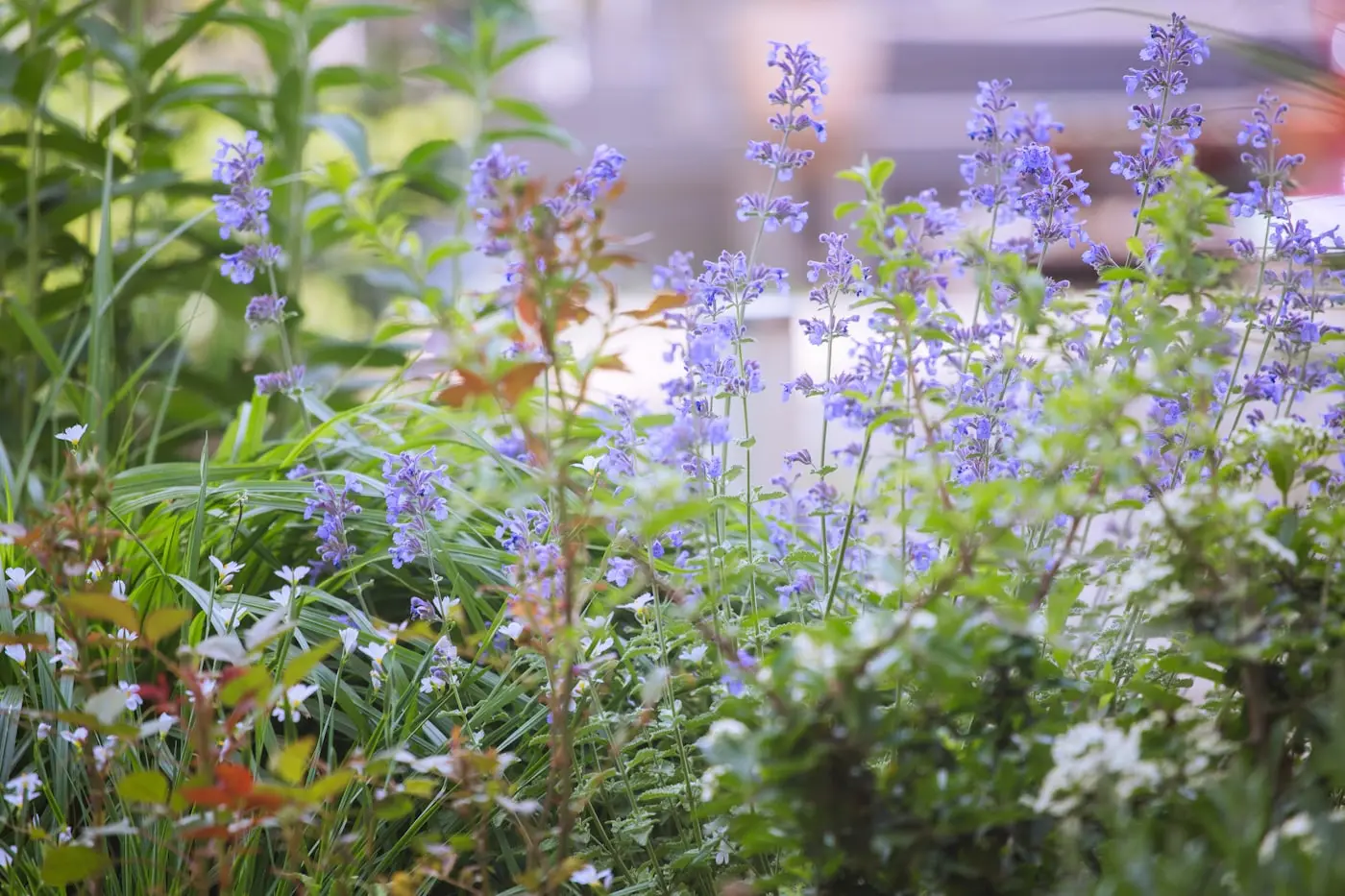
Tadcaster's limestone soil is particularly well-suited to classic mixed planting schemes built around roses, hardy perennials, and structural shrubs. This style - sometimes called the English mixed border - works brilliantly in this setting because the key plants all genuinely thrive in the conditions. A designer can create a border scheme that peaks in June with roses and alliums, carries colour through July and August with salvias, catmint, echinacea, and penstemon, and finishes with grasses and seed heads into autumn. Well-chosen, this is not high-maintenance planting - it needs cutting back once a year and benefits from annual mulch, but otherwise largely looks after itself.
Kitchen and productive garden areas
The Wharfe valley has a gentle, productive climate - sheltered from the north, south-facing aspects warm early, and the limestone soil drains well. Kitchen gardens on limestone soil grow most vegetables readily, and the quick spring warm-up means an earlier start than clay gardens. Raised beds on Tadcaster plots are often less about improving drainage (not usually needed) and more about organisation and access. A well-designed kitchen garden area with raised beds, soft fruit, an espalier tree or two against a wall, and a small greenhouse is a popular and practical addition to larger plots.
Formal and structured garden schemes
Tadcaster's established suburban character and some of its period properties suit formal garden design well. Box edging, yew hedges, pleached limes or hornbeam, and clipped topiary all work on limestone soil. Yew in particular performs excellently - it is one of the few topiary plants that actively prefers alkaline conditions, and a Tadcaster garden with established yew structure is a long-term investment in a garden that looks distinguished in all seasons. Box has suffered from box blight in recent years, but alternatives including Ilex crenata (Japanese holly) and Pittosporum tobira perform similarly on limestone soil.
Plants that perform on Tadcaster's magnesian limestone
- Roses: Shrub roses (rugosas, hybrid musks), English roses (David Austin varieties), climbing roses on walls and structures, floribundas for mass planting. The limestone soil gives roses the drainage and mineral content they prefer.
- Hardy perennials: Hardy geraniums (Rozanne, Patricia, Orion), salvia (Caradonna, May Night, Amistad), catmint (Six Hills Giant), alliums for late spring, echinacea, penstemon, and peonies (which love limestone).
- Lavender and Mediterranean sub-shrubs: Lavender Hidcote and Munstead, rosemary (Tuscan Blue), thyme, sage, and Cistus for sheltered sunny spots.
- Structural plants: Yew for hedging and topiary, beech for boundary hedges, box or Ilex crenata for low edging, viburnum for winter interest.
- Grasses: Stipa tenuissima for movement in sunny spots, Calamagrostis for upright structure, Festuca glauca for dry edges.
See the garden maintenance service for ongoing care once your planting is established.
Cost guide for Tadcaster garden design
| Service | Typical cost | What it includes |
|---|---|---|
| Initial consultation | Free to £75-150 | Site visit, brief discussion, outline proposal. |
| Planting plan only | £350-900 | Scaled scheme, plant list, spacings. You implement. |
| Full design with project management | £900-3,500+ | Design, contractor coordination, planting oversight. |
| Hard landscaping (patio/terrace) | £2,500-8,000+ | Preparation, natural stone or porcelain paving, edging. |
| Full garden makeover (50-100 sqm) | £6,000-20,000+ | Clearance, hard landscaping, planting, establishment. |
| Kitchen garden setup | £500-1,500 | 2-4 raised beds, soft fruit, espalier tree planting. |
| Lawn renovation | £400-1,200 | Scarification, aeration, overseeding, feed. |
For a full breakdown of costs by project type, see our gardening cost guide.
Process: what to expect from a Tadcaster garden designer
- Initial brief. You describe your garden, your budget, how you use the space and what you want from it. Tadcaster gardens often have significant existing structure worth noting - mature trees, established hedging, original features worth keeping.
- Site visit. The designer assesses soil depth, drainage, aspect, existing plants worth keeping, and any structural issues. Tadcaster visits are typically quick on drainage - the limestone handles that - and focus more on light, scale and the desired style.
- Proposal and costings. You receive a scaled proposal with a plant list, quantities, spacings, and indicative costs for design and build.
- Phasing for larger plots. Larger Tadcaster gardens are often phased over one to two years: hard landscaping and structural planting first, then softer planting fill as the structure establishes.
- Installation and establishment. The designer sources plants, oversees planting, and advises on first-season care. Mulching matters even on limestone soil - it builds organic content and helps moisture retention through summer.
Frequently asked questions about garden design in Tadcaster
What soil does my Tadcaster garden have?
Most Tadcaster LS24 gardens sit on magnesian limestone - alkaline (pH 7.4-8.0), free-draining, and mineral-rich. It is one of the best soils in Yorkshire for roses, lavender, salvias, and many classic garden plants. Acid-lovers like rhododendrons will not thrive. Depth is typically 30-50cm before limestone rock.
How much does garden design cost in Tadcaster?
A planting plan typically costs £350-900. Full design with project management runs £900-3,500+. Full builds for mid-to-large Tadcaster gardens run £6,000-20,000+. Designers quote directly. See our Yorkshire garden designer cost guide for typical ranges by project type.
What plants work well in Tadcaster's limestone soil?
Roses perform exceptionally well on Tadcaster's magnesian limestone. Lavender, catmint, salvia, alliums, hardy geraniums, and peonies are all excellent choices. For structure, yew is ideal. Avoid acid-loving plants - rhododendrons, azaleas, camellias will not establish on limestone soil.
Does Tadcaster's location between Leeds and York affect garden design?
The commuter location brings homeowners who expect quality outdoor spaces and have exposure to design ideas from two cities. The Wharfe valley setting and open aspect on many plots means garden designs that engage with the landscape rather than closing it out tend to work particularly well here.
Related services
Once your design is planted, regular garden maintenance keeps it in shape through the season. For overgrown plots that need clearing first, see our garden clearance service. For boundary hedging as part of your design, see hedge trimming in North Yorkshire.
Related: find a gardener in Tadcaster
Areas near Tadcaster we also cover
We cover garden design across the wider Wharfe valley area. For Boston Spa and Wetherby to the north, see garden design in Wetherby. For Selby to the south-east, see Selby garden design. For the full service overview, see the garden design service page.