What garden design looks like in Thirsk
Thirsk is James Herriot country, a classic North Yorkshire market town set in the fertile Vale of Mowbray with the Hambleton Hills rising to the east and the Pennine fringe to the west. The town has one of the best growing soils in North Yorkshire: fertile loam overlying Jurassic limestone, free-draining enough to work early in spring, with good moisture retention through summer. This is a different proposition entirely from the thin limestone soils of the moors edge or the heavy clay of the Vale of York, and the design choices reflect that.
The Georgian character of Castlegate, Millgate and the streets around the Market Place means Thirsk has a concentration of period town properties with enclosed walled or hedged gardens. These are the kinds of gardens where formal structure works well: clipped hedging, stone paths, trained fruit on period brick or stone, traditional herbaceous borders. The soil fertility makes it easy to grow well here, which means the design challenge is about restraint and structure as much as plant selection.
The surrounding villages (Sowerby, Topcliffe, Dalton, Carlton Miniott, Sandhutton) include farmhouses and rural cottages with larger plots where a more naturalistic or productive approach makes sense. Good agricultural land surrounds most of these properties, and kitchen gardens, fruit cages and productive growing areas are popular choices where the plot allows.
Formal walled gardens for period properties
Period townhouse gardens in central Thirsk often have enclosed rear gardens with stone or brick boundary walls. The design approach for these spaces leans toward formal structure: box or yew hedging (currently favoured species given box blight pressure), clipped topiary, stone or gravel paths, formal planting beds with seasonal interest. The enclosed aspect of these gardens creates a sheltered microclimate that allows some plants slightly tender for North Yorkshire to survive in a sheltered corner.
A garden designer working with a period Thirsk property will typically work to preserve and enhance existing structural elements: mature hedging, established climbing roses on walls, period stone paths and steps. The goal is a design that fits the character of the house rather than imposing a contrasting contemporary style, though contemporary gravel gardens and prairie planting can work well in the right property if the brief calls for it.
Productive kitchen gardens in good soil
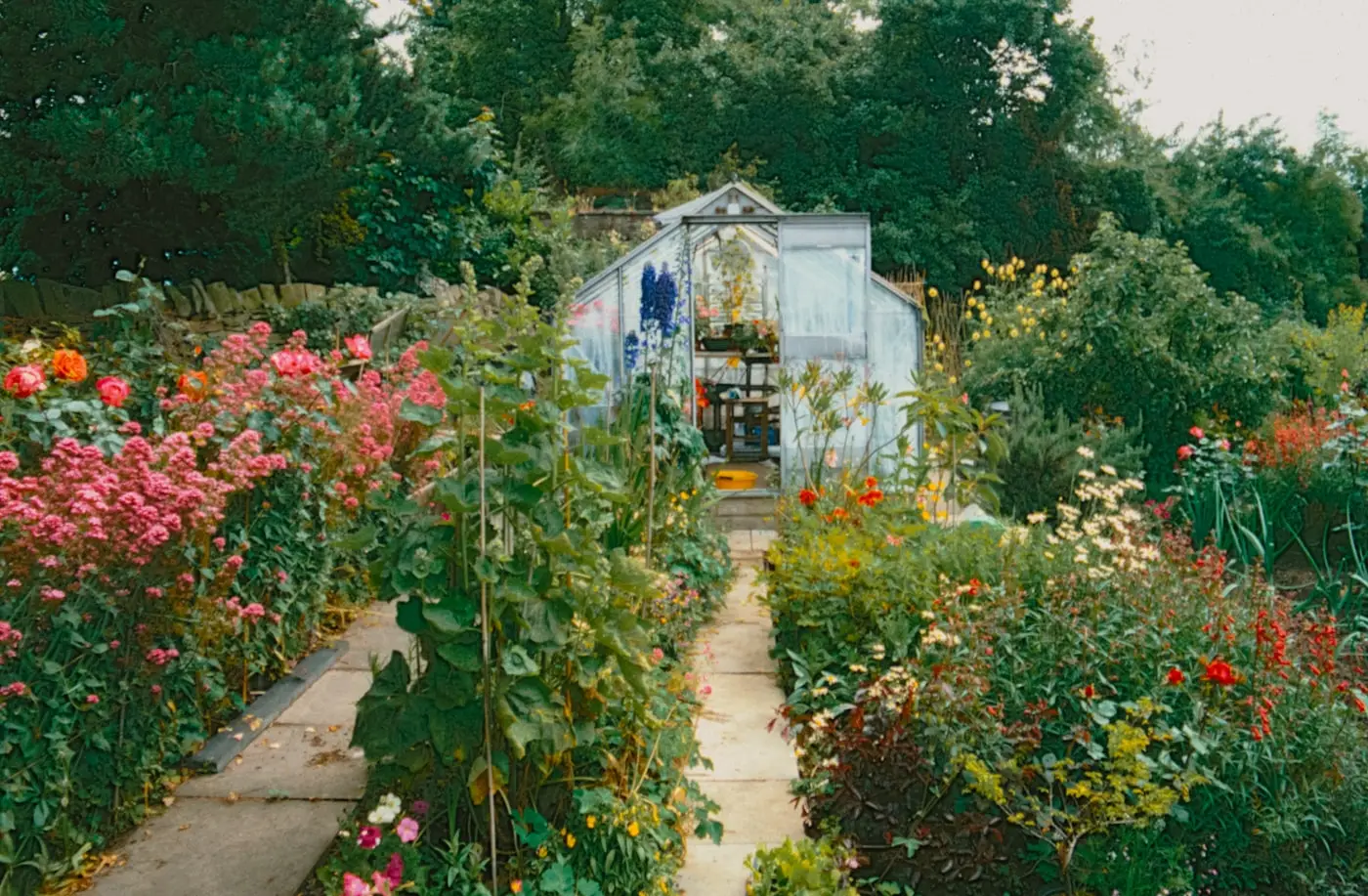
The Vale of Mowbray loam is genuinely productive for vegetables, and the longer growing season compared to Pennine or moors-edge locations (last frosts typically finishing early April in Thirsk) makes it easier to grow a full range of crops from seed. Kitchen gardens are a popular design project in Thirsk: raised beds with good paths between, a compost area, soft fruit in a cage, a cold frame or greenhouse, and annual beds for vegetables.
A productive garden design in YO7 can be highly aesthetic. The traditional English kitchen garden, with its box-edged beds, espalier fruit on brick walls, standard gooseberries and neat gravel paths, is one of the best-looking garden styles as well as the most useful. Designers who specialise in productive gardens will create a layout that maximises yield while maintaining visual structure through winter when the annual beds are empty.
Rose gardens and the limestone-loam advantage
Roses perform exceptionally well in Thirsk's slightly alkaline limestone loam. The pH of 6.5-7.5 sits exactly in the sweet spot for roses, and the free-draining but moisture-retentive soil means they establish quickly and flower well without the waterlogging problems that affect heavier clay soils. Hybrid teas, floribundas, shrub roses, old garden roses and climbing roses are all reliable here. A rose garden or substantial rose border in Thirsk is one of the most achievable and impressive design choices available in this location.
Companion planting with salvias, catmint, alliums, hardy geraniums and lavender around rose beds is both aesthetically strong and practically useful: the companion plants suppress weeds, attract beneficial insects, and extend the season when the roses are between flushes.
Cost ranges for Thirsk garden design
Garden design pricing depends on the scope of work and whether you want design only or full project management. These are the typical ranges for YO7:
| Service |
Cost range |
| Planting plan only |
£300-800 |
| Planting plan + implementation |
£600-1,500 |
| Full design and project management |
£800-3,000+ |
| Kitchen garden / raised-bed setup |
£400-9,000 |
| Rose border design and planting |
£500-2,500 |
| Full garden makeover (50-100 sqm) |
£5,000-15,000+ |
Hard landscaping (stone paving, sleeper edging, formal hedging installation) is quoted separately. For more detail on what drives the overall cost, see what a garden makeover costs.
Start your free Thirsk garden estimate
Tell us what you want and we put your enquiry in front of local designers who quote directly. No call centre fees on your side.
Get a design estimate
The full local guide
Plants that work well in Vale of Mowbray gardens
The fertile limestone loam around Thirsk gives you more choice than almost any other soil type in North Yorkshire. The main constraint is that strong acid-lovers (rhododendrons, camellias, pieris, blueberries) need ericaceous compost in raised beds rather than planting directly in the ground. Everything else has good prospects.
Roses are the outstanding performer here: hybrid teas, shrub roses, old garden roses, climbers and ramblers all establish quickly and flower prolifically in the limestone loam. Clematis, wisteria, delphiniums, peonies, and traditional herbaceous border plants are all reliable. Vegetables are productive without heavy additional feeding: the natural fertility of the loam supports a full kitchen garden without expensive soil improvement.
For structure and winter interest, formal hedging plants (yew, hornbeam, beech) are reliable in this soil and grow at a good pace in the Vale of Mowbray conditions. Topiary is achievable given the moderate climate and good soil: box alternatives (Ilex crenata, Lonicera nitida, Euonymus) are now the preferred choice given box blight, but they respond well to clipping in this region.
Scabious, achillea, verbascum, and the native chalk and limestone flora give a sense of the naturalistic potential: wildflower meadow areas work well on the limestone loam and establish readily without specialist seed bed preparation that chalk gardens in southern England often require.
Common garden design projects in Thirsk
Period townhouse garden redesigns are common in central Thirsk. These typically involve clearing decades of accumulated planting, assessing what is worth keeping (mature climbing roses, established yew hedging, period stone paths), and creating a new planting scheme with better structure and seasonal interest. Formal hedging, stone paving, climbing plants on period walls, and a simplified herbaceous border with reliable plants are the usual outcome.
Kitchen garden installations are popular in both town and rural properties. The Vale of Mowbray soil is productive enough that a well-designed kitchen garden genuinely pays its way in fresh vegetables and soft fruit. A designer who specialises in productive gardens will create a layout that is both functional and good-looking, with year-round structure even in winter when the beds are empty.
New suburban plots on the estates around Topcliffe Road and the northern edges of Thirsk need a different approach: starting from builder's soil with little topsoil, requiring soil improvement and a five-year planting plan rather than an immediately finished garden. A good designer will be honest about what is achievable in year one versus year five on a new-build plot.
Process for a Thirsk garden designer
- Initial brief. Tell us what you want from the garden, your approximate budget, and the character of the property. A Georgian townhouse garden and a rural farmhouse require different approaches even in the same postcode.
- Site visit and assessment. The designer visits, assesses your soil, aspect, existing planting and structural elements. A soil pH test is often worth doing in Thirsk to confirm the limestone influence before specifying plants.
- Proposal and design. You receive a scaled design with planting plan, materials specification and cost estimate. For kitchen gardens, the design includes a planting schedule showing what to sow when.
- Phasing and coordination. For full-build projects, the designer coordinates hard landscaping, soil preparation, and planting in sequence. Soil improvement should happen before hard paths are laid in enclosed beds.
- Installation and establishment. Planting is best done in autumn or early spring. The Vale of Mowbray soil warms quickly and establishment is generally straightforward compared to heavier clay soils further south.
A planting plan can be produced within one to two weeks of the site visit. A full redesign with installation typically takes four to twelve weeks depending on scale. Starting the design process in autumn means planting can happen in early spring, catching the best establishment window in YO7.
Designers in the Thirsk area
We connect homeowners across YO7 with local designers who quote directly. They set their own prices and there are no call centre fees on the customer side. The free initial estimate gives you a sense of what your project involves before you commit to the full design. Whether you want a planting plan for a period townhouse, a full kitchen garden installation, or a rose border on your Vale of Mowbray soil, we put your enquiry in front of someone who knows the area and understands what this soil can do.
Frequently asked questions
What soil do Thirsk gardens have?
Thirsk sits in the Vale of Mowbray on fertile loam overlying Jurassic limestone. It is one of the better growing soils in North Yorkshire: free-draining enough to work early in spring, with good moisture retention through summer, and a pH around 6.5-7.5 that suits a wide range of plants. It is notably less clay-heavy than the Vale of York to the south and less thin than the moors-edge soils to the east. Roses do particularly well on the slight alkaline influence.
How much does garden design cost near Thirsk?
A planting plan only service costs £300-800. Planting plan with implementation runs £600-1,500. Full design with project management typically costs £800-3,000+. A full garden makeover on a 50-100 sqm plot runs £5,000-15,000+. Hard landscaping for stone paving, sleeper beds or formal hedging is quoted separately. Designers quote directly based on your specific brief and site conditions.
Can a designer help with a productive kitchen garden in Thirsk?
Yes. Thirsk's fertile Vale of Mowbray loam is exceptionally productive for vegetables. A kitchen garden design typically involves raised beds or a traditional layout with paths, compost area, soft fruit, annual vegetable beds and a greenhouse or cold frame section. A good designer will create a layout that maximises yield, minimises maintenance, and looks as good as a decorative border. Budget from £400-900 for a basic raised-bed setup to £3,000-8,000 for a full kitchen garden with fruit cage.
What plants grow well in Thirsk's limestone loam?
Thirsk's limestone-influenced loam suits a wide range of plants. Roses perform exceptionally well on the slightly alkaline pH, especially shrub roses, hybrid teas and climbing roses. Clematis, wisteria, delphiniums, peonies, lavender, salvias, achillea, scabious, and traditional herbaceous border plants all thrive. Vegetables are productive in the fertile loam. The main plants to avoid are strong acid-lovers: rhododendrons, camellias and pieris all need raised beds with ericaceous compost rather than planting in open ground.
Areas around Thirsk we also cover
We also match homeowners with designers in Bedale, Masham, and surrounding villages including Topcliffe, Dalton, Carlton Miniott, Sandhutton, and Borrowby on the Hambleton fringe.
For general garden maintenance, lawn care, and year-round gardening services in Thirsk, visit our local gardeners in Thirsk page.