Climbing Plants for Fences in Yorkshire: What Grows Well (2026)
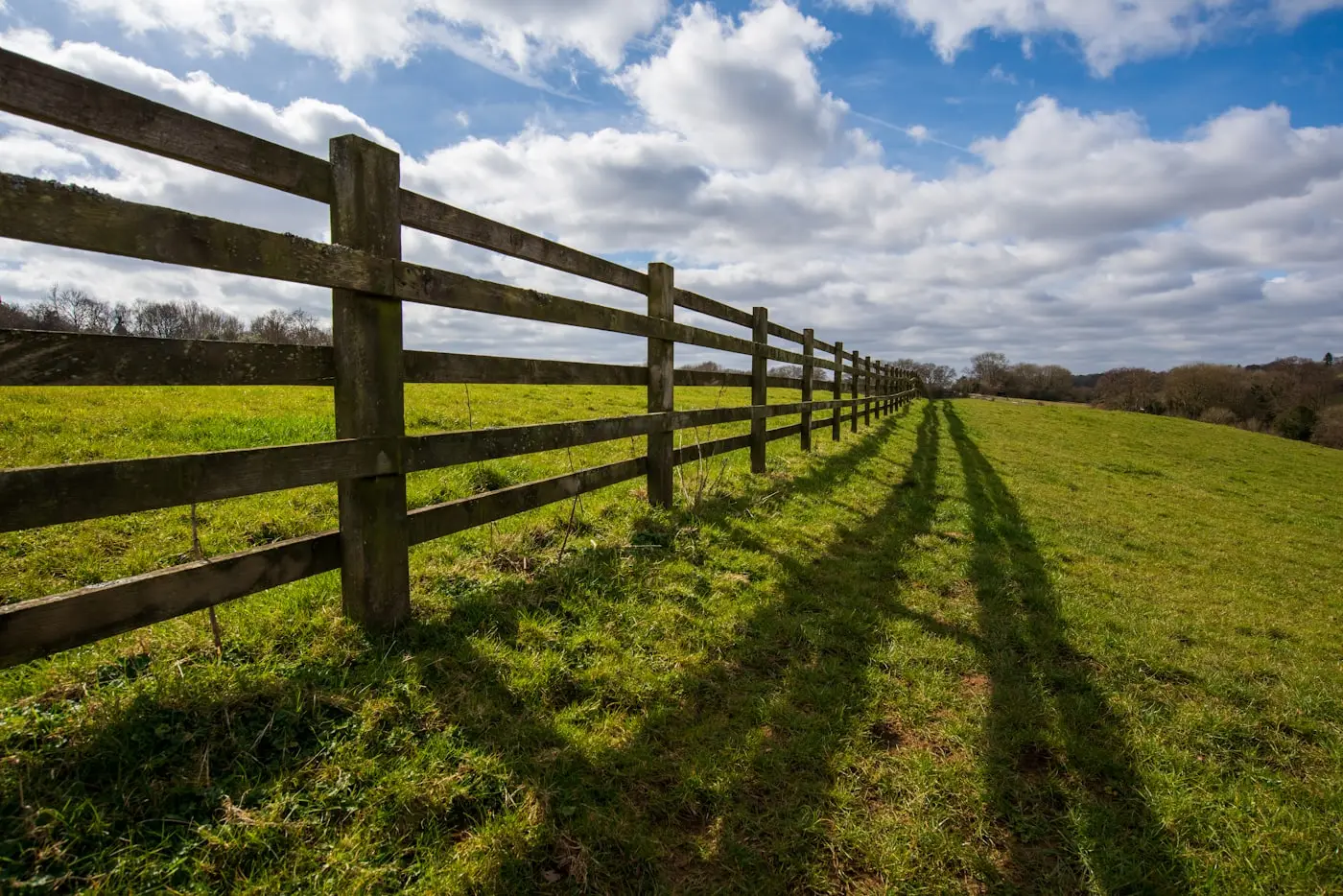
Yorkshire gardens cover a wide range of conditions: from the sheltered, relatively mild vale gardens around York and the Humber to the exposed moorland edges of the Dales and Moors, and the urban heat-island effects of central Leeds and Sheffield. The right climbing plant for a fence in Harrogate is not always the right plant for a fence in Holmfirth or Whitby.
This guide covers which climbers work reliably in Yorkshire conditions, how to prepare the soil, how to fix plants to fences properly, and what to avoid.
Understanding Yorkshire Conditions for Climbers
Before choosing a climbing plant, two questions matter more than any others: which direction does the fence face, and how exposed is the site?
Aspect. A south or south-west facing fence receives the most sun and warmth. A north or north-east facing fence is cool, often damp, and in shade for most or all of the day. East-facing fences can experience cold morning sun after a frost, which can damage tender growth. Most climbing plants specify a preferred aspect on their label - take this seriously in Yorkshire, where a south-facing fence can be significantly warmer than a shaded north-facing one just a few feet away.
Exposure. High winds are a serious factor across upland Yorkshire. A climber that grows well in a sheltered Leeds suburban garden may be torn from its fixings in an exposed Pennine garden. In exposed locations, stick to dense, self-clinging plants or those with small leaves that offer less wind resistance. Wire training systems are more reliable than trellis in windy spots as they create less sail area.
Yorkshire's clay soil is the other major factor. Clay retains moisture well, which suits most climbers, but it is slow to drain in winter and can be compacted and waterlogged in persistently wet periods. Heavy clay also heaves in frost, which can disturb young plants. Improving planting holes with grit and organic matter is worthwhile for woody climbers that you want to establish permanently.
Best Climbing Plants for Yorkshire Fences
Clematis montana
For a sunny or lightly shaded fence in Yorkshire, Clematis montana is one of the most reliable choices. It is vigorous (capable of 8-10 metres once mature), flowers prolifically in May with masses of small white or pink flowers, and is fully hardy in even the coldest Yorkshire winters. It establishes quickly from a 2-litre pot and will cover a 1.8-metre fence panel within 2-3 years.
Montana clematis needs very little pruning - just a tidy after flowering in June to keep it from overwhelming its space. It is less suitable for a small fence where you need precise control, as it will send long stems in all directions. For a large boundary fence where coverage is the goal, it is hard to beat.
For a south-facing fence where you want large, showy flowers in summer rather than May, consider the large-flowered clematis groups (Group 2 such as 'Nelly Moser', or Group 3 such as Jackmanii). These need annual pruning but flower over a longer period through summer.
Honeysuckle
Common honeysuckle (Lonicera periclymenum) is native to Britain and one of the most versatile climbers for Yorkshire gardens. It tolerates partial shade and clay soil, produces intensely scented flowers from June to August, and supports bumblebees, hawk-moths, and other pollinators. The berries in autumn attract birds.
Honeysuckle twines rather than self-clings, so it needs wire or trellis to wrap around. Growth is moderate - expect 2-3 metres per year once established. 'Belgica' (early Dutch honeysuckle) and 'Serotina' (late Dutch) flower at slightly different times and can be planted together for a longer season.
In very exposed or northerly Yorkshire sites, honeysuckle may be killed back each winter and regenerate from the base in spring. This is not fatal but means it never builds the woody structure for serious fence coverage. In this situation, stick to native species that handle Yorkshire winters robustly.
Climbing and rambling roses
Climbing roses on fences are a fixture of Yorkshire cottage gardens. Rugosa roses and their relatives are particularly suited to Yorkshire conditions: they handle poor soil, tolerate cold, and are relatively disease-resistant compared to hybrid tea and floribunda climbers. Rosa 'New Dawn' is one of the most widely planted climbers in the UK for good reason: reliable, repeat-flowering, fragrant, and vigorous enough to cover a substantial fence in a few years.
Rambling roses (once-flowering, summer only) include older varieties like 'Albertine' and 'Francis E. Lester' that are specifically well-suited to northern gardens. For a south or west-facing fence in a sheltered Yorkshire location, a climbing rose planted against post-and-rail fencing with wire support can be spectacular in June and July.
Roses need tying in regularly as they grow - they do not self-cling or twine. Horizontal training of stems (tying them sideways along wires rather than letting them grow straight up) dramatically increases flowering, as horizontal stems produce more flowering laterals. Our rose garden guide for Yorkshire covers this in more detail.
Pyracantha
Pyracantha (firethorn) is not technically a climber but is commonly trained flat against fences as an espalier or fan. It is one of the best choices for a secure, evergreen covering that also provides berries for birds in autumn and winter. The thorns make it an effective deterrent against intrusion along boundary fences.
Pyracantha is extremely tolerant of Yorkshire conditions: it handles clay soil, urban pollution, exposed sites, and all but the most extreme north-facing aspects. 'Orange Glow' and 'Saphyr Orange' are resistant to scab and fireblight (disease issues that can affect some varieties). Train against horizontal wires with the main stems tied in flat and prune new growth back in spring and summer to maintain the flat form.
Ivy for north-facing and shaded fences
For genuinely shaded or north-facing fences, ivy (Hedera helix in its various forms) is the most reliable choice. It self-clings to rough timber, grows in deep shade, and provides year-round cover. Variegated forms ('Goldheart', 'Glacier') add visual interest in situations where the wall or fence itself would otherwise be gloomy.
The caveat to note is that ivy on a timber fence will eventually need management - it can get very heavy and pull fence panels. Plan to cut it back every few years to keep the weight manageable. See our guide to ivy removal in Yorkshire for context on the longer-term implications.
Climbing hydrangea
Climbing hydrangea (Hydrangea anomala subsp. petiolaris) is one of the best choices for a shaded fence or north-facing aspect where something with flowers (rather than purely foliage) is wanted. It is slow to establish - sometimes three years of patience before it really moves - but eventually covers large areas with good white lacecap flowers in June. It is completely hardy in all Yorkshire conditions.
Virginia creeper
Virginia creeper (Parthenocissus quinquefolia) and its relative Boston ivy (Parthenocissus tricuspidata) are grown primarily for the spectacular autumn colour they produce - brilliant scarlet and crimson across the full fence coverage. Self-clinging on rough timber, tolerant of shade and most Yorkshire soils, and vigorous once established. Note that like ivy, virginia creeper's weight needs monitoring as stems become woody.
Evergreen vs Deciduous Climbers
Evergreen climbers (ivy, pyracantha) give year-round cover. Deciduous climbers (most clematis, roses, honeysuckle, virginia creeper, wisteria) are bare in winter. For a boundary fence where privacy or screening is the main goal, an evergreen or mix of evergreen and deciduous is usually more satisfying. For flower and scent, deciduous options are generally more rewarding.
In Yorkshire, deciduous climbers also have a structural maintenance advantage: in winter when the stems are bare, you can see the full structure of wires, ties, and support clearly, making annual maintenance easier.
Soil Preparation for Climbers
Most fences are built with posts sunk in concrete, and the soil immediately around the post base can be chemically hostile (alkaline from concrete) and compacted from installation traffic. Dig the planting hole at least 45cm from the post, and 45cm deep. On Yorkshire clay, add one third by volume of horticultural grit to the backfill to improve drainage around the root zone. Work in a bucket of garden compost or well-rotted manure to improve soil structure.
Most climbers benefit from a base dressing of slow-release fertiliser (such as blood, fish, and bone) at planting and again in early April each year. Roses specifically benefit from a dedicated rose fertiliser in April and after the first flowering flush in June.
The soil directly at the base of a fence panel is often extremely dry - the panel itself acts as a rain shadow and the overhanging fence cap sheds water away from the base. Water newly planted climbers thoroughly every 2-3 days for the first 4-6 weeks after planting, regardless of rainfall. Mulching the base to 7-10cm depth helps retain moisture through the first summer.
Fixing Climbers to Fences
Horizontal training wires are the most practical and durable fixing method for most climbers. Galvanised wire (1.6-2mm) attached with vine eyes at each post, strung at 30-40cm vertical spacing, gives you a framework to tie stems to as the plant grows. Stainless steel wire and fixings are worth the extra cost as they do not rust and stain the fence.
Plastic-coated trellis panels are an alternative but have disadvantages in Yorkshire's wind conditions: they create significant sail area that can pull fence panels loose in storms, and the plastic degrades over 10-15 years requiring replacement. Wire systems, once installed, are effectively permanent.
Self-clinging plants (ivy, climbing hydrangea, virginia creeper) do not need a support structure at all once they have established their adhesive attachment to rough timber. For the first year, you may need to lean stems toward the fence and secure with temporary staples or clips until the plant makes its own hold.
What to Avoid
Wisteria on fences. Wisteria is best suited to a house wall with masonry fixings or a substantial pergola structure. Its woody stems become enormously heavy and powerful - vigorous plants can deform metal structures, let alone timber fence panels. It also needs specific annual pruning (twice: in August and January) that many homeowners do not carry out, leading to very untidy plants with reduced flowering.
Russian vine (Fallopia baldschuanica). Sometimes sold as "mile-a-minute vine" - an accurate description. It is so vigorous that it regularly overwhelms fences, neighbouring trees, and anything else in its path. It is very difficult to eradicate once established and is not recommended for domestic gardens of normal size.
Kiwi vine (Actinidia deliciosa) in exposed sites. Kiwi vine can work on a sheltered south-facing fence in the warmer parts of Yorkshire (the Humber corridor, sheltered Leeds and Sheffield suburbs) but is marginal in exposed or northerly sites. The flowers and fruit need warmth that most Yorkshire gardens cannot reliably provide.
Pruning Climbing Plants on Fences
Every climbing plant has its own pruning requirements, but some general principles apply to fence-trained climbers in Yorkshire:
- Tie in new growth regularly through the growing season rather than leaving it for an annual session - stems are easier to train when they are young and flexible
- Remove dead and damaged wood in early spring before growth starts, when you can see the full structure clearly
- For plants that flower on old wood (clematis montana, most rambling roses), prune after flowering, not before
- For plants that flower on new wood (large-flowered clematis Group 3, repeat-flowering climbing roses), prune in late winter or early spring
- Any plant growing near gutters, windows, or roof lines needs checking and cutting back annually - growth toward these structures causes damage quickly
Our borders and planting service includes advice on choosing and establishing climbing plants for Yorkshire conditions, as well as ongoing pruning and training as part of a garden maintenance programme.
Frequently Asked Questions
What climbing plants grow well in Yorkshire?
Reliable choices for Yorkshire fences include Clematis montana (sunny or lightly shaded aspects), climbing and rambling roses (particularly rugosas and old varieties), honeysuckle, pyracantha, and ivy for shaded or north-facing aspects. Climbing hydrangea and virginia creeper also perform well in shadier Yorkshire conditions.
What climbing plants suit a north-facing fence in Yorkshire?
The most reliable plants for north-facing Yorkshire fences are ivy (Hedera helix), climbing hydrangea (Hydrangea anomala petiolaris), winter jasmine (Jasminum nudiflorum), and virginia creeper. These all tolerate shade and the cool, damp conditions typical of north-facing aspects.
How do you fix climbing plants to a fence in Yorkshire?
The most durable method is horizontal galvanised training wires fixed with vine eyes at fence posts, spaced 30-40cm apart vertically. Tie stems to wires with soft garden twine as they grow. Wire systems are more wind-resistant than trellis panels and more durable long-term.
How far from a fence should I plant a climber?
Plant 30-45cm from the fence base to avoid the dry rain-shadow zone directly against the panel and the alkaline concrete around post bases. Lean the plant toward the fence and train stems to the support from the outset.
Will wisteria damage my fence in Yorkshire?
Yes. Wisteria's woody stems become very heavy and powerful and will deform or pull apart standard timber fence panels. Grow wisteria on a house wall with masonry fixings or a purpose-built pergola with substantial uprights - not on a garden fence.
What is the fastest-growing climbing plant for a fence in Yorkshire?
Clematis montana is the fastest reliable climber for Yorkshire conditions, covering a 1.8-metre fence in 2-3 years. Russian vine is faster but is too vigorous to be practical in a domestic garden and is best avoided.
Need help planting climbers in your Yorkshire garden?
60-second assessment. If a local gardener takes your enquiry, they call you with a price.
Start the assessment