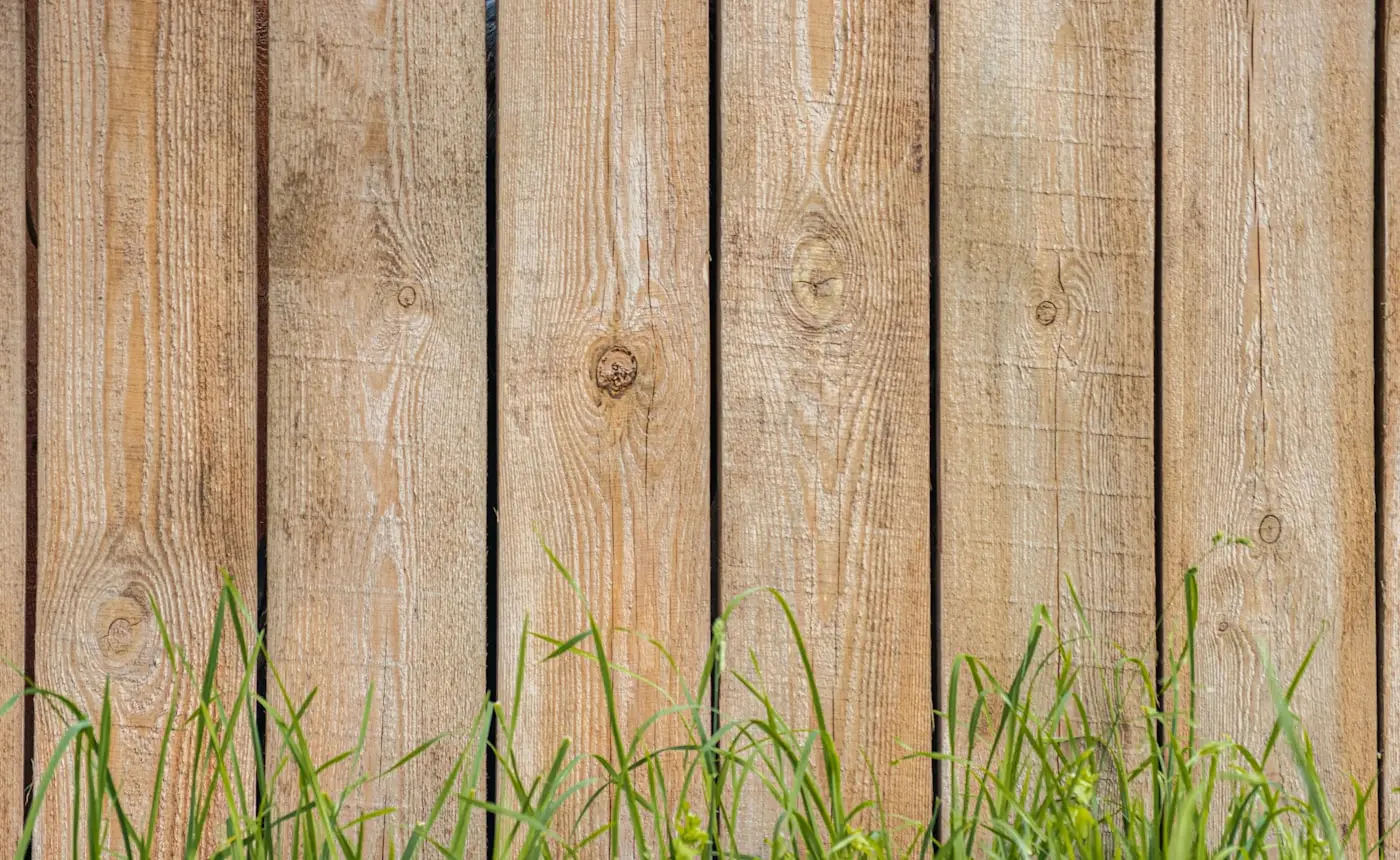
Garden fencing options are wide-ranging across Yorkshire, with installers covering Wakefield, Barnsley and York.
Garden fences in Yorkshire take a beating that fences in other parts of England do not. The prevailing westerly winds rolling off the Pennines bring persistent moisture, regular gale-force gusts, and the kind of sustained atmospheric damp that quietly rots untreated timber from the ground up. Add clay soils that shift and heave with seasonal moisture changes, and freeze-thaw cycles that crack concrete posts and open up timber joints, and you have conditions that are genuinely hard on fencing. A fence that would last 20 years in East Anglia might need replacing in 12 in an exposed Bradford garden.
This guide covers what garden fencing costs in Yorkshire in 2026, which types of fence hold up best in Yorkshire conditions, the party fence question that causes more neighbour disputes than almost anything else, and what to look out for when getting quotes for repair or replacement work.
Why Yorkshire Fences Fail
Understanding the failure modes helps you make better decisions about repair vs replacement and what to specify when installing new fencing.
Wind damage
The Pennine edge communities - Keighley, Hebden Bridge, Holmfirth, Penistone, parts of Barnsley, Heckmondwike, and the exposed hillsides around Sheffield - see regular gusts above 60mph in winter, and exposed gardens have recorded gusts above 80mph. Standard lap panel fencing is essentially a flat board acting as a sail. In these conditions, it is not a matter of if a panel blows out but when.
The physics are simple: a solid 1.8m x 1.8m lap panel presents roughly 3.2m2 of surface area to the wind. At 60mph, the wind load on that panel is considerable. If the panel is held by cheap staple fixings, or if the post it is fixed to has a rotten base, the panel goes. A closeboard fence - where each feather-edge board is individually fixed with overlapping rows - is structurally far superior because there is no large flat surface for the wind to catch. The load is distributed across many small boards and many fixing points.
Post base rot
The ground-level junction of a timber post is the most vulnerable point in any fence. Soil, moisture, and micro-organisms work on the timber at the surface of the ground, where conditions alternate between wet and dry, frozen and thawed. Even pressure-treated timber (UC3 grade, which is the minimum specification for in-ground use) eventually succumbs to this process. Cheap, inadequately treated posts can rot at the base in as little as 5-8 years in Yorkshire's damp climate. Good quality UC4-treated (ground contact) posts last considerably longer - 15-20 years is achievable.
The tell-tale sign of post base rot is a fence that leans or wobbles at the base without any obvious above-ground damage to the post itself. The post looks fine from the top three-quarters, but the bottom 200-300mm has softened. This is the failure mode that concrete spur repairs address - see below.
Freeze-thaw cycles and concrete posts
Concrete posts were widely installed from the 1970s onwards, marketed as the permanent solution to post rot. They do not rot. But they are not maintenance-free. Concrete expands and contracts with temperature, and hairline cracks - common in older slotted concrete posts - become entry points for water. Water in a crack freezes, expands, and drives the crack wider. Over many cycles, concrete posts crack vertically along the slot, or horizontally at the base. The older generation of slotted concrete posts (used with panel fencing) are now reaching the end of their structural life in many Yorkshire gardens.
Clay soil movement
Yorkshire clay swells when wet and shrinks when dry. This seasonal movement shifts post bases - particularly in drier East Yorkshire summers when clay shrinkage is most pronounced. A post concreted into the ground in moist conditions can work loose over years of clay movement. The result is a fence that leans progressively without the post itself having rotted. Reposting in concrete, using a deeper post hole (600mm minimum for a 1.8m fence, 750mm for exposed sites), addresses this.
Fencing Costs in Yorkshire: 2026 Price Guide
| Job type | Typical cost (Yorkshire, 2026) | Notes |
|---|---|---|
| Single lap panel replacement (supply + fit) | £150-350 | Height and access dependent; includes panel and fixing |
| Single closeboard panel / bay | £200-400 | More labour-intensive than lap panel replacement |
| Concrete spur repair (per post) | £80-150 | Concrete spur bolted alongside rotten post base |
| New post in concrete (per post, supply + labour) | £60-120 | Timber post, concrete, labour; assumes old post removed |
| Closeboard fencing, new installation | £100-180 per linear metre | Posts, gravel boards, feather-edge boards, labour |
| Lap panel fencing, new installation | £70-130 per linear metre | Posts, panels, arris rails, labour |
| Full strip-out and replacement (10m run, closeboard) | £1,000-1,800 | Remove old fence, dispose, install new; access dependent |
| Steel or composite fencing (per linear metre, installed) | £200-450+ | Premium material; minimal ongoing maintenance |
These prices are for Yorkshire in 2026. Labour rates in Yorkshire are typically £25-35 per hour - slightly below the national average - which helps offset the cost of more substantial specification requirements for Yorkshire conditions.
Common Fence Repairs and What They Cost
Panel replacement
Replacing one or two storm-damaged lap fence panels is the most common fence repair job in Yorkshire. A single 1.8m x 1.8m lap panel costs £25-60 in materials from a builders' merchant. Professional supply and fit, including the labour to remove the damaged panel, source and deliver a new one, and fix it correctly, runs at £150-350 per panel. The variation depends on height (1.5m panels vs 1.8m), access (easy rear garden vs narrow passage), and the condition of the arris rails and posts that the panel fixes to.
If the arris rails - the horizontal timber rails that the panel slides into on a lap panel fence - are also rotten, they need replacing too. Add £20-40 per arris rail for supply, plus the labour to fit them. If the posts are rotten, you are into post replacement territory, which is a larger job.
Concrete spur repair
A concrete spur repair is the cost-effective alternative to full post extraction and replacement. When the base of a timber post has rotted but the post above ground is still structurally sound, a concrete spur (a shorter concrete post) is dug in alongside the rotten timber base and bolted to it, effectively transferring the load to the new concrete anchor. The rotten base section does not need to be extracted - a significant saving on labour.
Cost: £80-150 per post including the spur, bolts, concrete, and labour. For a typical garden with three or four posts that need attention, this runs to £240-600 - considerably less than full replacement. The limitation: if the post above ground is also structurally compromised (cracked, badly weathered, or leaning through the full height), a spur repair will not solve the problem and full post replacement is needed.
Full post replacement
Extracting an old post - particularly a concreted-in post - is hard work. The concrete around the base needs to be broken up, the post levered or pulled free, and the hole dug out to a sufficient depth for the new post (minimum 600mm for a 1.8m fence on Yorkshire clay, preferably 750mm on exposed sites or in clay soils prone to movement). A new treated post costs £15-35 depending on size and grade. Labour to extract, repost, and concrete in runs at £60-120 per post depending on difficulty.
The common cheap shortcut - and why it fails
One of the most common complaints we hear about fence repair jobs: the installer replaced the damaged panels but left the old posts in place, or only superficially repaired them. New panels on rotten posts give you another 2-3 years before the next failure. A proper fence repair job addresses the posts first - they are the structural element. If a fence contractor wants to replace panels without assessing the posts, ask them directly why the posts do not need attention. The answer will tell you whether they are cutting corners or have a genuine reason.
Types of Fencing: What Suits Yorkshire
Closeboard (feather-edge board) fencing: the Yorkshire workhorse
Closeboard fencing is the right specification for most Yorkshire gardens, and especially for any exposed or semi-exposed position. Each vertical feather-edge board is individually fixed to arris rails, overlapping the next board by 25-50mm. This means there is no large flat panel for wind to act on, and individual boards can be replaced without disturbing the rest of the fence. The arris rails and posts are the structure; the boards are the cladding.
A properly specified closeboard fence - UC4-treated posts, concrete gravel boards at the base (keeping the timber off wet ground), pressure-treated arris rails and feather-edge boards - will serve a typical Yorkshire garden for 20-25 years with periodic treatment. It costs more to install than lap panel fencing at £100-180 per linear metre vs £70-130 per linear metre, but the lifespan difference more than justifies the premium.
Concrete gravel boards at the base are not optional on Yorkshire clay. They keep the bottom of the fence panels off the permanently damp ground-level zone, extending panel life significantly. Timber gravel boards rot at the base within a few years in Yorkshire's damp - specify concrete.
Lap panel fencing: fine for sheltered positions
Lap panel fencing - the overlapping horizontal boards on a factory panel - is the budget option and the most commonly installed fence in UK gardens. It is not wrong, but it is less suited to Yorkshire's exposed positions than closeboard. The large flat panel surface is vulnerable to wind, the panels are difficult to repair individually (the whole panel comes out or is replaced), and the design allows moisture to sit in the overlapping sections, accelerating rot.
For a sheltered urban back garden in Leeds, Bradford, or Sheffield - where buildings and other gardens provide wind protection - lap panel fencing is a perfectly reasonable choice at £70-130 per linear metre installed. For any garden on a ridge, a hillside, or with exposure to the west, closeboard is a significantly better investment.
Picket and ranch rail fencing
Picket fencing - vertical pointed boards with gaps between them - suits front gardens and cottage-style properties. It provides a boundary marker without full privacy, allows the garden to be seen from the road, and looks appropriate on older semi-rural properties across North Yorkshire, the Dales, and smaller Yorkshire market towns. Paint or stain it regularly (every 2-3 years in Yorkshire's climate) and it lasts well.
Ranch rail fencing - horizontal rails at two or three heights, typical of paddock and rural boundary use - is common in the Yorkshire countryside and larger rural properties. It provides minimal privacy but a clear visible boundary. In genuinely rural settings, it suits the landscape well. It is not appropriate for most suburban garden privacy requirements.
Steel and composite fencing: the long-term investment
Metal railings, powder-coated steel panel systems, and composite (wood-polymer) boards are expensive upfront - £200-450+ per linear metre installed - but they do not rot, do not need staining or preserving, and they do not blow down in Yorkshire wind the way timber lap panels do. For exposed sites where timber fencing has a proven poor performance record, or for homeowners who genuinely want a 25-year maintenance-free solution, the upfront premium may be justified.
Composite fencing boards (made from recycled wood fibre and plastic, typically in a horizontal arrangement on metal posts) are the most common premium choice for domestic gardens. They look good, are available in various colours and timber-effect finishes, and are genuinely low maintenance. They tend to suit more modern garden designs rather than traditional Yorkshire stone and brick properties.
Treatment and Maintenance: Timber Life in Yorkshire
Untreated or poorly treated softwood fencing in Yorkshire will rot within 5-8 years at the ground contact point. This is not hyperbole - it is what consistently happens. Yorkshire's climate combines prolonged moisture with freeze-thaw cycles, and untreated timber absorbs and retains moisture in ways that create ideal conditions for wood-rotting fungi.
The specification that matters most is the treatment standard of the timber at purchase:
- UC1 and UC2: Interior use only. Never appropriate for any exterior application in Yorkshire.
- UC3: Above-ground exterior use. Appropriate for fence panels, arris rails, and any part of the fence that does not contact the ground. The standard for most pressure-treated garden fence panels.
- UC4: Ground contact. The correct specification for fence posts, which are in direct contact with soil and the soil-to-air interface. Many cheaper posts are sold as UC3 - that is inadequate for posts in Yorkshire ground conditions. Specify UC4 for any post that goes into the ground.
Beyond the factory treatment, applying a quality exterior wood preservative stain every 2-3 years to all above-ground timber components significantly extends fence life. In Yorkshire's climate, this is a worthwhile annual maintenance task. Spring (when the wood is dry after winter but before summer UV) is the best time to apply. See our spring garden tidy guide for when to schedule this in the annual maintenance calendar.
The Party Fence Question
Fence disputes between neighbours are among the most common causes of residential friction in Yorkshire, and they are almost always made worse by misunderstanding the legal position. Here is the honest account of how boundary responsibility actually works.
The common myth
The idea that "the fence on the left side of your house looking from the road is your responsibility" is repeated so often that many people believe it is law. It is not. There is no universal rule. Boundary responsibility is a property-specific matter determined by the title deeds.
How to find out who is actually responsible
The title register for your property, available from HM Land Registry for a small fee, includes a plan showing the boundaries. A "T mark" on the boundary line indicates responsibility: a T mark on your side of the line means it is your boundary to maintain; T marks on both sides (forming an H shape) indicates shared responsibility. If there is no T mark, the boundary responsibility may not be defined - in which case the matter is governed by common law principles, which are genuinely complex and not easily summarised.
Before having any argument with a neighbour about who should pay for a fence, spend £3 on HM Land Registry access and look at the actual deeds. This resolves the majority of disputes immediately.
Party wall considerations
The Party Wall Act 1996 applies to party walls between properties but not typically to garden boundary fences. However, if fence work involves digging post holes close to a party wall or the foundations of an adjacent building, the Act may require notification to the neighbouring owner. This is a specific legal area - if in doubt, consult a party wall surveyor before undertaking significant foundation work near a boundary.
Storm Damage and Insurance
Yorkshire sees regular storm damage to garden fencing, particularly in winter. Most standard home contents or buildings policies include cover for storm-damaged fences, but the details vary significantly.
Common policy limitations to check:
- Maximum fence claim limits - often £500-1,000, which may not cover full replacement
- Definition of "storm" - some policies require documented wind speeds above a threshold
- Pre-existing damage exclusions - if the fence was already in poor condition, a storm claim may be reduced or refused
- Single event vs gradual deterioration - wind damage that removes a panel overnight is coverable; slow lean caused by post rot is not
If you have storm damage, take photographs immediately before any temporary repairs, note the date and time, and check a weather recording service for the wind speed at your location that day. This documentation supports any claim. Contact your insurer before starting repair work, as most policies require you to do so for claims above a certain value.
Finding a Reliable Fence Installer in Yorkshire
Fencing is a trade where quality varies enormously. Three things to check when getting quotes:
- Are they removing the old posts properly? The most common shortcut is to leave old rotten posts in the ground and just replace the panels. This is a cosmetic repair that will fail within a few years. Any serious fence installer removes old posts completely and installs new posts properly set in concrete.
- What timber treatment standard are they specifying? Ask specifically: "Are the posts UC4 treated for ground contact?" If they cannot answer this or do not know what UC3/UC4 means, treat that as a red flag.
- Are they specifying concrete gravel boards? In Yorkshire's climate, timber gravel boards at the base of the fence are inadequate. Concrete gravel boards at the base of the fence keep the panels off wet ground. A quote that does not include them is either assuming you already have them or cutting corners.
We can help with the garden work around fence installation and repair: garden clearance to remove overgrowth and old fence debris before installers arrive, border tidying and replanting after a fence is replaced, and the kind of ongoing garden maintenance that keeps the space looking good once the new fence is in. See our garden makeover cost guide for fencing as part of a wider garden improvement project.
Frequently Asked Questions
How long should a garden fence last in Yorkshire?
Closeboard fencing on UC4-treated posts with concrete gravel boards: 20-25 years with 2-3 yearly preservative treatment. Lap panel fencing on well-specified posts: 10-15 years. Budget lap panels on inadequate posts in exposed positions: 5-10 years. Steel or composite fencing: 25-40 years, minimal maintenance. Yorkshire's Pennine exposure and damp climate are harder on timber than most parts of England - specify properly and maintain regularly to reach the upper end of any lifespan estimate.
Who is responsible for the garden fence in Yorkshire?
Whoever the title deeds say is responsible - there is no universal rule. Check HM Land Registry for the title plan: the T mark on the boundary line indicates the responsible party. The common belief that "left side looking from the road" is your fence is a myth. Before any dispute with a neighbour, get the actual deeds. Shared responsibility (T marks on both sides) requires negotiation; single T marks are legally clear.
Can I replace just one fence panel?
Yes, and it is often the most sensible repair. Single lap panel replacement costs £150-350 professionally installed. The main consideration is matching - older panels may have weathered to a different colour and the same style may not be available. If posts and arris rails are sound, single-panel replacement is a straightforward and cost-effective fix. If the posts are also failing, you are looking at a more extensive repair.
What type of fence lasts longest in Yorkshire?
Steel or composite fencing lasts longest (25-40 years) but costs most upfront at £200-450+ per linear metre installed. For timber: closeboard feather-edge on UC4-treated posts with concrete gravel boards, maintained with preservative every 2-3 years, gives the best performance at £100-180 per linear metre. Lap panel fencing in exposed Yorkshire positions has the shortest lifespan and is the most common fence to need repeated repair or early replacement.
Is it worth replacing old concrete posts?
If the post is cracked or structurally compromised, yes - it needs replacing. If it is still sound, it can continue with new panels fitted to it. Full concrete post extraction is expensive and labour-intensive; fitting a concrete spur alongside a rotten timber post is often a cost-effective alternative at £80-150 per post. For cracked or failing concrete posts, full extraction and replacement at £60-120 per post is the correct repair.
How much does it cost to fence a garden in Yorkshire?
A 10-metre run of new closeboard fencing installed in Yorkshire costs approximately £1,000-1,800. Lap panel fencing for the same run costs £700-1,300. Single panel replacements: £150-350 each. Full garden perimeter fencing for a typical semi-detached with 15-20 metres of boundary runs £1,500-3,600 for closeboard specification. Access, slope, and ground conditions all affect the total; get three written quotes specifying post treatment grade, gravel board type, and post fixing method before committing.
Does home insurance cover storm-damaged fences in Yorkshire?
Most standard policies include storm damage cover for fences, but with limits (often £500-1,000 maximum) and conditions (documented storm, no pre-existing damage). Check your specific policy before assuming coverage. Photograph damage immediately, note the date, and record weather data for your location. Contact your insurer before starting significant repairs. Do not assume a claim is worth making for small jobs - compare repair cost against your policy excess first.
Related reading
- Garden clearance - clearing around fence work
- Garden maintenance across Yorkshire - boundary care included
- Hedge planting in Yorkshire - a natural boundary alternative to timber fencing
- Spring garden tidy - when to check and treat your fences
- Garden makeover costs - fencing as part of a complete garden transformation
Need help with your Yorkshire garden?
Clearance, replanting, and maintenance around fence work. We connect you with local gardeners who know Yorkshire conditions and work alongside the trades you need.
Get a free assessment