Garden lighting installations are being fitted across Yorkshire, with electricians and landscapers active in Leeds, York and Wakefield.
The quick answer: Garden lighting in Yorkshire costs £20-£60 for a basic solar set (DIY), £200-£600 for a low-voltage transformer system (DIY or professional), and £400-£2,500 for a professionally installed mains system. A typical medium garden scheme with 8 path lights and 4 uplighters professionally fitted costs £600-£1,200 including the Part P electrician's work. Running costs for an LED system are around £50-£150/year.
| System type | Supply cost | Installation cost | Total typical range |
|---|---|---|---|
| Solar stake lights (set) | £20-£60 | DIY (no install needed) | £20-£60 |
| Low-voltage transformer system | £200-£600 | DIY or £100-£300 pro fit | £200-£900 |
| Mains 240V (professional) | £200-£600 (fittings) | £300-£600 electrician | £500-£2,500 |
Why Garden Lighting Matters More in Yorkshire
Yorkshire sits further north than most of England and experiences significantly shorter winter days than southern regions. This is not a trivial difference - it changes the calculus on garden lighting investment considerably.
- Hull: approximately 7 hours of daylight in December
- Harrogate: approximately 7.5 hours in December
- Leeds/Sheffield: approximately 7.5-8 hours in December
- By contrast: Brighton averages 8.5 hours; London around 8 hours
That means Yorkshire gardens are in darkness for 16-17 hours a day in midwinter. A well-lit garden allows you to appreciate it from inside your home during those long dark evenings, use outdoor seating areas comfortably into autumn, and navigate the garden safely after dark. The return on garden lighting is proportionally higher in Yorkshire because the darkness problem is proportionally larger.
Garden Lighting System Types
Solar lighting
Solar garden lights charge from a small photovoltaic cell during daylight and run from the stored energy after dark. They require no wiring, no electrician, and no addition to your electricity bill. A set of 10-12 solar stake lights costs £20-£60 from garden centres or online retailers.
The Yorkshire caveat: solar lights work well from April to September in south-facing, unshaded gardens. They are unreliable from October to March. Yorkshire averages fewer than 2 hours of useful solar irradiance per day in November and December, which means solar lights either don't come on, or glow dimly for 1-2 hours before the charge runs out. North-facing gardens compound the problem. If you want reliable garden lighting during Yorkshire's long winters - which is when you most need it - solar is the wrong choice for the main system. A few solar accent lights for summer entertaining are fine; solar as the primary garden lighting source is a disappointment from October onwards.
Low-voltage transformer systems
A transformer converts mains 240V to a safe 12V or 24V output. Cable runs from the transformer to individual light fittings through the garden. The 12V system can be DIY-installed without any electrical qualification because the operating voltage is considered safe to handle. A complete starter kit - transformer, cable, connectors and 6-8 lights - costs £200-£600 depending on quality and the number of fittings.
Low-voltage systems are more reliable than solar in winter (they work from the mains transformer regardless of daylight), offer more fitting options than solar, and can be expanded easily. The trade-off versus mains 240V is that they cannot run high-wattage fittings and cable runs are limited in length before voltage drop becomes a problem. For most Yorkshire residential gardens, a well-specified low-voltage system is the best balance of cost, reliability and practicality.
Mains 240V professional installation
A properly designed mains garden lighting circuit, installed by a Part P electrician. This is the most capable and reliable option - any fitting type, any wattage, unlimited cable runs - and it is the only option that building control requires notification for. It is also the most expensive.
Typical components of a professionally installed system:
- Armoured cable run from the house consumer unit to a weatherproof external socket or distribution point
- Individual lighting circuits for different zones (path lights, uplighters, feature lighting)
- RCD protection for all outdoor circuits
- IP65-rated fittings throughout (minimum for Yorkshire weather exposure)
- Timer or smart control unit
Labour cost for a Part P electrician: £300-£600 for a typical residential garden installation, on top of materials. The notification to building control is typically included in the electrician's fee.
Light Fitting Types and Costs
| Light type | Supply cost per fitting | Best use |
|---|---|---|
| Solar stake lights | £3-£15 each | Summer accent, path definition |
| Low-voltage path lights | £15-£40 each | Paths, lawn edge definition |
| Low-voltage uplighters | £20-£60 each | Trees, shrubs, walls |
| Mains wall lights | £30-£120 each | Doors, gates, sitting areas |
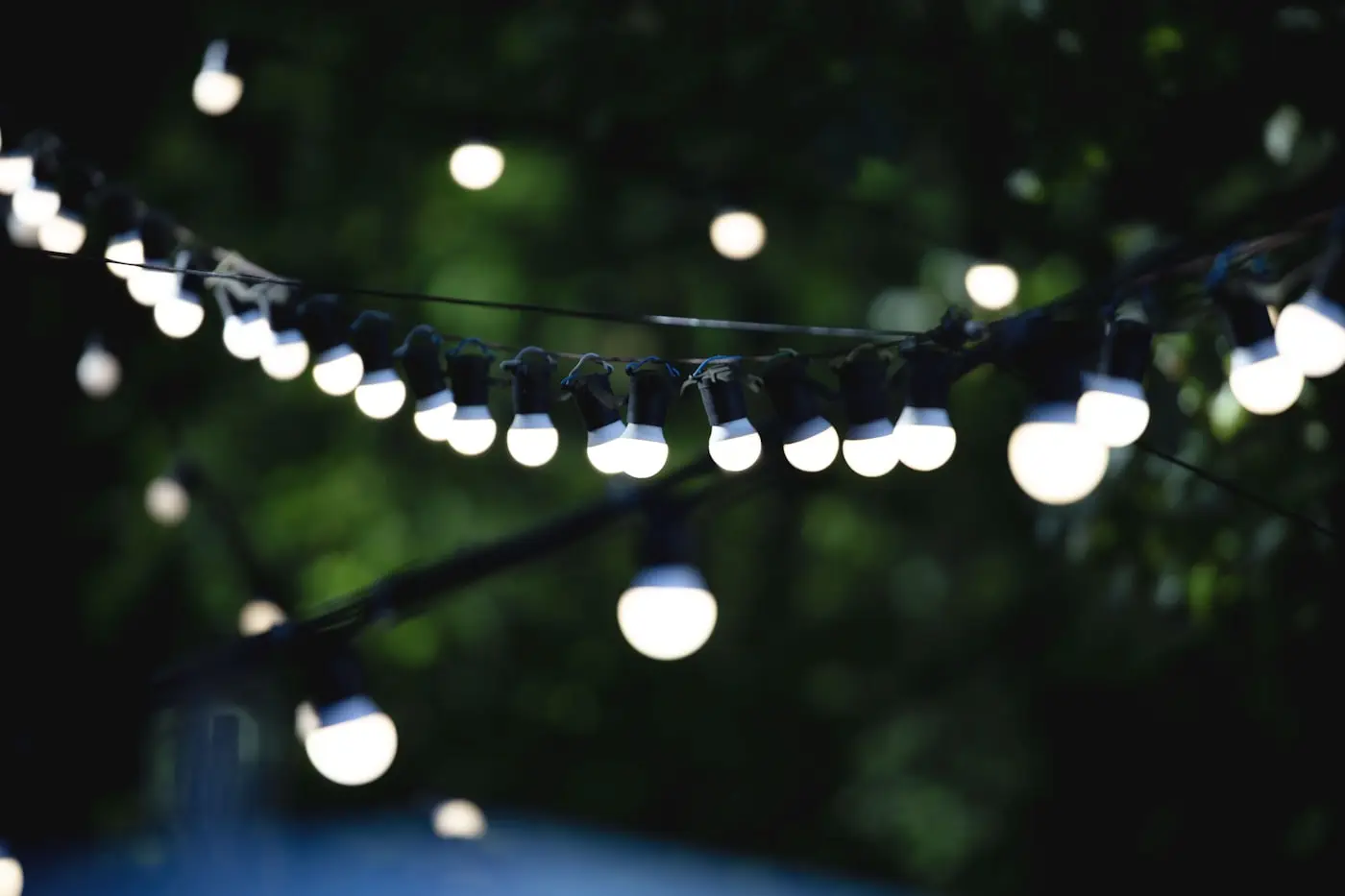
| String/festoon lights | £20-£80 per 10m | Pergolas, entertaining areas |
| Mains spotlights | £25-£80 each | Feature trees, statues, ponds |
| Deck/step lights | £15-£50 each | Safety, decking, steps |
Typical Project Costs for Yorkshire Gardens
Here are realistic all-in costs for common garden lighting projects in Yorkshire in 2026, including supply, installation and the Part P electrician where required.
| Project | Typical cost | Notes |
|---|---|---|
| Basic solar accent lighting (10 lights) | £30-£60 | Summer use only in Yorkshire |
| Low-voltage path system (8 lights) | £200-£450 | DIY-installed, year-round use |
| Professional low-voltage system (12 lights) | £400-£800 | Includes design and fitting |
| Mains: 8 path + 4 uplighters | £600-£1,200 | Part P electrician included |
| Full garden scheme (mains, 20+ lights, zones) | £1,500-£2,500 | Design, install, smart control |
The Part P Electrician Requirement
Any new mains electrical circuit installed outdoors must be carried out by a Part P qualified electrician and notified to your local building control authority. This is a legal requirement, not a recommendation. The Part P notification creates a building control record of the installation, which is required when you sell your home and solicitors request electrical certificates.
Cost of a Part P electrician in Yorkshire for garden lighting work: £300-£600 for a standard installation. This includes the notification fee. It is not optional for mains outdoor circuits, and any quote from a non-qualified person to install mains garden lighting at lower cost is a legal and insurance problem, not a saving.
The Part P requirement does not apply to:
- Solar lighting (no mains connection)
- Low-voltage 12V/24V systems running from a transformer already connected to mains (the transformer connection itself may require Part P notification if it is a new circuit)
- Plug-in outdoor fittings using an existing external socket (no new circuit, just using an existing one)
Running Costs: LED vs Halogen
LED garden lighting uses 70-85% less electricity than equivalent halogen fittings. For Yorkshire homeowners thinking about running costs over a long winter season, this is meaningful.
| LED (3W per fitting) | Halogen (20W per fitting) | |
|---|---|---|
| 10 fittings, 6 hrs/night | 0.18 kWh/night | 1.2 kWh/night |
| Annual cost (at 25p/kWh) | approx £16/year | approx £110/year |
| Bulb lifespan | 15,000-25,000 hrs | 1,000-2,000 hrs |
The payback on LED versus halogen is typically 12-18 months in energy savings alone, before factoring in bulb replacement costs. If you are replacing an old halogen garden lighting system or considering a new installation, specify LED throughout.
Smart Controls and Timers
Smart control reduces running costs and makes garden lighting genuinely useful rather than forgotten. Options in 2026:
- Dusk-to-dawn sensors: Automatically turn lights on at dusk and off at dawn. No programming required. Basic dusk-to-dawn sockets cost £10-£25 and can control any plug-in or low-voltage system.
- Programmable timers: Set specific on/off times. Useful if you want lights on for entertaining hours but not all night. Cost: £15-£40 for a plug-in unit; £30-£80 for a hardwired timer switch.
- Smart home integration: Systems like Philips Hue Outdoor, Lutron or simple smart plugs allow app control, scheduling, dimming and scene-setting from your phone. Cost: £50-£200 for the control equipment, plus the light fittings. Works well for entertaining gardens where you want to change the mood or turn lights on before arriving home.
Solar vs Mains: Yorkshire Verdict
The honest Yorkshire comparison:
- Solar: Low cost, no installation, no running cost. Suitable for summer accent lighting in south-facing, unshaded gardens. Unreliable in winter - which is when Yorkshire most needs garden lighting. Not the right choice as a primary system.
- Low-voltage transformer: Best all-round choice for most Yorkshire residential gardens. Year-round reliability, DIY-installable, expandable, reasonable cost. The right first step before committing to a full mains installation.
- Mains 240V: Maximum capability and reliability. Required for high-wattage feature lighting and long cable runs. The right choice for anyone wanting a permanent, fully designed system. Requires a Part P electrician and adds £300-£600 to the cost versus a DIY low-voltage system.
Frequently Asked Questions
How much does garden lighting cost to install in Yorkshire?
Professional garden lighting installation in Yorkshire costs £400-£2,500 for a full system. A typical medium garden with 8 path lights and 4 uplighters professionally installed costs £600-£1,200. Solar sets cost £20-£60 (no installation needed). Low-voltage transformer systems cost £200-£600 for a basic DIY setup.
Do I need an electrician to install garden lights in Yorkshire?
For mains 240V garden lighting, yes - a Part P qualified electrician must do the work and notify building control. Low-voltage 12V systems from a transformer can be DIY-installed. Solar requires no electrical work. Budget £300-£600 for a Part P electrician in Yorkshire for mains outdoor circuits.
Why is garden lighting particularly worth it in Yorkshire?
Hull averages only 7 hours of daylight in December; Harrogate around 7.5 hours. Your garden is in darkness for 16+ hours a day in midwinter. Good lighting allows you to use and appreciate your garden during those long dark evenings. The return on a good lighting system is proportionally higher in Yorkshire than in the south.
Does solar lighting work in Yorkshire?
Solar works adequately in summer for south-facing, unshaded gardens. The problem is winter: Yorkshire averages less than 2 hours of useful solar irradiance per day in November-January. Solar lights are often dim or non-functional precisely when you most need garden lighting. Use mains or low-voltage transformer systems for reliable winter lighting.
What types of garden lighting are there?
Path and bollard lights, uplighters (trees and shrubs), wall lights (doors and gates), string and festoon lights (entertaining areas), spotlights (feature lighting), and deck or step lights. A good scheme usually combines 2-3 types to create depth and variety.
How much does it cost to run garden lighting in Yorkshire?
LED garden lighting is very cheap to run. A set of 10 LED lights at 3W each running 6 hours/night costs around £16/year at 2026 electricity prices. Halogen equivalents cost 5-8x more. A well-specified LED garden lighting system typically costs £50-£150/year to run.
Can smart controls reduce garden lighting costs?
Yes. Dusk-to-dawn sensors, programmable timers and smart home systems ensure lights only run when needed. Payback on smart controls versus leaving lights running all night is usually under 2 years in energy savings.
Get a garden lighting quote for your Yorkshire property.
60-second form. If a local lighting specialist takes your enquiry, they call you with a design and price for your garden.
Start the assessment