Quick answer: Garden rewilding means converting part or all of your garden to support wildlife through reduced management and deliberate habitat creation. It is distinct from wildlife gardening (which adds features to a managed garden) and from neglect (which produces a monoculture of coarse grass and brambles). The key tool for Yorkshire gardens is yellow rattle (Rhinanthus minor), sown in September to weaken dominant grass and open up space for wildflowers. Managed rewilding requires annual cutting, removing cut material, and periodic control of rampant species. A gardener's role is to keep the wildness structured.
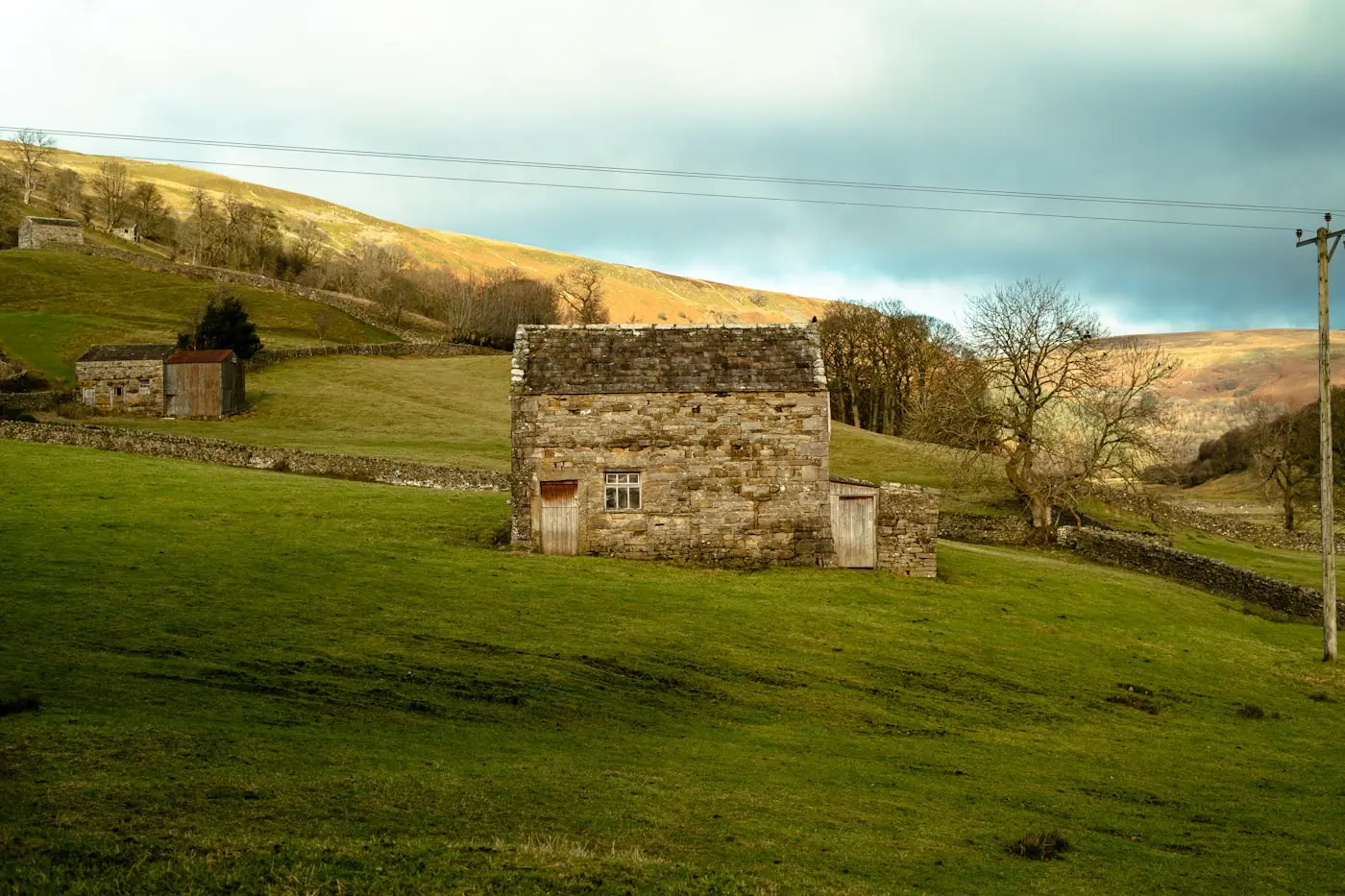
Rewilding versus Wildlife Gardening versus Neglect
These three things can look similar from a distance but produce very different results. Understanding the difference is essential to rewilding a Yorkshire garden successfully.
Wildlife gardening adds wildlife-friendly features to an otherwise conventionally managed garden: a bird table, a small pond, native plants in a border, a log pile in a corner. The lawn is still mown, the beds are still maintained, and the overall garden still looks managed. This is a valuable approach and genuinely beneficial, but it is not rewilding.
Neglect is what happens when management stops without a plan. In Yorkshire's fertile, wet climate, a neglected garden does not become a wildflower meadow. It becomes a rank grassland dominated by coarse rye-grass and Yorkshire fog, with brambles, nettles, and docks spreading from the margins. This monoculture of aggressive species has very low plant diversity and, despite its apparent wildness, supports relatively few specialist invertebrates compared to a managed species-rich meadow. Neglect is easy but unproductive as an ecological strategy.
Rewilding is active management for ecological diversity. It means introducing seed mixes of native wildflowers, using parasitic yellow rattle to weaken dominant grasses, cutting and removing material at ecologically optimal times, creating specific habitat features (log piles, bare soil patches, rough grass margins, scrub edges), and periodically removing the most dominant colonisers before they crowd out the diverse lower-growing plants. It requires less work than a conventional garden, but not no work - and what work it requires must be done at the right time.
Why Yorkshire Gardens Are Good Rewilding Candidates
Yorkshire's landscape history gives garden rewilding particular relevance. The county was once dominated by wildflower-rich hay meadows in the Dales, upland heather moorland, limestone grassland on the Wolds and the Magnesian limestone belt, and ancient woodland. Almost all of these habitats have been dramatically reduced by agricultural intensification over the past century. Yorkshire lost around 97% of its hay meadows between 1945 and 2000. The gardens of Yorkshire's towns and villages have a genuine role to play as refuge habitat for the plant species, invertebrates, and birds that have lost that landscape-scale habitat.
Yorkshire's cool, wet climate is genuinely conducive to wildflower meadow establishment, particularly in the areas influenced by the Pennines. The species-rich upland hay meadows of Wensleydale, Swaledale, and Wharfedale - carpets of wood cranesbill, globe flower, pignut, and melancholy thistle - represent a reference point for what low-fertility grassland with appropriate management can achieve in this part of England. Your garden's rewilded patch will not match Muker Meadows, but drawing from the same native species palette connects it ecologically to the wider Yorkshire landscape.
How to Start a Wildflower Meadow in Yorkshire
The most common starting point for garden rewilding in Yorkshire is converting an existing lawn area to meadow. This is both the most straightforward approach and the most visually impactful. The challenge is that most Yorkshire garden lawns are too fertile for wildflower meadow establishment - the grass is too vigorous and crowds out lower-growing wildflowers before they can establish.
Step 1: Assess Your Soil
Before starting, consider what you know about your soil's fertility. A lawn that has been regularly fed with nitrogen-based fertiliser for years will be significantly more fertile than one that has received no treatment. High-fertility soil strongly favours grass over wildflowers. If you have been feeding your lawn, a period without feeding (ideally at least two to three years) before starting meadow establishment will help reduce fertility. Removing the top layer of turf and topsoil entirely (stacking it to use elsewhere, or removing it) and sowing directly onto the exposed subsoil is the most reliable approach for a high-fertility site, though it is labour-intensive. Our garden maintenance team can advise on the best starting approach for your specific lawn condition.
Step 2: Sow Yellow Rattle
Yellow rattle (Rhinanthus minor) is the key to successful wildflower meadow establishment on an existing lawn in Yorkshire. This annual wildflower is hemi-parasitic on grasses - it attaches to grass roots and draws nutrients from them, weakening the grass significantly over two to three years. The visual effect is a reduction in the density and height of the grass sward, creating the gaps and low-fertility microhabitats that wildflowers need to establish.
Sow yellow rattle from fresh seed in September - the seed is short-lived and must not be stored between autumn and spring, as it requires a cold winter period to break dormancy. Before sowing, scarify the lawn vigorously to remove thatch and create soil-to-seed contact. Broadcast the seed at the supplier's recommended rate across the scarified surface. Do not cover. Keep the area lightly moist through early autumn but do not irrigate through winter. Yellow rattle germinates in March-April and flowers in June, producing the characteristic inflated golden seed cases that give it its name and a rattling sound when shaken.
In the first year after sowing yellow rattle, you will see some effect but the grass will still be dominant. In the second year, the grass becomes noticeably thinner and shorter in the areas where yellow rattle has established. By the third year, with continued annual yellow rattle re-seeding (the plant self-seeds freely once established), the grass is sufficiently weakened for a diverse wildflower meadow to develop.
Step 3: Add Native Wildflower Plugs
Yellow rattle alone does not create a wildflower meadow - it creates conditions in which wildflowers can establish. Adding native wildflower plug plants in autumn or early spring speeds up the process significantly and gives you more control over the species composition. Plant into gaps in the weakened grass sward, firming in well and watering at establishment.
For Yorkshire's typical neutral clay-loam soils, the following species are well-suited and reliably establish from plugs: ox-eye daisy (Leucanthemum vulgare), field scabious (Knautia arvensis), common knapweed (Centaurea nigra), meadow cranesbill (Geranium pratense), betony (Betonica officinalis), bird's-foot trefoil (Lotus corniculatus), red clover (Trifolium pratense), cowslip (Primula veris for drier sites), and meadow buttercup (Ranunculus acris). Use plants of known UK provenance if possible - regionally sourced plants are better adapted to Yorkshire conditions than those grown from continental European seed.
Yorkshire wildflower meadow establishment: the three-year plan
- Year 1, September: Scarify lawn heavily; sow yellow rattle at 4g per square metre; stop feeding the lawn entirely from now on
- Year 1, July: Cut the lawn at 5-7cm height; remove all cut material; do not leave clippings on the surface
- Year 2, March-April: Yellow rattle germinates; plant native wildflower plugs into gaps; continue no-feed regime
- Year 2, July: Cut after wildflowers have seeded (most Yorkshire meadow flowers seed by late July); remove cut material; re-sow yellow rattle in thin areas in September
- Year 3 onwards: Grass noticeably thinner; wildflowers spreading; cut and clear in July and again in October if needed; control brambles and nettles at margins
Yorkshire Native Wildflower Species: What to Use and What to Avoid
Not every wildflower seed packet sold in Yorkshire garden centres is appropriate for a rewilding project. Many commercial wildflower mixes contain non-native species (poppies from agricultural weeds, cornflowers that are not native to Yorkshire meadows) or are mixed from continental European provenance that is not well adapted to local conditions and does not contribute to the local gene pool.
For a Yorkshire rewilding project, specify UK-native wildflower seed of British provenance from specialist native seed suppliers. The Plantlife and Flora Locale websites maintain lists of approved suppliers. The seed mixes appropriate to Yorkshire meadow depend on your soil type:
For neutral clay-loam (most of West Yorkshire, South Yorkshire, Vale of York): meadow cranesbill, field scabious, ox-eye daisy, knapweed, betony, yellow rattle, red clover, bird's-foot trefoil, meadow vetchling, and agrimony.
For calcareous soils (Wolds, Magnesian limestone, Craven limestone): cowslip, wild thyme, rock-rose, salad burnet, small scabious, kidney vetch, basil thyme, and yellow-wort.
For Pennine upland meadow reference (Dales, Nidderdale, moorland fringe): wood cranesbill (Geranium sylvaticum, genuinely native to the Dales), pignut (Conopodium majus), globeflower (Trollius europaeus, for damper sites), melancholy thistle (Cirsium heterophyllum), and hay rattle.
Species to avoid or use carefully: wild carrot (spreads very vigorously on lighter soils), hogweed (highly competitive, photosensitising sap), and giant hogweed (invasive, dangerous, and already a serious problem along Yorkshire rivers). Himalayan balsam, Japanese knotweed, and rhododendron should be actively removed rather than accommodated in any rewilding scheme - these are invasive non-native species that reduce rather than enhance biodiversity.
Habitat Features: Beyond the Meadow
A rewilded garden is more than just a wildflower meadow. Creating varied habitat structure - different vegetation heights, different material types, different exposure levels - dramatically increases the range of species the garden supports.
Log Piles
A log pile made from native hardwood (oak, ash, hazel, elm if available) provides habitat for a wide range of invertebrates, particularly stag beetles, wood-boring beetles, and the larvae of many moth and fly species that require decaying wood to complete their life cycle. It also provides shelter for hedgehogs, slow worms, frogs, and toads. Locate the log pile in a shaded, slightly damp position - full sun dries the logs too rapidly. Leave it undisturbed once established; the value increases as decay proceeds over years and decades.
A leaf pile, similarly, provides hedgehog hibernation habitat and invertebrate overwintering sites. Position in a sheltered corner, replenish with autumn leaves, and leave through winter. This is the simplest and most cost-free habitat creation measure available to any Yorkshire homeowner.
Rough Grass Margins
The boundary between managed and unmanaged areas is ecologically the richest zone. A rough grass margin two to three metres wide along a fence or boundary, cut only once a year in autumn, provides warm, sheltered ground-level habitat for invertebrates, small mammals, and ground-nesting bees. The transition from short lawn through rough grass margin to longer meadow creates the structural diversity that maximises habitat value. In Yorkshire, this boundary zone is where common spotted orchid can sometimes establish spontaneously on calcareous soils - arguably the most rewarding surprise a rewilding Yorkshire garden can produce.
Scrub
Controlled scrub - a patch of native shrubs allowed to grow freely rather than being clipped to a formal shape - is among the highest-value habitat features a garden can have. A hawthorn (Crataegus monogyna) bush allowed to grow naturally, a blackthorn clump (Prunus spinosa), or a dog rose scrambling over a fence section all provide nesting, shelter, and food for birds and invertebrates at a level that a clipped hedge cannot. The key is keeping scrub from expanding beyond its designated area by periodic cutting at margins.
The Gardener's Role in a Rewilded Garden
One of the most common misconceptions about rewilding is that it removes the need for a gardener. In practice, the opposite can be true in the establishment phase, and the ongoing management - though less frequent - requires more ecological knowledge than conventional mowing and planting.
The most important annual task in a rewilded meadow is the cut-and-clear in late July. This replicates the traditional hay meadow management that maintained species-rich grassland for centuries: cut after flowering and seed-set, remove the cut material (do not leave it to rot on the surface), and allow the sward to green up again through late summer and autumn. This keeps fertility low, prevents coarse grasses from dominating, and allows the wildflower seed bank to build up over time. Missing this cut for even a year allows competitive grasses to recover and set back years of progress.
Controlling rampant species - brambles, nettles, coarse docks, creeping thistle - requires periodic attention, particularly at the margins of meadow areas. A skilled gardener can thin these species without removing them entirely (nettles support over forty species of invertebrates, including caterpillars of several butterfly species), maintaining their ecological value while preventing them from overwhelming the lower-growing meadow species.
The mown paths through a meadow area serve both aesthetic and management functions. They show that the area is intentionally managed rather than neglected, which matters for relationships with neighbours and for the overall visual character of the garden. They also create habitat edges and allow access for monitoring and maintenance. Our lawn mowing service includes the management of mown path networks through meadow areas, with the path routing and cut height calibrated to the specific meadow design.
Managing the Transition: Year by Year
The transition from a conventional managed garden to a rewilded one is a process over three to five years, not a single event. The first year is the most visually unpromising: the lawn looks slightly neglected, the yellow rattle has not yet had significant effect, and the plug plants are small. By year three, the transformation is typically dramatic. Homeowners who commit to the process and understand the timeline are invariably rewarded.
In parallel with the meadow establishment, the conventional planting in other parts of the garden can also be gradually shifted toward a more naturalistic, lower-maintenance approach. Replacing high-maintenance bedding plants with native and near-native perennials in the borders, underplanting roses with native ground cover, and allowing some self-seeding (foxgloves, aquilegia, astrantia) to build natural planting combinations over time all contribute to a garden that is working with rather than against ecological processes.
Our borders and planting service can assist with this naturalistic border conversion alongside meadow establishment, giving you a coherent approach to the whole garden rather than just one component.
Annual management calendar for a rewilded Yorkshire garden
- March-April: Yellow rattle germinates; plug plant wildflowers into gaps; begin monitoring for bramble and nettle incursions at margins
- May-June: Meadow area growing; first wildflowers in bloom; mow path network as needed; no cutting in the meadow area
- Late July (key intervention): Cut meadow area once most wildflowers have seeded - typically late July; remove all cut material; do not leave on the surface; this is the most important task of the year
- August-September: Collect and re-sow yellow rattle seed while still fresh; plug plant new wildflower species if desired; allow sward to green up for autumn
- October: Optional second cut at 5-7cm; remove material; cut back bramble margins; build up log pile with fallen material
- November-February: Leave standing; seed heads and tussock grass provide overwintering habitat; avoid disturbing log pile and rough margin
Getting Professional Help with Garden Rewilding
Rewilding a Yorkshire garden successfully requires ecological knowledge, correct timing, and the ability to distinguish between the plants that should stay and those that need managing. A homeowner new to rewilding can make costly mistakes - sowing yellow rattle at the wrong time (spring rather than autumn), cutting the meadow before wildflowers have seeded, or failing to remove cut material and returning fertility to the soil with every cut.
Our garden maintenance service includes rewilding support for Yorkshire gardens: yellow rattle sowing, wildflower plug planting, annual cut-and-clear management, and ongoing monitoring of the meadow establishment process. This is a genuinely specialist service - not every garden maintenance company has the ecological knowledge to support successful rewilding - and working with a gardener who understands the process from year one avoids the most common pitfalls.
If you are starting from a more established garden and want to integrate rewilding with existing planting and borders, our borders and planting service can design a coherent transition plan. For larger Yorkshire properties where rewilding might involve hedgerow restoration or tree planting alongside meadow establishment, our garden design service provides the overview needed to make the whole project work as a connected ecological whole.
Ready to rewild part of your Yorkshire garden?
Find a local gardener who knows how to establish wildflower meadows, manage them properly, and make your rewilded area look intentional rather than abandoned.
Get a free garden assessment →Frequently Asked Questions
What is garden rewilding and how is it different from wildlife gardening?
Wildlife gardening adds wildlife-friendly features to a managed garden (bird feeders, a pond, native plants). Rewilding goes further - it means reducing management over an area and allowing natural processes to determine what grows, while actively managing for ecological diversity. This means wildflower meadow establishment, habitat creation, and annual cut-and-clear management. Crucially, rewilding is not neglect; without management, Yorkshire's fertile, wet climate produces rank grass and brambles, not species-rich meadow.
How do I start a wildflower meadow in my Yorkshire garden?
Sow yellow rattle (Rhinanthus minor) from fresh seed in September onto a scarified lawn. Yellow rattle is hemi-parasitic on grasses and weakens them over two to three years, creating space for wildflowers. Add native wildflower plug plants in spring into the gaps it creates. Adopt a strict cut-and-clear regime (cut in late July, remove all material). Stop feeding the lawn from the start - soil fertility must decrease for wildflowers to thrive.
What Yorkshire wildflowers are best for a meadow garden?
For neutral clay-loam (most of Yorkshire): ox-eye daisy, field scabious, common knapweed, meadow cranesbill, betony, bird's-foot trefoil, and yellow rattle. For limestone soils: cowslip, wild thyme, rock-rose, and kidney vetch. For Dales reference: wood cranesbill, pignut, and meadow thistle. Always use UK-native, British-provenance seed for rewilding purposes.
Is a rewilded garden really lower maintenance?
Less frequent than a conventional garden, but not zero maintenance. The key annual task is a late-July cut-and-clear after wildflowers have seeded, removing all cut material to keep fertility low. Periodic control of dominant species (brambles, nettles, docks) at margins is also needed. Missing the July cut for even one year can set back years of progress. The total hours are less than maintaining a mown lawn, but the interventions must happen at the ecologically correct times.
How much of my garden should I rewild?
There is no minimum. Even a strip along a boundary, a rough grass margin, or a small meadow patch adds genuine habitat value. Most Yorkshire homeowners who rewild do so with part of the garden - a corner, a back strip, or an area under trees - while keeping other areas managed for lawn, entertaining, and planting. The hybrid approach works well and the mown path through a meadow area signals intention and provides structure to the wilder space.