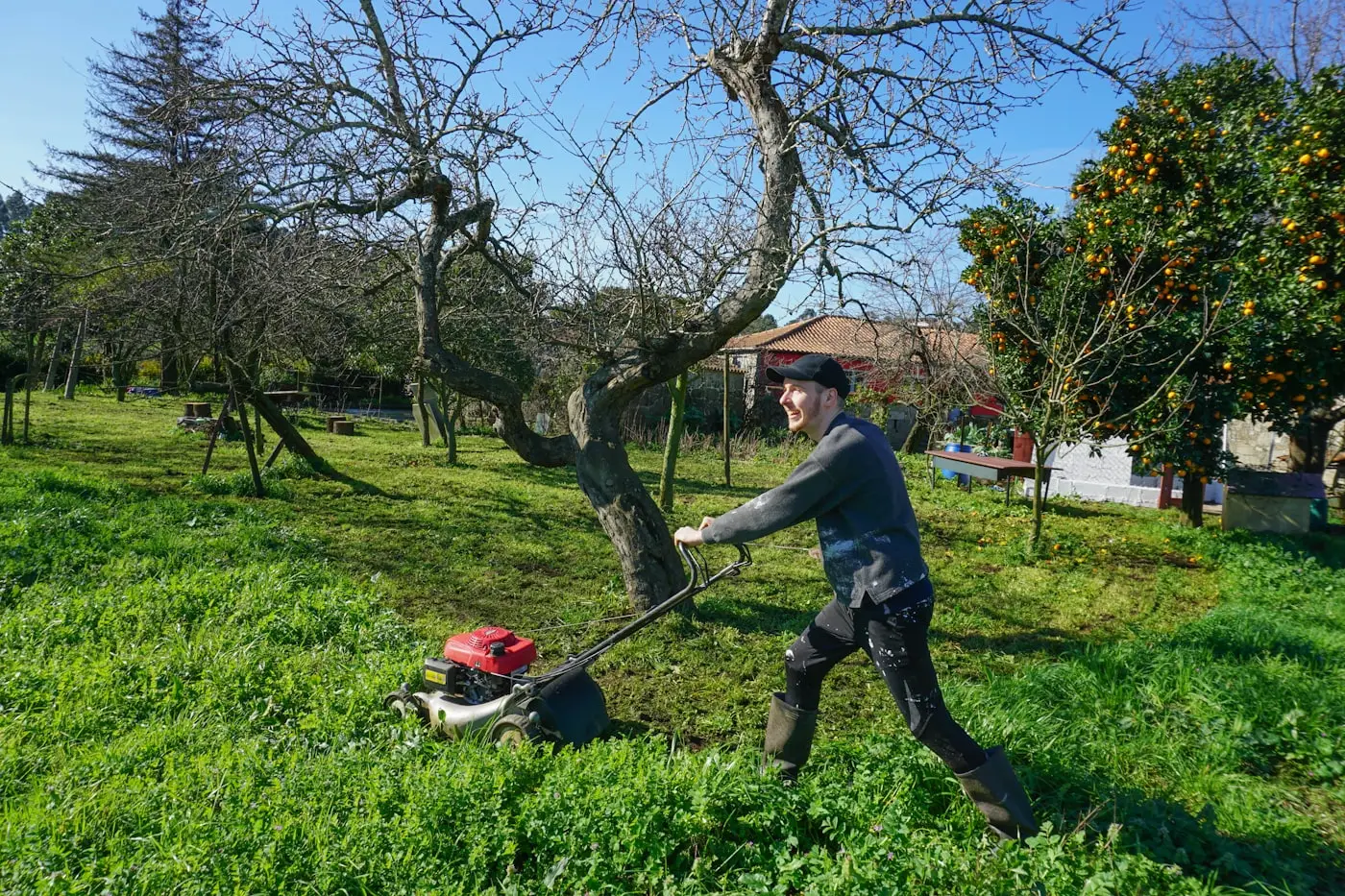
Pocklington is a market town that wears its history in its gardens. The chalk-loam soil that runs through the town and out toward Barmby Moor, Allerthorpe and Melbourne is free-draining and slightly alkaline - conditions that produce excellent yew and beech hedging, fine roses, and traditional borders that hold their structure well through a normal growing season. What the same soil does less well is hold moisture in a dry July or August. Chalk upland sheds water fast, and if your borders look tired by midsummer and you have not been mulching generously in spring, that is the soil telling you something. The town sits in a gentle bowl between the Wolds escarpment to the east and the Vale of York opening to the west. The Pocklington Canal and Beck run through the lower ground to the northwest, and properties near the water sit on flat alluvial ground with a quite different character - heavier, moister, with drainage and moss considerations that chalk-upland gardens do not share. Understanding which kind of ground your Pocklington garden sits on is the starting point for understanding what maintenance it actually needs. For the town-level overview of coverage and contacts, see the Pocklington town page. This guide deals with the practical specifics.
What Shapes Garden Work in Pocklington
Three conditions define garden maintenance in the YO42 area more than anything else: the chalk geology, the market town character with its mix of period and modern housing, and the seasonal rhythm driven by Wolds winters followed by fast-growing springs.
Chalk geology and what it means for your garden
The Yorkshire Wolds chalk upland is one of the most distinctive gardening environments in northern England. The chalk bedrock sits close to the surface across most of Pocklington and the villages east toward the scarp - Millington, Bishop Wilton, Huggate - and the soil it produces is free-draining, mildly alkaline, and rich in calcium. For established planting, this is largely excellent news. Yew, beech, hornbeam, box and most traditional hedging species do well on chalk. Roses, clematis and most Mediterranean herbs thrive. The problem comes with plants that need acid conditions: rhododendrons, azaleas, pieris, and most heathers will not perform well in open Wolds chalk soil. If you want them, raised beds with ericaceous compost are the answer. In borders on chalk, organic matter is the key annual input - chalk soil is nutritious but fast-draining, and a generous spring mulch of well-rotted compost or bark does more to support your planting through a dry spell than anything else you can do. A gardener who understands chalk soil will factor this into the maintenance routine from the first visit.
Mole activity on chalk grassland
Mole damage to lawns is more than an occasional irritant in Pocklington - it is a recurring maintenance issue for gardens adjacent to chalk grassland, field margins and open farmland at the Wolds edge. The underlying reason is straightforward: chalk grassland supports dense earthworm populations, and earthworms are what moles eat. A garden with open chalk ground beyond its boundary is a mole-accessible environment for much of the year. The signs are familiar to anyone who has dealt with it: raised mole hills on the lawn surface, ridged turf along the runs just beneath the surface, and localised areas where the lawn lifts and feels unstable underfoot. Regular lawn maintenance cannot fix an active mole problem, but it can tidy the aftermath - pushing mole hills flat and overseeding disturbed turf is part of the spring reset on many Pocklington lawns. The control itself needs a qualified mole catcher rather than a standard garden maintenance visit. Most experienced Pocklington gardeners can point you to someone reliable.
Stone walls and chalk boundary features
Pocklington and the villages around it have a significant stock of chalk and limestone boundary walls - along properties near All Saints Church, through the older streets in the town centre, and out along the lanes toward the Wolds villages. These walls are attractive but require specific maintenance. Repointing with cement is the most common mistake: cement is too rigid and too impermeable for chalk walls, and it traps moisture that causes the wall to deteriorate from the inside. Lime mortar is the correct material - it is flexible and breathable in the way chalk masonry needs. Wall-trained fruit trees, climbing roses and wisteria on period walls are common across the older parts of Pocklington and they need annual pruning to keep them in shape, prevent root damage at the wall base, and maintain the wall face. A gardener who has worked the older properties around the church and market town centre will have handled lime-mortar walls before. It is worth asking when you enquire.
Canal-side and alluvial ground near the Beck
Not all of Pocklington sits on chalk. The lower ground around Pocklington Canal and the Beck is flat alluvial land, quite different in character from the chalk upland above the town. Alluvial soil is heavier, retains moisture, and can become waterlogged in wet winters and spring. Lawns on canal-side plots are more prone to moss, compaction and slow drainage than gardens on the chalk. The maintenance response is different: scarification and aeration matter more on heavy alluvial ground than they do on free-draining chalk, and border plants that perform well on chalk (lavender, rosemary, most Mediterranean species) may struggle in the heavier wet ground near the water. If your garden is in the lower part of the town near the canal basin, make sure the gardener who quotes you understands which type of soil they are dealing with. The two halves of Pocklington are not the same garden environment.
Victorian terraces, modern estates and Wolds villages
Pocklington's housing stock covers a wide range. The older properties around All Saints Church and the market town centre include Victorian and Edwardian terraces with enclosed rear gardens, period boundary walls, and established planting that has been in place for decades. These gardens often have feature elements - wall-trained plants, mature yew topiary, formal box edging - that need careful maintenance to preserve. The modern residential estates on the edges of the town, toward the A1079 York road corridor, are a different proposition: younger gardens, open-plan layouts, establishing hedges. And the Wolds villages further east - Millington, Bishop Wilton, Full Sutton - have well-established larger gardens on Wolds-edge ground that can run to paddock strips, orchard sections and established hedgerows that are a full day's structural work at the start of each season. Describing your property type clearly when you enquire saves time on both sides and produces a more accurate first quote.
Pocklington postcode coverage
YO42 covers Pocklington town itself plus Barmby Moor, Allerthorpe, Melbourne, Wilberfoss, Yapham, Hayton, Full Sutton and the villages along the Wolds edge. Extended coverage reaches Stamford Bridge (YO41) and the outlying Wolds villages including Millington, Bishop Wilton and Huggate.
Garden Maintenance in Pocklington - What It Costs
Pocklington sits within the East Yorkshire pricing band, which runs broadly in line with or slightly below the Yorkshire county average. Rates are lower than the Harrogate or York premium zones but reflect the travel time for gardeners serving outlying Wolds villages. For a fuller pricing context, see the UK gardener cost guide and the garden clearance cost guide. The table below covers working ranges for YO42 in 2026.
| Service | Pocklington typical range (YO42), 2026 | Notes |
|---|---|---|
| Hourly rate (maintenance) | £25-£35/hr | Contract rates toward lower end; one-off visits higher. Wolds village travel adds time. |
| Half-day maintenance visit | £70-£130 | Medium garden on contract rate. Period properties with wall-trained plants add time. |
| Fortnightly maintenance visit | £35-£70 per visit | Medium garden, regular contract through growing season. |
| One-off lawn cut | £25-£55 | Standard accessible garden. Larger Wolds plots with long grass: add 20-40%. |
| Spring tidy (one-off) | £80-£200 | State of garden determines time. Post-Wolds-winter resets can be substantial. |
| Hedge trimming (standard domestic) | £40-£85 per visit | Standard boundary hedge lower end. Established beech or yew: £80-£160. |
| Garden clearance (medium plot) | £180-£420 | Accessible flat garden. Larger Wolds properties: from £400 for a full day. |
| Lawn scarification and overseeding | £60-£110 | Recommended in autumn on chalk-loam lawns. Essential after mole disruption. |
| Mole control (via pest controller) | £60-£120 per visit | Separate contractor. Most Pocklington gardeners can recommend a local mole catcher. |
One cost consideration specific to Pocklington that does not appear in generic Yorkshire pricing guides is the autumn leaf clearance bill on larger Wolds-edge plots. Properties with mature beech, lime and horse chestnut - common across the established gardens east of the town - produce large leaf volumes through October and November. A single sweep is rarely enough: chalk-loam lawns with leaves sitting on them for more than two weeks in autumn will show yellowing and die-back patches that take a full spring scarification and overseed to recover. Budget for two proper half-day visits in October and November rather than a single autumn tidy.
Finding a Reliable Gardener in Pocklington
The standard vetting process applies across Yorkshire: public liability insurance (ask for the certificate showing insurer and policy number, not a verbal confirmation), a Waste Carrier's Licence for any job that involves green waste removal, and references or photos of recent local work. In Pocklington there are a couple of additional questions worth asking before you book.
First: chalk soil experience. A gardener who has spent their working life maintaining sheltered clay-loam gardens in the Vale of York will not instinctively know to apply a generous spring mulch to chalk borders, or to choose salt-tolerant and drought-hardy species for a dry Wolds-edge bed facing east. Ask directly whether they have maintained chalk-based gardens in the YO42 area and what their approach is to summer moisture retention. Any gardener who has worked the Pocklington area regularly will have an answer without thinking too hard about it.
Second: wall and boundary experience. If your garden includes chalk or limestone boundary walls, wall-trained fruit or established climbers on period masonry, ask whether they have experience with lime-mortar walls and the pruning of wall-trained plants. These are basic skills for anyone who has worked the older parts of Pocklington, but not guaranteed in a gardener moving their rounds in from outside the area.
Beyond those, the standard approach: book in February for the April growing season start, confirm the scope of the maintenance contract in writing (chalk Wolds gardens have seasonal peaks that are worth agreeing in advance rather than negotiating on the day), and for any clearance job on a larger property, insist on a fixed quote after an in-person visit rather than an hourly estimate over the phone. For detailed advice on what to look for and ask, the how to find a gardener in Yorkshire guide covers the full vetting process.
The garden maintenance, hedge trimming and garden clearance service pages have more detail on what each type of job involves and what to expect from a well-run visit.
Seasonal Garden Work in Pocklington: What to Expect
The Pocklington gardening calendar has two strong peaks, and the gaps between them are rarely as quiet as they look from the house window in January.
Spring: the Wolds winter reset
March to May is the most concentrated work period for Pocklington gardens. The Yorkshire Wolds winter is not especially cold by northern standards, but it is wet and windy - easterlies off the Wolds scarp push into the gardens on the eastern edges of the town, borders get battered, and the combination of wind and chalk-upland frost-thaw cycles leaves lawns looking rough by February. The fast-growing chalk-loam spring that follows means that the window for getting reset work done before normal maintenance takes over is relatively short. A garden that looks manageable in early March can need a full day's work before the first fortnightly visit becomes viable. Book spring resets early - a February call for a late-March or early-April start is the right timing for most YO42 properties.
For lawns on chalk, spring scarification is worth considering: moss and thatch accumulate through a wet winter even on free-draining chalk ground, and a light scarification followed by overseeding in March or April sets the lawn up for a clean growing season. If your lawn has suffered mole damage over winter, the same spring visit is the right time to address it: flatten hills, firm and re-level disturbed turf, and overseed bare patches before the growing season begins.
Autumn: hedges, leaves and winterising
Autumn brings two clear workstreams. Hedge trimming is the first: the bird nesting season (March to August, broadly) closes, and August through November is the main hedge trimming window across the Pocklington area. The beech and yew boundaries common on older Pocklington properties can be substantial - mature beech hedges that have had inconsistent management may need significant reduction work rather than a simple annual tidy. A proper cut now avoids the problem of a hedge that has grown wide and tall over several seasons becoming a structural challenge. The second autumn workstream is leaf clearance. Properties with mature limes, beeches and horse chestnuts generate serious leaf volumes through October and November. Two half-day visits a month apart - one in mid-October while leaves are still falling, one in early November after the bulk has come down - is the right approach on larger Wolds-edge plots.
Areas We Cover Near Pocklington
Pocklington is the main market town for the western edge of the Yorkshire Wolds, but coverage extends across the surrounding East Riding. Nearby areas include:
- Beverley (HU17) - the East Riding county town, 14 miles south. Boulder clay subsoil in Beverley contrasts with the chalk upland of YO42; different maintenance profile. Strong fortnightly maintenance market among the Georgian and Victorian properties near the Minster. See the Beverley gardeners guide for how clay soil shapes maintenance there.
- York (YO1-YO31) - 12 miles west. City centre and suburban gardens. York sits in the Vale of York on heavy clay - a very different soil character from Pocklington's chalk. See the York gardeners guide for what that clay means for lawn maintenance across the city suburbs.
- Driffield (YO25) - the market town of the East Riding Wolds, 14 miles northeast. Similar chalk Wolds character to Pocklington.
- Selby (YO8) - 14 miles southwest. Flat Vale of York ground; quite different garden character from Pocklington. Strong maintenance market among the newer housing.
- Market Weighton (YO43) - 6 miles south on the Wolds edge. Similar chalk character to Pocklington. Covered as part of the YO42-YO43 East Riding corridor.
Frequently Asked Questions
How much does a gardener cost in Pocklington?
Pocklington gardeners typically charge £25-£35 per hour for general garden maintenance in 2026. Half-day visits run £70-£130 for a medium garden. Fortnightly maintenance contracts for a medium plot run £35-£70 per visit. Larger Wolds-edge properties and one-off jobs sit toward the upper end. For a broader pricing comparison see the UK gardener cost guide.
How does chalk soil affect gardens in Pocklington?
Pocklington's chalk-loam soil is free-draining and slightly alkaline - excellent for yew, beech, roses and traditional border plants, but fast to dry out in summer. Organic mulching in spring is the key annual maintenance task. Acid-loving plants need raised beds with ericaceous compost. A gardener who knows chalk soil will factor mulching and moisture management into the maintenance routine from the start. The flat alluvial ground near Pocklington Canal is heavier and wetter - a different maintenance profile entirely.
Do gardeners in Pocklington deal with moles?
Mole activity is common in Pocklington and the surrounding Wolds chalk grassland, where high earthworm populations attract moles into garden lawns. Most garden maintenance professionals are not pest controllers, but they can manage the aftermath - flattening hills, firming disturbed turf, overseeding bare patches as part of the spring reset. For the control itself, most experienced YO42 gardeners can recommend a local mole catcher. Expect £60-£120 for a residential removal visit in this area.
What is the best time to book a gardener in Pocklington?
February or early March for the April growing season start. Spring demand in YO42 is consistent, and regular maintenance slots fill ahead of the season. The post-Wolds-winter reset is often a substantial first visit - book early if your garden needs significant spring clearance before regular maintenance can begin. For hedge trimming, book between August and February to avoid the bird nesting season.
What garden work gets booked most in Pocklington?
Fortnightly lawn and border maintenance from April to October; spring clearance and reset visits after the Wolds winter; hedge trimming on beech, yew and hawthorn boundaries; garden clearances on neglected plots; mole-damage repair and lawn overseeding in spring; and autumn leaf clearance on larger Wolds-edge properties with mature deciduous trees.
Do gardeners in Pocklington cover the surrounding Wolds villages?
Yes. Coverage includes Barmby Moor, Allerthorpe, Melbourne, Wilberfoss, Millington, Bishop Wilton, Full Sutton and the villages along the Wolds edge. Wolds-edge properties often have larger plots with established hedgerows and mature trees that need seasonal maintenance programmes. Travel time to outlying villages is factored into quotes.
How do I maintain garden walls in Pocklington?
Chalk and limestone boundary walls require lime mortar repointing - not cement, which traps moisture and damages chalk masonry. Wall-trained fruit and climbers need annual pruning to manage root pressure and maintain the wall face. A gardener experienced with the older properties around All Saints Church and the Pocklington market town centre will have handled lime-mortar walls before. Ask specifically when enquiring.
What are the seasonal peaks for garden work in Pocklington?
Two peaks. Spring (March to May): post-Wolds-winter reset, spring scarification, mole-damage repair and first growing-season flush. Autumn (September to November): hedge trimming on beech and yew, leaf clearance on larger plots, and lawn scarification and overseeding. Both are busy periods - booking ahead of each peak is the practical approach.
What does garden maintenance include in Pocklington?
Standard garden maintenance covers lawn mowing and edge trimming, weeding of borders, light pruning of shrubs, path sweeping and general tidying. On chalk Wolds soil, a good maintenance gardener will also advise on spring mulching and watch for moisture stress in borders through summer. Hedge trimming, clearance, hard landscaping and mole control are priced separately.
How do I find a reliable gardener in Pocklington?
Ask for public liability insurance (insurer name and policy number), a Waste Carrier's Licence for green waste removal, and references or photos of recent work in the YO42 area. Ask specifically about chalk soil experience - any gardener who has worked Pocklington regularly will know the free-draining character of the ground and what it means for maintenance. Use the estimate form on this site to put your enquiry in front of a local YO42 gardener.
How does the Pocklington Canal affect garden conditions nearby?
Properties near the canal and Beck sit on flat alluvial ground that is heavier and wetter than the chalk upland above the town. These lawns are more prone to moss, compaction and slow drainage. Scarification and aeration matter more here than on chalk. Border planting choices should reflect the heavier, moister conditions. Make sure the gardener you book understands which type of soil they are dealing with if your garden is in the lower part of Pocklington near the waterway.
Is there a difference between maintaining Victorian terrace gardens and newer estate gardens in Pocklington?
Yes. Victorian and Edwardian properties around the town centre often have enclosed gardens with period walls, established planting and wall-trained features that need careful management. Newer estates have younger, more open gardens with establishing hedges. Wolds villages have larger plots with hedgerows and mature trees that require seasonal structural work. Describing your property type clearly when you enquire produces a more accurate first quote and avoids surprises on the day.
Related reading
- How much does a gardener cost in the UK? (2026)
- Garden clearance cost guide (2026)
- Garden maintenance across Yorkshire
- Hedge trimming across Yorkshire
- Garden clearance across Yorkshire
- Weed control across Yorkshire
- Pocklington - local gardeners overview
- Gardeners in Beverley
- Gardeners in York
- Gardeners in Beverley - clay soil and East Riding conditions
- Gardeners in Hull - East Yorkshire's clay and coastal gardens
For structural landscaping or a full redesign, see our garden design Pocklington page.
Request a gardener for your Pocklington garden.
60-second assessment, local gardener, free estimate. Tell us your YO42 postcode and what you need.
Start the estimate