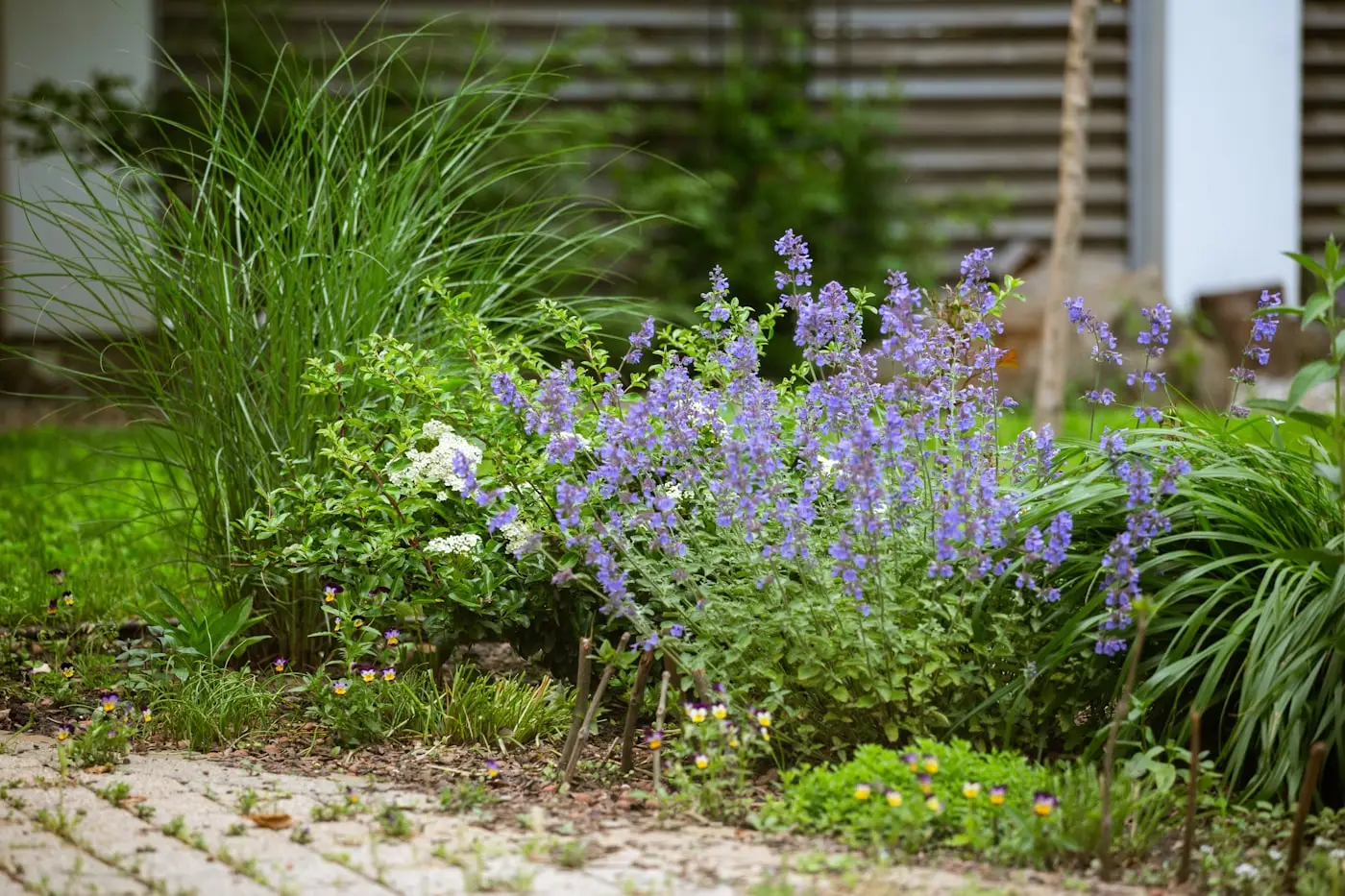
What garden design looks like in Pocklington
Pocklington sits on the western edge of the Yorkshire Wolds on the YO42 corridor between York and Driffield. A market town with a distinctive character shaped by the chalk-loam soil that runs through the town and the surrounding Wolds-edge villages. The soil here is free-draining and slightly alkaline, which shapes everything about the gardening: excellent for yew, beech, roses and traditional borders, but unforgiving if you are trying to grow acid-loving plants without raised beds.
The town sits in a gentle natural bowl between the Wolds escarpment rising to the east and the Vale of York opening to the west. The eastern edge toward the scarp catches serious easterlies through autumn and winter, which means open borders there need structural planting for shelter rather than just decorative species. The western edge looking toward the Vale is noticeably more protected and allows for less wind-tolerant planting schemes.
Burnby Hall Gardens within the town is a genuine reference point for garden design in Pocklington. The formal beds and nationally significant hardy water-lily collection shape what homeowners expect from a well-designed garden here. It is not unusual for people to mention Burnby Hall when describing what they want from a redesign — that formal aesthetic, structural hedging, and traditional Yorkshire planting adapted to their own plot size and budget.
Walled kitchen garden restoration
Walled kitchen garden restoration is the most specialist design category in YO42. Many period properties in Pocklington have original kitchen gardens with fan-trained and espaliered fruit on old brick or stone walls that have had inconsistent management over the decades. The work typically involves pruning neglected fruit trees, repointing wall sections where needed, re-establishing formal kitchen beds, and advising on fruit varieties suited to the chalk-loam. This is a multi-visit programme rather than a one-off clearance because the restoration happens in phases across multiple seasons.
Formal borders and Burnby Hall influence
The Burnby Hall influence shapes what homeowners here want from a garden. Formal border planting, symmetrical layouts, structural hedging and traditional Yorkshire planting schemes suit the chalk-loam soil well. A good designer will create a scaled-down version of that formal aesthetic adapted to your specific plot rather than attempting something that needs a full-time gardening team to maintain. The established yew and beech hedging throughout Pocklington demonstrates how well these species suit the chalk-loam — they hold their shape cleanly and respond well to regular trimming.
Larger Wolds-edge plots
The villages out toward the Wolds escarpment (Millington, Bishop Wilton, Full Sutton) have well-established larger gardens on Wolds-edge ground with thinner soil over chalk and higher wind exposure compared to the town centre. These plots need shelter planting first before decorative borders can succeed. Established hedging (beech, hornbeam, hawthorn) provides the wind shelter for more delicate planting behind. A designer who knows the Wolds-edge conditions will recommend hardy species and shelter strategies that actually work at this elevation and exposure rather than treating it like a sheltered town-centre plot.
Cost ranges for Pocklington garden design
Garden design pricing depends on the scope of work and whether you want design only or full project management. These are the typical ranges for budgeting:
| Service |
Cost range |
| Planting plan only |
£300-800 |
| Planting plan + implementation |
£600-1,500 |
| Full design and project management |
£800-3,000+ |
| Border replant (up to 10 sqm) |
£150-400 |
| Kitchen garden / raised-bed setup |
£400-900 |
| Full garden makeover (50-100 sqm) |
£5,000-15,000+ |
| Walled kitchen garden restoration |
£2,000-8,000+ |
Hard landscaping (stone paving, sleeper beds, wall repointing) is quoted separately and typically runs £2,000-£12,000 for a mid-size project depending on materials and scope. Designers quote directly based on your specific brief and site conditions. For more detail on what drives the cost, see what a garden makeover costs.
Start your free Pocklington garden estimate
Tell us what you want and we put your enquiry in front of local designers who quote directly. No call centre fees on your side.
Get a design estimate
The full local guide
What plants tend to suit Pocklington gardens
The chalk-loam soil here is free-draining and slightly alkaline, which shapes the planting palette. Mediterranean and drought-tolerant species thrive: salvias, sedums, lavender, rosemary, catmint, hardy geraniums, ornamental grasses, cistus, and traditional cottage-garden perennials all do well on chalk-loam. Roses perform excellently here — both shrub roses in borders and climbing varieties trained on walls. The established yew and beech hedging throughout Pocklington demonstrates how well these species suit the soil conditions.
Acid-loving plants like rhododendrons, pieris, camellias and heathers need raised beds with imported ericaceous compost if you want them. In open chalk-loam ground they will make slow progress at best. A local designer will assess your soil and recommend a planting scheme that works with the alkaline conditions rather than fighting them.
For walled kitchen gardens, the chalk-loam suits traditional fruit trees well: apples, pears, plums and cherries all thrive here when trained properly. Fan-trained and espalier forms on south-facing walls get excellent sun exposure and the free-draining soil prevents root rot. Soft fruit (raspberries, blackcurrants, gooseberries) also perform well in formal kitchen-garden layouts.
On the eastern edge toward the Wolds scarp, wind exposure limits the planting palette more than soil type. Structural shelter hedging (beech, hornbeam, hawthorn) needs to be established first before decorative species can succeed. Once shelter is in place, the same chalk-loving palette works well.
Process for a Pocklington garden designer
- Initial brief. Tell us what you want from the garden, whether it is a planting refresh, a full redesign, walled kitchen garden restoration, or help with a specific problem like wind exposure or drainage.
- Site visit and assessment. The designer visits, assesses your soil, aspect, existing planting and any constraints like wind exposure or existing walls. This is usually a free initial consultation.
- Proposal and design. You receive a scaled design with planting plan, materials specification, and cost estimate. For design-only work, this is the deliverable and you implement it yourself or find your own contractors.
- Phasing and coordination. For full design-and-build projects, the designer coordinates contractors (hard landscaping, wall repointing, fencing), orders plants, and schedules installation across multiple phases if needed.
- Installation and establishment. Planting is carried out, usually in autumn or early spring. The designer advises on aftercare and establishment watering for the first season.
A planting plan can be produced within one to two weeks of the site visit. A full redesign with installation typically takes four to twelve weeks depending on project scale. Walled kitchen garden restoration projects often run longer because they involve multiple phases: clearance and assessment first, then pruning established fruit trees, repointing walls where needed, and finally replanting formal beds. Most designers recommend starting design work in winter so the installation is ready for spring planting.
Designers in Pocklington postcode
We connect homeowners across YO42 with local designers who quote directly. They set their own prices and there are no call centre fees on the customer side. The free initial estimate gives you a sense of what your project involves before you commit to the full design. Whether you want a planting plan only, walled kitchen garden restoration, or full project management, we put your enquiry in front of someone who has done similar work in the Pocklington area and understands the chalk-loam soil and Wolds-edge conditions.
Frequently asked questions
What soil does my Pocklington garden have?
Pocklington sits on Wolds-edge chalk-loam soil which is free-draining and slightly alkaline. This means excellent conditions for yew, beech, roses, lavender, salvias and traditional cottage-garden perennials. Acid-loving plants like rhododendrons and pieris need raised beds with ericaceous compost because they will not thrive in open chalk-loam ground. The eastern edge toward the Wolds scarp has thinner soil over chalk and higher wind exposure compared to the more sheltered western edge toward the Vale of York.
How much does garden design cost in Pocklington?
A planting plan only service costs £300-800. Planting plan with implementation runs £600-1,500. Full design with project management typically costs £800-3,000+. A full garden makeover on a 50-100 sqm plot runs £5,000-15,000+. Walled kitchen garden restoration is quoted separately and typically runs £2,000-8,000+ depending on the existing condition and scope of work. Designers quote directly based on your specific brief and site conditions.
Can you design a formal garden influenced by Burnby Hall?
Yes. Many Pocklington homeowners reference Burnby Hall Gardens when describing what they want from a redesign. Formal border planting, structural hedging, symmetrical layouts and traditional Yorkshire planting schemes suit the chalk-loam soil here. A local designer will create a scaled-down version of that formal aesthetic adapted to your plot size and budget rather than attempting something that needs a full-time gardening team.
What plants suit Pocklington chalk-loam soil?
Chalk-loam is free-draining and alkaline, which suits Mediterranean and drought-tolerant species best. Salvias, sedums, lavender, rosemary, catmint, hardy geraniums, ornamental grasses, cistus, roses and traditional cottage-garden perennials all thrive here. The established yew and beech hedging throughout Pocklington demonstrates how well these species suit the soil. Avoid acid-loving plants in open borders unless you are prepared to build raised beds with imported ericaceous compost.
How long does a Pocklington redesign take?
A planting plan can be produced within one to two weeks of the site visit. A full redesign with installation typically takes four to twelve weeks depending on project scale and plant availability. Walled kitchen garden restoration projects often run longer because they involve multiple phases: clearance and assessment first, then pruning established fruit trees, repointing walls where needed, and finally replanting formal beds. Most designers recommend starting design work in winter so the installation is ready for spring planting.
Can you restore a walled kitchen garden?
Yes. Walled kitchen garden restoration is a specialist category in Pocklington with several designers who have experience managing fan-trained and espaliered fruit on old brick or stone walls. The work typically involves pruning neglected fruit trees, repointing wall sections, re-establishing formal kitchen beds, and advising on fruit varieties suited to the chalk-loam. This is a multi-visit programme rather than a one-off clearance because the restoration happens in phases across multiple seasons.
What about wind exposure on Wolds-edge plots?
The eastern edge of Pocklington toward the Wolds escarpment catches serious easterly winds through autumn and winter. Open borders there need structural shelter planting, not just decorative species. Established hedging (beech, hornbeam, hawthorn) provides wind shelter for more delicate planting behind. A designer will assess your exposure and recommend a planting scheme that accounts for the prevailing wind rather than treating it like a sheltered town-centre plot.
Areas around Pocklington we also cover
We also match homeowners with designers in York, Beverley, Driffield, and surrounding Wolds-edge villages including Barmby Moor, Allerthorpe, Melbourne, Wilberfoss, Millington, and Bishop Wilton.
For general garden maintenance, lawn care, and year-round gardening services in Pocklington, visit our local gardeners in Pocklington page.