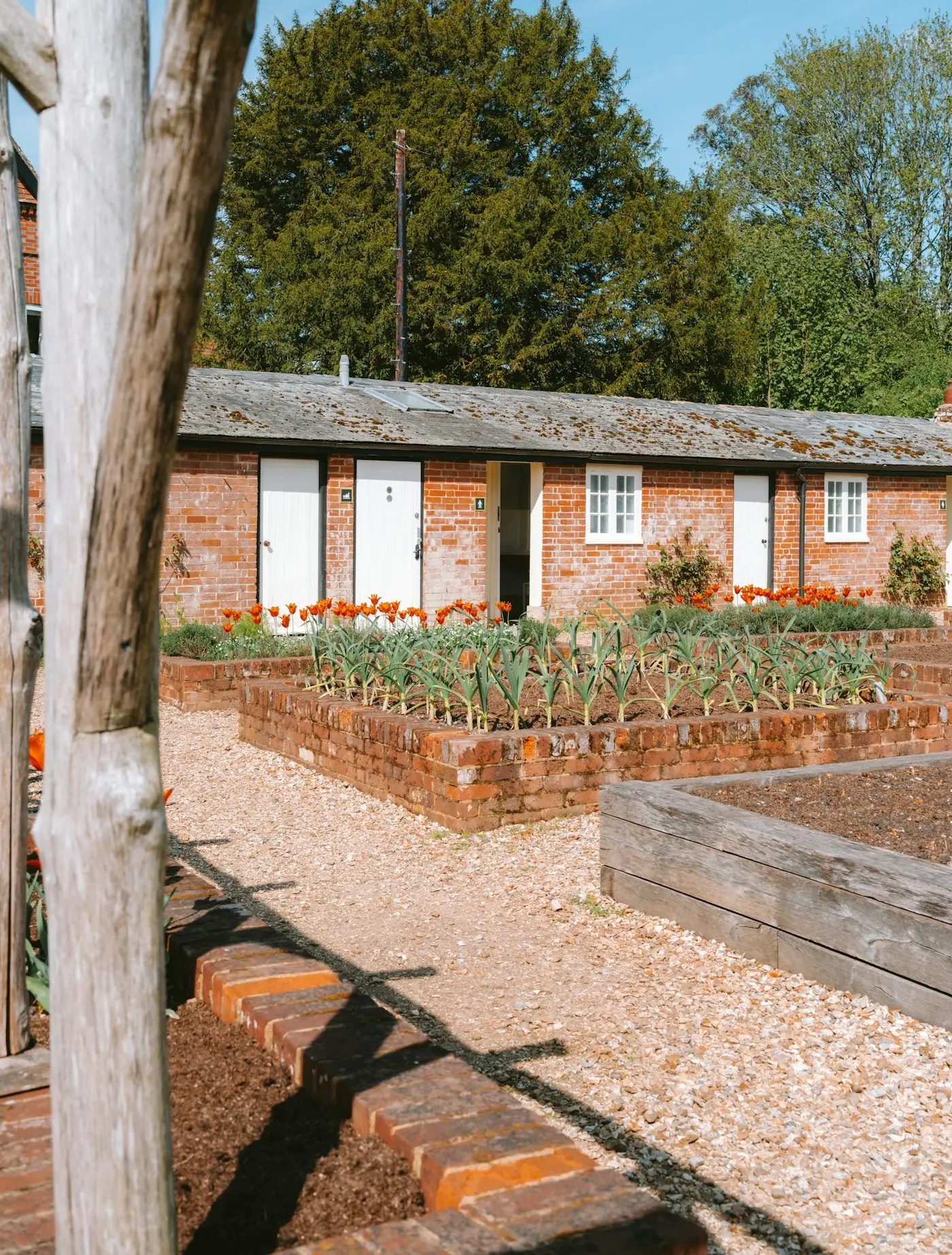
What garden design looks like in Beverley
Beverley is a market town in the East Riding of Yorkshire on the HU17 postcode corridor, with a residential mix of period properties around the Minster, Edwardian and Victorian streets running north toward the racecourse, and modern family estates on the southern and eastern edges toward Molescroft and Woodmansey. The surrounding villages along the Westwood — Walkington, Tickton, and the rural lanes out toward Bishop Burton and Cherry Burton — have bigger plots with established hedging and mature planting that often needs a proper seasonal reset rather than just ongoing maintenance.
The soil across most of Beverley is Yorkshire Wolds chalk and free-draining limestone-influenced ground with an alkaline profile. This is excellent for drought-tolerant planting — lavender, rosemary, salvias, hardy geraniums, ornamental grasses, catmint, and Mediterranean herbs all thrive here — but it also means summer watering becomes more important than it would be on clay. The free-draining nature is an advantage in wet winters, but it shapes the planting palette more than the postcode does. A good garden designer will assess your soil pH and moisture retention and recommend plants that suit the conditions you have rather than fighting them.
Most Beverley gardens settle into a fortnightly rhythm through the growing season — a regular maintenance visit, the hedges kept in shape, borders looked at in spring and autumn. The bigger plots out toward Walkington and Tickton tend to want a couple of proper seasonal pushes on top, particularly a thorough spring reset after what the Wolds winter puts them through. A well-designed garden reduces the maintenance burden rather than adding to it, and the initial design needs to account for the ongoing commitment as well as the planting itself.
Period-property gardens around the Minster
The period properties around the Minster and along the Saturday Market typically have formal gardens with structural hedging, traditional mixed borders, and the kind of planting that respects the architecture rather than competing with it. Climbing roses, clematis and wisteria on brick or rendered walls are classic elements. The free-draining soil suits cottage-garden perennials and drought-tolerant planting better than moisture-hungry species. A designer who understands period properties will recommend a planting scheme that maintains the formal structure while creating something practical for modern living.
Modern family estates on the southern edge
The modern family estates at Molescroft, Woodmansey, and the Swinemoor Lane corridor want lawns, structural planting, raised beds and practical layouts that accommodate children, pets, and outdoor living without looking municipal. These are bigger plots with scope for mixed borders, kitchen gardens and play areas. The free-draining soil and exposure to the Wolds weather mean the initial design needs to include shelter planting and mulching strategies that reduce the ongoing watering burden. A good designer will create a layout that looks deliberate from the start rather than evolving through trial and error over five seasons.
Westwood-fringe rural properties
The properties along the Westwood toward Walkington and out to Bishop Burton have a different brief altogether. These are bigger rural plots with established hedging, mature trees, and the kind of exposure that comes from sitting on the edge of open chalk grassland. The Wolds wind matters more here than in the town, and shelter planting makes the difference between what thrives and what struggles. A designer who knows the East Riding conditions will recommend hardy species that suit the exposure rather than treating it like a sheltered suburban plot.
Compact courtyard and terrace gardens
The terraced streets north of the centre and the Victorian rows along Lairgate and Norwood have compact rear gardens, often under 80 square metres with persistent shade from boundary walls and neighbouring properties. Shade-tolerant planting, raised beds, and vertical solutions work better here than trying to force sun-loving species into conditions that do not suit them. A designer will recommend planting that suits the light levels and soil drainage you actually have.
Cost ranges for Beverley garden design
Garden design pricing depends on the scope of work and whether you want design only or full project management. These are the typical ranges for budgeting:
| Service |
Cost range |
| Planting plan only |
£300-800 |
| Planting plan + implementation |
£600-1,500 |
| Full design and project management |
£800-3,000+ |
| Border replant (up to 10 sqm) |
£150-400 |
| Kitchen garden / raised-bed setup |
£400-900 |
| Full garden makeover (50-100 sqm) |
£5,000-15,000+ |
Hard landscaping — paving, sleeper beds, fencing, low walls — is quoted separately and typically runs £2,000-£12,000 for a mid-size project depending on materials and scope. Designers quote directly based on your specific brief and site conditions. For more detail on what drives the cost, see what a garden makeover costs.
Start your free Beverley garden estimate
Tell us what you want and we put your enquiry in front of local designers who quote directly. No call centre fees on your side.
Get a design estimate
The full local guide
What plants tend to suit Beverley gardens
The free-draining chalk-influenced soil across Beverley suits drought-tolerant species better than moisture-hungry border perennials. Lavender, rosemary, salvias, hardy geraniums, sedums, ornamental grasses, catmint, and Mediterranean herbs all thrive on the alkaline well-drained ground. These plants handle summer drought better than species that expect consistent moisture, and they suit the Wolds weather rather than fighting it.
Traditional cottage-garden perennials — delphiniums, lupins, peonies, roses — do well here provided you mulch and water through dry spells. Climbing roses, clematis and wisteria on walls are classic elements for period properties. Structural hedging with beech, hornbeam or yew provides shelter and formal structure, particularly on the exposed plots along the Westwood.
Acid-loving plants like rhododendrons, azaleas, camellias and pieris will not thrive in the alkaline soil without raised beds and ericaceous compost. If you want them, a designer will recommend a solution, but they are working against the natural soil profile rather than with it. Most designers will steer you toward planting that suits the chalk influence and saves the ongoing battle with soil amendments.
Process for a Beverley garden designer
- Initial brief. Tell us what you want from the garden — whether it is a planting refresh, a full redesign, or help with a specific problem like drainage or a blank canvas on a new-build plot.
- Site visit and assessment. The designer visits, assesses your soil, aspect, existing planting and any constraints. This is usually a free initial consultation to understand the scope.
- Proposal and design. You receive a scaled design with planting plan, materials specification, and cost estimate. For design-only work, this is the deliverable and you implement it yourself or find your own contractors.
- Phasing and coordination. For full design-and-build projects, the designer coordinates contractors (hard landscaping, fencing, drainage), orders plants, and schedules installation.
- Installation and establishment. Planting is carried out, usually in autumn or early spring. The designer advises on aftercare and establishment watering, which matters more on free-draining chalk than on clay.
A planting plan can be produced within one to two weeks of the site visit. A full redesign with installation typically takes four to twelve weeks depending on project scale and plant availability. Starting the design in winter means you are ready to plant in early spring rather than losing the season to planning.
Designers in Beverley postcode
We connect homeowners across HU17 with local designers who quote directly. They set their own prices and there are no call centre fees on the customer side. The free initial estimate gives you a sense of what your project involves before you commit to the full design. Whether you want a planting plan only or full project management, we put your enquiry in front of someone who has done similar work in the Beverley area and understands the soil and exposure challenges of the East Riding.
Frequently asked questions
What soil does my Beverley garden have?
Most Beverley gardens sit on Yorkshire Wolds chalk and free-draining limestone-influenced soil with an alkaline profile. This suits lavender, rosemary, salvias, hardy geraniums, ornamental grasses, catmint, and Mediterranean herbs. The soil drains well, which is an advantage in wet winters, but it also means summer watering matters more than on clay. A designer will test your pH and advise on the planting palette that suits your specific plot.
How much does garden design cost in Beverley?
A planting plan only service costs £300-800. Planting plan with implementation runs £600-1,500. Full design with project management typically costs £800-3,000+. A full garden makeover on a 50-100 sqm plot runs £5,000-15,000+. Hard landscaping for paving, walls or raised beds is quoted separately. Designers quote directly based on your specific brief and site conditions.
Can you design a period-property garden around the Minster?
Yes. Period-property gardens around the Minster typically want structural hedging, traditional mixed borders, and formal features that respect the architecture. Climbing roses, clematis and wisteria on brick or rendered walls are classic elements. The free-draining soil suits cottage-garden perennials and drought-tolerant planting. We put your enquiry in front of designers who have experience with period properties and understand the formal planting style these homes expect.
What plants suit the Westwood-fringe plots?
The Westwood-fringe properties have exposed chalk grassland influence and considerable wind exposure. Hardy drought-tolerant species do best: lavender, rosemary, hardy geraniums, sedums, salvias, ornamental grasses, and low-growing ground cover. Shelter planting and windbreaks make the difference between what survives and what struggles. A designer will recommend planting that accounts for the exposure rather than treating it like a sheltered suburban plot.
How long does a Beverley redesign take?
A planting plan can be produced within one to two weeks of the site visit. A full redesign with installation typically takes four to twelve weeks depending on project scale and plant availability. Most Beverley gardens settle into a fortnightly maintenance rhythm through the growing season, so the design needs to account for the ongoing commitment as well as the initial installation. Starting the design in winter means you are ready to plant in early spring.
Can you work with established hedges and mature planting?
Yes. The bigger Beverley plots out toward Walkington and Tickton often have established hedging, mature shrubs and trees that define the garden structure. A good designer will assess what is worth keeping and what needs replacing, and then build the new planting scheme around the established framework. Established hedging is usually worth keeping unless it has died back or outgrown the space.
What is the difference between a designer and a regular gardener?
A regular gardener handles ongoing maintenance: mowing, hedge trimming, weeding, seasonal tidying. Typical rate is £25-35 per hour in Yorkshire. A garden designer creates the layout, selects the plants, specifies materials, and coordinates the installation. Design fees start at £300-800 for a planting plan only and go up to £3,000+ for full project management on a complex redesign. Once the design is installed, a regular gardener can maintain it.
Areas around Beverley we also cover
We also match homeowners with designers in Hull, Driffield, Pocklington, and surrounding East Riding villages including Molescroft, Tickton, Woodmansey, Walkington, Bishop Burton, and Cherry Burton. For regular lawn care in Beverley, see our Beverley lawn services page.