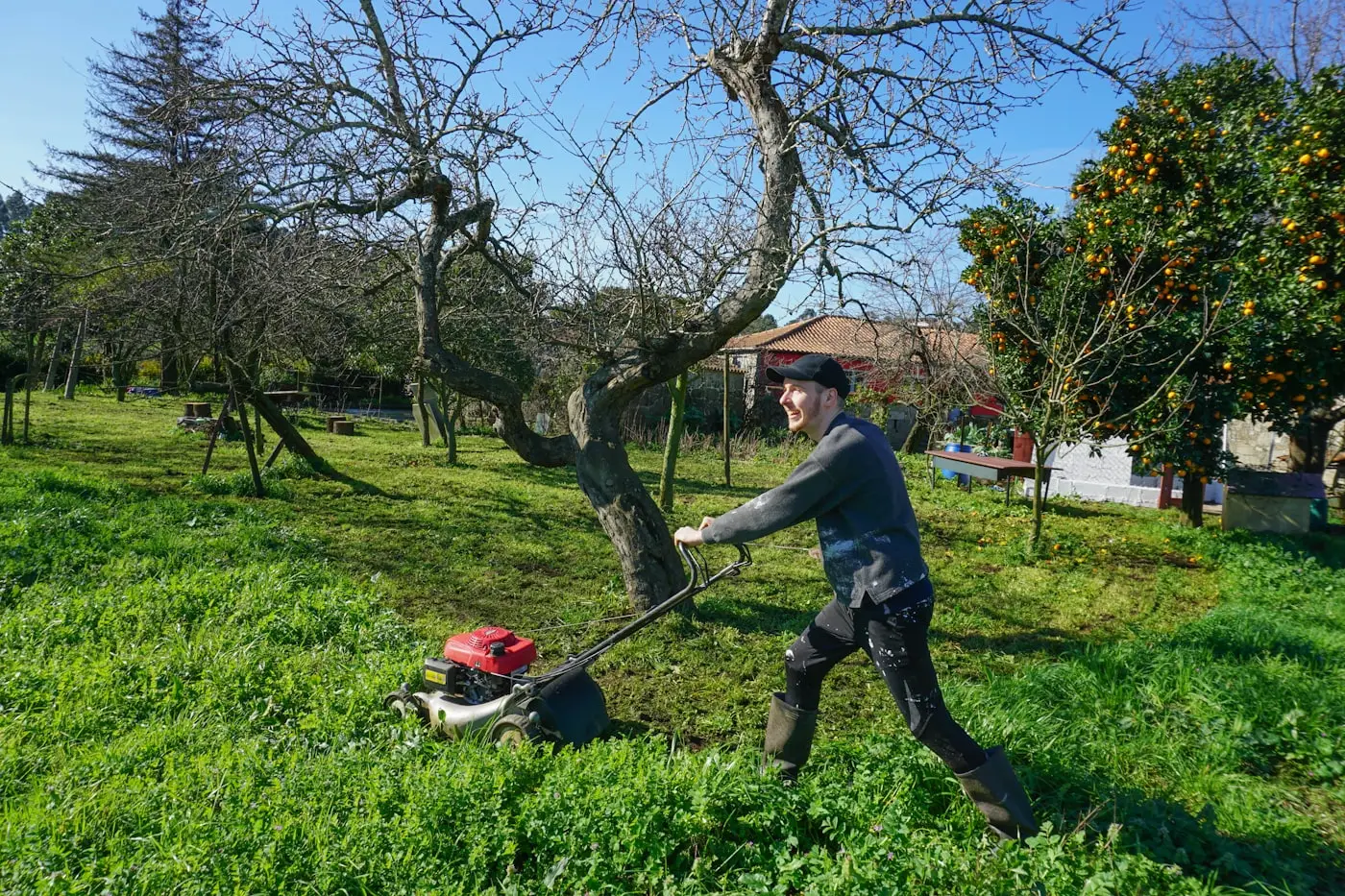
Rastrick sits between Brighouse and the hills above the Calder Valley, a predominantly interwar suburban settlement with a consistent garden stock: semi-detached houses from the 1920s through to the 1950s, clay soil, rear gardens in the 20 to 60 square metre range, and front gardens that have variously been maintained, paved over, or allowed to develop into something between the two. There is no exotic geology here, no dramatic slopes, no unusual planting tradition. What Rastrick gardens need is consistent, competent, reliable maintenance from April to October, and a gardener who knows the clay soil character of this part of West Yorkshire well enough to manage it properly. Rates run £25-36 per hour in 2026. For the local contact and area overview, the Rastrick town page has what you need. This guide covers what the work costs, what clay soil maintenance means in practice, and how to find a reliable gardener in HD6.
Garden Character in Rastrick
Rastrick's garden stock is a direct product of the interwar semi building era. These properties were built for working-class and lower-middle-class households in the 1920s, 1930s and into the 1950s, with modest rear gardens that were intended to be productive and practical rather than ornamental. In 2026 most of those gardens have evolved from the original vegetable plot and grass path layout into standard lawn-and-border suburban gardens, with the common additions of a paved patio area, a garden shed, and whatever planting has been added and removed over the intervening decades.
Typical garden sizes
Rastrick rear gardens run typically 5 to 8 metres wide and 8 to 15 metres deep, giving plot areas in the 40 to 120 square metre range. A standard interwar semi in the streets off Crowtrees Lane or Rastrick Common will have a rear garden in the middle of this range: enough space for a reasonable lawn, a planted border along one or both sides, and a patio area at the house end. Front gardens are typically 3 to 5 metres deep with a privet or conifer hedge boundary. These are not large or complex gardens, but they are real gardens that need managing, and a fortnightly maintenance programme from April to October keeps them consistently presentable.
Established hedge stock
The interwar period was the golden era of suburban hedge planting, and Rastrick's housing stock reflects this. Privet is the most common boundary hedge species, with leylandii conifer hedges a close second among properties developed from the 1960s onward. Some older properties on the village fringe have established beech or hawthorn boundaries. Privet hedges on properties that have been owner-occupied for decades can become substantial: six or more feet tall, two or three feet wide, running the full length of the front or side boundary. These are not difficult to manage if trimmed regularly, but a privet hedge that has been left uncut for two or more years will require significantly more time and cost to bring back into shape than a hedge on regular annual maintenance.
Practical rather than ornamental
Rastrick gardens do not have the ornamental ambition of the Victorian and Edwardian suburbs to the north. The garden culture here is practical: the lawn should be mowed, the hedge should be trimmed, the borders should not be overgrown. Most HD6 homeowners who invest in professional maintenance are looking for reliable, consistent upkeep rather than skilled horticulture. That does not mean the work is any less important, but it does mean the brief is usually clear: keep it tidy, keep it regular, do not let it get out of control. Our garden maintenance service delivers exactly this across West Yorkshire.
Rastrick Soil: West Yorkshire Clay
Rastrick sits on the West Yorkshire clay formation, the same soil type that runs through most of the Huddersfield, Brighouse and Halifax corridor. This is a moderately heavy clay that holds moisture and nutrients well but becomes compacted under regular use and drains slowly after wet periods in winter and spring.
The practical implications for your lawn and borders are the familiar West Yorkshire clay characteristics. In winter and early spring, the soil can remain waterlogged for extended periods after heavy rain, and walking on or mowing a wet clay lawn compacts the surface and damages the structure. In summer dry spells, the same clay can bake to a hard crust that repels water initially when rain does come. Clay lawns in Rastrick go through a harder summer dormancy than the free-draining limestone lawns of eastern Yorkshire, and a wetter, slower-draining winter than the gritstone soils of the Pennine hilltops.
Spring aeration is the most effective single annual intervention for clay lawns in HD6. Hollow-tine aeration in April before the main growing season relieves compaction, allows water and nutrients to penetrate to the root zone, and significantly improves summer drought resilience and winter drainage. Autumn scarification removes the thatch layer that accumulates over the growing season and worsens waterlogging on the clay surface. Overseeding bare or thin patches in early October, after scarification, gives the best establishment window before winter frosts. Our lawn mowing service covers Rastrick and the wider HD6 area through the growing season.
HD6 postcode coverage
HD6 covers Rastrick, Brighouse, Clifton and Bailiff Bridge. Adjacent HD2 (Huddersfield north), HD3 (Lindley) and HX3 (Northowram, Shelf) are covered as part of the wider West Yorkshire network.
What Garden Work Costs in Rastrick
Rastrick rates sit in the middle of the West Yorkshire suburban band. The pricing is straightforward for standard maintenance on accessible plots. For national context, the how much does a gardener cost UK guide covers the full picture.
| Service | Rastrick typical range (HD6), 2026 | Notes |
|---|---|---|
| Hourly rate (maintenance) | £25-£36/hr | Regular contract lower end. One-off visits higher. |
| Fortnightly maintenance visit | £48-£80 per visit | Medium interwar semi rear garden. Minimum visit charge applies to small plots. |
| Lawn cut (one-off) | £35-£60 | Standard accessible suburban rear lawn. |
| Hedge trimming - standard | £45-£90 | Privet or conifer boundary hedge. Established overgrown hedges quoted after site visit. |
| Garden clearance | £190-£400 | Medium suburban plot. Fixed quote required after in-person visit. |
| Spring aeration and overseeding | £70-£140 | Strongly recommended on Rastrick clay lawns every spring. |
What Gets Booked Most in Rastrick
Fortnightly lawn and border maintenance
Regular fortnightly garden maintenance from April to October is the core booking across Rastrick. Lawn mowing, edge trimming, border weeding and light pruning are the standard visit tasks. On a typical Rastrick interwar semi rear garden, a fortnightly visit runs one to one and a half hours. Most regular maintenance customers in HD6 are on annual contracts that run from April through October, with the option to add seasonal one-off visits for spring tidying and autumn clearance.
Hedge trimming
Privet and conifer hedge trimming is consistently among the most frequently booked individual services in Rastrick. Privet needs cutting at least twice per year to stay in shape: once in June and once in late August to September. Leylandii conifer hedges need at least one annual cut and should not be cut into old brown wood, as most conifers will not regenerate from old growth. If your leylandii hedge has grown significantly above the height you want it maintained at, discuss with the gardener what is achievable: it may be reducible in height by careful management over several years, or it may be at the point where removal and replacement with a more manageable species is the practical solution.
Spring aeration and lawn care
Clay lawn care across HD6 is a consistent seasonal booking. Spring hollow-tine aeration in April is the most effective annual intervention for Rastrick's compacting clay lawns. Autumn scarification and overseeding in September prepares the lawn for winter and fills in any bare patches before frosts. Our grass cutting service includes advice on clay lawn management as part of the regular maintenance programme.
One-off clearance
Garden clearance is requested in Rastrick when properties change hands or when a garden has been left unmanaged. Standard interwar rear garden clearances, removing overgrown shrubs, accumulated green waste and self-seeded growth, can typically be completed in a half-day to a full day depending on the extent. Always get a fixed quote after an in-person visit. Confirm that waste removal is included in the quote, because a clearance that does not include disposal leaves you with a disposal problem that can be costly to resolve separately.
How to Find a Reliable Local Gardener in Rastrick
Standard vetting applies across all Yorkshire postcodes. Ask for public liability insurance documentation, a Waste Carrier's Licence for any job with green waste removal, and references or photos of recent work in HD6. Ask about experience with clay soil lawn management and whether they offer spring aeration as part of or alongside their maintenance service. A gardener who does not understand clay soil behaviour, or who continues to mow a waterlogged clay lawn in November rather than pausing the programme, will cause unnecessary damage to your lawn over time.
Ask specifically whether they have customers in Rastrick or the adjacent Brighouse streets, as a gardener with an established local round will have a more efficient routing that keeps costs reasonable for regular maintenance. Get two quotes for any significant one-off job and make sure both quotes specify whether waste removal is included. Book regular maintenance in January or February for an April start.
Seasonal Considerations for Rastrick Gardens
Rastrick's position on the West Yorkshire plateau, slightly elevated above the Calder Valley floor but well below the exposed Pennine hilltops, gives it a climate that is recognisably four-seasonal without the extremes of altitude. Winter frost is real but rarely prolonged. Summer is warm enough to support vigorous lawn and garden growth but not hot enough to cause severe drought stress in most years on clay-retentive soil.
Spring is the most important maintenance period. Clay soil in HD6 warms slowly, and the first productive maintenance visit of the year is typically late April when the ground has drained from winter and begun to warm. April aeration on clay lawns is the single most valuable annual investment for Rastrick homeowners. Privet hedge trimming starts in May once new growth is underway.
Summer maintenance follows the fortnightly pattern. The clay soil's moisture retention means Rastrick lawns hold up reasonably well through dry summer periods, better than equivalent limestone lawns further east. However, compaction from mower weight on clay surfaces is an ongoing risk, and a good gardener will recognise when conditions are too wet to mow productively and adjust the schedule rather than proceeding regardless.
Autumn in Rastrick: lawn scarification in late September, overseeding in early October, the final hedge cut of the year by September, border clearance through October and November. Any overgrown shrubs that need significant cutting back are best addressed in late autumn or early winter while plants are dormant and the extent of growth is most visible.
Winter maintenance is minimal on clay soil. Avoid walking on or mowing waterlogged clay in December and January. February is rose pruning time and the right point for any significant structural pruning of dormant shrubs. The growing season begins again in late April.
Frequently Asked Questions
How much does a gardener cost in Rastrick?
Rastrick gardeners typically charge £25-£36 per hour in 2026. Fortnightly maintenance visits run £48-£80 for a medium interwar semi garden. For a national price comparison, see the how much does a gardener cost UK guide. For the local overview, see the Rastrick town page.
What soil type do Rastrick gardens have?
West Yorkshire clay, a moderately heavy clay that holds moisture well but compacts under foot traffic and drains slowly after wet periods. Spring aeration is strongly recommended on most HD6 lawns. Autumn scarification removes thatch that worsens winter drainage. Clay soil warms slowly in spring, which slightly delays the start of the growing season compared to sandier soils.
What garden services are most in demand in Rastrick?
Fortnightly lawn and border maintenance from April to October, hedge trimming for privet and conifer boundaries, spring aeration and autumn scarification for clay lawn management, and one-off garden clearance when properties change hands or gardens have been neglected.
How much does hedge trimming cost in Rastrick?
Standard domestic hedge trimming in Rastrick runs £45-£90 for privet or conifer boundaries. Established overgrown hedges that have not been cut in two or more years cost more on the first cut. Get a fixed quote after a site visit rather than an hourly estimate for any established hedge.
What is the best time to book a gardener in Rastrick?
January or February for regular maintenance starting in April. For hedge trimming, book between August and February to avoid the nesting season. One-off clearances can be arranged with two to three weeks' notice outside the peak March-to-June period.
Do Rastrick gardeners cover Brighouse and Clifton?
Yes. Gardeners covering Rastrick (HD6) typically also cover Brighouse and Clifton as part of the same local round. The garden character across the HD6 area is broadly similar throughout. Use the estimate form on this site to confirm coverage for your specific address. For the local overview, see the Rastrick town page.
How do I find a reliable gardener in Rastrick?
Ask for public liability insurance, Waste Carrier's Licence and references in HD6. Ask about clay soil experience and whether they offer spring aeration. Book in January or February for an April maintenance start. Use the estimate form on this site to put your enquiry in front of a gardener covering your HD6 postcode.
Request a gardener for your Rastrick garden.
60-second assessment, local gardener, free estimate. Tell us your HD6 postcode and what you need.
Start the estimate