Weed Control in Yorkshire Gardens: Dealing With Ground Elder, Bindweed and Couch Grass
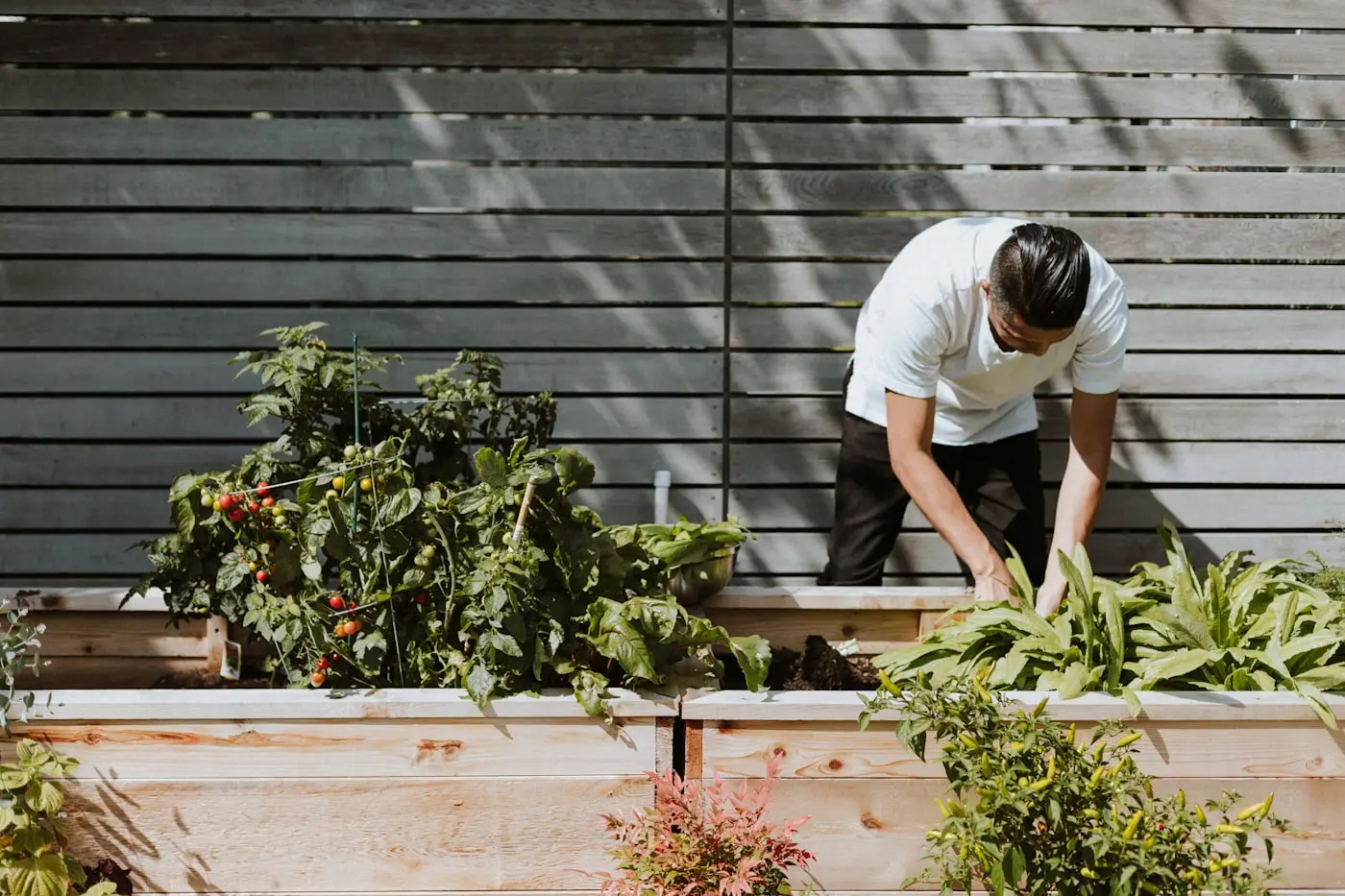
Yorkshire gardens are weedy. This is not a moral failing - it is a combination of soil type, climate, and history that makes weeds a persistent fact of life in most parts of the county. Heavy clay in West and South Yorkshire holds moisture and nutrients, which is exactly what productive weeds need. Mild wet winters mean perennial weeds barely go dormant before starting into vigorous growth again in March. And most Yorkshire gardens sit on land that was previously farmland, woodland edge, or urban industrial ground, all of which carry weed seed banks that take decades to exhaust.
The good news is that effective weed control is possible. The bad news is that the worst Yorkshire weeds - ground elder, bindweed, couch grass, horsetail - require sustained effort over more than one season. There are no shortcuts to clearing an established ground elder infestation. But with the right approach and realistic expectations, these weeds can be managed effectively enough to maintain a good garden.
The quick answer: the hardest weeds (ground elder, bindweed, horsetail) require either repeated glyphosate applications or permanent exclusion membranes combined with raised planting. Organic methods alone are not sufficient to eradicate established infestations. Expect two or three seasons to get serious perennial weeds under full control.
Why Yorkshire Gardens Are Particularly Weedy
The three main reasons Yorkshire gardens tend to have persistent weed problems are:
Clay soil. Most of West Yorkshire, the majority of South Yorkshire, and large areas of the East Riding have clay or clay-loam soils. Clay is nutrient-rich and moisture-retentive - ideal for fast-growing weeds. It is also difficult to cultivate, which makes hand-weeding physically hard (roots are locked into the dense soil), and makes ground preparation for new planting labour-intensive.
Wet climate. The Pennine damp that most of West Yorkshire experiences means the ground rarely dries out significantly except in exceptional summers. Perennial weeds that would struggle or go into stressed dormancy in a dryer climate carry on growing almost year-round in Yorkshire. Ground elder and bindweed in particular benefit from Yorkshire's wet mild winters - they start into growth earlier in spring and maintain growth later into autumn than in dryer parts of England.
Historical land use. Most Yorkshire urban and suburban gardens were farmland within the last 150 years. Dock, nettle, thistle, and bindweed are all characteristic of disturbed farmland and have massive seed banks in Yorkshire soils. New-build gardens have the additional problem of construction soil: the topsoil removed and replaced during building work often carries weed seeds from multiple sites, and the disturbed ground conditions favour rapid weed colonisation.
The Hardest Weeds in Yorkshire Gardens
Ground elder (Aegopodium podagraria)
Ground elder is the most commonly complained-about perennial weed in Yorkshire gardens, and with good reason. It spreads through an extensive rhizome (underground root) system that can extend metres in all directions from the parent plant. Every root fragment left in the soil after digging generates a new plant. In clay soil, where roots break and fragment when you dig, it is essentially impossible to remove ground elder by hand-digging without creating more plants in the process.
Ground elder was introduced to Britain by the Romans as a medicinal herb and has spread throughout the country since. In Yorkshire's damp, nutrient-rich soils it is particularly vigorous. It is shade-tolerant, meaning it establishes under trees and shrubs where other weeds do not compete, and its dense mat of leaves excludes everything else.
What works: Glyphosate (Roundup and equivalents) applied to actively growing foliage is the most effective chemical control. Apply when leaves are large (at least 10-15cm across) and the plant is actively growing - May to September in Yorkshire. Two applications four to six weeks apart in the first season significantly weaken the plant. Follow-up the next spring to catch regrowth from root fragments. In beds where you want to plant, combining glyphosate treatment with weed-suppressing membrane laid over bare soil before replanting is the most reliable long-term solution.
What does not work: digging alone (fragments the roots and spreads the problem), flame weeding (burns the top growth, roots regrow), mulching alone (ground elder grows through even thick mulch).
From next door: Ground elder regularly comes under or through boundary fences from neighbouring gardens. Physical root barriers (rigid plastic membrane sunk 30cm into the ground along the boundary line) slow reinvasion. Maintaining a treatment programme near the boundary is necessary if the source is ongoing.
Bindweed (Calystegia sepium and Convolvulus arvensis)
Bindweed is the bane of Yorkshire cottage gardens and allotments. The field bindweed (Convolvulus arvensis, small white or pink flowers) and the larger hedge bindweed (Calystegia sepium, large white trumpet flowers) both share the same characteristic: roots extending 3-4 metres or more deep into the soil, far beyond the reach of any cultivation. Even a 1cm fragment of root will generate a new plant. Hedge bindweed in particular establishes readily where garden hedges are left untrimmed, using the dense growth as a climbing frame; a regular hedge trimming service keeps the structure open and significantly limits the foothold it can gain.
In West and South Yorkshire's clay soils, bindweed is at its most resilient. The deep roots are protected from almost all disturbance, and the extensive lateral root system means pulling the topgrowth leaves the root system entirely intact.
What works: Repeated glyphosate application to the foliage, applied when the plant is in active growth and the leaves are large enough to absorb a meaningful dose. The trick with bindweed is to let the stems grow to 30-40cm, wind them around short canes, and then spray them. This concentrates the herbicide on the bindweed without affecting surrounding plants. Two or three applications per season for two to three seasons is typically required to significantly reduce an established infestation.
Organic methods - repeatedly cutting or pulling back the topgrowth - do not eradicate bindweed. They deplete the root reserves over several seasons but require persistent effort and do not provide a clear end point. In a heavily infested area, organic management alone is unsatisfactory.
Couch grass (Elymus repens)
Couch grass (also called twitch or quitch) is the grass equivalent of ground elder: an aggressively spreading perennial with white rhizomes that run through the soil in all directions. It is particularly common in Yorkshire's clay soils, where its rhizomes push through the dense soil layer more effectively than many garden plants can root.
In lawns, couch grass appears as patches of coarser, paler grass that spreads laterally and resists being mown out - a consistent lawn mowing schedule at the correct cutting height is the best preventive measure, as longer grass between cuts gives couch grass more competitive foothold. In borders, it grows through the rootballs of other plants, making chemical treatment impossible without damaging what you want to keep.
What works: In bare ground, glyphosate applied to actively growing foliage is effective. In borders where couch has grown through existing plants, hand-forking out the rhizomes is necessary - painstaking work in clay, but the only option where chemical treatment is not possible. Lifting perennial plants, washing the soil off the roots, and carefully removing all couch rhizomes from the rootball before replanting into improved, well-cultivated soil is the thorough approach.
Horsetail (Equisetum arvense)
Horsetail is the most difficult weed in any Yorkshire garden. It is a primitive plant - effectively unchanged for 300 million years - with silica-reinforced stems and a deep root system that can extend metres below the surface. It is completely resistant to most herbicides, including glyphosate (though glyphosate does suppress it somewhat with repeated applications). The silica coating prevents herbicide absorption.
Horsetail is common in Yorkshire on land near watercourses, on former industrial land, and on the wetter parts of the county. Once established, it is effectively impossible to eradicate. The realistic management approach is exclusion: robust weed-suppressing membrane covered with a thick layer of bark mulch or gravel, maintained consistently. This suppresses growth without eliminating it - if the membrane is removed or damaged, horsetail regrows.
Heavy crushing of the stems before applying glyphosate (which disrupts the silica coating enough to allow some absorption) provides partial control, but two or three applications are needed for even moderate suppression. This is the closest thing to a chemical solution that exists for horsetail, and it is partial at best.
Yorkshire-Specific Invasive Weeds
Himalayan balsam (Impatiens glandulifera)
Himalayan balsam is an annual that grows to 2-3 metres in a single season. It is not a problem in most suburban Yorkshire gardens, but it is a significant issue for gardens backing onto rivers and streams, particularly along the Aire (through Leeds and Bradford), the Wharfe (through Ilkley, Otley, Wetherby, and Tadcaster), and the Ouse and Nidd in and around York.
The balsam is a relative of the garden busy lizzie - pink or white flowers in summer followed by explosive seed pods that can project seeds several metres. It forms dense stands on riverbanks and damp ground and smothers native vegetation. It colonises garden edges near watercourses in late spring as seeds from upstream germinate in the damp soil.
Control is straightforward for what is in your garden: pull or cut the plants before they set seed (before August). The roots are shallow and the whole plant comes out easily. The complication is that upstream populations seed your boundary every year, so annual removal is an ongoing requirement rather than a one-time clearance.
Giant hogweed (Heracleum mantegazzianum)
Giant hogweed is a serious hazard species. It grows mainly on riverbanks and waste ground in Yorkshire - not typically in cultivated gardens - but properties backing onto riverbanks or adjacent to waste ground on rivers like the Wharfe, Aire, and Ouse may find it on or near their boundary.
Identification: it is large - stems 3-5 metres, leaves up to 1.5 metres across, white umbrella flower heads up to 60cm across. The stems have distinctive reddish-purple blotches and hollow ridges. If you think you have it, do not touch it. The sap contains furanocoumarins that cause severe phototoxic burns when the affected skin is subsequently exposed to sunlight. Burns can be deep, slow-healing, and leave permanent scarring.
Report it to your local council if found on a roadside or public land. On private land, removal requires full protective equipment (waterproof coverall, thick gloves, eye protection) and licensed disposal of the material. This is specialist work - do not attempt it without proper preparation.
Chemical Weed Control: Glyphosate in Yorkshire Gardens
Glyphosate (sold as Roundup, Gallup, and various own-brand equivalents) is the most effective herbicide available to amateur gardeners for perennial weed control. It is a systemic herbicide - absorbed through the leaves, transported throughout the plant including into the root system, which is why it is effective on deep-rooted perennials where contact herbicides are not.
In Yorkshire's climate, apply glyphosate when:
- The weed is actively growing (May to September for most perennial weeds)
- Leaves are large enough to absorb a meaningful dose
- Dry weather is forecast for at least six hours after application (rain washes off the herbicide before it is absorbed)
- Wind is calm (spray drift damages other plants)
Do not apply glyphosate to stressed, drought-affected, or very young foliage - absorption is reduced. Apply in the morning if possible, so the plant is actively transpiring and moving the herbicide through its system.
Glyphosate does not work on horsetail at normal application rates (see above). It is only partially effective on established Japanese knotweed and requires multiple applications over several seasons combined with professional treatment for full control.
For professional weed control treatment using stronger formulations not available to amateur gardeners, a qualified herbicide applicator can achieve faster results on established infestations.
Organic Weed Control Methods
Flame weeding
A gas-powered flame weeder (a wand connected to a propane canister) kills annual weeds and young perennial growth by applying intense heat to the foliage. It is effective on driveways, gravel, and between paving where you cannot cultivate. It is less effective on established perennial weeds because it only destroys the topgrowth - the roots survive and regrow within days.
Flame weeding is used in organic gardening as a repeated treatment that gradually depletes root reserves. It works well as a pre-emergence treatment on vegetable beds (flame the surface a week before planting to destroy the first flush of weed seedlings). For established bindweed or ground elder, it is a management tool rather than an eradication method.
Cardboard and mulch exclusion
Covering an infested area with a thick layer of cardboard (3-4 layers, overlapped) and then 10-15cm of bark mulch, woodchip, or gravel excludes light from the soil surface and kills or severely suppresses annual and biennial weeds. It also weakens many perennial weeds over time. The disadvantage is that it takes one to two growing seasons to be effective, and ground elder and bindweed will eventually grow through even thick mulch.
This method works best as a preparatory step for new beds: suppress the existing weeds for one season with cardboard and mulch, then remove everything and plant through high-quality weed-suppressing membrane with compost above. The combination of suppression followed by permanent membrane is much more effective than either alone.
Smother planting
Dense, vigorous ground-cover plants can outcompete annual weeds and slow the spread of perennial weeds. Good smother plants for Yorkshire conditions include Geranium macrorrhizum (spreads readily, semi-evergreen, tolerates clay and partial shade), Epimedium (slow to establish but eventually impenetrable), and Pachysandra terminalis in deep shade. These do not eradicate ground elder or bindweed, but they compete effectively once established and reduce the visual and practical impact of the weeds.
When to Hire a Professional for Weed Control
There are situations where DIY weed control is insufficient and professional help makes sense:
Established ground elder or bindweed across a whole border: a whole bed that has been colonised by ground elder over several years requires a systematic clearance and replanting programme that benefits from professional assessment of what to save and what to remove.
Post-new-build weed control: new-build topsoil is often full of dock, thistle, and grass seeds. A pre-planting herbicide programme to exhaust the initial flush of germination before planting is good practice for any new garden.
Knotweed and Schedule 9 species: Japanese knotweed, giant hogweed, and Himalayan balsam are listed on Schedule 9 of the Wildlife and Countryside Act 1981. Allowing them to spread into the wild is an offence, and their disposal is regulated. Professional management with a contractor who has appropriate licensing is the correct approach.
The weed control service page covers both professional herbicide treatment and weed management programmes across Yorkshire. After weed treatment, see borders and planting for replanting cleared areas with appropriate Yorkshire-hardy species.
Weed Control Summary Table
| Weed | Most effective control | Realistic timescale | Yorkshire prevalence |
|---|---|---|---|
| Ground elder | Glyphosate + exclusion membrane | 2-3 seasons | Very high (most gardens) |
| Bindweed | Repeated glyphosate to foliage | 2-4 seasons | High |
| Couch grass | Glyphosate on bare ground, hand-fork in borders | 1-2 seasons | High (especially in clay) |
| Horsetail | Exclusion membrane (no chemical solution) | Ongoing management | Moderate (wet areas, former industrial) |
| Himalayan balsam | Pull before seed set, annual removal | Annual management | Moderate (near watercourses) |
| Dock | Glyphosate or careful digging to remove taproot | 1 season | Very high (disturbed ground) |
| Annual weeds (chickweed, groundsel, hairy bittercress) | Hoe regularly, flame weeding, mulch | Season by season | Universal |
Weed problem in your Yorkshire garden?
60-second assessment. If a local gardener takes your enquiry, they call you with a price.
Start the assessmentFrequently Asked Questions
How do I get rid of ground elder in a Yorkshire garden?
Ground elder spreads through underground rhizomes that regenerate from every fragment. Repeated glyphosate applications to actively growing foliage (May-September) over two to three seasons is the most effective approach. Follow up with weed-suppressing membrane before replanting. Digging alone makes it worse by fragmenting the roots further.
What kills bindweed in a Yorkshire garden?
Repeated glyphosate applied to foliage when bindweed is in active growth. Wind the stems around short canes before spraying to concentrate the herbicide without affecting nearby plants. Two or three applications per season for two or three seasons significantly weakens an established infestation. Complete eradication from deep roots is unlikely - management to acceptable levels is the realistic goal.
Is glyphosate safe to use in a garden?
Glyphosate is a licensed herbicide in the UK, legal for amateur use. Apply as directed: no wind, dry weather for at least six hours after application, keep pets and children off until dry. It breaks down relatively quickly in soil and does not persist as a soil contaminant at normal garden application rates.
How do I identify Giant hogweed in Yorkshire?
Giant hogweed has stems 3-5 metres tall with reddish-purple blotches, hollow ridged structure, enormous compound leaves, and white umbrella-shaped flower heads up to 60cm across. It grows mainly near rivers. Do not touch it - the sap causes severe phototoxic burns. If found on your property, get professional specialist removal.
What is Himalayan balsam and why is it a problem in Yorkshire?
An invasive annual growing to 2-3 metres, common along Yorkshire riverbanks (Aire, Wharfe, Ouse). It spreads via explosive seed pods and forms dense stands excluding native vegetation. Not usually a problem in most suburban gardens, but a persistent issue for properties backing onto rivers and streams. Control by pulling or cutting before seeds set in August. Annual removal is needed as seeds arrive from upstream populations every year.