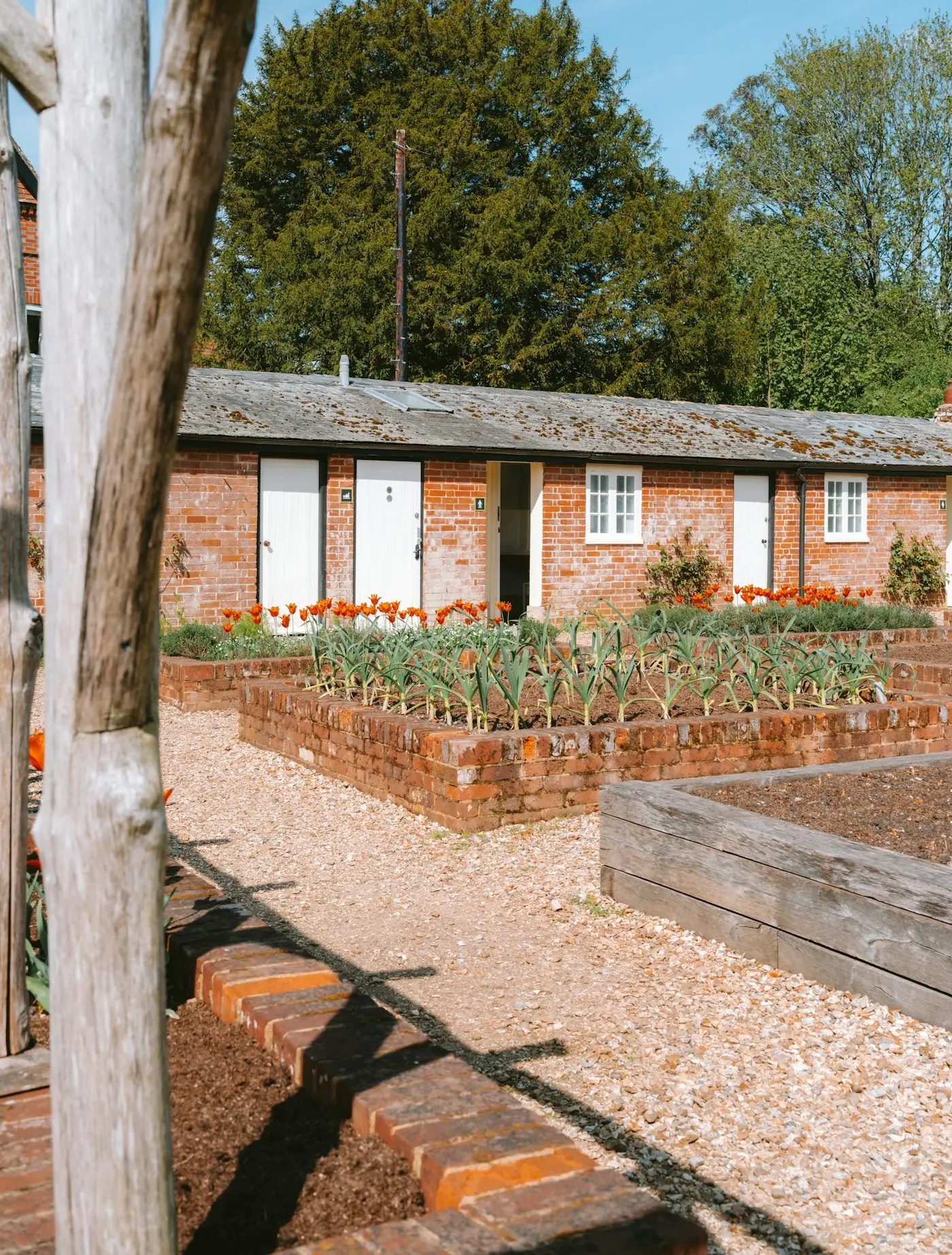
What garden design looks like in Adwick-le-Street
Adwick-le-Street is a northern Doncaster suburb with a character shaped significantly by the coal mining history of the wider area. While the pits themselves closed decades ago, the housing stock tells the story: a mix of older village properties, inter-war colliery housing, and the newer semis and detached houses built on former colliery land from the 1970s onwards. The gardens that come with these properties vary from established plots with mature planting to new-build blanks that were agricultural ground a generation ago.
The soil is the constant throughout: Coal Measures clay. This heavy, slow-draining ground is the defining fact of gardening in Adwick-le-Street and the surrounding DN6 area. It stays wet from October through March, and on newer housing estates where the topsoil has been disturbed and compacted during construction, the drainage can be worse still. In a dry summer, coal clay contracts and cracks. Plants that need consistently moist but well-drained conditions - the kind you can grow easily in lighter Yorkshire soils - simply struggle here unless the soil is managed carefully.
None of this means you cannot have an excellent garden in Adwick-le-Street. It means the design needs to start with an honest assessment of the soil and drainage conditions, choose plants that are genuinely suited to the situation, and use hard landscaping strategically to create surfaces that drain properly and reduce the area of clay soil you need to manage. A designer who knows South Yorkshire clay will give you realistic advice from the start rather than presenting you with a planting palette that looks good on paper but fails by the second summer.
Drainage and hard landscaping first
On many Adwick-le-Street plots, particularly those on former colliery land or estates built from the 1980s onwards, the first design conversation is about drainage. Poorly draining clay with compacted subsoil creates waterlogging problems that no amount of planting will solve. Before you invest in plants and borders, it is worth assessing whether you need to improve drainage in specific areas - either through cultivation, adding organic matter, installing soakaways, or redesigning the garden levels slightly to direct surface water away from borders and the house.
Hard landscaping on clay needs to be installed correctly. Patios and paths that settle and hold water are a common problem on heavy clay subgrades. A properly designed and installed patio on clay subgrade uses adequate sub-base depth, compaction, and drainage detailing that prevents the movement and pooling that often affects DIY jobs on this soil. If your existing patio is sunken or pooling water, that is a drainage and subgrade issue rather than just a cosmetic problem.
Low-maintenance planting for clay soil
The appeal of low-maintenance garden design is strong in Adwick-le-Street, and it is entirely achievable with the right approach. The key insight is that high-maintenance gardens on heavy clay are usually high-maintenance because they have large areas of bare soil between plants - soil that grows weeds faster than anything else when it is wet, and bakes hard when it is dry. The design solution is to eliminate bare soil: use ground-cover planting, deep mulch, and structural shrubs that fill the space properly rather than leaving gaps for weeds.
Plants that genuinely thrive on Coal Measures clay include tough shrubs like dogwood (Cornus), viburnum, spiraea, and hardy roses. Ornamental grasses including miscanthus and deschampsia handle the wet winters and dry summers well. Perennials including rudbeckia, helenium, astrantia, and persicaria are reliable on clay. Ground cover with hardy geraniums and epimedium suppresses weeds effectively under shrubs and trees. These are not compromise plants - they are plants that look good in a well-designed garden and happen to suit the conditions you actually have.
Making the most of newer suburban plots
Many Adwick-le-Street gardens are on post-war and more recent housing estates where the plot came with the house and was little more than a strip of lawn and a fence. These gardens often have good proportions - enough space to create distinct zones for outdoor dining, planting, and children - but they need design to make the space feel deliberate rather than default. A simple intervention like repositioning the patio, creating a defined border rather than random strips around the edge, and adding one or two focal points through specimen planting or a garden structure transforms how these rectangular plots work and feel.
Privacy planting is often the first priority in newer suburban gardens where the fences are standard height and the next-door property is close. Fast-growing but manageable privacy screens using bamboo, hornbeam hedging, or informal shrub planting at specific points can make a rear garden feel like a private space rather than a goldfish bowl within a single growing season. A designer will advise on what works practically for the space and the aspect rather than just suggesting the tallest possible plants everywhere.
Cost ranges for garden design in Adwick-le-Street
| Service | Cost range |
|---|
| Planting plan only | £300-800 |
| Planting plan with implementation | £600-1,500 |
| Full design and project management | £800-3,000+ |
| Border replant (up to 10 sqm) | £150-400 |
| Patio design and installation | £2,000-8,000 |
| Full garden makeover (50-100 sqm) | £5,000-15,000+ |
Garden design consultations in Yorkshire typically run £50-120 per hour. A site visit to assess your garden and give specific advice costs around £150-250. Drainage improvement work is costed separately based on what is needed. Designers quote directly after seeing your plot. See our garden design service page for more detail on what is included at each level.
Get a free Adwick-le-Street garden estimate
Tell us what you want from the garden and we will connect you with local designers who quote directly.
Get a design estimate
The full local guide
Plants that perform on Coal Measures clay
The starting point for any planting design on Coal Measures clay is choosing plants that can handle the two extremes: wet, slow-draining conditions in winter and hard-baked, cracked soil in a dry summer. Most plants that fail on this soil do so because they cannot tolerate the winter waterlogging rather than because they dislike clay per se. Root rot, heaving, and dieback in the first winter are the usual failure modes.
Reliable shrubs for this soil type include dogwood (particularly Cornus alba and Cornus sanguinea varieties for winter stem colour), viburnum (V. opulus, V. tinus, V. plicatum), spiraea (all varieties), forsythia, and most hardy roses. These are backbone plants that establish well and provide year-round structure. Hardy fuchsias work as summer colour shrubs and will die back in a hard winter but regenerate reliably.
For perennials, the most reliable on coal clay include rudbeckia, helenium, astrantia, persicaria, hostas (in shadier spots where the soil stays more consistently moist), and crocosmia. Ornamental grasses - particularly miscanthus, deschampsia, and molinia - are among the best plants for this soil. They handle both the wet and the dry, provide year-round structure including good winter silhouettes, and are largely pest and disease free.
Trees for clay include ornamental cherries (Prunus varieties), crab apples (Malus), rowans (Sorbus), and field maple (Acer campestre). These all tolerate heavy soil well and provide seasonal interest. Avoid trees that need very well-drained conditions and never plant eucalyptus on clay - it will grow fast but become structurally unstable as the clay heaves around the roots.
Process for an Adwick-le-Street garden design
- Initial brief. Tell us what you want from the garden - whether it is better drainage, low-maintenance planting, patio design, or a full makeover of a neglected plot.
- Site visit. The designer visits, assesses soil and drainage, notes any existing plants worth keeping, and discusses your brief and budget.
- Design proposal. A scaled plan with planting list and cost estimate. For design-only work this is the deliverable. For full project management, it is the starting point.
- Coordination and installation. The designer coordinates contractors for paving, drainage and fencing, orders plants, and manages the installation sequence.
- Establishment. Planting in autumn or early spring, with advice on watering and mulching through the first season to get the planting established on clay soil.
Frequently asked questions
What is the soil like in Adwick-le-Street gardens?
Adwick-le-Street sits on Coal Measures clay - heavy, slow-draining soil that stays wet in winter and cracks in dry summers. On newer housing estates built on former colliery land, the topsoil may also be compacted and poorly structured from construction activity. Good soil management (organic matter, mulch, appropriate plant choice) makes a significant difference to what you can grow here.
How much does garden design cost in Adwick-le-Street?
A planting plan only costs £300-800. Planting plan with implementation runs £600-1,500. Full design and project management is £800-3,000 or more. A full garden makeover on a typical suburban plot runs £5,000-15,000. Hourly rates for a Yorkshire garden designer run £50-120. Designers quote directly after a site visit.
What plants work on Coal Measures clay in Adwick-le-Street?
Reliable plants include dogwood, viburnum, spiraea, hardy roses, miscanthus and deschampsia grasses, rudbeckia, helenium, astrantia, and ornamental cherries and crab apples. Plants that struggle on this soil include those needing excellent drainage year-round, such as many Mediterranean herbs and drought-tolerant alpines.
What plants work on Clay Measures clay in Adwick-le-Street?
Plants that tolerate wet winters and periodic summer drought on Coal Measures clay include hardy shrubs (dogwood, viburnum, spiraea), ornamental grasses (miscanthus, deschampsia), perennials (rudbeckia, helenium, astrantia, persicaria), and ground cover (hardy geraniums, epimedium). Trees that cope with clay include ornamental cherries, crab apples, and rowans. Avoid deep-rooted drought-sensitive plants unless you are prepared to irrigate or significantly improve the soil first.
Can you design a low-maintenance garden in Adwick-le-Street?
Yes. Low-maintenance design on coal clay means eliminating bare soil with ground cover and mulch, choosing structural shrubs over high-maintenance perennials, and using hard landscaping to reduce the manageable area. A designer will audit your garden and show you what specific changes reduce maintenance time significantly.
Do you cover the surrounding Doncaster area?
Yes. We connect homeowners with designers across DN6 and the wider Doncaster area including Skellow, Carcroft, Woodlands, Armthorpe, and Bawtry. Designers quote directly and set their own prices.
Areas around Adwick-le-Street we also cover
We connect homeowners with designers across the Doncaster area including Armthorpe, Bawtry, and Goldthorpe. For general gardening services and maintenance in Adwick-le-Street, visit the local gardeners in Adwick-le-Street page. See also our guide to finding a gardener in Adwick-le-Street.