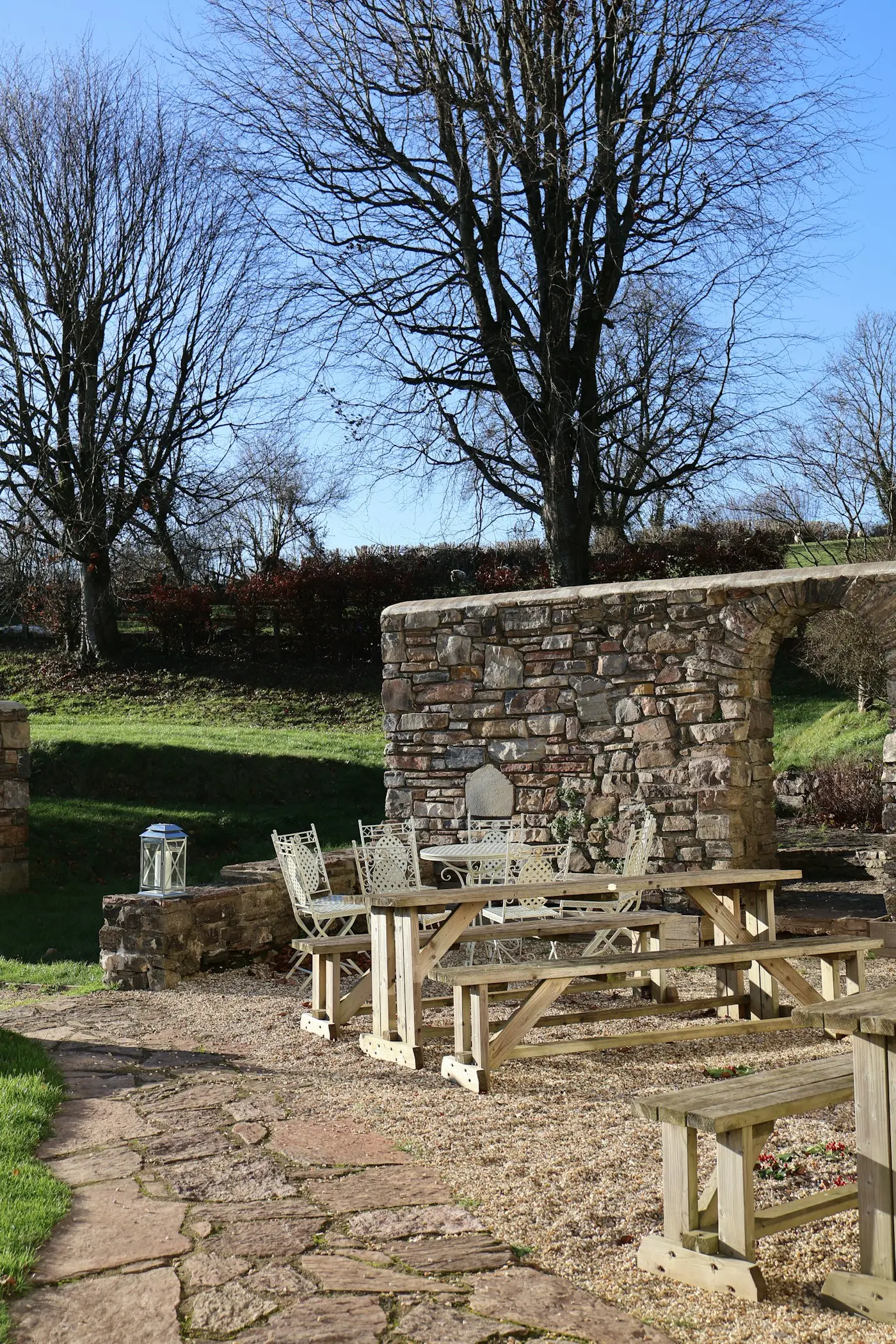
What garden design looks like in Grassington
Grassington is the quintessential Yorkshire Dales village: stone-built, set in Carboniferous limestone country, surrounded by dry-stone walls, and sitting inside the Yorkshire Dales National Park. The Dales Way passes through, Bolton Abbey is a short drive away, and the village gets substantial tourist footfall through the year. It is one of the most recognisable Dales settlements, and its gardens are part of that character.
Designing a garden in Grassington means working with the limestone landscape rather than against it. The soil is very thin and highly alkaline, with limestone pavement often just inches below the surface. Rainfall is over 1,000mm per year, but it drains straight through the karst rock, leaving gardens surprisingly drought-stressed in summer. The growing season is short at 250 metres altitude, with the last frost potentially extending into early May. And the National Park conservation area designation means significant garden changes require thought about how they relate to the wider village character.
These constraints are also the village's appeal. Dry-stone walls, exposed limestone, native Dales planting, cottage gardens with cowslips and harebells in the grass: these are the features that make Grassington look the way it does. The best garden design here works with that character rather than importing something that looks incongruous in a Dales limestone village.
Dales conservation garden design
Grassington is a conservation area inside a National Park, which means any significant change to the garden that could affect the character of the village needs to be considered carefully. A garden designer with National Park experience will know which works need prior discussion with the Yorkshire Dales National Park Authority (YDNPA) and which fall within permitted development. As a general principle, works that maintain or restore the limestone village character (dry-stone wall restoration, traditional cottage planting, stone paving with local materials) are viewed more favourably than works that introduce contrasting materials or styles.
Dry-stone boundary walls are often the most important feature in a Grassington garden. They define the character of the village as much as the buildings themselves, and restoration or rebuilding that uses traditional techniques and local limestone is almost always the right approach. A designer who works in the National Park will have access to experienced dry-stone wallers who understand both the techniques and the materials requirements for conservation area work.
Dry-stone wall restoration and new construction
Dry-stone walls in the Yorkshire Dales have their own grammar: the coursing, the through-stones, the capstones, and the proportion of the wall all follow conventions developed over centuries. Getting these details right matters both for the structural performance of the wall and for its visual relationship to the landscape. A wall that uses the wrong stone, the wrong coursing, or the wrong proportions looks wrong in the Dales setting in a way that is obvious to anyone familiar with the landscape.
Experienced Dales dry-stone wallers use local limestone sourced from the immediate area wherever possible. The colour and texture of limestone varies between Wharfedale, Swaledale and Wensleydale, and using stone from a different area gives a visible mismatch. A good designer will specify sourcing requirements as part of the restoration brief rather than leaving it to the contractor.
Low-maintenance design for holiday-let owners
Grassington has a very high proportion of holiday-let and second-home properties. Many owners are not local and visit infrequently, which creates a specific design challenge: the garden needs to look consistently good when guests arrive but cannot rely on regular maintenance by someone who is there. The garden that the owner cultivates lovingly on summer weekends is not the same garden as the one that performs well for 48 weeks of the year when the owner is not present.
A holiday-let garden design in Grassington typically uses: stone or gravel hard surfaces rather than lawn (which requires weekly cutting to look presentable), structural planting that holds its form without shaping between visits, a simple framework that clearly reads as intentional rather than neglected, and a colour palette derived from the natural limestone flora so that even if planting is slightly past its best it still looks in keeping with the landscape. A good brief is specific: how many maintenance visits per year can you realistically arrange, and what should each visit involve?
Cost ranges for Grassington garden design
Garden design pricing depends on scope, access, and whether work is in the National Park conservation area. These are the typical ranges for BD23:
| Service |
Cost range |
| Planting plan only |
£300-800 |
| Planting plan + implementation |
£600-1,500 |
| Dry-stone wall restoration |
£80-150 per metre |
| Raised bed installation (stone-edged) |
£400-1,500 |
| Holiday-let garden makeover |
£3,000-8,000 |
| Full garden makeover (50-100 sqm) |
£5,000-15,000+ |
For more detail on what drives the overall cost, see what a garden makeover costs.
Start your free Grassington garden estimate
Tell us what you want and we put your enquiry in front of local designers who quote directly. No call centre fees on your side.
Get a design estimate
The full local guide
Plants that suit limestone gardens in Upper Wharfedale
The highly alkaline limestone soil around Grassington (pH 7.5-8.0+) suits a distinct and restricted planting palette. The clearest guide is the native Dales limestone flora: the plants that grow wild on the limestone scars, pavements, and hay meadows around the village give the most reliable indication of what will thrive in garden conditions on the same soil.
Native limestone plants that transition well into gardens: bloody cranesbill (Geranium sanguineum), common rock rose (Helianthemum nummularium), wild thyme (Thymus serpyllum), harebells (Campanula rotundifolia), cowslips (Primula veris), bird's-foot trefoil, fairy flax, and scabious. These are all plants that establish readily in the thin alkaline soil without any special treatment. A garden designed around native limestone flora has a genuine connection to the landscape that no amount of non-native planting can replicate.
In cultivation, clematis are exceptional in limestone conditions: all species thrive, from the small-flowered Clematis alpina and C. macropetala (both well-suited to the altitude and exposure) to the large-flowered hybrids on sheltered walls. Shrub roses are reliable: rugosa roses are particularly tough and handle the altitude and exposure better than more refined varieties. Lavender, rosemary, catmint, achillea, and the native limestone flora all handle the free-draining alkaline conditions.
Traditional Dales hedging: hawthorn (Crataegus monogyna) is the native hedging plant throughout the area and looks completely natural. Blackthorn (Prunus spinosa) is tough and good for wildlife. Both are substantially better choices for a Dales conservation area garden than non-native hedge plants that look out of place in the landscape.
Common garden design projects in Grassington
Dry-stone wall restoration and cottage garden planting plans are the two most common design projects in Grassington. The walls need attention periodically (capstones shift, sections lean or collapse) and the cottage garden planting that suits the walls is a specific palette that not every designer knows well. Getting both elements working together is the most effective first step for most Grassington properties.
Holiday-let garden redesigns for absent owners require a systematic approach: the brief must specify maintenance frequency and the garden must function within that constraint. Replacing high-maintenance lawn and annual bedding with stone surfaces, structural evergreen planting, and robust perennials is the most common outcome. This is not a lesser garden, it is a smarter one for the circumstances.
Raised bed kitchen gardens are popular for owners who visit regularly and want fresh vegetables. Stone-edged raised beds over the thin limestone, filled with good topsoil, give reliable productivity in the short Dales growing season. The alkaline drainage from the limestone below has minimal effect at 30-40cm depth, and the raised bed warms earlier in spring than open ground, which matters when the growing season is curtailed by May frosts.
Process for a Grassington garden designer
- Initial brief. Tell us whether the property is a holiday let, a primary residence, or a second home, and how many maintenance visits per year are realistic. National Park location requires a designer with conservation area experience; this is important to specify from the start.
- Site visit and soil assessment. The designer probes soil depth across the plot (critical in limestone pavement terrain), assesses aspect, existing walls, and any National Park constraints. Check whether any boundary walls are listed or scheduled before discussing changes to them.
- Proposal and design. You receive a scaled design with planting plan, materials specification, and cost estimate. For conservation area properties, the design notes which elements may need prior YDNPA discussion before work begins.
- Phasing. Wall restoration goes first. Hard surfaces second. Planting last, in autumn or early spring. The short growing season makes timing more critical in Grassington than lower-altitude Yorkshire locations.
- Installation and establishment. On very thin limestone soil, the right plant choices establish without irrigation once settled. Mulching retains moisture through the summer dry periods that occur despite the high overall rainfall. The designer will advise on post-planting care for the first season.
A planting plan can be produced within one to two weeks of the site visit. A full redesign with installation typically takes four to twelve weeks. For conservation area and National Park projects, allow additional time for any discussions with the YDNPA before work begins.
Designers in the Grassington area
We connect homeowners across BD23 with local designers who quote directly. For National Park and conservation area properties in Upper Wharfedale, reaching a designer who has specific experience in Dales limestone gardens gives substantially better results than a general garden designer who has not worked with the soil type or the planning constraints. Tell us the property type and maintenance situation in the initial brief and we will put it on the enquiry.
Frequently asked questions
What soil does Grassington have?
Grassington sits on Carboniferous limestone pavement and scars at around 250 metres altitude in Upper Wharfedale. The soil in most gardens is very thin and alkaline (pH 7.5-8.0+), often with limestone pavement just inches below the surface. Soil depth varies dramatically within a single garden. The area has high rainfall (over 1,000mm per year) but it drains through the limestone very quickly, making gardens drought-stressed in summer. The growing season is shorter than lower Wharfedale, with last frosts potentially extending into early May.
Do I need planning permission to change my garden in the Yorkshire Dales National Park?
Grassington is inside the Yorkshire Dales National Park, which has additional planning and conservation requirements beyond standard permitted development rules. Most routine garden work does not require planning permission. However, significant changes to the character of the garden, changes affecting boundary walls, or any construction visible from the street in a conservation area may require consent. A local designer working in the National Park will know which works need prior approval from the YDNPA. Always check before removing or significantly altering dry-stone boundary walls, which are often protected features.
How much does garden design cost in Grassington?
A planting plan only service costs £300-800. Planting plan with implementation runs £600-1,500. Full design with project management typically costs £800-3,000+. Dry-stone wall restoration runs £80-150 per metre. Raised bed installation over thin limestone pavement runs £400-1,500 for a basic setup. A full garden makeover runs £5,000-15,000+. Holiday-let garden designs typically run £3,000-8,000 for a complete low-maintenance makeover. Designers quote directly based on your specific brief.
What plants suit limestone gardens in the Dales?
The native Dales limestone flora gives the clearest guide: bloody cranesbill, rock rose, wild thyme, harebells, cowslips, bird's-foot trefoil, and scabious all grow wild on this soil and perform reliably in gardens. In cultivation, clematis excel in limestone conditions, as do shrub roses, lavender, catmint, achillea, and traditional cottage garden plants. Hawthorn and blackthorn are the traditional hedging plants. Avoid acid-loving plants entirely in open ground: they will not establish at pH 7.5+.
Areas around Grassington we also cover
We also match homeowners with designers in Settle and surrounding Upper Wharfedale villages including Threshfield, Hebden, Conistone, Kilnsey, and Burnsall.
For general garden maintenance, lawn care, and year-round gardening services in Grassington, visit our local gardeners in Grassington page.