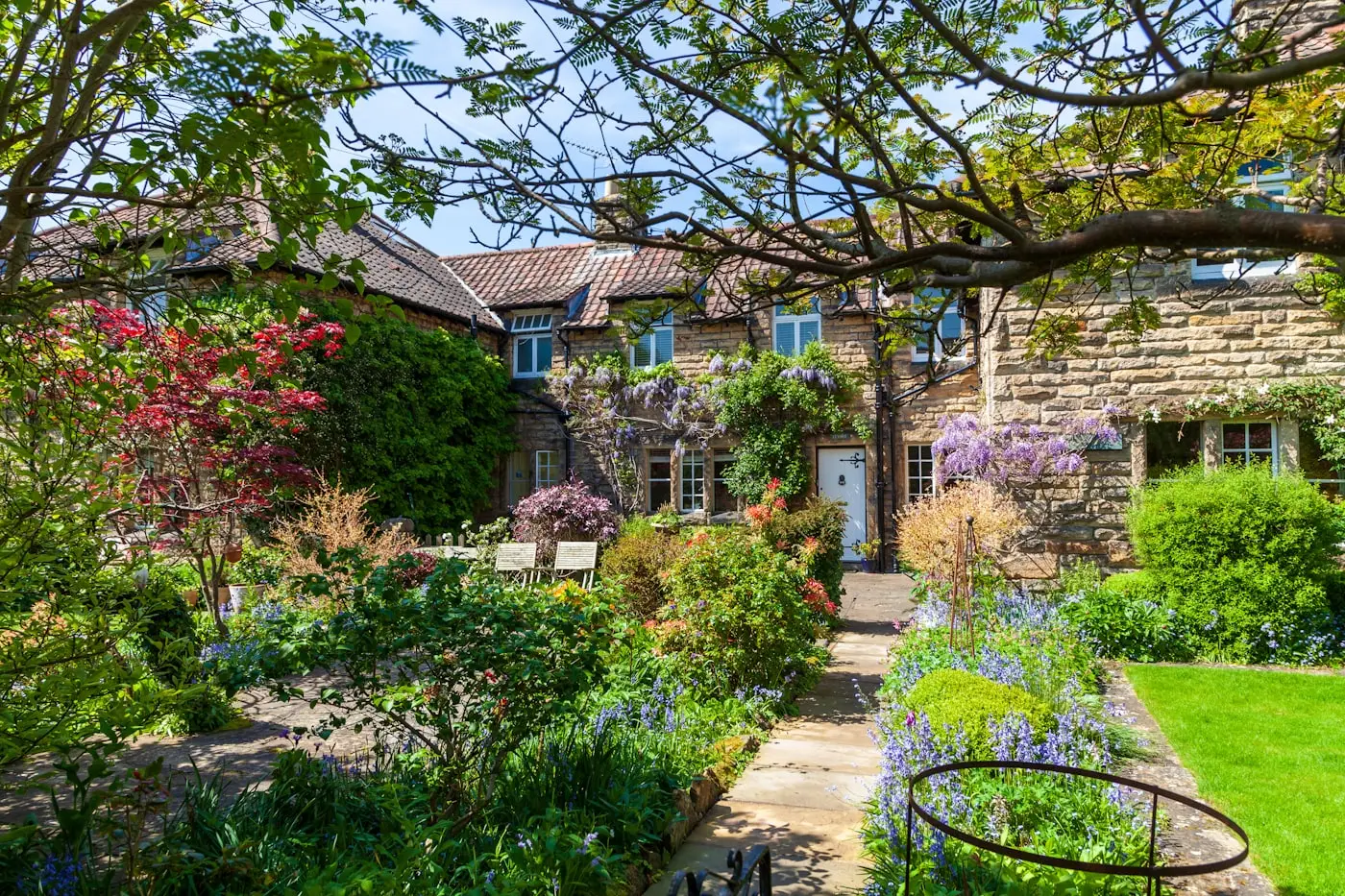
What garden design looks like in Settle
Settle is a limestone town at the foot of the Yorkshire Dales. Pen-y-ghent and Ingleborough are on the skyline. The market square has Georgian character. The whole landscape is built on and from Carboniferous limestone: the walls, the buildings, the pavements on the hills above the town. And the gardens are an extension of that limestone character in a way that is both a challenge and an opportunity.
The challenge is the soil. Thin, alkaline, and highly variable in depth, Settle gardens range from reasonable growing ground in sheltered lower positions to literal rock at the surface in exposed uphill gardens. Soil depth on the limestone karst can change from 40cm to nothing within a metre, which makes conventional border preparation an unpredictable exercise. A designer who does not know this soil will specify plants that establish poorly or not at all. A designer who understands it will work with the limestone rather than fighting it.
The opportunity is the native flora that the limestone supports. The wildflower meadows around Settle and the botanical riches of the limestone pavements above the town (Southerscales, Ingleborough SSSI) demonstrate what alkaline, thin soil can produce when well-managed: bloody cranesbill, rock rose, mountain pansy, harebells, cowslips, wild thyme, scabious, fairy flax, and dozens more species that are rare or absent in the lowlands. A Settle garden designed around the native limestone palette can be as botanically interesting as any designed garden in Yorkshire.
Limestone garden design and rockery work
Exposed limestone in a garden can be treated as a problem (it needs covering or removing) or a feature (it becomes a design element). In Settle, the second approach is almost always more appropriate and more satisfying. Rock gardens and scree beds are legitimate high-maintenance disciplines that use the limestone character of the site rather than importing it. A well-designed rockery in Settle uses the native limestone, places it naturally rather than artificially, and plants it with a palette derived from the limestone flora: saxifrages, sedums, sempervivums, thyme, rock phlox, and alpine species that thrive in the excellent drainage.
A garden designer with limestone garden experience will probe the soil depth across the plot before deciding on the design approach. Where rock is genuinely at or near the surface, raised beds or scree-and-rockery treatment are more honest and more successful than attempting conventional borders over inadequate soil depth. Where there is reasonable depth, conventional border planting with an alkaline-tolerant palette is feasible.
Raised beds over thin limestone soil
The most practical solution for productive growing over thin limestone is raised beds built directly on the rock surface, filled with good-quality topsoil and compost. At 30-40cm depth, raised beds give a full growing season for most vegetables without the limitation of shallow ground. The alkaline drainage from the limestone below has minimal effect at that depth, and the raised bed warms quickly in spring, which matters in Settle where the last frost can extend into late April.
Stone-edged raised beds using local limestone or reclaimed stone are the natural choice in BD24. They look completely at home in the landscape and will last for decades without maintenance. A kitchen garden with stone-edged raised beds, gravel paths, and a simple tool store is both practical and attractive in a way that works alongside the cottage character of most Settle properties.
Traditional Yorkshire cottage garden character
Duke Street, Cheapside, and the areas around the market square have Georgian and Victorian stone-built properties with enclosed walled gardens. These suit a traditional cottage garden aesthetic with formal structure: stone paths, low hedging, climbing plants on the walls, and a planting palette that suits the alkaline soil. Roses (shrub and climbers), clematis (especially large-flowered hybrids), and the traditional cottage perennials that tolerate limestone all work well here.
The shorter growing season at Settle's elevation means spring-flowering bulbs and early perennials matter more than in the vale. Tulips, alliums, early clematis, wallflowers and forget-me-nots in spring give the garden its best display. Late summer can be quieter at this altitude than in the lowlands, which makes choosing repeat-flowering plants and late-season perennials worthwhile.
Cost ranges for Settle garden design
Garden design pricing depends on the scope of work and whether you want design only or full project management. These are the typical ranges for BD24:
| Service |
Cost range |
| Planting plan only |
£300-800 |
| Planting plan + implementation |
£600-1,500 |
| Rockery / scree bed construction |
£500-2,500 |
| Raised bed installation (stone-edged) |
£400-1,500 |
| Full design and project management |
£800-3,000+ |
| Full garden makeover (50-100 sqm) |
£5,000-15,000+ |
For more detail on what drives the overall cost, see what a garden makeover costs.
Start your free Settle garden estimate
Tell us what you want and we put your enquiry in front of local designers who quote directly. No call centre fees on your side.
Get a design estimate
The full local guide
Plants that suit alkaline limestone gardens near Settle
The highly alkaline, thin limestone soil around Settle suits a distinct and interesting planting palette. The key rule is that all strong acid-lovers must be grown in raised beds with ericaceous compost or avoided entirely. In open ground at pH 7.5-8.0, rhododendrons, azaleas, camellias, pieris, and blueberries simply will not establish or thrive. Planning around this constraint rather than fighting it is the first design decision.
What does thrive: Clematis of all types (they prefer alkaline soil and are particularly good on limestone). Shrub roses and climbing roses on alkaline soil perform well. Lavender, rosemary, catmint, salvias, and Mediterranean herbs handle the free-draining alkaline conditions. Scabious, achillea, verbascum, and traditional English meadow plants are at home in the thin limestone soil. The native flora of the limestone pavements above Settle gives the most accurate guide: any plant that grows in the wild Dales limestone will grow in your garden without any special treatment.
For structure, yew hedging (traditional and tolerant of limestone), hawthorn (native and tough), and common beech are all reliable. Box is the traditional low edging plant in cottage gardens, though box blight means its alternatives (Ilex crenata, Lonicera nitida) are often chosen now. Native limestone shrubs include dogwood (Cornus sanguinea), wayfaring tree (Viburnum lantana), and spindle (Euonymus europaeus), all of which are excellent wildlife plants and look natural in the Dales setting.
Common garden design projects in Settle
Rockery and scree bed creation is the most distinctive design project for Settle gardens with exposed or near-surface limestone. Rather than removing rock, a good designer uses it: placing the native limestone naturally as outcrops, planting between them with alpine and rock-garden plants, and creating a low-maintenance garden that looks genuinely part of the landscape. This approach suits both low-maintenance householders and gardeners who enjoy the specialist world of alpine plants.
Raised bed kitchen garden installations are popular for homeowners who want to grow vegetables on thin soil. Stone-edged raised beds with good topsoil give reliable productivity without fighting the underlying limestone. A typical kitchen garden installation includes four to six raised beds, paths between them, a composting area, and space for a cold frame or small greenhouse.
Cottage garden redesigns on the older Georgian and Victorian properties in the town centre typically involve working with stone boundary walls, assessing what existing planting is worth keeping, and creating a new border scheme with alkaline-tolerant plants. The wall character of central Settle is a significant design asset: trained climbers, wall plants, and stone paths are all natural choices that suit the period character.
Process for a Settle garden designer
- Initial brief. Tell us what you want from the garden, your budget, and specifically whether you have thin or near-surface limestone in your plot. Soil depth assessment is a critical first step in Settle that is not always necessary in lower-lying Yorkshire locations.
- Site visit and soil assessment. The designer probes soil depth across the plot before any design begins. On Carboniferous limestone, the depth variation within a single garden can drive the entire design approach. This assessment takes longer than on predictable lowland soil.
- Proposal and design. You receive a scaled design with planting plan, materials specification, and cost estimate. For rockery and raised-bed projects, the design includes stone specification and sourcing recommendation.
- Phasing and coordination. Stone work goes first. Raised beds second. Planting last, ideally in autumn or early spring before the last frost date in late April. The shorter Settle growing season makes timing of planting more important than in lower-lying areas.
- Installation and establishment. On alkaline soil with the right plant choices, establishment is reliable and straightforward. Mulching matters more here than in lower areas because the free-draining limestone soil loses moisture quickly in summer despite the high rainfall.
A planting plan can be produced within one to two weeks of the site visit. A full redesign with installation typically takes four to twelve weeks. Start the design process in autumn to be ready to plant the following spring.
Designers in the Settle area
We connect homeowners across BD24 with local designers who quote directly. They set their own prices and there are no call centre fees on the customer side. Limestone garden design is a specialist discipline, and reaching a designer who has worked on alkaline, thin-soil sites in the Dales fringe gives better results than a general garden designer unfamiliar with the limestone character of this area.
Frequently asked questions
What soil does Settle have?
Settle sits on Carboniferous limestone with thin, very alkaline soil (pH 7.0-8.0) in most gardens. The karst landscape means soil depth varies dramatically within a single plot: rock can be at the surface in some spots while adjacent ground has 30-40cm of workable soil. The area gets 1,000-1,200mm of rain per year, but it drains through the limestone very quickly, making gardens surprisingly drought-stressed in summer. A local designer will probe soil depth across the plot before specifying plants or hard landscaping.
What plants grow in alkaline limestone soil near Settle?
Clematis do exceptionally well on limestone. Scabious, achillea, verbascum, and the native limestone flora (bloody cranesbill, rock rose, wild thyme, harebells, cowslips) are at home in the thin alkaline soil. Roses perform well on the limestone influence. Lavender, rosemary, catmint, and Mediterranean herbs handle the free-draining alkaline conditions. Avoid acid-lovers (rhododendrons, camellias, blueberries) entirely in open ground: they will not establish in soil at pH 7.5+.
How much does garden design cost near Settle?
A planting plan only service costs £300-800. Planting plan with implementation runs £600-1,500. Full design with project management typically costs £800-3,000+. Rockery and scree bed construction runs £500-2,500 depending on size and stone. Raised bed installation over thin limestone soil runs £400-1,500 for a basic setup. A full garden makeover on a 50-100 sqm plot runs £5,000-15,000+. Designers quote directly based on your specific brief and site conditions.
Can you build a productive garden over thin limestone soil in Settle?
Yes, but the standard approach of digging and adding compost to existing ground is limited where rock is close to the surface. Raised beds built directly on the limestone pavement, filled with good quality topsoil and compost, sidestep the problem entirely. A raised bed at 30-40cm depth over limestone gives a full growing season for most vegetables. Most productive Settle gardens use raised beds for annual vegetables and fruit, with alkaline-tolerant perennial planting in the surrounding ground.
Areas around Settle we also cover
We also match homeowners with designers in Grassington and surrounding Ribble Valley villages including Giggleswick, Stainforth, Horton-in-Ribblesdale, and Long Preston.
For general garden maintenance, lawn care, and year-round gardening services in Settle, visit our local gardeners in Settle page.