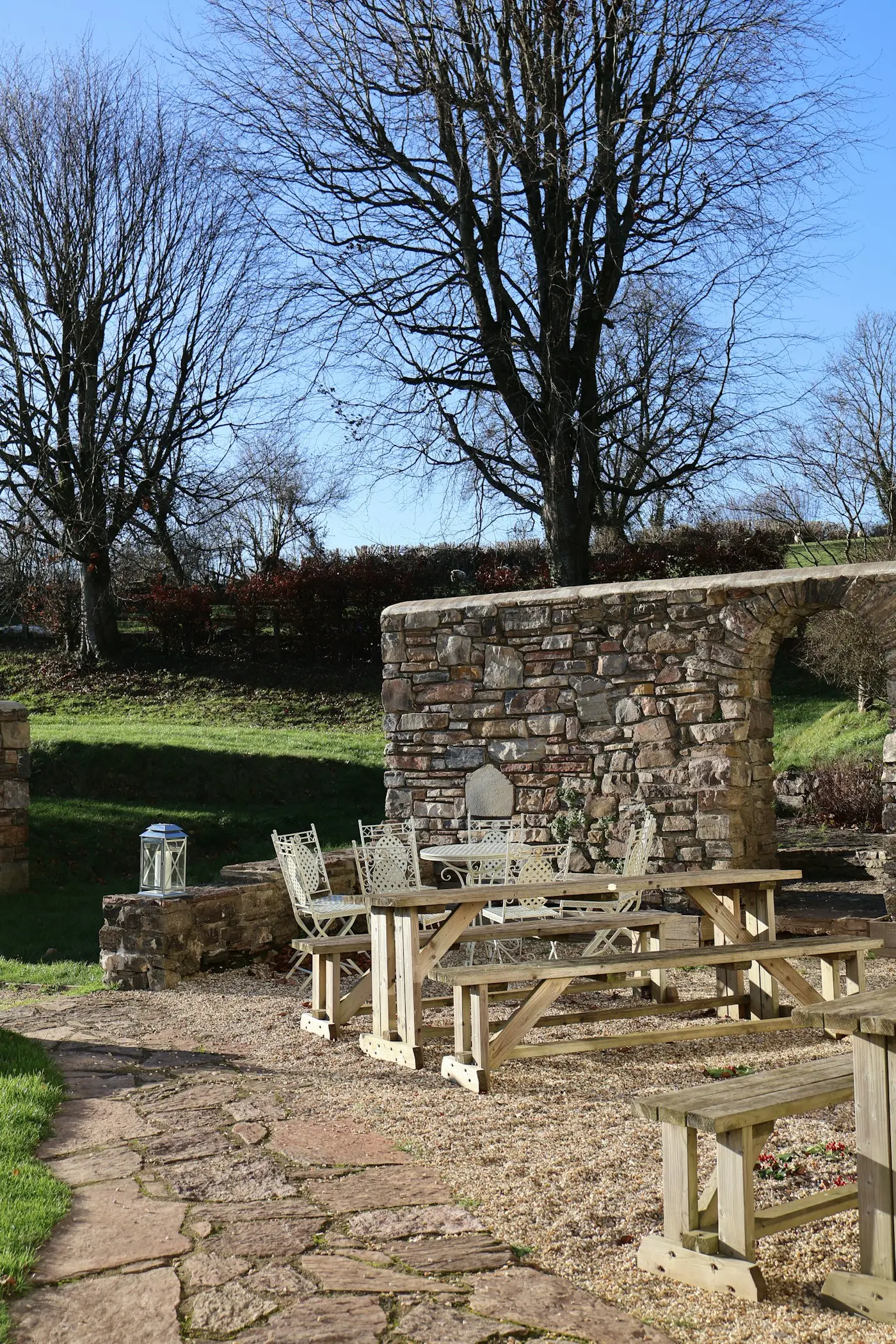
What garden design looks like in Hebden
Hebden is a small village in the Calder Valley fringe, sitting on the edge of the Pennine gritstone country near Hebden Bridge. The BD23 postcode places it in the North Yorkshire/West Yorkshire border zone, and the character is firmly Pennine: acidic gritstone soils, high rainfall, steep valley sides, and a landscape that feels wild and distinctly upland even where the valleys are settled. Gardens here have a particular character - often on sloped ground, frequently with mature trees providing shade and shelter, and with the acidic gritstone soil that opens up plant choices not available on alkaline or clay soils elsewhere in Yorkshire. The high rainfall (typically 50-60% more than the drier parts of Yorkshire to the east) means drainage is important but moisture-loving plants thrive here in a way they do not in drier lowland gardens.
Acidic gritstone - the opportunity
Acidic gritstone soil in the Calder Valley fringe is a genuine gardening opportunity. Ericaceous plants that are virtually impossible elsewhere in Yorkshire - rhododendrons, azaleas, camellias, pieris, and heathers - thrive on acid gritstone. A well-designed garden on this soil can create spectacular spring colour with rhododendrons and azaleas that grow as large, robust specimens rather than struggling containers. Ferns, hostas, and woodland plants also love the acidic, moisture-retentive conditions. A designer who knows gritstone soils will help you exploit the unique plant palette rather than ignoring it and trying to grow plants better suited to neutral or alkaline conditions.
High rainfall and drainage management
The Calder Valley receives significantly more rainfall than the lowland Yorkshire average, and this shapes garden design in practical ways. Surface drainage is important: permeable surfaces, well-drained paths, and borders that can handle sustained wet periods without waterlogging are all design priorities. Lawns on compacted gritstone clay can become waterlogged and mossy in wet winters. Hollow-tine aeration and top-dressing with sharp sand improves grass quality over time. In very wet and shaded positions, a naturalistic planting approach using ferns, hostas, and moisture-loving ground cover may be more successful and less work than a traditional lawn.
Sloped valley-side gardens
Many gardens in the Calder Valley fringe are on sloped ground, either on the valley sides proper or on the hill approaches to the valley floor. Sloped gardens on gritstone are inherently interesting visually but require practical design to be functional. Retaining walls (in stone appropriate to the local character), terracing to create usable flat areas, and drainage management to prevent surface run-off cutting through borders are the design tools. Natural stone walls in local gritstone are the most appropriate retaining structure for this landscape and are genuinely beautiful when well-built.
Cost ranges for Hebden garden design
| Service | Cost range |
|---|
| Planting plan only | £300-800 |
| Planting plan with implementation | £600-1,500 |
| Full design and project management | £800-3,000+ |
| Border replant (up to 10 sqm) | £150-400 |
| Patio design and installation | £2,000-8,000 |
| Full garden makeover (50-100 sqm) | £5,000-15,000+ |
Garden design consultations in Yorkshire run £50-120 per hour. A site visit costs around £150-250. See our garden design service page for full detail.
Get a free Hebden garden estimate
Tell us what you want from the garden and we will connect you with local designers who quote directly.
Get a design estimate
The full local guide
Plants that perform in Hebden gardens
Acid gritstone in the Calder Valley fringe supports rhododendrons, azaleas (both deciduous and evergreen), pieris, camellias, heathers, and most ericaceous shrubs. Ferns are among the best plants for this soil and climate: soft shield fern, male fern, lady fern, and hart's tongue all thrive in the damp acid conditions. Hostas grow exceptionally well on acid gritstone with adequate moisture. Ornamental grasses including molinia and deschampsia suit the Pennine moorland character. For structural planting, native hawthorn, rowan, and silver birch are appropriate to the valley setting.
How the process works
- Initial brief. Tell us what you want from the garden.
- Site visit and assessment. The designer visits, assesses your soil, drainage, and existing planting.
- Design proposal. A scaled plan with planting list, materials specification, and cost estimate.
- Coordination and installation. For full project management, the designer coordinates contractors for paving, fencing, and planting.
- Establishment. Planting in autumn or early spring with advice on maintenance through the first season.
Frequently asked questions
What soil does Hebden have?
Hebden sits on acidic Pennine gritstone with high rainfall in the Calder Valley fringe. The soil is acidic, reasonably free-draining on higher ground, and supports ericaceous plants that cannot grow on alkaline or clay soils elsewhere in Yorkshire.
What plants thrive in Hebden's acidic gritstone soil?
Rhododendrons, azaleas, camellias, pieris, heathers, ferns (all varieties), hostas, ornamental grasses, and woodland plants all thrive on acid gritstone. This is a plant palette unavailable to most Yorkshire gardeners and worth exploiting fully in a design.
How much does garden design cost in Hebden?
A planting plan only costs £300-800. Full design and project management is £800-3,000. For valley-side gardens with slope and retaining work, hard landscaping costs can be higher. Hourly rates for a Yorkshire designer run £50-120. Designers quote directly after a site visit.
How do you handle a sloped garden in Hebden?
Terracing creates usable flat areas on steep ground. Natural gritstone retaining walls hold soil appropriately for the local character. Drainage management prevents surface run-off cutting through borders. A designer will use the slope as a visual asset rather than treating it as a problem.
Do you cover the wider Calder Valley from Hebden?
Yes. We connect homeowners with designers across BD23 and the wider Calder Valley area. Designers quote directly.
Getting the most from Calder Valley gritstone gardens
The Calder Valley fringe near Hebden has some of the most distinctive gardening conditions in Yorkshire, and the homeowners who understand and work with them have access to a plant palette that most Yorkshire gardeners cannot replicate. The combination of high rainfall, acidic soil, and valley shelter creates conditions close to those of the west of Scotland or parts of Wales - where some of the most spectacular gardens in Britain exploit these conditions with ericaceous planting at its most ambitious.
The critical difference between a Hebden garden that exploits these conditions and one that ignores them is plant selection. If you plant a standard Yorkshire suburban palette (viburnum, forsythia, spiraea) in an acid gritstone Calder Valley garden, you will get an adequate result but miss what is genuinely special about the site. If you plant rhododendrons, azaleas, tree ferns (Dicksonia antarctica does surprisingly well in sheltered Calder Valley gardens), pieris, and woodland perennials, you get a garden that is distinctive and cannot be replicated in most other parts of the county.
Hard landscaping on Calder Valley gritstone plots needs to handle the high rainfall. All paved surfaces need adequate drainage fall - anything flat or nearly flat will become slippery with algae in a damp Hebden winter. A textured stone surface drains faster and provides more grip than smooth-faced porcelain in wet conditions. The local gritstone, used as a natural paving material, is the most appropriate and most practical choice for this environment. It matches the character of the valley buildings and handles the wet conditions better than imported materials.
For gardens on steep valley-side ground near Hebden, the structural requirement is retaining walls that hold the slope while the planting establishes. Natural stone dry-stone walls are the traditional and most appropriate solution for this landscape. Built in local gritstone, they provide both a structural function and a visual connection to the broader valley character. The face of a dry-stone retaining wall also provides niches for wall ferns, wall pennywort, and other wall-growing plants that add character to the structure over time.
Areas around Hebden we also cover
We match homeowners with designers in Kirkburton and Honley and Denby Dale. For general gardening services in Hebden, visit the local gardeners in Hebden page. See also our guide to finding a gardener in Hebden.