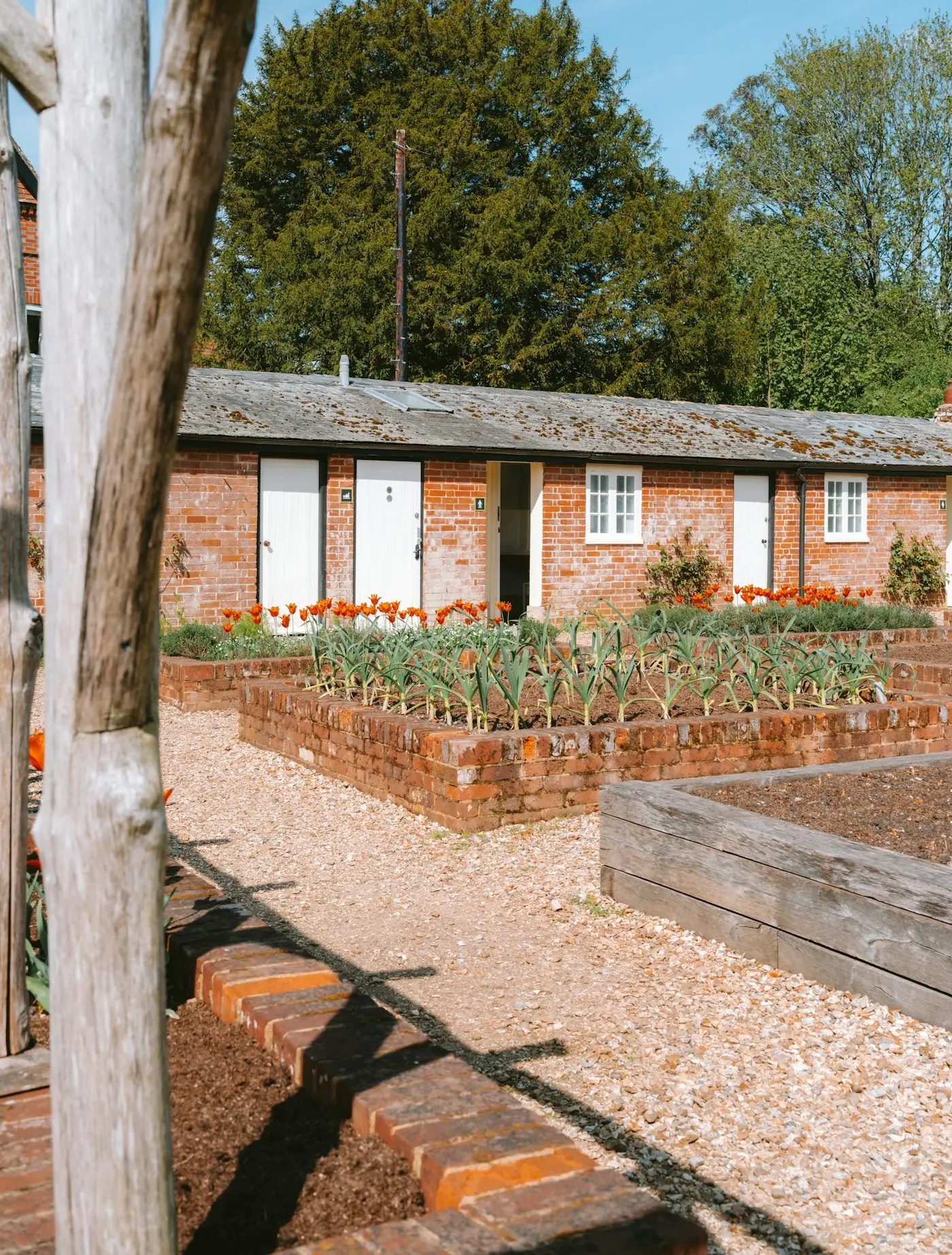
What garden design looks like in Holmfirth
Holmfirth is the Last of the Summer Wine landscape in the flesh: a deeply folded Pennine valley with stone-built terraced cottages stacked on the sides, the River Holme threading through the bottom, and moorland rising above Upperthong and Hepworth to over 350 metres. The town has a strong and creative local character, and its gardens reflect that: steep, stone-walled, and often unexpectedly inventive in what can be done with a challenging plot.
The defining design challenge in HD9 is the slope. Most properties in the older parts of the valley have gardens that slope steeply, sometimes at gradients that make conventional lawn-and-border gardens impossible without structural work. The gritstone character of the area gives a natural retaining material: stone walls feature throughout the valley and look completely at home when used in garden terracing rather than imported materials.
The soil is acidic Millstone Grit, which opens up planting possibilities that are unusual in Yorkshire: rhododendrons in open ground, heathers as structural plants, ferns and hostas in the shaded valley-side positions. The strong local gardening culture means clients in Holmfirth often arrive with a clear vision rather than a blank brief, and a good designer here needs to be a collaborator as much as a specifier.
Terraced valley gardens and stone walls
Creating level outdoor space on a steep Holme Valley garden means terracing. The approach uses gritstone retaining walls (the natural and appropriate material here) or railway sleepers to hold back the slope and create a series of connected platforms. The key design decisions are: how many levels, what height of retaining wall, where the steps go, and whether the terracing follows the contours of the slope or cuts across them.
A garden designer working on a steep HD9 site will start with a survey of the gradient and soil depth. On Millstone Grit, the soil depth can vary from 30cm to 90cm within a short horizontal distance, and retaining walls need to be founded in the stone rather than in shallow soil if they are to stand long-term. A structural assessment before design saves expensive rebuilding later.
Stone walls in Holmfirth are often centuries old and structurally sound despite appearing uneven. Before removing or rebuilding an existing stone wall, a designer will assess whether it is load-bearing and whether restoration is preferable to replacement. In most cases, restoration is the better answer: a restored stone wall looks more genuine than a new one and, if well-built, will last another century.
Gardens with views versus screening from neighbours
Many Holmfirth gardens on the valley sides have spectacular views across the valley toward the moors. These views are a design asset, but the stacked nature of terraced development means neighbours are often visible at close range. A recurring design decision in HD9 is whether to open the view (at the cost of visibility from neighbours) or screen for privacy (at the cost of the view). This is a genuine trade-off that a good designer will discuss explicitly rather than ignoring.
Partial screening with open-structured plants (ornamental grasses, Rosa glauca, native rowan, birch) can filter the view from neighbours without fully blocking the valley view. Formal hedging (yew or beech) provides complete privacy but screens everything behind it including the view. The right answer depends on the specific site geometry and the client's priorities, which is why a site visit before design is essential rather than optional.
Shade gardening on north-facing slopes
North-facing slopes are a common occurrence in a valley that runs roughly east-west. Gardens on the north side of the valley, particularly in Netherthong and parts of the town near the river, can be in shade for much of the day in winter. This is not a design problem: it is a design opportunity if the right plants are specified. Shade-tolerant plants that handle the acid Millstone Grit soil include ferns (Dryopteris, Polystichum, Osmunda), hostas, astilbes, hydrangeas (H. aspera, H. arborescens), epimediums, foxgloves, and Solomon's seal.
A shaded north-facing garden in Holmfirth can be a genuinely lush and interesting space if it is designed for the conditions rather than planted with sun-loving species that will struggle. Attempting to grow lavender and salvias on a permanently shaded north slope will fail. A good designer will recommend a shade planting palette that thrives rather than an optimistic list that includes plants the site cannot support.
Cost ranges for Holmfirth garden design
Steep-slope gardens in the Holme Valley often cost more than equivalent flat-site projects due to access and retaining structure requirements. These are the typical ranges for HD9:
| Service |
Cost range |
| Planting plan only |
£300-800 |
| Planting plan + implementation |
£600-1,500 |
| Terrace design and construction |
£3,000-15,000+ |
| Stone wall restoration |
£80-150 per metre |
| Shade garden redesign |
£500-2,500 |
| Full garden makeover (50-100 sqm) |
£5,000-20,000+ |
For more detail on what drives the overall cost, see what a garden makeover costs. Access on steep sites adds to labour cost; include an honest description of your access when requesting an estimate.
Start your free Holmfirth garden estimate
Tell us what you want and we put your enquiry in front of local designers who quote directly. No call centre fees on your side.
Get a design estimate
The full local guide
Plants that suit moorland-edge gardens in the Holme Valley
The acid Millstone Grit soil around Holmfirth supports a planting palette that is genuinely different from the limestone-influenced gardens of North Yorkshire. Rhododendrons, azaleas, and heathers thrive in open ground without ericaceous compost. This is the same soil chemistry as Scottish Highland gardens, which gives access to a wide range of acid-tolerant plants that perform reliably here.
For moorland-edge character, the native palette points the way: heather (Calluna vulgaris), bilberry (Vaccinium myrtillus), cotton grass (Eriophorum), and hardy moorland grasses. In garden terms, this translates to Calluna and Erica as ground cover, Molinia caerulea (purple moor grass) as a structural grass, and Rosa glauca, rowan, and silver birch as structural shrubs and small trees that look entirely at home in the Pennine landscape.
Hardy geraniums (especially Geranium pratense, the native cranesbill) colonise naturally on disturbed gritstone soil. Sedums, achillea, and ornamental grasses (Festuca glauca, Stipa tenuissima) handle the thin, free-draining upper-slope positions well. Alliums are reliable across the spectrum of aspects. For the lush valley-bottom positions with heavier soil, astilbe, astrantia, and herbaceous geraniums create a more traditional cottage garden feel without fighting the acid soil conditions.
Common garden design projects in Holmfirth
Terrace creation on steep, undeveloped rear gardens is the single largest category. Many properties in Netherthong, Upperthong, and Hepworth have steeply sloping gardens that were never properly developed and consist of a rough grass slope bounded by old stone walls. Terracing transforms these from unusable spaces into the most attractive room in the house: properly designed terraces with stone steps, structural planting and good views are a genuine lifestyle improvement.
Cottage garden redesigns on the older millworkers' properties typically involve small rear plots with multiple gritstone walls creating compartments. Working with the existing stone structure, assessing which walls are sound and which need rebuilding, and creating a planting scheme that suits the acid soil and the character of the building is the design challenge. Creative planting in small enclosed spaces is where good designers differentiate themselves from average ones.
View gardens on the upper valley slopes require decisions about screening, privacy, and which direction to face the sitting area. Getting this right requires a site visit at different times of day to understand where the sun falls and what the neighbours can see. A designer who has worked on multiple Holme Valley view gardens will have developed a feel for these trade-offs that is worth paying for.
Process for a Holmfirth garden designer
- Initial brief. Tell us the gradient, access constraints, aspect (north, south, east, west), and any specific challenges. Steep-slope sites need designers who have done this work before, not designers who will learn on your project.
- Site visit and survey. The designer assesses gradient, soil depth, existing stone structures, drainage, aspect, and neighbour visibility. On steep sites, a proper survey takes longer than on a flat site and is worth the time.
- Proposal and design. For terraced gardens, the design includes retaining wall specification, step positions, drainage channels, and planting plan as integrated elements. These cannot be designed in isolation on a steep site.
- Phasing. Stone work and drainage go first. Hard surfaces (paths, paved areas) second. Planting last, typically in autumn for best establishment through winter.
- Installation and establishment. On acid gritstone soil, the right plants establish quickly and reliably. The designer will advise on mulching and establishment watering, which is important on thin upper-slope soils even in a high-rainfall area.
A planting plan can be produced within one to two weeks of the site visit. A full terrace-and-planting project typically takes six to sixteen weeks depending on scale. Starting in autumn is ideal: structural work over winter, planting in early spring.
Designers in the Holmfirth area
We connect homeowners across HD9 with local designers who quote directly. They set their own prices and there are no call centre fees on the customer side. Tell us about the specific challenges of your Holme Valley garden in the initial brief and we put your enquiry in front of a designer who has experience with steep-slope, acidic-soil, view gardens in the Pennines rather than a designer who works primarily on flat suburban plots.
Frequently asked questions
What soil does Holmfirth have?
Holmfirth gardens sit on Carboniferous Millstone Grit. On the valley sides, the soil is thin, acidic (pH 5.5-6.5), and free-draining on higher ground, with deeper, heavier loam in the valley floor around the River Holme. The sheltered south-facing valley position makes the climate kinder than the exposed moorland above, but altitude ranges from around 150m in the valley to over 350m on the surrounding moors. Upper gardens at Upperthong and Hepworth have a noticeably shorter growing season than the valley bottom.
How much does garden design cost in the Holme Valley?
A planting plan only service costs £300-800. Planting plan with implementation runs £600-1,500. Full design with project management typically costs £800-3,000+. Steep-slope terracing projects on Holmfirth valley sides typically run £3,000-15,000+ depending on gradient and materials. A full garden makeover on a 50-100 sqm plot runs £5,000-20,000+ on a slope. Access costs on steep gardens add to the overall price compared to equivalent flat-site projects. Designers quote directly based on your specific brief and site conditions.
How do designers handle steep gardens in Holmfirth?
Steep valley-side gardens need terracing to create usable, safe space. The approach is to cut level platforms into the slope and retain them with gritstone walls, sleepers, or gabion structures, then connect the levels with steps. A site survey of the gradient and soil depth comes before any design. Access for materials delivery is assessed at the same time, as steep-access sites cost more to build than flat-access equivalents. The designer will specify retaining wall heights and drainage channels to manage water running down the slope.
What plants work in Yorkshire moorland-edge gardens?
Moorland-edge gardens at Holmfirth elevation suit plants that handle acidic soil, exposure, and occasional waterlogging. Heathers, bilberry, and native moorland grasses establish naturally. In the garden, hardy geraniums, sedums, ornamental grasses, and Alliums are reliable. Structural shrubs include Rosa glauca, Cotoneaster horizontalis, and native rowans. On north-facing slopes, ferns and hostas handle the shade and moisture. Rhododendrons grow without ericaceous compost on the acid gritstone soil.
Areas around Holmfirth we also cover
We also match homeowners with designers in Hebden Bridge and surrounding Holme Valley villages including Honley, Meltham, Hepworth, Netherthong, Upperthong, and Jackson Bridge.
For general garden maintenance, lawn care, and year-round gardening services in Holmfirth, visit our local gardeners in Holmfirth page.