Garden design · Pateley Bridge, Nidderdale
Pateley Bridge garden design and landscaping.
Pateley Bridge sits at the heart of Nidderdale AONB, where valley-floor loam meets acidic gritstone moorland above and rainfall tops 950mm a year. Your garden's geology and your plot's position on the valley side shape everything. Local designers and skilled gardeners quote you directly. Design from £500.
- Free initial estimates
- Local designers who quote directly
- Design from £500
- No call centres
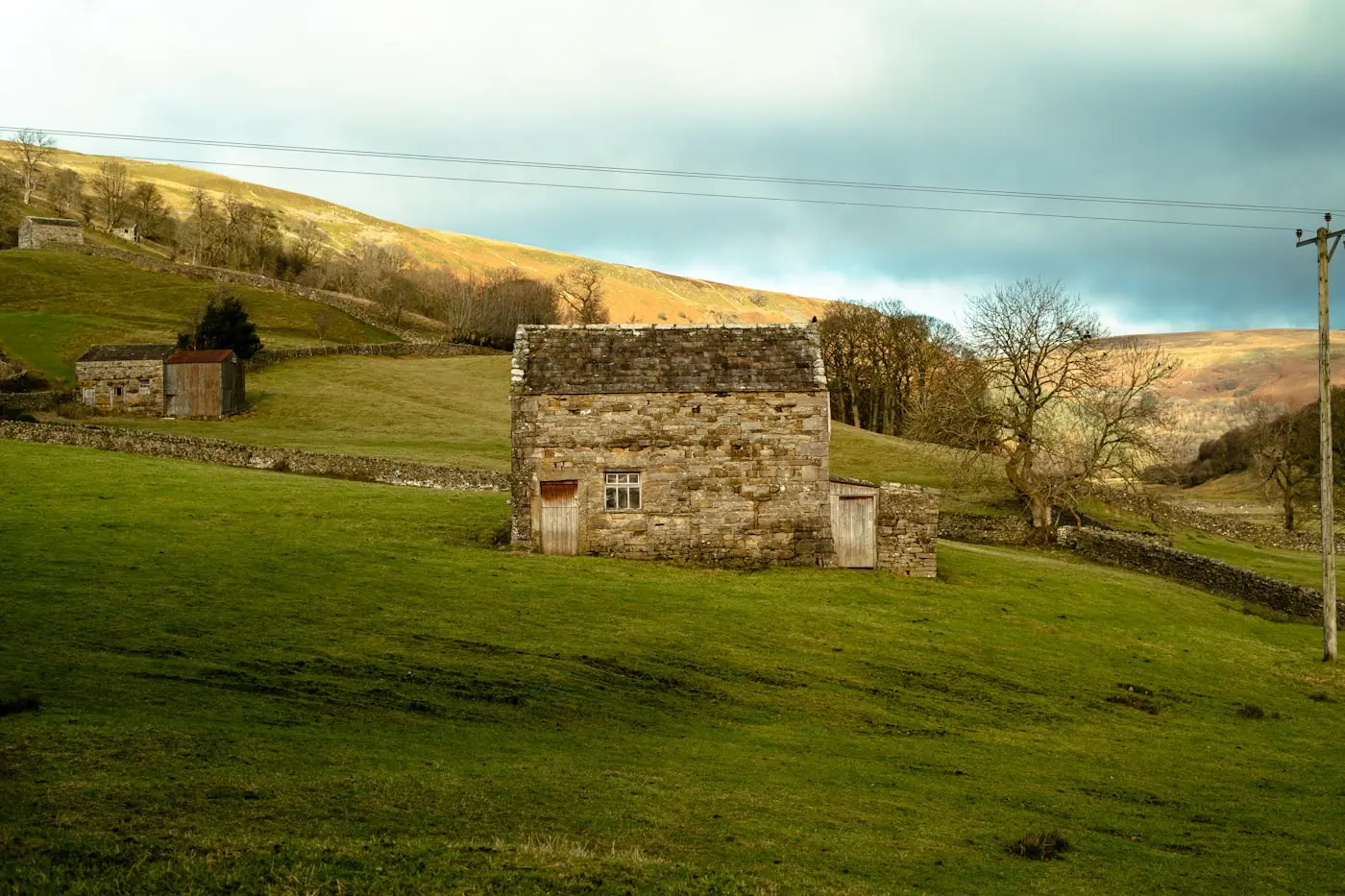
What garden design looks like in Pateley Bridge
Pateley Bridge is the market town and natural centre of Nidderdale, one of the most beautiful valleys in the Yorkshire Dales fringe. Nidderdale holds Area of Outstanding Natural Beauty status, which gives the valley strong landscape protection and shapes the visual character of everything in it, including your garden. If you have a property in HG3, whether it is on the valley floor, on a steep side slope, or on the moorland edge, the context for your garden is extraordinary and worth designing to.
The geology of Nidderdale is genuinely varied. On the valley floor around Pateley Bridge itself, centuries of farming have produced decent loamy soil that holds moisture without becoming waterlogged. As you climb the valley sides, the character of the soil changes: the lower slopes have a mixed limestone-gritstone substrate with reasonable depth, while higher up the geology shifts fully to gritstone and the soil becomes thinner, more acidic, and eventually peat-dominated at the moorland edge. The heather moorland above Pateley Bridge, visible from most gardens in the valley, signals that you are in a genuinely different gardening environment from the Vale of York or even the lower Harrogate area. If your garden is on the upper slopes, your pH and drainage profile will be very different from a neighbour on the valley floor, even if you are only 200 metres apart horizontally.
High rainfall is the other defining characteristic. Nidderdale receives 950mm or more of rainfall annually, roughly a third more than Harrogate and nearly twice as much as parts of the Vale of York. That moisture, combined with the cooler temperatures and shorter growing season at this altitude, shapes which plants thrive here. Many moisture-loving perennials and ferns that need irrigation elsewhere in Yorkshire grow effortlessly in Nidderdale gardens. Conversely, plants that need good drainage and warm, dry summers, including Mediterranean herbs like lavender and rosemary, tend to struggle at the valley top and need specific positioning to perform well.
For local gardening support and ongoing maintenance once your design is planted, the gardeners in Pateley Bridge page covers what to look for in a local gardener for this area. The full garden design service overview describes how the process works across Yorkshire.
The quick answer: costs and process for Pateley Bridge garden design
A planting plan for a typical Pateley Bridge or Nidderdale garden runs £350-900. Full design with project management runs £900-3,500 or more, depending on the complexity of the site and whether retaining walls or drainage works are needed. Valley-side gardens on steep slopes attract higher costs because more on-site time is needed and the sequencing of hard landscaping is more critical. Full garden builds including retaining walls, hard surfaces, and planting typically run £6,000-18,000+ for a mid-size plot. Designers quote you directly; there is no fee on your side of the enquiry.
The process begins with a site visit where the designer assesses your soil, your slope, your aspect, and the existing plants in the garden. On a complex Nidderdale plot, this visit may take longer than usual because the variation in conditions across a single valley-side garden can be significant. The designer will test or assess your soil pH as part of the visit, because the difference between acid and alkaline conditions fundamentally changes the planting scheme. From there, you receive a proposal with a plant list, quantities, spacings, and indicative costs. You choose whether to implement it yourself or have the designer manage the project from start to finish.
The Yorkshire garden designer cost guide breaks down fees by project type if you want detailed cost context before making an enquiry.
Get your Nidderdale garden designed this season.
Tell us about your plot, its position in the valley, and what you want from it. A local designer comes back with a real figure. No subscriptions, no call centres. Design from £500.
Start your free estimateThe full local guide
Nidderdale soil, climate, and what they mean for your garden
Understanding Nidderdale's geology before you plant anything is the single most valuable thing a designer does on a Pateley Bridge project. The limestone-gritstone transition on the valley sides means that a planting scheme appropriate for the valley floor may be entirely wrong for a garden fifty metres higher and half a mile further up the dale. Valley-floor loam at a pH of around 6.5 to 7.0 supports a wide range of plants, including most common garden perennials, roses, and vegetable crops. Gritstone-derived soil at pH 5.5 to 6.0 higher up the valley suits heathers, bilberry, rhododendron species, and acid-tolerant grasses, but will slowly kill plants that need neutral or alkaline conditions.
The high rainfall in Nidderdale is mostly an asset. If your garden has reasonable drainage, that moisture means you rarely need to irrigate, and many plants that struggle with summer drought in drier parts of Yorkshire perform magnificently here. Astrantia, rodgersia, ligularia, and hostas thrive in the damp, cool summers. The risk is the opposite: where drainage is poor, standing water in winter can kill plants that would otherwise be fine, and lawns on heavy clay soil can stay wet into April. Raised beds and improved drainage are often the priority in the lower-lying parts of Pateley Bridge gardens before any planting scheme is put in place.
The growing season in Nidderdale is noticeably shorter than the Vale of York. Last frosts can run into mid-April at valley level, and into early May on the exposed upper slopes. Spring comes late but feels genuine when it arrives, and the long light evenings of a Nidderdale June and July are one of the pleasures of gardening here. Autumn colour, particularly on the birch, oak, and rowan trees native to the valley sides, extends well into November and is worth factoring into your planting scheme.
Pateley Bridge is famous in gardening circles as the sweet pea capital of England, a title connected to the Nidderdale Show and its legendary sweet pea classes. The valley's cool, moist summers with plenty of light are ideal for sweet pea cultivation, and a kitchen cutting garden with a serious sweet pea section is entirely achievable for a Pateley Bridge gardener with a decent south-facing plot.
What gets designed in Pateley Bridge and Nidderdale gardens
Valley-side terrace and retaining wall schemes
Many properties in and around Pateley Bridge sit on valley sides with significant slopes. Some have no level ground at all between the house and the boundary. The most effective solution is a terraced design: level platforms retained by dry-stone walling in local gritstone or limestone (depending on which part of the valley you are in), connected by stone steps, each level used for a different purpose. A well-executed terraced Nidderdale garden creates an outdoor living space where none appeared to exist and dramatically increases the usable area of the plot. The walling material should match local vernacular: gritstone on the upper valley, limestone toward the lower section.
Converted farmhouse and cottage garden redesigns
Nidderdale has a significant number of converted stone farmhouses and farm cottages, many of which now operate as holiday lets or second homes. The gardens of these properties often have large, shapeless areas of grass, overgrown hedging, and a few legacy shrubs from previous owners. A full redesign creates a garden that reads as coherent and intentional rather than leftover, provides a practical outdoor space for guests or family, and requires minimal intervention between visits. Low-maintenance structured planting, good hard surfaces for seating, and native hedging for wildlife and privacy are the usual priorities.
Productive kitchen gardens and cutting beds
The cool, moist Nidderdale summers are genuinely well-suited to vegetable and cut-flower growing. Raised beds with deeply improved soil overcome the variability of the underlying geology and give you predictable growing conditions. A Nidderdale kitchen garden can realistically produce salads from April to November, brassicas from June to February, and sweet peas from May to September in a good year. Designers who work in the Dales understand the specific timing differences that affect sowing and planting in this climate, which runs two to three weeks behind equivalent work in the Vale of York.
Moorland-edge naturalistic schemes
For gardens that back onto the open moorland above Pateley Bridge, a naturalistic planting approach that references and transitions gently into the surrounding landscape is both the most appropriate aesthetic choice and the most practical one. These gardens do not fight the exposure or the thin acid soil but work with it, using native species, moorland grasses, and heather relatives that genuinely belong in this environment. The effect, when well-executed, is a garden that feels like an extension of the landscape rather than something imposed on it.
Design styles that suit Pateley Bridge
The strong landscape character of Nidderdale AONB shapes what works aesthetically. Gardens that reference the vernacular, using stone walls, native species, and planting palettes drawn from the valley, sit naturally in the setting. Gardens that try to import a style that belongs somewhere else, manicured formal parterres, Italian-influenced schemes, tropical planting, tend to look uneasy against the backdrop of open moorland and grey stone buildings.
The most successful Pateley Bridge gardens tend to be honest about the conditions: they celebrate the moisture by growing plants that enjoy it, use local stone for hard surfaces, and choose planting that transitions naturally into the surrounding landscape. Within that framework, there is plenty of room for beauty, structure, and seasonal interest. A well-planted Nidderdale garden in July, with astrantia, geraniums, persicaria, and ornamental grasses in full growth, is as beautiful as any garden in Yorkshire.
For period stone cottages in the town centre, a more traditional cottage-garden approach with climbing roses, clematis, foxgloves, and sweet peas works well and suits the architecture. For converted farmhouses on the hillside, a more structured scheme with clipped hedging and clear levels tends to read better than loose naturalistic planting, which can look untidy against a large stone building. The Yorkshire garden design ideas guide covers styles across different property types and landscapes in more detail.
Cost guide for Pateley Bridge garden design
| Service | Typical cost | What it includes |
|---|---|---|
| Initial consultation | Free to £75-150 | Site visit, brief discussion, outline proposal. |
| Planting plan only | £350-900 | Scaled scheme with plant list. You implement. |
| Full design with project management | £900-3,500+ | Design, contractor coordination, planting oversight. |
| Gritstone dry-stone walling (per metre) | £130-210 | Skilled labour with local stone, foundations included. |
| Terraced valley-side garden (full project) | £8,000-22,000+ | Retaining walls, steps, drainage, surfaces, planting. |
| Full garden makeover (50-100 sqm flat) | £6,000-18,000+ | Clearance, hard landscaping, planting, establishment. |
| Kitchen garden / raised-bed setup | £500-1,400 | 2-4 raised beds, improved soil, initial planting. |
Remote access to Nidderdale adds a modest cost premium compared to equivalent work in the Harrogate area: materials take longer to transport and designers spend more time travelling. For context on Yorkshire-wide pricing, our gardening cost guide covers the main variables.
What plants thrive in Pateley Bridge conditions
The Nidderdale growing environment favours plants that enjoy moisture, tolerate some exposure, and are genuinely cold-hardy. Here are the categories that consistently perform well:
- Moisture-loving perennials: Astrantia (Hadspen Blood, Roma) for long-season flower, persicaria (Firetail, Bistorta amplexicaulis) for late summer spires, rodgersia for bold architectural leaves, ligularia (Desdemona, The Rocket) for damp corners in shade.
- Ferns: Dryopteris filix-mas (male fern) and Athyrium filix-femina (lady fern) are both native to valley sides and thrive in shade with moisture. Polystichum setiferum for winter interest in sheltered spots.
- Shrubs for shelter and structure: Viburnum opulus (guelder rose) is native to the valley and provides spring blossom and autumn berries. Cornus alba Sibirica for winter stem colour in damper ground. Philadelphus for June scent in a sheltered corner.
- Acid-tolerant plants (for upper slopes): Calluna vulgaris (heather), Vaccinium myrtillus (bilberry), Rhododendron yakushimanum and its hybrids for compact flowering without invasive spread.
- Sweet peas and cut flowers: Lathyrus odoratus varieties perform exceptionally in Nidderdale's cool, moist summers. Grow up hazel or bamboo cane structures in raised beds or a sunny border.
Once your planting is established, ongoing garden maintenance keeps it in good shape. If your Nidderdale garden needs clearing before design work begins, the garden clearance service covers that first step.
Process: working with a Pateley Bridge garden designer
- Initial brief. Describe your garden, its position in the valley, your brief and your budget. Photos of the slope, the aspect, and the soil condition are helpful.
- Site visit and soil assessment. The designer visits, assesses soil pH and depth, maps sun and shade, notes drainage issues, and identifies any plants worth retaining. This visit typically takes longer on complex valley-side plots.
- Proposal and costings. A scaled planting plan or full scheme proposal with plant list, quantities, spacings, and indicative costs. On slopes, this will include a layout for any retaining walls or steps.
- Phasing and timing. Hard landscaping in autumn or winter, planting in spring. The Nidderdale climate means spring planting slightly later than Harrogate: aim for mid-April at valley level, early May on exposed upper slopes.
- Installation and aftercare. The designer sources plants, oversees installation, and advises on the first-year watering and mulching programme to establish the scheme.
Frequently asked questions about garden design in Pateley Bridge
What soil does my Pateley Bridge garden have?
Nidderdale has genuinely mixed geology. On the valley floor around Pateley Bridge itself, you get reasonable loamy soil that has been cultivated for centuries and holds moisture well without waterlogging. On the valley sides, the geology transitions from limestone in the lower sections to gritstone higher up, and the soil becomes progressively more acidic, thinner, and peaty toward the moor. If your garden is on the upper slopes or edges of the moor, a pH test is worth doing before any planting scheme is drawn up.
How much does garden design cost in Pateley Bridge?
A planting plan for a Pateley Bridge or Nidderdale garden typically costs £350-900. Full design with project management runs £900-3,500+. Valley-side gardens with retaining walls or difficult access push costs higher. Full garden builds typically run £6,000-18,000+ depending on scope. See our Yorkshire garden designer cost guide for a detailed breakdown by project type.
Is Pateley Bridge in the Yorkshire Dales National Park?
Pateley Bridge is the capital of Nidderdale, which is designated as an Area of Outstanding Natural Beauty (AONB) rather than a National Park. The distinction matters for planning: AONB designation gives strong landscape protection but without the full planning framework of the Dales National Park. Any significant hard landscaping, walling, or structures in a Pateley Bridge garden should be checked against local planning rules, particularly for listed buildings or conservation area properties in the town centre.
What plants work well in a Pateley Bridge garden?
On valley-floor loam: hardy geraniums (Rozanne, Patricia), astrantia, persicaria, and rodgersia perform well in the moist conditions. On the acid upper slopes: heathers, bilberry, gaultheria, and rhododendron species thrive. Sweet peas, for which Nidderdale is famous via the local show, thrive in the valley's cooler, moist summers. For structural hedging, beech holds its autumn leaves all winter and handles the exposure better than privet or laurel.
Related services
Once your Nidderdale garden is planted up, regular garden maintenance keeps it in good shape through the season. For overgrown or neglected plots that need clearing first, see our garden clearance service. For boundary hedging work once your design includes hedging features, see hedge trimming in North Yorkshire.
Related: Find a gardener in Pateley Bridge
Areas near Pateley Bridge we also cover
For Harrogate and the broader HG postcode area, see Harrogate garden design. For other Dales-fringe and North Yorkshire towns, see our full garden design service page.