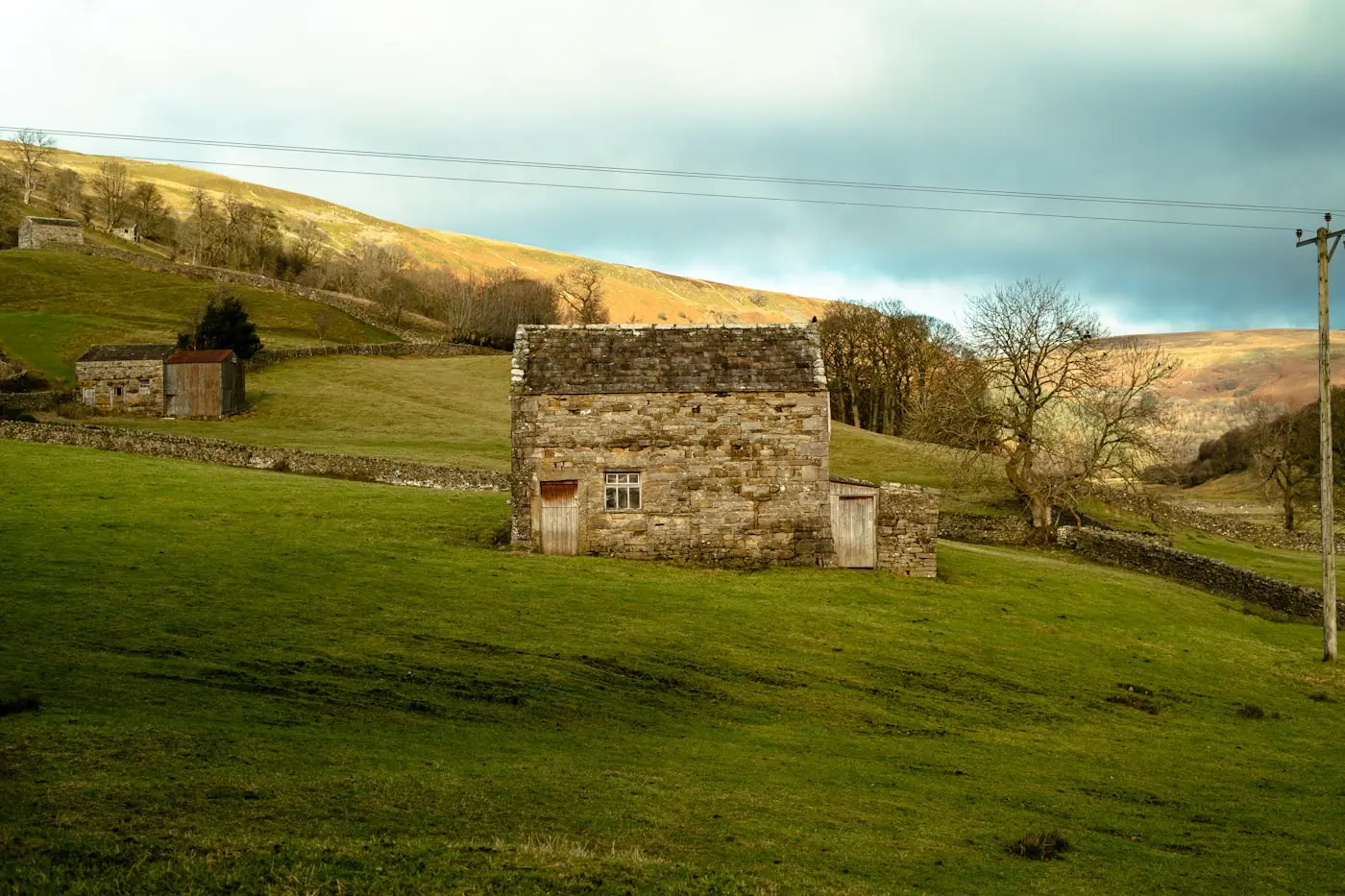
What garden design looks like in Skelmanthorpe
Skelmanthorpe is a Holme Valley village in the HD8 postcode, on the Pennine fringe south of Huddersfield. The village has a traditional mill-village character: stone-built properties, stone boundary walls, and gardens that reflect the Millstone Grit geology beneath. The acidic soil, moderate elevation, and proximity to the open moorland to the west give the gardening here a distinct character that is different from the lower valley floors to the east.
The Millstone Grit bedrock produces acidic soils with pH typically between 5 and 6.5. These soils are free-draining on upper slopes, becoming deeper and damper in the valley bottom areas. The acidity is the key soil characteristic: it suits a specific range of plants naturally and limits others. Ericaceous plants - rhododendrons, azaleas, pieris, heathers - grow without soil amendment here, while lime-loving plants like lavender and rosemary need raised beds or lime addition to perform in open borders.
A garden designer working in Skelmanthorpe will use the natural soil chemistry as a design asset rather than fighting it. A planting scheme built around the plants that thrive in acidic gritstone conditions will look more at home in the Holme Valley setting and require less maintenance than one based on plants that need the soil amended to survive.
Mill-village garden character
The stone-built character of Skelmanthorpe and the surrounding HD8 villages shapes the appropriate design language. Gardens on these properties look best when they complement the stone rather than contrasting with it: simple structural planting, gritstone or reclaimed stone for any hard landscaping, and a planting palette that sits naturally in the Pennine setting. Contemporary designs with clean lines and structural plants work well against the gritstone backdrop. Overly floriferous or tropical-inspired designs tend to sit less comfortably in this setting.
Older properties often have gritstone boundary walls that are worth retaining and building into the design. Wall-trained climbers (climbing roses, pyracantha, ceanothus in sheltered positions) make use of the wall surface and add vertical interest. The walls themselves provide shelter for more tender planting on the lee side.
Naturalistic planting for Holme Valley conditions
The naturalistic planting approach - choosing species that are adapted to the conditions and allowing them to develop without constant intervention - suits the HD8 area well. Native and near-native planting is both appropriate for the setting and lower maintenance than exotic species that struggle with the acidity and Pennine conditions. Heathers and bilberries on upper slopes, ferns and hydrangeas in sheltered positions, rowan and hawthorn for structure and seasonal interest.
The key advantage of the naturalistic approach on Skelmanthorpe plots is that the plants establish more readily and are more resilient once established. A garden planted with species that are genuinely suited to the local conditions needs less intervention than one that is fighting the soil chemistry and climate.
Cost ranges for Skelmanthorpe garden design
| Service | Cost range |
|---|
| Initial design consultation | £150-400 |
| Planting plan only | £300-800 |
| Full design and project management | £800-3,000+ |
| Hard landscaping with gritstone | £2,000-8,000 |
| Full garden makeover (50-100 sqm) | £5,000-15,000+ |
Gritstone or reclaimed stone for hard landscaping adds to the cost but looks considerably better on period Holme Valley properties. Designers quote directly based on your site and brief.
Start your free Skelmanthorpe garden estimate
Tell us what you want from your garden and we put your enquiry in front of a local designer who understands Holme Valley conditions and quotes directly.
Get a design estimate
The full local guide
Plants for Skelmanthorpe acidic gritstone gardens
The acidic soil is a genuine asset for ericaceous planting. Rhododendrons grow well in sheltered positions without ericaceous soil amendment. Azaleas provide spectacular spring colour on north and east-facing slopes. Pieris gives year-round interest with spring colour from new foliage and late-winter flower. Heathers naturalise on upper exposed positions. This range of plants, which requires specialist soil treatment in alkaline or neutral areas, grows naturally in Skelmanthorpe's soil.
Hydrangeas are excellent in the moist, acidic conditions of the Holme Valley. Hardy ferns suit shaded north-facing positions. Ornamental grasses add movement and year-round structure. For formal hedging: beech, holly, and yew all perform well on acidic soils; hornbeam is also reliable and slightly faster-growing than beech. Native rowan gives excellent year-round interest and is completely adapted to the Pennine conditions.
Frequently asked questions
What soil do Skelmanthorpe gardens have?
Skelmanthorpe sits on Millstone Grit in the Holme Valley, producing acidic soils with pH typically between 5 and 6.5. The soil is moderately free-draining on upper slopes and can become wetter in valley bottoms. The acidity suits ericaceous plants naturally and limits lime-loving Mediterranean species in open borders.
How much does garden design cost in Skelmanthorpe?
An initial design consultation runs £150-400. A planting plan costs £300-800. Full design with project management is typically £800-3,000. A full garden makeover on a 50-100 sqm plot runs £5,000-15,000. Designers quote directly based on your plot and brief.
What design style suits Skelmanthorpe mill-village gardens?
Skelmanthorpe's stone-built mill village character suits naturalistic planting that complements the gritstone setting. Contemporary low-maintenance designs work well on the older stone properties. The acidic soil makes ericaceous planting schemes - rhododendrons, heathers, pieris - particularly appropriate here.
What plants work well in Skelmanthorpe gardens?
Acid-loving plants thrive naturally: rhododendrons, azaleas, heathers, pieris, and bilberries. Hydrangeas perform very well in the moist, acidic conditions. Hardy ferns suit shaded positions. Hardy geraniums, astilbes, and ornamental grasses are reliable perennials. Native rowan and hawthorn provide year-round interest.
Do you cover Clayton West and Scissett?
Yes. We connect homeowners with designers across HD8 including Clayton West, Scissett, Emley, Shelley, and surrounding Holme Valley villages. Soil conditions and design challenges are broadly similar across the area.
Do you cover Clayton West and Scissett as well as Skelmanthorpe?
Yes. We connect homeowners with designers across HD8 including Clayton West, Scissett, Emley, Shelley, and surrounding Holme Valley villages. Soil conditions and design challenges are broadly similar across the area. Designers quote directly and set their own prices.
Areas around Skelmanthorpe we also cover
We match homeowners with designers across HD8 and the Holme Valley including Clayton West, Scissett, Emley, Shelley, and Flockton. For general garden maintenance, lawn care, and year-round gardening in Skelmanthorpe, visit our local gardeners in Skelmanthorpe page.