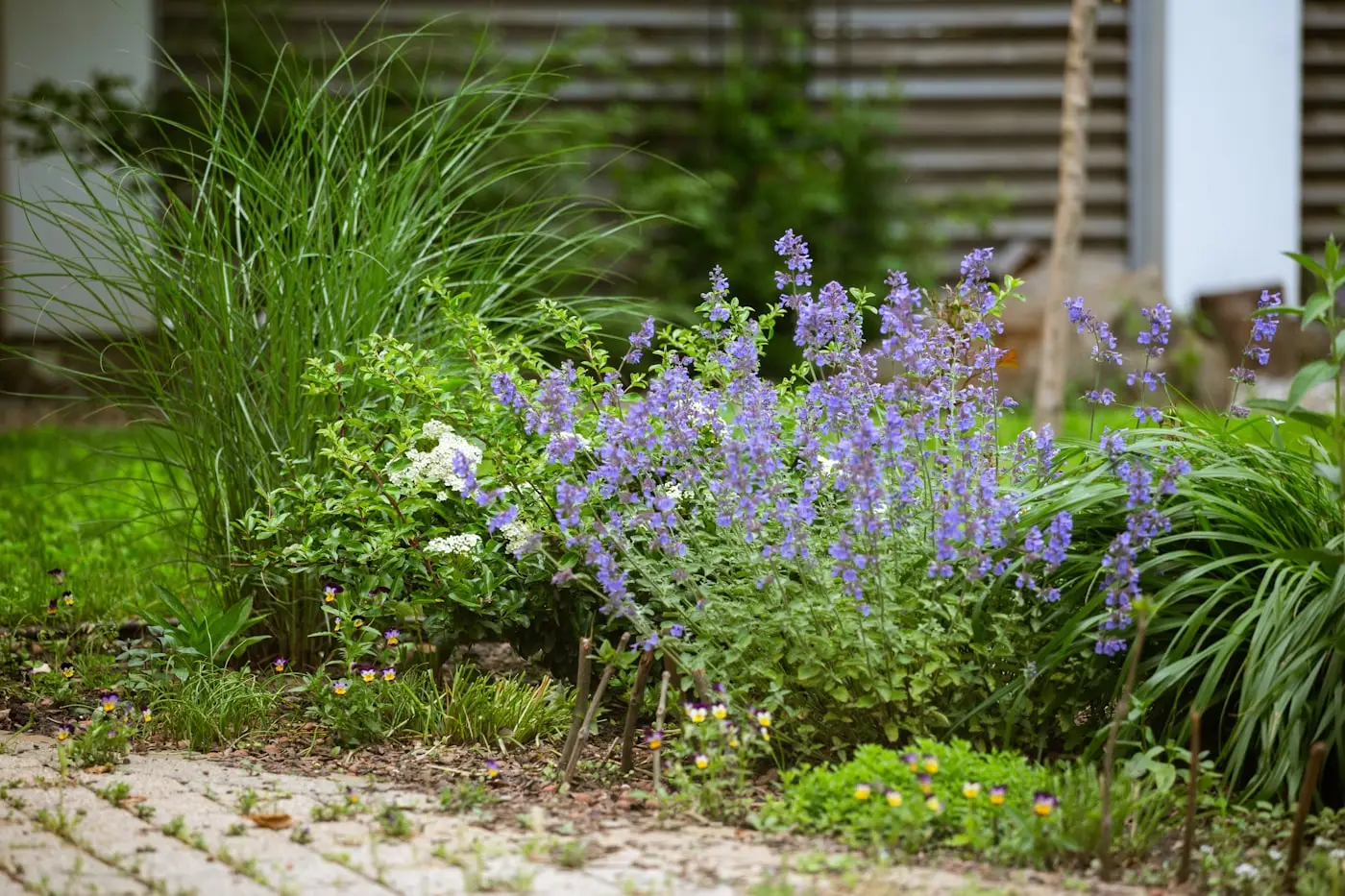
What garden design looks like in Skipton
Skipton sits at the foot of the Yorkshire Dales on the BD23 corridor, where the Leeds-Settle rail line meets the Leeds-Liverpool Canal. A market town with a strong residential mix of canal-side stone terraces in the centre, family estates on the southern edge, and Dales-fringe rural properties above Embsay and Gargrave where the gardening conditions are a different world from the valley town.
Garden design here needs to account for three distinct soil zones within a few miles. Town-centre properties along the high street and the canal sit on free-draining gritstone rubble — thin soil that dries fast in summer and suits drought-tolerant planting better than water-hungry borders. Out toward Embsay and Gargrave, the soil improves to proper loam over limestone with better moisture retention and considerably more scope for established border planting. The elevation climbs fast on the northern and western edges, bringing shorter growing seasons and real wind exposure toward the Pennine fringes. A good garden designer will assess which soil type you have and recommend a planting palette that works with it rather than fighting the conditions.
Stone boundary walls are a defining feature throughout Skipton and they become part of the design rather than just the backdrop. Managing climbing plants on period stone, repointing where needed, and integrating drystone aesthetic into the planting scheme are all standard elements of a Dales-fringe garden design. If your property has Yorkshire stone paving or walled enclosures, those are almost always worth keeping and building around rather than replacing.
Stone-house garden design
Period stone properties in Skipton town and the surrounding Dales villages typically want formal stone walls, Yorkshire-stone paving, structural hedging (yew, beech or hornbeam), and traditional cottage-garden planting that suits the limestone influence. Climbing roses, clematis and wisteria on old stone walls are classic elements. Lavender, rosemary and other drought-tolerant Mediterranean herbs thrive on the free-draining limestone soil. The design needs to respect the period character while creating something practical for a modern household.
Canal-side and compact terrace gardens
The canal-side and town-centre terrace gardens are typically under 100 square metres with consistent damp and often morning shade. Moisture-tolerant shade plants do better than sun-hungry species here: ferns, hostas, astilbes, Japanese anemones, and hardy geraniums for shade. The thin stony soil means mulching and a consistent watering regime matter more than on inland clay. A designer will recommend planting that suits the conditions you actually have rather than aspirational planting that needs more sun and better soil than a canal-terrace plot can provide.
Larger family estates on the southern edge
The family-home estates on the southern edge of Skipton want lawn care, established border planting, and the kind of structural design that keeps a proper suburban garden from looking municipal. These are bigger plots with better soil and more scope for mixed planting, kitchen gardens and play areas. The regular maintenance afterwards is straightforward if the initial design is done well.
Dales-fringe rural properties
Properties above Embsay and Gargrave heading toward the Pennines have a completely different brief. The elevation, the limestone and the Pennine wind create genuine gardening challenges: shorter growing seasons, frost risk extending into late April, and serious wind exposure that shapes everything from which hedges survive to how quickly fences take damage. Shelter belts and structural planting matter more here than in the valley town. A designer who knows the Dales-fringe conditions will recommend hardy species and shelter strategies that actually work at elevation rather than treating it like a suburban plot with better views.
Cost ranges for Skipton garden design
Garden design pricing depends on the scope of work and whether you want design only or full project management. These are the typical ranges for budgeting:
| Service |
Cost range |
| Planting plan only |
£300-800 |
| Planting plan + implementation |
£600-1,500 |
| Full design and project management |
£800-3,000+ |
| Border replant (up to 10 sqm) |
£150-400 |
| Kitchen garden / raised-bed setup |
£400-900 |
| Full garden makeover (50-100 sqm) |
£5,000-15,000+ |
Hard landscaping — Yorkshire stone paving, sleeper beds, drystone walling — is quoted separately and typically runs £2,000-£12,000 for a mid-size project depending on materials and scope. Designers quote directly based on your specific brief and site conditions. For more detail on what drives the cost, see what a garden makeover costs.
Start your free Skipton garden estimate
Tell us what you want and we put your enquiry in front of local designers who quote directly. No call centre fees on your side.
Get a design estimate
The full local guide
What plants tend to suit Skipton gardens
The soil type shapes the planting palette more than the postcode. Town-centre gritstone rubble wants drought-tolerant species: sedums, salvias, ornamental grasses, lavender, rosemary, cistus, and hardy Mediterranean herbs. These plants handle the thin soil and summer drought better than moisture-hungry border perennials.
Out toward Embsay and Gargrave on loam over limestone, the planting scope opens up considerably: roses (especially shrub roses and climbers on walls), clematis, wisteria, delphiniums, peonies, hardy geraniums, catmint, and traditional cottage-garden perennials all do well. The limestone influence means acid-loving plants like rhododendrons and pieris need raised beds with ericaceous compost if you want them — they will not thrive in open borders here.
At higher elevations heading toward the Pennines, the shorter growing season and wind exposure mean shelter and hardy planting choices matter more. Structural hedging (beech, hornbeam, hawthorn) provides shelter for more delicate planting behind. A local designer will recommend a planting scheme that accounts for your specific elevation, aspect and soil type rather than applying a generic list.
Process for a Skipton garden designer
- Initial brief. Tell us what you want from the garden — whether it is a planting refresh, a full redesign, or help with a specific problem like drainage or a blank canvas.
- Site visit and assessment. The designer visits, assesses your soil, aspect, existing planting and any constraints. This is usually a free initial consultation.
- Proposal and design. You receive a scaled design with planting plan, materials specification, and cost estimate. For design-only work, this is the deliverable and you implement it yourself or find your own contractors.
- Phasing and coordination. For full design-and-build projects, the designer coordinates contractors (hard landscaping, fencing, drainage), orders plants, and schedules installation.
- Installation and establishment. Planting is carried out, usually in autumn or early spring. The designer advises on aftercare and establishment watering.
A planting plan can be produced within one to two weeks of the site visit. A full redesign with installation typically takes four to twelve weeks depending on project scale. The growing season at Skipton elevation is shorter than the Yorkshire average, so starting the design in winter means you are ready to plant in early spring rather than losing the season. Frost risk extends to late April at higher elevations above Embsay.
Designers in Skipton postcode
We connect homeowners across BD23 with local designers who quote directly. They set their own prices and there are no call centre fees on the customer side. The free initial estimate gives you a sense of what your project involves before you commit to the full design. Whether you want a planting plan only or full project management, we put your enquiry in front of someone who has done similar work in the Skipton area and understands the soil and elevation challenges.
Frequently asked questions
What soil does my Skipton garden have?
Town-centre gardens near the canal sit on thin free-draining gritstone rubble that dries fast in summer. Out toward Embsay and Gargrave, the soil improves to loam over limestone, with better moisture retention and more scope for established planting. Higher elevations heading toward the Dales fringes have thinner limestone soil with serious wind exposure. A local designer will assess your specific plot during the site visit.
How much does garden design cost in Skipton?
A planting plan only service costs £300-800. Planting plan with implementation runs £600-1,500. Full design with project management typically costs £800-3,000+. A full garden makeover on a 50-100 sqm plot runs £5,000-15,000+. Hard landscaping for Yorkshire stone paving, walls or sleeper beds is quoted separately. Designers quote directly based on your specific brief and site conditions.
Can you design a stone-house garden in the Dales style?
Yes. Stone-house garden design around Skipton typically uses Yorkshire stone paving, drystone wall features, structural hedging (beech, yew or hornbeam), and traditional cottage-garden planting that suits the limestone influence. Climbing roses, clematis and wisteria on period stone walls are classic elements. We put your enquiry in front of designers who have experience with period properties and understand the Dales aesthetic.
What plants suit canal-side gardens in Skipton?
Canal-side plots have consistent moisture and often sit in morning shade. Moisture-tolerant shade plants do better than sun-hungry species here: ferns, hostas, astilbes, Japanese anemones, and hardy geraniums for shade. The thin stony soil means mulching and consistent watering are more important than on inland clay. A designer will recommend a planting palette that suits the conditions you have rather than fighting them.
How long does a Skipton redesign take?
A planting plan can be produced within one to two weeks of the site visit. A full redesign with installation typically takes four to twelve weeks depending on project scale and plant availability. The growing season at Skipton elevation is shorter than the Yorkshire average, so starting the design in winter means you are ready to plant in early spring. Frost risk extends to late April at higher elevations above Embsay.
Can you work with existing stone walls?
Yes. Stone boundary walls are a defining feature throughout Skipton and they often become focal points in the design. Managing wall-trained climbers, repointing where needed, and integrating the stone into the planting scheme are all part of a good Dales-fringe garden design. Existing walls are almost always worth keeping unless they are genuinely unsafe.
Areas around Skipton we also cover
We also match homeowners with designers in Ilkley, Harrogate, and surrounding Dales-fringe villages including Embsay, Gargrave, and Settle.
For general garden maintenance, lawn care, and year-round gardening services in Skipton, visit our local gardeners in Skipton page.