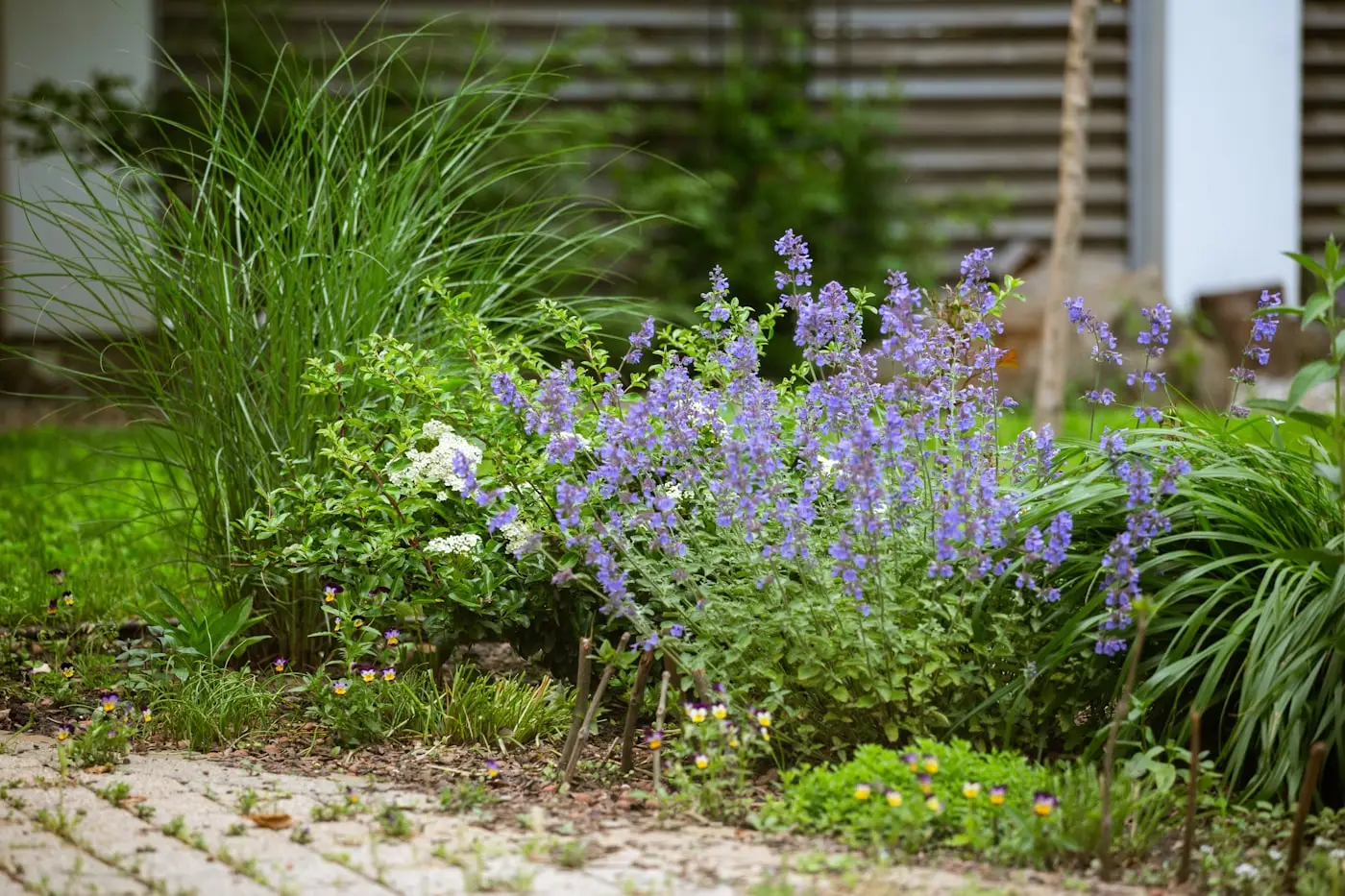
What garden design looks like in Thorne
Thorne is a South Yorkshire market town in the DN8 postcode, on the edge of the Isle of Axholme and the former Hatfield Moors - a large lowland raised bog that was progressively drained and reclaimed from the seventeenth century onward. The residual peat soils that remain across the Thorne area are unique in South Yorkshire, which is otherwise dominated by Coal Measures clay and Magnesian limestone. This makes Thorne's gardening challenges quite different from the towns around it.
Peat soil is highly acidic, with pH typically between 4 and 5.5. It is moisture-retentive, nutrient-poor relative to mineral soils, and can dry out and shrink significantly in dry summers. The acidity is the dominant characteristic: acid-loving plants that need ericaceous conditions elsewhere grow naturally without soil amendment. But most conventional garden plants and vegetables need liming and fertilising to perform well in raw peat.
A garden designer working in Thorne needs to understand that the peat soil chemistry is the starting point for every planting decision. Either design around the acidity and exploit what it allows, or incorporate raised beds and soil amendment for plants that need different conditions. Most good Thorne garden designs do a bit of both.
Peat soil and the ericaceous opportunity
The Hatfield Moors peat is acidic enough to grow blueberries without any soil amendment. That is significant: blueberries need pH 4.5-5.5 and fail on most Yorkshire soils without raised ericaceous beds, but they grow naturally in Thorne's garden soil. A Thorne garden designed around productive blueberry planting, heather groundcover, bilberries, and ericaceous ornamentals is something genuinely distinctive that exploits a soil condition most Yorkshire gardeners have to work hard to create.
Heathers naturalise in the peat conditions and give year-round ground cover with seasonal flowering. Rhododendrons grow well in sheltered positions without soil amendment. Hardy ferns suit the moist acidic conditions. The range of bog and moisture-loving plants that perform in Thorne's conditions is wider than in free-draining soils: iris sibirica, astilbes, primulas, and gunnera all suit the wet peaty areas where most plants struggle.
Raised beds and soil improvement for productive gardens
Raw peat is nutrient-poor. For vegetable growing, raised beds with imported topsoil or a peat-topsoil mix, regular liming to raise pH to around 6.5, and annual fertiliser additions are needed for most crops. The good news is that peat holds moisture well and reduces irrigation needs. Once the pH and fertility are corrected, the peat-based soil can be productive. Brassicas (which need neutral to slightly alkaline pH), onions, leeks, and most salad crops respond well to limed, fertilised raised beds on a Thorne garden.
Flat landscape and creating visual interest
The flat former moor landscape means most Thorne gardens are level. On flat plots, creating visual interest requires design rather than borrowed topography. Raised beds introduce level change and give the space three-dimensional interest. Structural planting at the boundary creates enclosure without obscuring the open sky that is a genuine asset in the open landscape setting. Well-placed focal points - a well-designed seating area, a productive fruit cage, a water feature - organise the flat space and give it a sense of intention.
Cost ranges for Thorne garden design
| Service | Cost range |
|---|
| Initial design consultation | £150-400 |
| Planting plan only | £300-800 |
| Full design and project management | £800-3,000+ |
| Raised beds and soil amendment | £800-3,000 |
| Full garden makeover (50-100 sqm) | £5,000-15,000+ |
Soil amendment for productive growing on peat adds to the overall cost but opens up the range of what is possible. Designers quote directly based on your site and brief.
Start your free Thorne garden estimate
Tell us what you want from your garden and we put your enquiry in front of a local designer who understands the Hatfield Moors peat conditions and quotes directly.
Get a design estimate
The full local guide
Plants for Thorne peat gardens
Blueberries grow naturally in Thorne's peat soil and are the standout opportunity: they are both ornamental (with good autumn colour and spring blossom) and productive, and they require no soil amendment in the local conditions. Heathers provide year-round groundcover. Bilberries naturalise. Hardy ferns suit moist acid conditions in sheltered positions.
For ornamental planting on the acidic soil: rhododendrons (in sheltered positions), azaleas, pieris, and heathers are all naturally suited. Hydrangeas perform very well in the acidic moist conditions. Iris sibirica and astilbes suit the wetter areas. Ornamental grasses and sedges are effective on the flat landscape and look at home in the moors-edge setting.
Frequently asked questions
Why is Thorne's soil unusual for South Yorkshire?
Thorne sits on the edge of Hatfield Moors, giving the area acidic peat soils that are unique in South Yorkshire, which is otherwise dominated by clay and limestone. Peat soil is highly acidic (pH 4 to 5.5), moisture-retentive, nutrient-poor, and suits acid-loving plants that struggle on alkaline or neutral soils.
How much does garden design cost in Thorne?
An initial design consultation runs £150-400. A planting plan costs £300-800. Full design with project management is typically £800-3,000. A complete garden makeover on a 50-100 sqm plot runs £5,000-15,000. Soil improvement for productive gardens on peat may add to the overall cost. Designers quote directly based on your site and brief.
What plants thrive on Thorne's peat and acidic soils?
Acid-loving plants perform naturally in Thorne: heathers, rhododendrons, azaleas, and blueberries. Heathers and bilberries naturalise on peaty ground. Blueberries grow exceptionally well. Hardy ferns suit the moist, acidic conditions. Bog garden plants including iris sibirica, astilbes, and primulas perform well near wet ground.
Can you grow vegetables in Thorne's peat soils?
Peat soil is nutrient-poor for vegetables without amendment. Adding lime to raise pH to 6-6.5, incorporating fertiliser, and using raised beds with imported topsoil or compost makes a wider range of vegetables possible. Blueberries and acid-tolerant soft fruit grow naturally in the peat conditions.
Does the flat landscape of Thorne affect garden design?
Yes. The flat landscape means most gardens are level with open aspects. Creating visual interest on flat plots involves raised beds for level change, structural planting at the boundary for enclosure, and strong focal points. The open sky of the former moors is an asset that good design can frame rather than obscure.
Areas around Thorne we also cover
We match homeowners with designers across DN8 and the Hatfield Moors area including Moorends, Goole Road corridor, Fishlake, Sykehouse, and Hatfield. For general garden maintenance, lawn care, and year-round gardening in Thorne, visit our local gardeners in Thorne page.