Garden design · Tockwith
Garden design across Tockwith, Long Marston, Bilton-in-Ainsty, Cattal and the Vale of York YO26 corridor between Wetherby and York. Planting plans, full redesigns, and hard landscaping on the Magnesian limestone free-draining loam that defines this part of the Vale. Local designers who quote directly, free initial estimates, design from £500.
Tockwith is a village in the Vale of York, YO26 postcode, lying between the A59 Harrogate-York road and the River Nidd. The village character is genuinely rural - a mix of older properties with substantial plots, newer executive houses built in the village vernacular, and farm conversions on the village fringe. The surrounding landscape is flat Vale of York arable farmland, which gives Tockwith gardens an open, exposed character quite different from the enclosed valley gardens of Nidderdale or the sheltered suburban plots of Harrogate.
The defining soil characteristic across this part of the Vale of York is Magnesian limestone-influenced loam - free-draining, alkaline, with good structure. This is excellent growing ground for a wide range of garden plants, particularly those with Mediterranean or prairie preferences. The soil warms quickly in spring, drains well in wet weather, and is relatively easy to work. The main constraint is irrigation: the free-draining character means the soil dries quickly in summer, and newly planted borders and productive gardens need consistent watering to establish.
Most garden design enquiries from Tockwith and the surrounding YO26 villages reflect the rural-executive character of the area: larger plots than suburban Leeds or Sheffield, a preference for formal-informal hybrid designs that suit the traditional property styles, and frequently an interest in productive growing that complements the agricultural landscape. For year-round garden maintenance, see the Tockwith local gardeners page.
Design fees are separate from build and planting costs. The ranges below reflect what designers across Yorkshire typically charge. Most quote a fixed fee after seeing the site.
| Service | Typical range |
|---|---|
| Initial consultation | Free to £75-150 |
| Planting plan only | £300-800 |
| Planting plan + implementation | £600-1,500 |
| Full design and project management | £800-3,000+ |
| Border replant (up to 10 sqm) | £150-400 |
| Full garden makeover (50-100 sqm) | £5,000-15,000+ |
Larger rural plots in the Tockwith area sit at the upper end of or above standard ranges. Hard landscaping in natural limestone or sandstone complements the local vernacular and is priced separately from design fees. See the garden makeover cost guide for broader context on project costs across Yorkshire.
Free initial estimate from a designer who understands Vale of York conditions, Magnesian limestone loam, and the rural character of gardens in YO26.
The full local guide
The newer and renovated properties around Tockwith, Long Marston, and Bilton-in-Ainsty often have substantial plots - 200 to 500 sqm of back garden or grounds - with limited structure and a mix of builder's turf and rough grass. The design brief in these cases is typically to create a garden that suits the property scale: a formal terrace near the house, a managed lawn area, substantial planted borders with year-round interest, and either a productive growing section or a wildflower meadow area. Budget £10,000-£30,000 for a comprehensive landscape design on a larger rural plot.
Older Tockwith and Long Marston properties with established gardens often have good bone structure - mature trees, established hedging, defined garden areas - but borders that have been planted piecemeal or have gone to ground elder and encroaching grass. A border redesign on Magnesian limestone loam is an opportunity to use the full range of plants that suit alkaline, free-draining conditions: salvias, alliums, roses, geraniums, ornamental grasses, cistus, and lavender. A cottage border replant covering 25-30 metres of border length typically costs £900-£2,500 for design, soil improvement, and planting.
The open Vale of York position at Tockwith exposes gardens to east and north winds that are not blocked by topography the way valley gardens are. Shelter structure is often the first design priority: native hedging using hawthorn, field maple, or a mixed native mix provides wind shelter within three to four years and integrates with the agricultural landscape character. Within that shelter belt, the planting palette can be significantly more diverse than on fully exposed open ground.
The combination of free-draining loam, a long Vale of York growing season, and the rural character of Tockwith gardens makes productive growing an appealing addition to many design briefs. Vegetables, fruit trees, cut flowers, and herb beds all perform well on this soil with irrigation support. A productive garden design incorporating raised beds, fruit trees, a cutting garden, and a compost area typically costs £4,000-£9,000 installed.
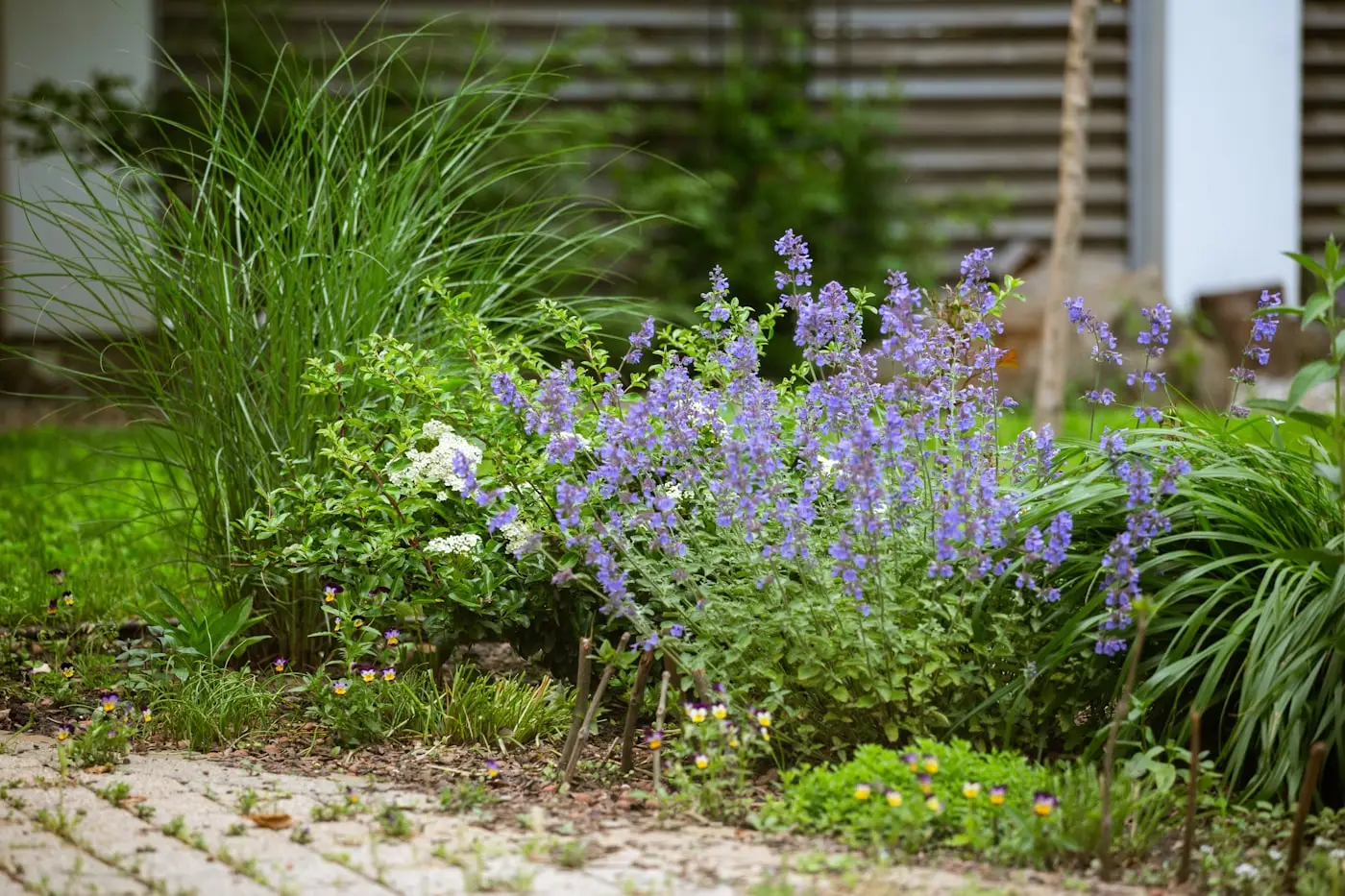
Tockwith's Magnesian limestone loam is one of the best growing soils in Yorkshire for ornamental plants. The alkaline, free-draining conditions suit roses (they thrive on limestone loam), lavender, salvia, alliums, catmint, and geraniums. For prairie-style planting that suits larger Vale of York plots, ornamental grasses (Stipa, Pennisetum, Calamagrostis) combined with rudbeckias, heleniums, and echinacea create a naturalistic low-maintenance planting that looks well in the open landscape setting.
For structural planting, philadelphus, buddleja, and viburnum all perform well on this soil. For more formal structure, yew hedging grows steadily on limestone loam and clips reliably - box can be used but box blight is a consideration in any design that relies on box edging as a key element. Hornbeam makes an excellent formal hedge alternative with more disease resilience.
Productive growing on this soil is very effective: brassicas, root vegetables, legumes, and most soft fruit all perform well. The main irrigation requirement is the key management task - the free-draining loam needs consistent moisture for productive crops in summer. A drip irrigation system on a timer is worth including in any productive garden design.
Lawns on Magnesian limestone loam are relatively easy to maintain compared to heavy clay - drainage is not the primary issue. Lawn care here focuses on feeding (the free-draining soil loses nutrients more quickly than clay), regular mowing at the right height, and overseeding bare patches in autumn.
What soil does my Tockwith garden have?
Tockwith sits on Magnesian limestone-influenced loam - free-draining, alkaline, and with good structure. This is excellent growing ground for roses, lavender, salvia, alliums, grasses, and most ornamental perennials. Acid-loving plants (rhododendrons, camellias, pieris) will not perform in the open ground. The free-draining character means irrigation is important for productive gardens and newly planted borders in dry summers.
How do I irrigate a Tockwith garden in dry summers?
The Magnesian limestone loam drains freely and dries quickly in summer. Established ornamental planting generally copes with dry spells once the root system is developed, but productive gardens and newly planted borders need consistent water. A drip irrigation system on a timer is the most efficient approach. Water butts connected to outbuildings can supplement mains supply for smaller productive gardens.
Do I need shelter planting in an exposed Tockwith position?
In exposed Vale of York positions, yes. The flat landscape provides no natural topographic shelter from east and north winds. A shelter belt of native hedging - hawthorn, field maple, blackthorn - provides effective wind protection within three to four years. Without it, exposed borders lose plants to wind-rock and desiccation that would survive in a sheltered position. The shelter investment always pays off.
What size garden project is typical in Tockwith?
Tockwith and the surrounding YO26 villages tend to have larger plots than urban Yorkshire. Back gardens of 150-400 sqm are common, and rural properties may have significant grounds beyond the immediate garden. A full landscape design on a larger plot (150-300 sqm) typically costs £10,000-£25,000 for a comprehensive design and implementation. A designer will provide a site-specific estimate after visiting.
Do I need planning permission for work in Tockwith?
Most garden work - planting, paving, garden buildings under permitted development height limits - does not require planning permission. Tockwith is in Harrogate Borough Council's area. Any work visible from the road or near a highway boundary warrants checking permitted development limits. Your designer will advise if any element of the proposed design needs consent.
When is the best time to start a garden project in Tockwith?
The Vale of York has a relatively long and reliable growing season. Planting is best in spring (March-May) or autumn (September-November). The free-draining loam warms quickly in spring, which makes early spring planting particularly effective. Hard landscaping can proceed year-round in reasonable weather. Start the design conversation 8-12 weeks before your target planting window.
Garden design coverage across the Vale of York and surrounding towns:
Surrounding villages including Long Marston, Bilton-in-Ainsty, Cattal, Cowthorpe, Kirk Hammerton, and Green Hammerton.
For general garden maintenance and clearance in Tockwith, visit our local gardeners in Tockwith page.