Lawn treatment across Yorkshire
Lawn Treatment Across Yorkshire - Feed, Weed, Moss
Yorkshire clay lawns need more than a fortnightly mow. Moss, compaction, waterlogging and thin grass are problems that mowing does not fix. Lawn treatment - the right feed, weed control and moss killer applied at the right time - is what actually turns a mediocre lawn into a good one.
- Free quotes, no obligation
- Local gardeners
- 240+ Yorkshire towns covered
- No call centres
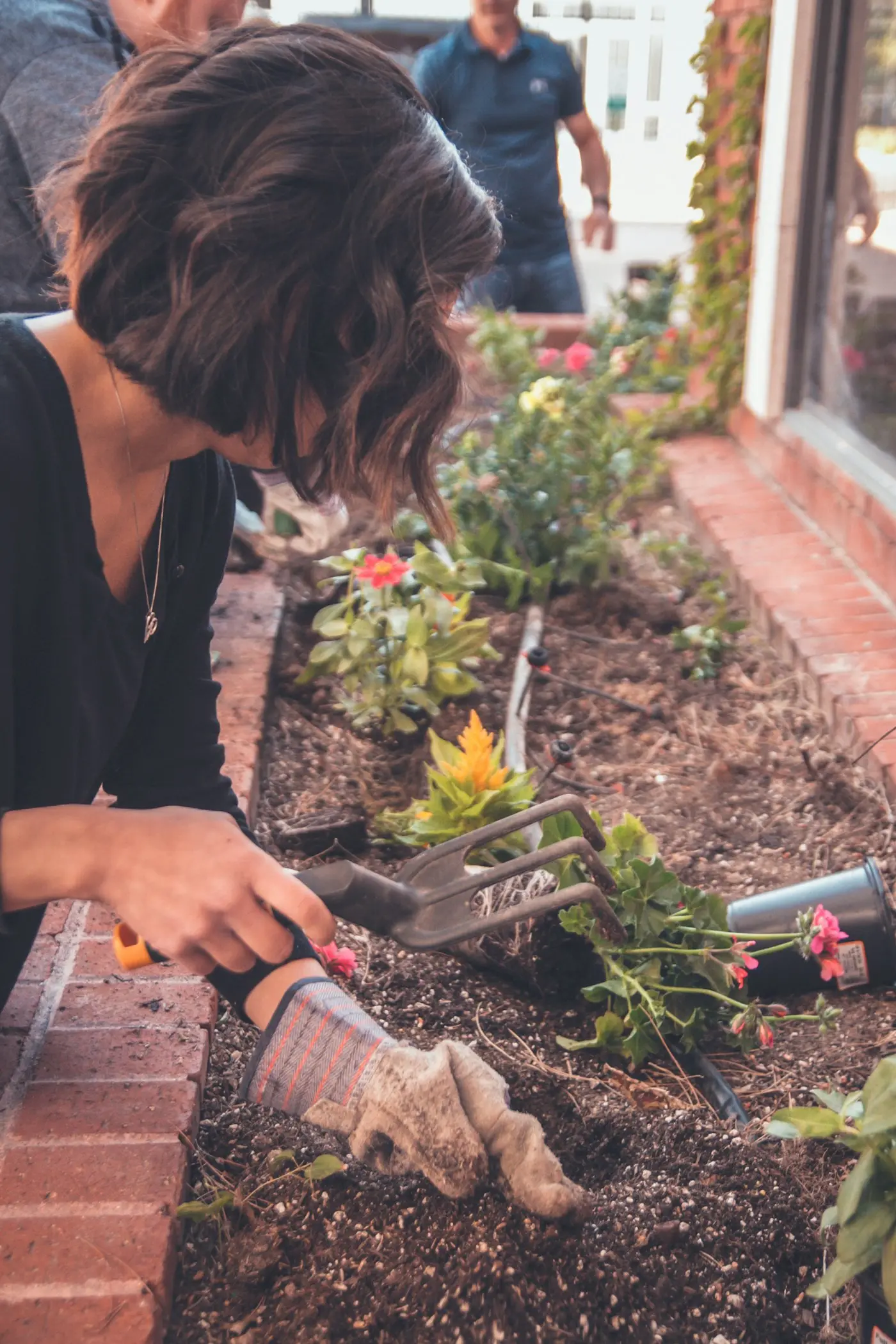
The problem with Yorkshire lawns
Most of Yorkshire sits on heavy clay or clay-loam soils. Clay drains badly, compacts under foot and mower traffic, and retains moisture in ways that suit moss far better than grass. Add the county's above-average rainfall - West Yorkshire and the Pennine fringe regularly exceed 1,000mm per year - and you have exactly the conditions that moss thrives in. The lawns that look their worst by February, full of dark patches and soft ground, are almost always the ones that got nothing more than mowing through the previous season.
Mowing is maintenance. It keeps the lawn presentable but does nothing to improve the underlying soil or grass condition. Lawn treatment is the part of lawn care that actually changes things: feeding the grass, starving the weeds, killing the moss, and topping up bare patches so the turf thickens. For a full seasonal picture of what treatment fits where, read the lawn care Yorkshire guide.
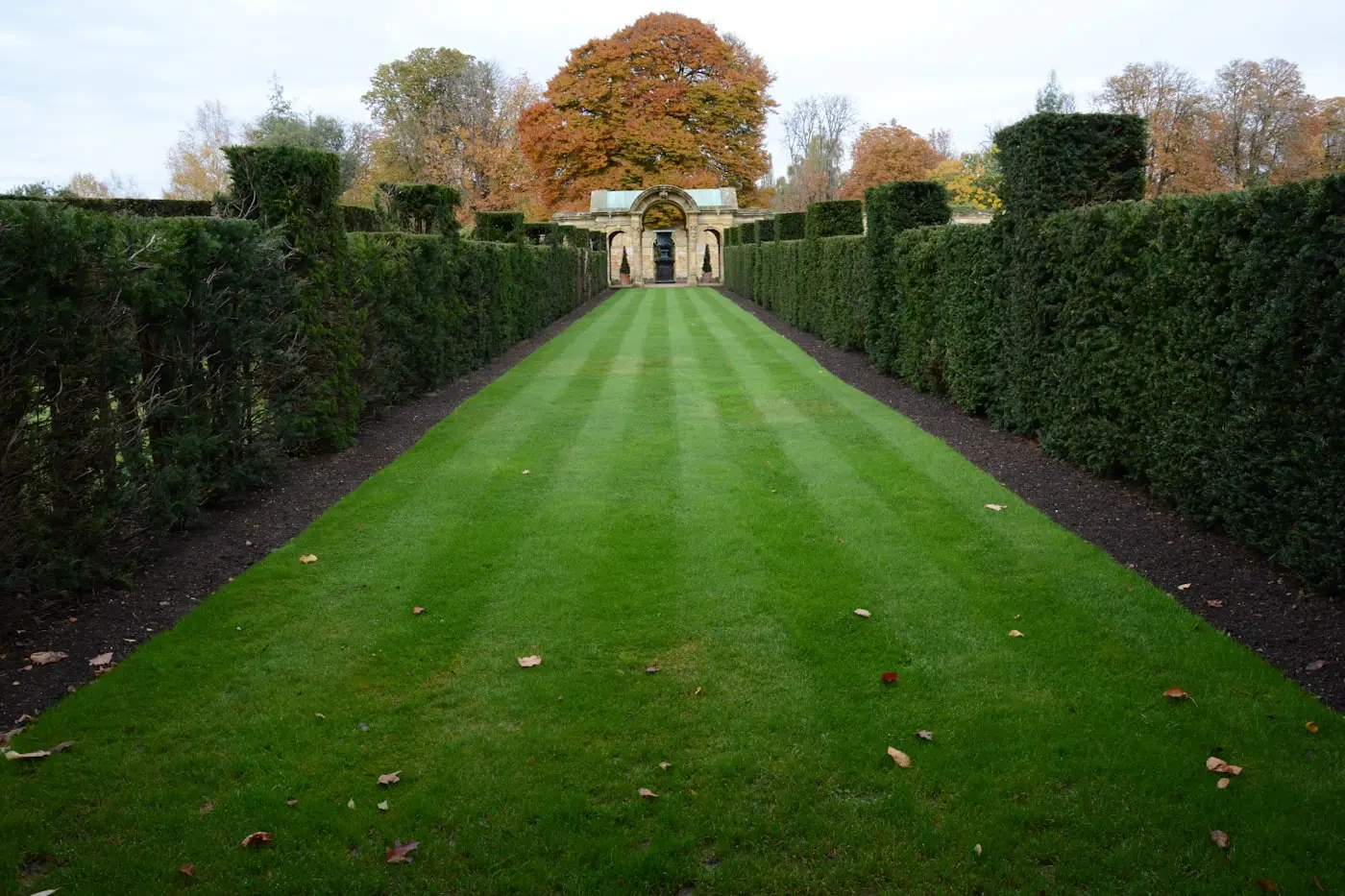
What lawn treatment involves: the seasonal breakdown
Spring programme (April to May)
The spring programme is the most impactful single treatment you can do for a struggling Yorkshire lawn. The grass is coming out of dormancy and actively growing, which means it will absorb nutrients effectively and recover quickly from any treatment stress. Spring treatment typically includes:
- Spring fertiliser - a higher-nitrogen feed to promote leaf growth and green up the lawn after winter. Applied April-May when the soil is warming. A good spring feed will green the lawn within two to three weeks.
- Selective weed killer - a broadleaf herbicide that kills dandelions, daisies, plantain and clover without harming the grass. Applied at the same time as the feed or separately depending on the product. Most lawns need at least one selective weed treatment per year to stop weeds thickening.
- Moss treatment (if needed) - iron sulphate or ferrous sulphate applied to blacken and kill moss ahead of scarification. Usually done in late February or March, two to three weeks before scarification. If moss is present, treat it before feeding - feeding over live moss makes the problem worse.
Summer (June to August)
If the spring programme was done well, summer is largely about maintenance. A mid-season iron tonic (iron without fertiliser) can green up a lawn that has paled in hot weather without pushing excessive growth. In a dry Yorkshire summer, drought preparation is more useful than feeding: raise the mowing height to 5-7cm to shade the soil and reduce moisture loss. Avoid heavy fertiliser applications in July and August - they push soft growth that is vulnerable to drought stress and disease.
Autumn programme (September to October)
The autumn programme is where the real work happens for Yorkshire lawns. This is the most important treatment window of the year. A full autumn programme includes:
- Scarification - mechanical removal of thatch and dead moss from the lawn surface. Should follow a moss treatment by two to three weeks so the moss is dead and easier to lift. See the lawn scarification service for what this involves and why it matters.
- Hollow-tine aeration - removing plugs of compacted clay from the lawn to improve drainage, air movement and water penetration. Essential for Yorkshire clay lawns that hold water in winter.
- Overseeding - sowing grass seed into the scarified, aerated surface to thicken bare or thin areas. Autumn is the best window: the soil is warm from summer, there is less competition from weeds, and autumn rain keeps the seedbed moist.
- Autumn fertiliser - a low-nitrogen, high-potassium feed to harden the grass before winter. Autumn feed strengthens the root system and improves disease resistance through the cold months.
Winter: leave it alone
There is very little useful treatment to do in winter. Avoid walking on frozen or waterlogged lawns, which compresses the already-stressed clay and can cause permanent surface damage. If moss has returned heavily by February, an early application of iron sulphate at the end of winter sets you up for scarification in March or April.
Treatment prices across Yorkshire
These are typical prices for lawn treatment in Yorkshire. National franchise lawn treatment companies tend to charge more than local gardeners for the same work. The prices below reflect what independent local practitioners charge.
| Treatment | Small lawn | Medium lawn | Large lawn |
|---|---|---|---|
| Spring feed + weed | £45–£65 | £65–£95 | £90–£150 |
| Moss treatment | £40–£60 | £60–£90 | £85–£130 |
| Autumn programme | £80–£150 | £120–£200 | £180–£300 |
| Annual programme | £200–£350 | £300–£500 | £450–£700 |
Small = terrace or small semi, typically under 50 sq m of lawn. Medium = standard semi-detached, 50-100 sq m. Large = detached house, 100 sq m+. Prices vary with condition, access and whether waste removal is included in the autumn programme (scarified material has to go somewhere).
Can I do lawn treatments myself?
Yes. DIY lawn treatment products from garden centres - iron sulphate, lawn fertiliser, selective weed killer - work and are the same chemistry professionals use, usually in lower concentrations. The honest trade-off: professionals apply more accurate coverage, know the right products for your specific grass and soil type, and handle the timing better across the season. For straightforward spring feeding and basic weed control, DIY is a reasonable choice. For persistent moss, pH problems, or lawns that have got into poor condition, professional assessment is worth the cost.
Can I treat my lawn myself or should I hire a professional?
DIY lawn treatment is a reasonable option for straightforward spring feeding and weed control. The products available from garden centres - iron sulphate, granular fertiliser, selective weed killer - are the same chemistry professionals use, typically at slightly lower concentrations. Where professionals add value is in calibrated application, correct timing, soil diagnosis, and the mechanical equipment needed for scarification and hollow-tine aeration. For basic feeding and moss control on a lawn in reasonable condition, DIY works. For the full autumn programme or for lawns with persistent problems, professional treatment gets meaningfully better results.
What does lawn care include?
Lawn care covers the full set of treatments and maintenance tasks that keep a lawn healthy: mowing, feeding, weed control, moss treatment, scarification to remove thatch, hollow-tine aeration to tackle compaction, overseeding bare patches, and edging to keep the lawn's boundaries clean. A typical annual programme for a Yorkshire lawn includes a spring feed and weed treatment (April-May), a summer iron tonic if needed, and an autumn programme of moss treatment, scarification, aeration, overseeding and autumn feed. Mowing and edging are usually separate from a treatment programme.
How much does lawn care cost in Yorkshire?
Lawn care in Yorkshire costs from £45 for a spring feed and weed treatment on a small lawn, up to £150 for a spring programme on a large lawn. Autumn programmes including scarification, aeration and overseeding run £80-£300 depending on lawn size. Annual programmes covering all seasonal treatments cost £200-£700. Yorkshire independent practitioners charge less than national franchise lawn companies for equivalent work.
When should I start lawn care in spring in Yorkshire?
Spring lawn care in Yorkshire should start when soil temperature at 10cm depth reaches 8 degrees Celsius - typically late March or early April across most of Yorkshire, two to three weeks later at higher Pennine-fringe elevations. Moss treatment can start earlier in late February or March. Selective weed killer is most effective in May when weeds are in active growth. Applying spring fertiliser before the soil has warmed means the grass cannot absorb the nutrients and they wash off in rain.
What is the difference between lawn mowing and lawn care?
Lawn mowing cuts the grass to a maintained height and keeps the lawn presentable. Lawn care is the broader programme of treatments that improves the lawn's health and condition: feeding, killing weeds and moss, removing thatch through scarification, relieving compaction through aeration, and overseeding thin or bare patches. Mowing without lawn care produces a lawn that stays at the same mediocre quality year after year. The two work together - a well-fed, aerated lawn grows denser and is easier to maintain with regular mowing.
The full guide
Why Yorkshire lawns need treatment more than most
Clay and compaction
Yorkshire has some of the heaviest domestic lawn soils in England. The South Yorkshire coalfield corridor - Sheffield, Barnsley, Rotherham - sits on dense clay with poor natural drainage. East Yorkshire's Humber plain has heavy alluvial clay. Even the better-draining limestone areas of the Dales have surrounding parishes with difficult clay subsoils. Clay compacts under foot traffic and mowing. Compaction reduces drainage, which keeps the lawn wet longer, which is exactly what moss needs to establish. Aeration is the fix; treatment without aeration will need repeating year after year without addressing the cause.
Moss and pH
Moss thrives in acidic soils. Yorkshire clay often runs slightly acidic, particularly in the Pennine areas where peat-influenced soils drag the pH down. If your lawn tests below pH 6.0, lime applications (ground limestone or calcified seaweed) can raise the pH over two or three seasons and make the lawn genuinely less hospitable to moss. A soil test costs almost nothing and the results change how you approach treatment. Worth doing before committing to an annual programme. The lawn moss treatment guide for Yorkshire covers this in full.
Yorkshire's rainfall
The county gets substantially more rain than the national average used in most lawn care guides written for the South East. West Yorkshire, Calderdale, and the Pennine fringes regularly exceed 1,000mm annually. Even the relatively drier east coast and Vale of York get 600-700mm. All that moisture, sitting in compacted clay, creates the waterlogging conditions that make moss a structural problem rather than an aesthetic one. Treatment without addressing drainage is fighting the tide. Autumn aeration alongside treatment is not optional for Yorkshire clay lawns - it is the difference between improving and treading water year to year.
DIY vs professional lawn treatment
The honest answer: DIY works. Iron sulphate from a garden centre or online, applied correctly, kills moss as effectively as a professional product. A bag of slow-release spring fertiliser from Homebase is the same chemistry as what a lawn specialist uses, usually in a slightly lower concentration. The product barrier is low.
Where professionals earn their money:
- Coverage accuracy. Applying granular or liquid products unevenly - too heavy in patches, missing strips - creates an uneven lawn that can be worse than doing nothing. Professionals use calibrated spreaders.
- Timing. Applying autumn feed too late, or spring weed killer too early, or moss treatment on a frozen lawn, all reduce effectiveness. Experience with Yorkshire's specific climate and soil conditions matters.
- Diagnosis. If the lawn has multiple problems - moss, weeds, poor grass density, pH imbalance, compaction - knowing what to tackle in what order is not obvious. A professional assessment identifies the priority correctly.
- Scarification and aeration. These require mechanical equipment that most homeowners do not own and that hire shops do not always stock in the right form. Hollow-tine aerators in particular are rarer to hire than slit aerators, and for Yorkshire clay, hollow-tine is the better tool.
For straightforward spring feeding and basic weed control on a lawn in reasonable condition, DIY is a sensible choice. For the autumn programme - scarification, aeration, overseeding, feeding - professional treatment gets meaningfully better results. For more on autumn lawn care in Yorkshire, read the autumn garden care guide.
What lawn treatment includes (and what it does not)
The term "lawn treatment" gets used loosely, and different providers mean different things by it. At its core, a lawn treatment visit applies one or more of the following: fertiliser to feed the grass, selective weed killer to kill broadleaf weeds without harming grass, or iron sulphate to kill moss. These are the chemical components of lawn care. What treatment does not include - in almost every professional programme - is scarification, aeration, mowing, or edging. Those are separate services that require separate equipment and separate visits.
Fertiliser is the foundation. The three key nutrients in any lawn fertiliser are nitrogen (N), phosphorus (P), and potassium (K). Nitrogen drives leaf growth and green colour - the most visible effect after application. Phosphorus promotes root development, which matters most in autumn and after seeding. Potassium hardens the grass against cold, frost, and disease. A spring fertiliser for Yorkshire lawns should have a higher nitrogen content to push growth as the lawn emerges from winter. An autumn fertiliser should have higher potassium and lower nitrogen to prepare the plant for winter rather than pushing soft growth that frost will damage.
Selective weed killer targets broadleaf plants - dandelions, daisies, plantain, clover, speedwell - without affecting grass, which is a monocot and responds differently to the active ingredients (typically mecoprop-P, dicamba, or MCPA). Applied in the right conditions (dry, still, soil not waterlogged), a single spring application controls the majority of established lawn weeds. Some persistent weeds like clover need a second application or a specific clover-active product. Creeping buttercup and yarrow are harder to control and may need specialist treatment.
Moss treatment specifically uses iron sulphate (ferrous sulphate) rather than a herbicide. Iron makes the lawn surface temporarily hostile to moss - the iron reacts with moss cell tissue, blackening and killing it. The dead moss then needs to be physically removed by scarification; iron sulphate alone does not remove it, only kills it. Applying fertiliser and weed killer to a lawn with live moss without treating the moss first is counterproductive - the feed helps the moss as much as it helps the grass.
What treatment does not include: overseeding is a separate operation, typically done after scarification and aeration when the soil surface is disturbed and ready for seed contact. Some providers include it as part of an autumn package; others price it separately. Clarify before booking whether overseeding, scarification, and aeration are included in the programme or are extras. The best autumn lawn programmes include all four - treat, scarify, aerate, overseed - but this is a package quote, not a standard treatment visit.
Yorkshire soil chemistry and your lawn
pH is the single most underestimated factor in Yorkshire lawn care. Grass grows best at a pH between 6.0 and 7.0 - neutral to slightly acidic. Below pH 6.0, the availability of key nutrients drops even if you are applying fertiliser, because soil chemistry at low pH locks nutrients into forms the grass cannot absorb. Below pH 5.5, moss has a significant competitive advantage over grass regardless of treatment programme, simply because the soil conditions suit moss and progressively disadvantage grass.
Yorkshire soils vary significantly by geology. Millstone Grit soils across the Pennine belt - Calderdale, Kirklees, the upper Calder Valley, Saddleworth, and up through the South Pennines into North Yorkshire - are naturally acidic, typically running at pH 5.0-5.8. If your lawn is in Bradford, Halifax, Huddersfield, or on the edges of the Pennines, the soil is almost certainly too acidic for grass to compete effectively with moss, regardless of how much treatment you apply. The fix is lime application (ground limestone or calcified seaweed) to raise pH gradually - typically over two or three seasons, at an autumn application rate of 50-100g per square metre. Do not apply lime at the same time as fertiliser; the two interact and reduce each other's effectiveness.
The Vale of York has more moderate soils, typically running at pH 6.0-7.0. Lawns in York, Selby, Wetherby, and across the Vale sit closer to the grass-friendly range and tend to have less of a structural moss problem if treated regularly. The main challenge here is clay compaction and drainage rather than pH.
Limestone areas of the Yorkshire Dales - around Grassington, Settle, Malham, and the Craven district - have alkaline soils at pH 7.5 or above. Ironically, highly alkaline soil also reduces nutrient availability for grass, just via a different mechanism than acid soil. Lime application on an already-alkaline lawn is counterproductive. If your lawn is in the limestone belt and struggling despite regular treatment, a soil test is the diagnostic step - and the fix is acidifying with sulphur rather than alkalising with lime.
A soil test costs £15-25 from a mail-in kit or can be done with a digital pH meter from a garden centre for £10-15. On a Yorkshire lawn, it is the single most cost-effective diagnostic tool available. The result tells you whether your treatment programme is fighting the pH or working with it. A lawn being fed expensive fertiliser on soil at pH 5.2 is largely wasting the treatment - the nutrients are being locked out of the root zone before the grass can use them. Fix the pH first, then treat.
Seasonal lawn treatment calendar for Yorkshire
Late winter: moss assessment and early treatment (February to March)
If moss is visible and covers more than 10-15% of the lawn surface, treat it now before the spring growth rush. Apply iron sulphate at the recommended rate, allow two to three weeks for the moss to blacken and die, then plan a scarification visit for March or early April while the ground is workable. Early moss treatment prevents the spring feeding from benefiting moss as much as grass. If the lawn is dormant and moss-free, leave it alone - there is little to be gained from treatment on a frozen or waterlogged January lawn.
Spring (March to May): feed and weed
This is the first high-impact treatment window of the year. Apply a spring fertiliser when soil temperature at 10cm depth reaches 8 degrees Celsius - typically late March or early April across most of Yorkshire, slightly later at higher elevations. The warming soil enables grass roots to absorb nutrients efficiently. Apply too early (February, cold soil) and the feed sits on the surface, is washed off by spring rain, and produces no benefit.
Selective weed killer is most effective in May when weeds are in active growth and the systemic action of the herbicide can be translocated through the plant. Dandelions, plantain, daisies and clover treated in May with a quality selective weed killer will typically brown off within two to three weeks. A second application in late May or early June handles any that did not respond to the first or that germinated after it. Avoid applying weed killer before mowing - mown-off leaf area means less surface for the herbicide to be absorbed.
A note on timing weed killer in Yorkshire: a dry, still day with no rain forecast for 24-48 hours is what is needed for the herbicide to be absorbed before rain washes it off. Yorkshire's spring weather is unpredictable enough that this requires planning - do not apply weed killer the day before a forecast front comes through from the west.
Early summer (June): iron tonic if needed
If the spring feed produced a good result, June requires little intervention. A light application of iron sulphate without fertiliser (sometimes called an iron tonic or summer iron) firms up the sward, deepens green colour, and suppresses any moss that is attempting to re-establish in damp areas. Yorkshire summers often have enough cool, wet periods in June for moss to begin regaining ground in shaded or poorly draining areas - a light iron application at this point interrupts that cycle without pushing excessive growth the way a nitrogen-heavy fertiliser would.
In a very dry Yorkshire June - rare, but not impossible - the priority shifts to maintaining moisture rather than treating. Raise the mowing height to 5-7cm to shade the soil surface and reduce evaporation. Do not apply fertiliser in drought conditions; the concentrated granules can scorch dry grass and the nutrients have nowhere to go without soil moisture to carry them to the roots.
Autumn (September to October): the main programme
The most important treatment window of the year for Yorkshire lawns. The full autumn programme runs in sequence: moss treatment in September (if moss is present), allow two to three weeks for moss to blacken, scarify and aerate in October, overseed immediately after scarification while the surface is open, and apply an autumn feed in the same visit as or within a week of aeration. The components are described in detail in the sections on scarification and aeration.
The autumn feed matters specifically for what it does to root development. An autumn formulation with high potassium and low nitrogen supports the root system going into winter without pushing soft leaf growth. Roots that go into winter well-fed and well-developed are more frost-resistant, recover faster in spring, and are more resistant to the fungal diseases (red thread, fusarium) that can affect Yorkshire lawns in wet autumn and winter conditions.
Winter (November to February): leave it alone
There is no useful treatment to apply in winter. Fertiliser applied to frozen or waterlogged soil either sits on the surface doing nothing or washes off in rain. Walking on frozen turf compresses the stressed clay surface and causes damage that is slow to recover. Avoid cutting grass shorter than 5cm heading into winter - the extra leaf length helps protect the soil from frost and the root zone from temperature extremes. The only useful winter action is to stay off the lawn when it is waterlogged or frozen, and to plan the spring programme so you can act quickly when soil temperatures rise in March.
Organic versus synthetic lawn treatments
Both approaches work. The choice is not one of effectiveness versus ineffectiveness - it is a question of speed, risk, cost, and what matters most to you for the environment and the household using the lawn.
Organic products - seaweed meal, chicken manure pellets, commercial organic lawn feeds based on plant meals and blood-based fertilisers - release nutrients slowly as soil bacteria break down the organic matter. This slow-release mechanism means you cannot scorch a lawn by applying too much (within reason), the nutrients remain available over a longer period, and the soil biology benefits from the organic matter input. The downsides: organic products have lower nutrient concentrations per kilogram than synthetic equivalents, so you need more material and cost per unit of nutrient is higher. The results take longer to become visible - four to six weeks for an organic feed versus one to two weeks for a high-analysis synthetic. For a lawn in good condition on a patient homeowner's schedule, organic works well. For a lawn that needs rapid improvement in spring, synthetic produces faster results.
Synthetic granular fertilisers have higher nitrogen, phosphate, and potassium concentrations and act faster. The main risk is scorch: applying granules to wet grass (the granules stick to the blades and concentrate) or applying too heavily in dry conditions (concentrated granules in dry soil can draw moisture from grass roots) can leave brown patches or uneven growth. Following the application rate on the bag precisely and watering in after application reduces this risk substantially. For most homeowners using a calibrated spreader, synthetic fertiliser at the correct rate on dry grass with watering in is safe and effective.
The hybrid approach - organic feed in spring for slow sustained release through the growing season, a targeted synthetic application if the lawn needs a visible boost in summer, and organic autumn feed to support roots without the scorch risk of high-nitrogen synthetics in cooler conditions - is what many professional lawn care operators in Yorkshire use in practice. It gives the benefits of both approaches across the seasonal calendar.
Why DIY lawn treatment often fails
The products are not the problem. Garden centre lawn treatments use the same active ingredients as professional products, typically at slightly lower concentrations. The failures come from application timing, application rate, and the sequencing of treatments relative to each other and to weather.
The most common mistakes: applying spring fertiliser before the soil has warmed (the grass cannot use nutrients in cold soil, and the feed washes off). Applying weed killer on a wet lawn or before rain - the herbicide is diluted and washed off before it is absorbed. Applying moss treatment at the wrong rate (too light to kill the moss, or too heavy and scorching the surrounding grass). Applying autumn fertiliser in November rather than September or October (the grass is slowing toward dormancy and cannot use what is applied, which then washes off in winter rain). Applying fertiliser to a lawn with significant thatch - the granules sit in the thatch layer rather than reaching the soil, and the nutrients are lost.
The sequencing mistakes are particularly common in Yorkshire, where the autumn programme needs to be done in a specific order within a specific window: moss treatment first, then scarification, then aeration, then overseed, then feed. Doing it out of order - feeding a lawn with live moss, or overseeding before scarification, or aerating before the moss is dead - reduces the effectiveness of each step. Most DIY attempts do one or two elements of the sequence in isolation, which produces limited results and then leads to the conclusion that treatment does not work on Yorkshire lawns. It does work - but it works as a programme, not as isolated individual applications.
The other honest limitation of DIY treatment is the mechanical work. Iron sulphate, fertiliser, and weed killer are all straightforward to apply. Hollow-tine aeration on a heavy clay lawn is physically demanding and requires equipment that most homeowners do not own. The machine needs to cover the lawn in overlapping passes, and the cores need to be collected or broken down. A hired machine managed by someone not familiar with it typically produces uneven results. The aeration service page covers the case for professional equipment in more detail.
Frequently asked questions about lawn treatment
What's the difference between lawn mowing and lawn care?
Lawn mowing cuts the grass to a maintained height and is a maintenance task that keeps the lawn presentable. Lawn care is the broader programme of treatments that actually improves the lawn's health and condition: feeding the grass, killing weeds and moss, removing thatch through scarification, relieving compaction through aeration, and overseeding thin or bare patches. Mowing done without any lawn care produces a lawn that stays at the same mediocre quality year after year. Lawn care done without consistent mowing wastes the treatment. The two work together - a well-fed, aerated lawn grows denser and is easier to keep looking good with regular mowing.
How much does lawn treatment cost in Yorkshire?
Lawn treatment in Yorkshire costs from £45 for a spring feed and weed treatment on a small lawn, up to £150 for a spring programme on a large lawn. Autumn programmes including scarification, aeration and overseeding run £80-300 depending on lawn size. Annual programmes covering all seasonal treatments cost £200-700 depending on size. Yorkshire prices sit below national franchise averages.
When should I treat my lawn for moss in Yorkshire?
The main moss treatment window in Yorkshire is late February to April, before the spring growth surge. Apply iron sulphate to blacken and kill the moss, leave two to three weeks, then scarify to remove it. Autumn is the second window: scarify first, then overseed, then apply an autumn feed with iron. Yorkshire's wet springs mean moss can re-establish quickly - treating in autumn sets the lawn up better for the following year.
Do lawn treatments actually work on Yorkshire clay soils?
Yes, but clay soils need addressing at the root cause as well as the surface. Fertiliser and weed killer help, but clay compaction and poor drainage are the underlying reasons Yorkshire lawns get moss-heavy and thin. A treatment programme works best when combined with annual aeration - hollow-tine aeration pulls plugs of clay out, improving air and water movement. Treatment alone without addressing compaction will need repeating every year without long-term improvement.
What is the difference between lawn scarification and lawn treatment?
Scarification is the physical removal of thatch and dead moss from the lawn surface. Treatment refers to the application of chemicals - fertiliser, weed killer, moss killer - to feed the grass or kill unwanted plants. The two often go together in an autumn programme: treat the moss with iron first, then scarify to remove it once it is dead, then overseed bare patches. Scarification on its own is a separate service.
Can I do lawn treatment myself?
Yes. DIY products work. Iron sulphate, selective weed killer, lawn fertiliser - all available from garden centres and online. Where professionals add value: calibrated application, correct timing, and equipment for scarification and hollow-tine aeration. For basic feeding and weed control, DIY is fine. For the full autumn programme, professional equipment makes a meaningful difference.
What is included in a lawn treatment programme?
An annual lawn treatment programme typically includes spring fertiliser with selective weed killer (April-May), a summer iron tonic if needed, and an autumn programme covering scarification, hollow-tine aeration, overseeding of bare patches, and autumn slow-release fertiliser. What is NOT included in a standard programme: mowing, edging, and general garden maintenance - those are separate. Some providers bundle treatment with mowing; clarify this before booking. Read the lawn fertiliser guide for Yorkshire for product specifics.
How long do I have to keep kids and pets off after lawn treatment?
For granular fertiliser: until watered in and the surface is dry - typically 24-48 hours or until after rain. For liquid iron sulphate moss treatment: allow the lawn to dry completely before allowing access, usually 24 hours. Selective weed killer varies by product - check the label, but 24-48 hours dry time is standard. Your specialist should tell you the specific products applied and their re-entry intervals at the time of the visit.
What is the difference between lawn feed and lawn treatment?
Lawn feed means fertiliser specifically - the product that delivers nitrogen, phosphorus, and potassium to the grass. Lawn treatment is the broader term covering any chemical application: feed, weed killer, moss killer, or a combined product. A spring treatment visit typically includes both feed and selective weed killer in a single visit. A full annual programme covers all the seasonal applications. The terms are used interchangeably in marketing but it is worth confirming what is actually included when you book.
How many treatments per year does a Yorkshire lawn need?
A minimum of two: spring (feed and weed) and autumn (feed, moss control, scarification and aeration as a package). Three is more effective: add a summer iron application in June to maintain colour and suppress moss re-establishment. The biggest improvement comes from getting the spring and autumn programmes right, not from chasing a four-visit schedule. Annual hollow-tine aeration as part of the autumn visit is the single highest-impact addition to a basic feed-and-weed programme on Yorkshire clay.
What if my lawn is mostly moss - will treatment help?
Yes, but treatment is the beginning of the solution, not the whole answer. Apply iron sulphate to kill the moss, wait two to three weeks, then scarify to remove it physically. Without scarification, the dead moss stays in place and blocks recovery. After scarification, overseed bare patches and address the underlying cause with hollow-tine aeration. A lawn that is predominantly moss has typically never been aerated and has compacted, possibly acid soil. One full autumn programme brings it back. Consistent annual maintenance after that stops it reverting.
Does lawn treatment include killing weeds?
It depends on what is included in the programme. A spring treatment visit typically includes selective weed killer (broadleaf herbicide) alongside the fertiliser, applied either as a combined product or separately. This kills common lawn weeds including dandelions, daisies, clover and plantain without harming the grass. Moss treatment is separate and uses iron sulphate rather than a broadleaf herbicide. Confirm what is included when booking - some programmes quote for feed only and charge weed control as an addition.
Further reading
Ready to sort the lawn properly?
Tell us the size and current state of the lawn. A local specialist can take it on, recommend the right programme and call you with a price.
Request a gardenerLawn treatment across all of Yorkshire.
Local gardeners and lawn specialists covering 240+ towns and surrounding villages. Find your nearest specialist in Yorkshire - pick your town for local pricing and availability.
- Ackworth
- Acomb
- Addingham
- Adwick-le-Street
- Armthorpe
- Baildon
- Barlby
- Barnsley
- Batley
- Bawtry
- Bedale
- Beverley
- Bingley
- Birstall
- Bishopthorpe
- Bolton-upon-Dearne
- Boroughbridge
- Boston Spa
- Bradford
- Bridlington
- Brighouse
- Brough
- Burley-in-Wharfedale
- Castleford
- Catterick Garrison
- Cleckheaton
- Conisbrough
- Copmanthorpe
- Cottingham
- Crofton
- Cudworth
- Darton
- Denby Dale
- Dewsbury
- Doncaster
- Driffield
- Dunnington
- Easingwold
- Elland
- Emley
- Farsley
- Featherstone
- Filey
- Flockton
- Garforth
- Golcar
- Goldthorpe
- Goole
- Grassington
- Greetland
- Guisborough
- Guiseley
- Halifax
- Harrogate
- Hawes
- Haworth
- Haxby
- Hebden
- Hebden Bridge
- Heckmondwike
- Hedon
- Helmsley
- Hemsworth
- Hessle
- Holmfirth
- Honley
- Horbury
- Hornsea
- Horsforth
- Howden
- Hoyland
- Huddersfield
- Hull
- Huntington
- Ilkley
- Keighley
- Kippax
- Kirkburton
- Kirkbymoorside
- Knaresborough
- Knottingley
- Leeds
- Leyburn
- Linthwaite
- Liversedge
- Loftus
- Long Preston
- Maltby
- Malton
- Market Weighton
- Marsden
- Masham
- Meltham
- Mexborough
- Middleham
- Mirfield
- Morley
- Mytholmroyd
- Normanton
- North Cave
- Northallerton
- Norton
- Ossett
- Otley
- Pateley Bridge
- Penistone
- Pickering
- Pocklington
- Pontefract
- Poppleton
- Pudsey
- Queensbury
- Rawcliffe
- Rawmarsh
- Reeth
- Richmond
- Ripon
- Rotherham
- Rothwell
- Royston
- Saltburn-by-the-Sea
- Scarborough
- Selby
- Settle
- Sheffield
- Sherburn-in-Elmet
- Shipley
- Silsden
- Skelmanthorpe
- Skipton
- Slaithwaite
- South Elmsall
- Sowerby Bridge
- Spofforth
- Sprotbrough
- Stamford Bridge
- Stocksbridge
- Stockton-on-the-Forest
- Stokesley
- Strensall
- Swanland
- Swinton
- Tadcaster
- Thirsk
- Thorne
- Thornton
- Thurnscoe
- Tickhill
- Todmorden
- Upton
- Wakefield
- Wath-upon-Dearne
- Wetherby
- Whitby
- Willerby
- Withernsea
- Wombwell
- Yeadon
- York
- Yarm
- Great Ayton
- Marske-by-the-Sea
- Ingleton
- Bramhope
- Alwoodley
- Dinnington
- Mosborough
- Ecclesfield
- Wickersley
- Mapplewell
- Chapeltown
- Aston
- Elloughton
- Anlaby