Lawn scarification across Yorkshire
Lawn Scarification in Yorkshire - Thatch Out, Grass Back
Yorkshire's wet climate and clay soils produce heavy thatch and moss year after year. Scarification - mechanical removal of that layer - is the single most transformative thing you can do for a struggling lawn. The lawn looks worse before it looks better. Within four to six weeks, it looks considerably better than it ever did.
- Free quotes, no obligation
- Local gardeners
- 240+ Yorkshire towns covered
- No call centres
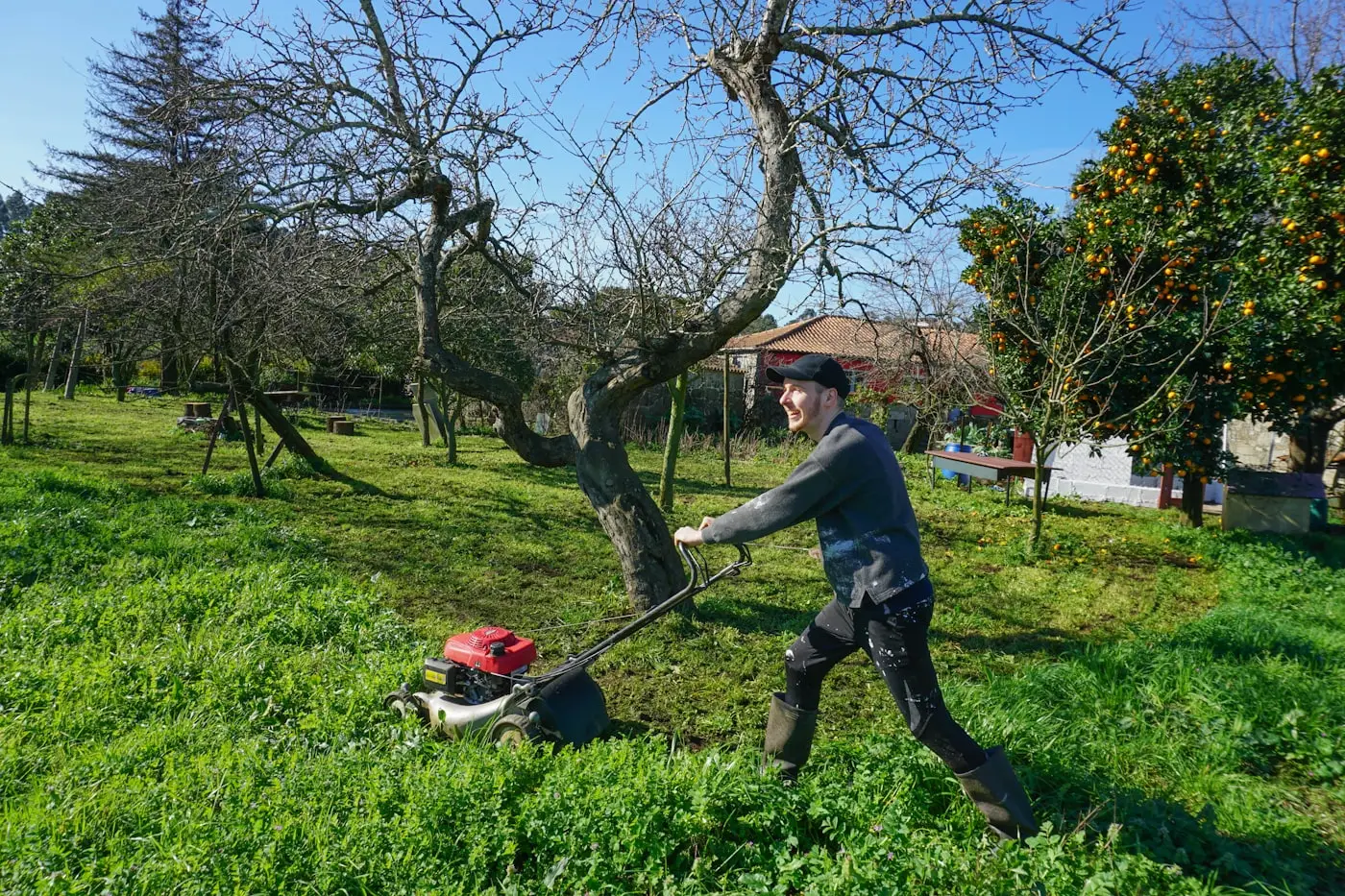
Why Yorkshire lawns build up so much thatch
Thatch is the layer of dead grass stems, root material, and organic debris that accumulates between the living grass blades and the soil surface. A small amount of thatch - up to about 1cm - is natural and not harmful. More than that, and it starts to block the movement of air, water, and nutrients to the grass roots.
Yorkshire gardens accumulate thatch faster than most because of the combination of a long wet growing season and clay-dominant soils that break down organic matter slowly. Where a free-draining sandy soil might decompose thatch reasonably quickly, Yorkshire clay keeps it in place. Add the moss that grows prolifically in the county's cool, damp conditions, and many lawns are running a 2-3cm layer of compacted thatch and dead moss by the end of summer. That is why a lawn treatment programme on its own is not enough - treatment kills the moss but the dead material still needs to come out.
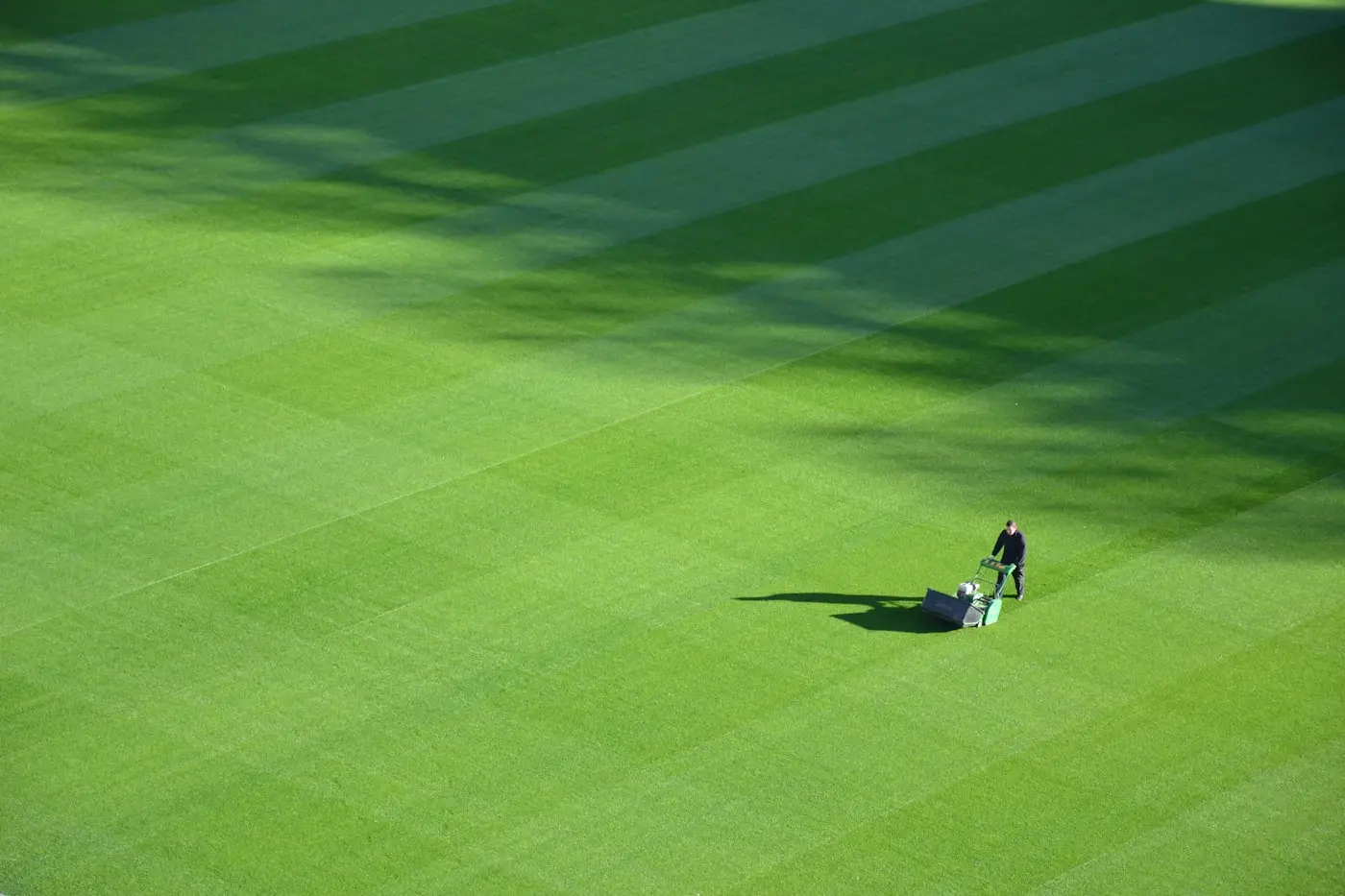
What scarification does
A scarifier uses rotating steel blades or spring tines to cut vertically through the turf at regular intervals, dragging out thatch, dead moss, and lateral-growing grass stems (runners) that block light and air to the sward. Done well, it:
- Removes the thatch layer that blocks air, water and nutrients from reaching the soil
- Removes dead moss that has been killed by prior treatment with iron sulphate
- Breaks up lateral runners that create a dense mat of dead material
- Exposes the soil surface so overseeded grass can make soil contact and germinate
- Stimulates the remaining grass to grow more vigorously by removing competition
What it does not do: scarification alone does not address soil compaction. If your Yorkshire clay lawn also needs improved drainage and aeration, hollow-tine aeration done at the same time is the complementary treatment. The lawn aeration guide for Yorkshire explains the difference between slit, solid-tine, and hollow-tine aeration and why hollow-tine is usually the right choice for clay.
Before and after: what to expect
This is the part that surprises people who have not had scarification done before. Immediately after, the lawn looks terrible. The scarifier removes a substantial amount of material and the surface looks raked-back, patchy, thin, and in some cases almost bare in the areas where moss was thickest. First-timers often call the gardener wondering if something went wrong. Nothing went wrong.
The process of recovery:
- Day 1-7: The lawn looks its worst. Thin and exposed. If the soil has been overseeded, there is no visible germination yet.
- Week 2-3: Overseeded areas start to show fine green grass coming through if conditions are right (soil warm enough, moisture present). Existing grass begins to recover.
- Week 4-6: New grass is visible and thickening. The lawn looks considerably better than it did pre-scarification, not just post-scarification.
- By spring following autumn scarification: The lawn should be noticeably denser, greener, and more resistant to moss re-establishment than it was the previous spring.
The key variables are timing and aftercare. Autumn scarification with immediate overseeding, done September-October, gives the new grass the best chance of establishing before winter closes in. Spring scarification (April-May) works but recovery competes with weed germination and the warmer, drier conditions that follow summer. For the full seasonal guide to scarification in Yorkshire, read the lawn scarification guide for Yorkshire.
Scarification prices across Yorkshire
Yorkshire independent lawn specialists charge below the rates that national franchise programmes quote. These are the typical ranges for local practitioners.
| Lawn size | Scarification only | Scarify + overseed | Scarify + aerate + overseed |
|---|---|---|---|
| Small (terrace, up to 50 sq m) | £60–£90 | £100–£140 | £130–£180 |
| Medium (semi, 50-100 sq m) | £90–£140 | £140–£200 | £180–£260 |
| Large (detached, 100 sq m+) | £130–£200 | £200–£290 | £260–£380 |
Prices include removal of the scarified material, which can be a significant volume on a heavily thatched lawn - several bags or a barrow or two of debris. If yours is a very large lawn or a particularly severe thatch problem, confirm the disposal arrangement when booking. Grass seed cost for overseeding varies with lawn size and seed type (drought-tolerant mixes cost more than basic ryegrass blends).
The full guide
Best time to scarify in Yorkshire
September to October: the main window
This is the preferred window for most Yorkshire lawns. The soil is still warm from summer - soil temperature above 8-10 degrees Celsius is what grass seed needs to germinate - and Yorkshire's reliable autumn rainfall keeps the newly overseeded surface moist without the risk of drought stress that summer brings. Booking in late August or September for an October slot is sensible; most experienced lawn specialists fill their autumn scarification slots early.
Autumn scarification pairs naturally with the rest of the autumn garden care programme: moss treatment in September, scarification when the moss has blackened, hollow-tine aeration at the same visit, overseed, and apply autumn feed. Done as a package, the results are substantially better than any single treatment on its own.
April to May: the secondary window
Spring scarification works and is worth doing if the lawn missed its autumn slot or if the thatch layer built up significantly over winter. The grass is growing actively and will recover quickly. The downside: spring scarification at the same time as overseeding faces more competition from weed seeds, which also germinate in spring. Selective weed killer applied later in May resolves most of this, but it adds a step and a cost. For most Yorkshire lawns, if you can only do one scarification per year, autumn is the better window.
How often to scarify
For most Yorkshire lawns, once per year is the right frequency. The county's climate and soils mean thatch builds up reliably through each growing season, and annual autumn scarification as part of a full renovation programme is enough to keep the lawn in good condition.
Twice per year - spring and autumn - is appropriate for:
- Lawns with a severe existing thatch problem (2cm+ of compacted thatch and moss) that needs heavy remediation in the first one or two years
- Lawns in particularly shaded locations, where thatch builds faster and decomposition is slower
- Lawns on heavy clay in very wet Yorkshire locations where organic matter barely decomposes between seasons
Once the lawn has been brought to a good baseline condition, annual autumn scarification as part of the full programme - aeration, overseed, feed - keeps it there without the need for twice-yearly intervention.
Should you scarify yourself?
Rotary scarifiers are available from hire shops and many garden centres. The honest answer: they work. A hired electric or petrol scarifier can do a reasonable job on a small to medium lawn, and the result will be better than not scarifying at all.
Where the DIY case weakens:
- Depth setting. Scarifying too shallow does not remove enough thatch. Scarifying too deep damages the grass crowns and can leave the lawn slow to recover. Experienced operators know the right setting for the condition they find.
- Hollow-tine aeration equipment. Most hire shops have slit aerators and solid-tine aerators but hollow-tine units - the type that actually removes plugs of clay - are harder to find for hire. For Yorkshire clay, hollow-tine is substantially more effective.
- Overseeding technique. Spreading seed evenly over a freshly scarified surface and achieving good soil contact takes practice. Uneven distribution means uneven recovery.
- Debris removal. A heavily thatched lawn produces a lot of scarified material. Bagging and disposing of it is physical work, and it needs to go somewhere.
For small lawns in reasonable condition with accessible thatch, DIY scarification is a reasonable option. For medium or large lawns, clay-dominant sites, or lawns with significant moss and thatch buildup, professional equipment and experience produces noticeably better results. The moss treatment guide for Yorkshire covers the treatment steps that ideally precede scarification.
What is lawn thatch and why does Yorkshire cause it?
Thatch is the layer of dead and dying organic matter that sits between the living grass blades and the soil surface. It is made up of dead grass stems, lateral runners, old root material, and decomposing moss - essentially the residue of the lawn's growing activity that has not broken down fast enough to be absorbed back into the soil. A small amount of thatch - up to about 1cm - is normal and not harmful. It provides slight insulation for the soil surface and a small buffer against wear. More than that, and it starts to cause problems: it blocks air and water movement, creates ideal conditions for moss, and stops the grass roots from developing properly into the soil beneath.
Yorkshire produces more thatch than drier parts of England for two connected reasons. First, the county's long, wet growing season keeps grass growing from March through to October or November in mild years, generating more organic residue than a shorter season would. Second, Yorkshire's heavy clay soils break down organic matter slowly. Where a free-draining sandy or loamy soil would decompose thatch relatively quickly through microbial activity, the clay acts as a slow substrate that retains moisture but resists the biological processes that would otherwise clear the organic layer naturally. The combination of high organic output and slow decomposition means thatch accumulates consistently year after year.
As a rule of thumb, lawns in the wettest parts of Yorkshire - West Yorkshire, Calderdale, the Harrogate uplands, anywhere on the Pennine fringe - should be checked annually and scarified accordingly. Lawns in the drier eastern parts of the county, including the East Riding, the Wolds, and the Humber plain, may manage with scarification every two years if the thatch layer stays below 1cm. The honest answer is that most Yorkshire lawns that have not been maintained regularly have a thatch layer well above 1cm and are past due for treatment whenever they first get it.
How to tell if your lawn needs scarifying
There are three simple checks that do not require any specialist equipment. The first is the pencil test: push a pencil vertically into the lawn surface and push it to the depth of any spongy layer before the pencil hits firm soil. If the spongy layer is more than 1cm, the thatch has crossed from normal to problematic. If it is more than 2cm, the lawn is significantly overdue for scarification and a heavy-duty pass will be needed to clear it properly.
The second check is visual. Stand at one end of the lawn and look across the surface at an oblique angle. Healthy grass in good condition will look dense and green with minimal variation. A lawn with significant thatch will have a brownish or greyish underlying layer visible beneath the green, and the surface will look slightly raised compared to a well-maintained lawn. Areas of moss coverage are the clearest indicator: if moss covers more than 30% of the lawn surface, the conditions that favour moss - poor drainage, accumulated organic matter, lack of air movement - have been present long enough for the thatch layer to be substantial.
The third check is how the lawn feels underfoot. Walk across it on a dry day. A lawn in good condition feels firm with a slight natural give. A lawn with significant thatch feels noticeably springy or spongy - the bounce comes from the thatch layer compressing under your weight rather than from healthy, resilient grass. If the lawn feels like a mattress underfoot, it is time to scarify.
Scarification versus raking: the difference
Lawn raking with a spring-tine rake collects surface debris - fallen leaves, loosely attached dead grass, light surface thatch. It can improve the appearance of a lawn and remove the loose top layer of dead material. What it cannot do is cut through and remove established thatch that has compacted into a dense layer between the grass and soil. A spring-tine rake working over a lawn with 2cm of compacted thatch will remove the loose surface material and leave the underlying layer largely intact.
Scarification uses powered rotating blades - either steel scarifying blades or stiff wire tines mounted on a rotating drum - to cut vertically through the turf at regular intervals, physically slicing through the thatch layer and dragging it out. The cutting action is aggressive compared to a rake: it severs lateral grass runners, cuts through the root mat, and lifts material that has been pressed into the soil surface over months of foot traffic and mowing. The result is a surface that looks significantly worse immediately after - raked bare, with exposed soil in places - but with the thatch layer genuinely removed rather than just disturbed.
The practical difference: a spring-tine rake is maintenance. It keeps the surface tidy between proper treatments. A powered scarifier is the actual treatment. For a Yorkshire lawn that has not been properly scarified in two or more years, raking makes almost no difference to the underlying thatch problem. A motorised scarifier set to the correct depth for the conditions is what removes it.
Power scarifiers themselves vary. An electric model from a hire shop or purchased for home use will handle a small to medium lawn adequately, though depth setting and consistency of coverage matter more with a lighter machine. Petrol-powered professional models are heavier, produce a more consistent cut depth across uneven ground, and can handle a heavier thatch layer without bogging down. For a standard domestic Yorkshire lawn of 50-100 square metres, either works reasonably well. For a large lawn with significant thatch on uneven ground, the professional machine produces a noticeably better result.
What to expect during and after scarification
The immediate aftermath of scarification surprises most homeowners who are doing it for the first time. The lawn looks substantially worse than it did before. Bare patches are visible where the moss and thatch was thickest. The remaining grass looks thin and raked-back. The surface is uneven. It looks, frankly, like someone has attacked it rather than treated it. This is entirely normal and is a sign that the treatment removed what it was supposed to remove.
Recovery timeline in Yorkshire conditions depends heavily on when it is done. Autumn scarification (September to October) recovers fastest because the soil is still warm from summer - soil temperatures typically 12-15 degrees in September, dropping to 8-10 in October - which means overseeded grass can germinate within two to three weeks and the existing grass continues to grow through the recovery period. A well-done autumn scarification with overseeding, on a lawn in moderate condition, typically looks noticeably better within four to six weeks and significantly better by the following spring.
Spring scarification (April to May) also recovers reasonably quickly because the grass is in active growth. The recovery competes with weed seed germination, which is more active in spring than autumn, and the window between spring growth and summer heat stress is shorter. For a Yorkshire lawn where the thatch is moderate and the main issue is keeping the lawn in shape, spring scarification works well. For a lawn with a serious thatch problem that has accumulated over several years, autumn is the better window because the recovery conditions are more forgiving and there is more growing time before winter.
What is especially worth noting for Yorkshire: cold wet springs are common at higher elevations and can slow recovery significantly. A lawn scarified in late March in Harrogate or on the Pennine fringe can sit in a thin, exposed state for four to six weeks before the soil warms enough for real recovery to begin. This is one reason autumn is the safer window for Yorkshire - the warmth is more reliable in early autumn than early spring. If you are committed to spring scarification, choose the latest possible slot (late April or early May) rather than the earliest to give the soil the best chance of being genuinely warm.
Combining scarification with other services
Scarification works best as part of a sequence rather than in isolation. The logical order, done in a single visit or as part of a coordinated autumn programme, is: scarify first to remove thatch and dead moss, aerate second to address compaction in the soil beneath, topdress with sharp sand mix brushed into the aeration holes, overseed bare patches, then apply an autumn feed. Each step creates the conditions for the next one to be more effective.
Scarification opens the surface and removes the thatch barrier; aeration creates channels into the soil beneath it; topdressing fills those channels and improves drainage structure; overseeding uses the disturbed, open surface for direct soil contact; and the autumn feed supports root development before winter closes in. Done as a single visit, this sequence takes a professional team three to four hours on a medium-sized Yorkshire lawn. Done piecemeal over several weeks, the later steps are less effective because the soil surface has settled back and the optimal window has moved on.
Combined package costs for a full autumn programme in Yorkshire - scarify, hollow-tine aerate, topdress, overseed and feed - typically run £150-200 for a small lawn (under 50m²), £200-320 for a medium lawn (50-100m²), and £280-500 for a large detached-house lawn (100-200m²). These are meaningfully below what national franchise lawn treatment companies charge for the same programme. See the price table above for a breakdown of individual service costs versus combined packages, and the lawn treatment service for what the chemical treatments in the sequence involve.
Frequently asked questions about lawn scarification
What is lawn scarification?
The mechanical removal of thatch, dead moss, and lateral grass growth from the lawn surface using rotating blades or tines. It opens up the turf, improves air and water movement to the roots, and prepares the surface for overseeding. It temporarily makes the lawn look worse before it looks substantially better.
When is the best time to scarify in Yorkshire?
September to October is the main window. Soil is still warm enough for overseeding to take, and autumn rain keeps the surface moist. April to May is the secondary window if the autumn slot was missed. Avoid summer heat and winter frost periods - the lawn needs to be able to recover.
Does scarification damage the lawn?
Yes, temporarily. The lawn looks significantly worse immediately after - thin, bare in patches, raked-back. This is expected. Within four to six weeks of autumn scarification with overseeding, the lawn fills back in and looks markedly better than it did before. Do not judge the result in the first week.
How much does scarification cost in Yorkshire?
From £60-90 for scarification only on a small lawn. With overseeding: £100-140. With aeration and overseeding as a full autumn programme: £130-180. Medium and large lawns are proportionally higher. Yorkshire independent specialists charge less than national franchise lawn programmes for equivalent work.
How often should I scarify?
Once per year for most Yorkshire lawns - autumn is the right window. Twice per year for lawns with severe thatch or shade problems while bringing them back to a good baseline. Once established, annual autumn scarification as part of a full programme is enough.
What is the difference between scarification and aeration?
Scarification removes thatch from the surface. Aeration addresses compaction in the soil beneath by creating channels (hollow-tine removes soil plugs, improving drainage). They target different problems and work best done together. See the lawn aeration guide for Yorkshire for how the two complement each other.
My lawn looks dead after scarifying - is this normal?
Yes, completely normal. A properly scarified lawn looks significantly worse immediately after - thin, raked back, bare in patches where moss was thickest. This is what a successful treatment looks like. If overseeding followed, new grass will typically be visible within two to three weeks in autumn conditions. By four to six weeks, the lawn should be visibly filling in and looking better than it did before the treatment. Do not judge the result in the first week.
Can I scarify when wet?
Avoid scarifying on a soaking-wet surface. Wet thatch clogs scarifier blades and the machine will drag rather than cut cleanly. In Yorkshire's autumn climate, a dry spell of two to three days is enough for the surface to be workable even after heavy rain. The ground below the thatch layer does not need to be dry - just the surface grass. Early morning dew is fine; a lawn still waterlogged from heavy overnight rain is not.
How short should I cut the grass before scarifying?
Mow shorter than usual before scarification - down to around 3-4cm if the grass is currently at its normal summer height of 5-7cm. A closer cut allows the scarifier blades to reach the thatch layer without being impeded by long grass. Do not scalp the lawn, but a closer cut immediately before the treatment improves the result. Cut two to three days before scarification rather than the same day if possible, so any stress from close mowing has passed before the more aggressive scarification treatment follows.
Should I scarify every year?
For most Yorkshire lawns, once per year in autumn is right. Yorkshire's wet growing season and clay soils produce thatch reliably, and annual removal keeps the lawn from falling behind. Lawns in very shaded positions or on heavy West Yorkshire clay may benefit from twice-yearly scarification in the first couple of years while bringing them back to a good baseline. Once in good condition, annual autumn scarification as part of a full aeration and feed programme is sufficient.
What do I do with all the thatch removed?
On a heavily thatched Yorkshire lawn, scarification produces several barrow-loads of material. It is not suitable for most home compost heaps - it is slow to break down and can carry moss spores. Most professional scarification services include removal and disposal as part of the price; confirm this when booking. If doing it yourself, bagged thatch goes in a green waste bin or at the council tip. Do not leave it piled on the lawn - it will kill the grass beneath.
Can I scarify in summer?
Technically possible, not recommended. Summer scarification in July or August stresses the grass at the same time as heat and potential drought make recovery difficult. Any overseeding competes with weed seeds and faces drought stress. Spring and autumn are the right windows. The only case for summer scarification is a lawn that needs renovation urgently before an event or a letting period, where the homeowner accepts the risk of slow or uneven recovery.
Further reading
Ready to properly renovate the lawn?
Tell us about the lawn and what it looks like. A local specialist can take it on, recommend the right package and call you with a price.
Request a gardenerLawn scarification across all of Yorkshire.
Local lawn specialists covering 240+ towns and surrounding villages. Find your nearest specialist in Yorkshire - pick your town for local pricing and availability.
- Ackworth
- Acomb
- Addingham
- Adwick-le-Street
- Armthorpe
- Baildon
- Barlby
- Barnsley
- Batley
- Bawtry
- Bedale
- Beverley
- Bingley
- Birstall
- Bishopthorpe
- Bolton-upon-Dearne
- Boroughbridge
- Boston Spa
- Bradford
- Bridlington
- Brighouse
- Brough
- Burley-in-Wharfedale
- Castleford
- Catterick Garrison
- Cleckheaton
- Conisbrough
- Copmanthorpe
- Cottingham
- Crofton
- Cudworth
- Darton
- Denby Dale
- Dewsbury
- Doncaster
- Driffield
- Dunnington
- Easingwold
- Elland
- Emley
- Farsley
- Featherstone
- Filey
- Flockton
- Garforth
- Golcar
- Goldthorpe
- Goole
- Grassington
- Greetland
- Guisborough
- Guiseley
- Halifax
- Harrogate
- Hawes
- Haworth
- Haxby
- Hebden
- Hebden Bridge
- Heckmondwike
- Hedon
- Helmsley
- Hemsworth
- Hessle
- Holmfirth
- Honley
- Horbury
- Hornsea
- Horsforth
- Howden
- Hoyland
- Huddersfield
- Hull
- Huntington
- Ilkley
- Keighley
- Kippax
- Kirkburton
- Kirkbymoorside
- Knaresborough
- Knottingley
- Leeds
- Leyburn
- Linthwaite
- Liversedge
- Loftus
- Long Preston
- Maltby
- Malton
- Market Weighton
- Marsden
- Masham
- Meltham
- Mexborough
- Middleham
- Mirfield
- Morley
- Mytholmroyd
- Normanton
- North Cave
- Northallerton
- Norton
- Ossett
- Otley
- Pateley Bridge
- Penistone
- Pickering
- Pocklington
- Pontefract
- Poppleton
- Pudsey
- Queensbury
- Rawcliffe
- Rawmarsh
- Reeth
- Richmond
- Ripon
- Rotherham
- Rothwell
- Royston
- Saltburn-by-the-Sea
- Scarborough
- Selby
- Settle
- Sheffield
- Sherburn-in-Elmet
- Shipley
- Silsden
- Skelmanthorpe
- Skipton
- Slaithwaite
- South Elmsall
- Sowerby Bridge
- Spofforth
- Sprotbrough
- Stamford Bridge
- Stocksbridge
- Stockton-on-the-Forest
- Stokesley
- Strensall
- Swanland
- Swinton
- Tadcaster
- Thirsk
- Thorne
- Thornton
- Thurnscoe
- Tickhill
- Todmorden
- Upton
- Wakefield
- Wath-upon-Dearne
- Wetherby
- Whitby
- Willerby
- Withernsea
- Wombwell
- Yeadon
- York
- Yarm
- Great Ayton
- Marske-by-the-Sea
- Ingleton
- Bramhope
- Alwoodley
- Dinnington
- Mosborough
- Ecclesfield
- Wickersley
- Mapplewell
- Chapeltown
- Aston
- Elloughton
- Anlaby