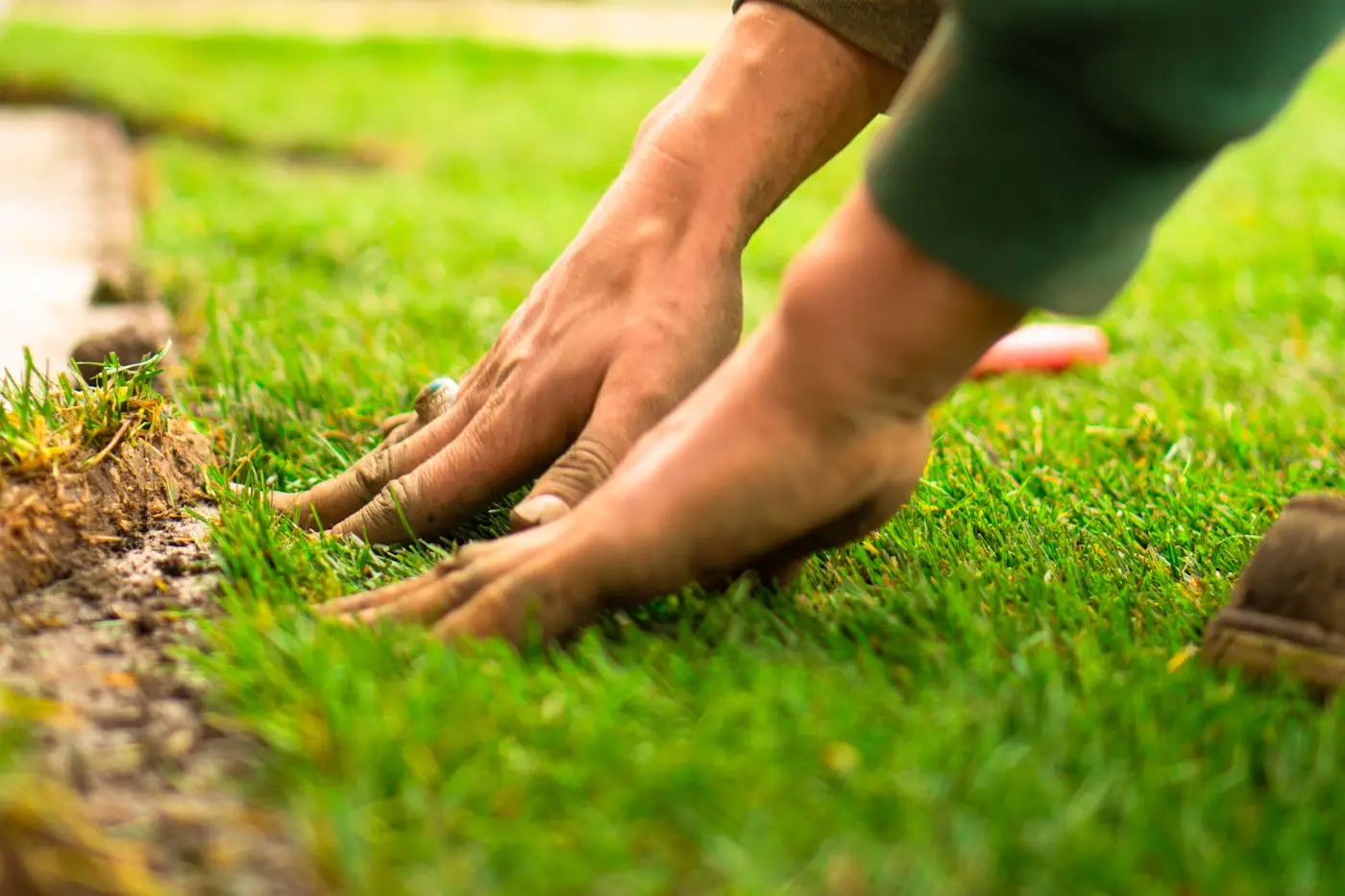
Most Yorkshire gardens sit on soils that compact more readily than those in the south of England. The Coal Measures clay that underlies much of West and South Yorkshire, the heavy Vale of York silts, and the clay-with-flints of the Magnesian Limestone belt all share one characteristic: they close up under pressure. Every time someone walks across the lawn, kicks a ball, or runs a mower over the surface, the clay particles are pushed closer together. Over a season, the soil structure beneath the grass becomes dense enough that water struggles to drain and air cannot penetrate to the root zone. The grass above goes thin, yellow in patches, and susceptible to disease and drought stress.
Aeration is the mechanical solution. It breaks up the compacted layer and restores the channels that water, air, and nutrients need to reach the roots. Done right on a Yorkshire clay soil, it is transformative: lawns that have waterlogged all winter drain properly by the following spring. Lawns that went brown every August start holding their colour through summer. The effect takes a year or two of annual treatment to fully show, but the direction of travel is clear from the first season.
Quick answer: Hollow-tine aeration is the right method for Yorkshire clay. Best timing is September. Professional cost is typically £60 to £120 for a medium lawn; DIY hire is £50 to £80 per day for the machine. Combine with overseeding and top-dressing for best results. Do it annually if your lawn is on clay-heavy soil.
Cost of Lawn Aeration in Yorkshire: 2026 Rates
| Lawn size | Professional aeration only | Aeration + overseed + top-dress | DIY hire cost |
|---|---|---|---|
| Small (up to 50m²) | £60 to £90 | £90 to £130 | £50 to £80 machine hire + seed |
| Medium (50 to 150m²) | £80 to £130 | £130 to £180 | £50 to £80 machine hire + seed |
| Large (150 to 400m²) | £120 to £180 | £180 to £280 | £50 to £80 machine hire + seed |
| Very large (400m²+) | £180 to £300+ | £280 to £400+ | May need 2-day hire; additional seed costs |
These are 2026 Yorkshire rates. Prices vary depending on soil condition (severely compacted clay takes longer), access to the garden, and whether the job is combined with other autumn renovation work. Most professional gardeners offer autumn renovation packages combining scarification, aeration, overseeding, and top-dressing for a single fixed price, which is usually better value than booking each task separately.
Yorkshire note: Some gardens in Harrogate, York, and the Dales require specialist equipment access through narrow side passages. If your garden access is restricted to a gate less than 90 centimetres wide, confirm the equipment dimensions before booking. Some powered hollow-tine aerators are too wide; in these cases hand-fork aeration or a narrower pedestrian machine may be used, which takes longer and may add to the cost.
Hollow-Tine vs Solid-Tine: Which to Use on Yorkshire Clay
Solid-tine aeration uses a spike or fork to push into the soil. The spike compresses the soil sideways to create the hole. On sandy or loam soils, this is effective because the soil structure is open enough that a temporary channel is created and the displaced material does not immediately close back in. On Yorkshire clay, solid-tine aeration is significantly less effective. The clay particles are pushed sideways and close back within weeks. You have moved the problem rather than solved it.
Hollow-tine aeration uses a hollow tube to punch into the soil and physically remove a core. The core is deposited on the surface (it looks like dozens of small soil plugs scattered across the lawn). The channel left behind is real: nothing has been compressed into it, and it stays open. When dressed with sharp sand, the channel remains open through the winter, allowing drainage and air movement. Over several years of annual treatment, the sand gradually mixes into the surrounding clay structure, improving its drainage properties permanently.
| Type | How it works | Best for | Yorkshire clay verdict |
|---|---|---|---|
| Solid-tine | Spike pushed into soil, displaced sideways | Sandy/loam soils, light maintenance | Limited benefit; not recommended as primary treatment |
| Hollow-tine | Core of soil physically removed | Clay soils, compacted lawns | Correct choice for Yorkshire; do annually |
| Slitting | Vertical cuts through turf | Improving surface drainage quickly | Useful addition in autumn; not a replacement for hollow-tine |
| Hand fork | Garden fork pushed in, wiggled | Spot treatment of small areas | Fine for individual patches; impractical for whole lawns |
Why September and October Beat Spring for Yorkshire Aeration
Many lawn care guides recommend spring aeration. For Yorkshire, autumn is the right call, and by a significant margin. Here is the reasoning.
Yorkshire's clay soils stay cold and wet well into spring - often April. Aerating on cold, waterlogged clay before the grass is actively growing means the channels close back more quickly and the lawn has less ability to recover from the disruption. Spring in Yorkshire is also a narrower window than in the south: by the time the soil is ready for aeration, you are already into the main growing season, with less time for recovery before summer arrives.
September, by contrast, is ideal. Soil temperature in most of Yorkshire through September is 12 to 15 degrees Celsius: warm enough for grass seed to germinate reliably in the aeration channels when you overseed immediately after. Rainfall returns in autumn, keeping the overseeded lawn moist without you needing to water. The grass then has the whole of October, November, and the following spring to establish before facing another summer. And the aeration channels, dressed with sharp sand and compost top-dressing, have a winter to stabilise before the growing season begins again.
Early October is also workable, but germination becomes less reliable from mid-October as soil temperatures drop below 10 degrees Celsius. If you miss September, get aeration and overseeding done in the first ten days of October at the latest for best results. Our full Yorkshire lawn care calendar covers the complete seasonal schedule and why each window matters for the county.
Signs Your Yorkshire Lawn Needs Aeration
You do not need to wait for the lawn to look obviously terrible. These are the signs that compaction is affecting your grass:
- Water pooling after rain: if puddles form on the lawn surface and take more than a day to drain away, the soil below is too compacted to absorb water at a reasonable rate. This is very common on Yorkshire clay in winter and after a wet summer.
- Hard surface in dry conditions: push a screwdriver into the lawn in summer. If it resists penetration beyond 5 to 6 centimetres without significant pressure, the soil is compacted. Well-aerated soil allows a screwdriver to push in easily to 10 centimetres.
- Thin, patchy grass despite feeding: if the lawn does not respond to feeding or overseeding, roots that cannot penetrate the compacted layer are the likely cause. Fertiliser applied to a compacted lawn sits in the thatch layer rather than reaching the root zone.
- Moss appearing in patches: moss tolerates compacted, poorly drained conditions that grass cannot. Significant moss build-up is often a drainage and compaction signal.
- Visible wear lines or paths: the areas that get walked most are the first to show compaction. If the grass is thinner along the route from the house to the garden gate, that path has been compacted and aeration targeted at those zones will help.
- Lawn struggled to green up this spring: a compacted lawn is slow to green in spring because root development is restricted and the soil stays cold. If your lawn was noticeably late coming back to life compared to a neighbour's garden, compaction is worth investigating.
Persistent waterlogging that does not respond to aeration may point to a deeper drainage issue rather than simple surface compaction. Our guide on garden drainage in Yorkshire covers when surface treatment is not enough and what the structural solutions are.
DIY Aeration vs Professional: Honest Comparison
| DIY | Professional | |
|---|---|---|
| Equipment | Hire hollow-tine aerator, £50-80/day | Included in quote |
| Materials | Seed, top-dressing, autumn feed: £40-80 for medium lawn | Usually included or quoted separately |
| Time | 3-5 hours for medium lawn (all tasks) | 1-2 hours typically |
| Skill needed | Moderate; machine is manageable but heavy on clay | Professional equipment and experience |
| Penetration depth | Some hire machines only reach 5-6cm; check before hiring | Professional machines reach 8-10cm consistently |
| Total DIY cost (medium lawn) | Approx. £100 to £160 | £130 to £180 |
The cost difference between DIY and professional for aeration is smaller than many people expect, particularly on larger lawns. The main DIY risks are: hiring a machine that does not penetrate deeply enough for Yorkshire clay, getting the seed mix wrong, and not doing the top-dressing correctly. On a medium or large clay-heavy lawn, professional aeration combined with experienced overseeding and top-dressing typically produces a better outcome than DIY at nearly the same total cost. For small lawns or confident gardeners who have done it before, DIY is a sensible choice.
Aftercare: Overseeding and Top-Dressing
Aeration alone is useful. Aeration followed immediately by overseeding and top-dressing is transformative. The aeration channels give seeds somewhere to germinate with direct soil contact rather than sitting on thatch. The top-dressing fills the channels and gradually changes the clay structure.
Overseeding on aerated ground
Apply seed immediately after aeration, before the channels dry out or get disturbed. Broadcast at 35 to 50 grams per square metre across the whole lawn, not just the bare patches - thickening the whole sward is more effective than patching. For best results, combine aeration with our lawn scarification service to remove thatch before overseeding. Choose a seed mix appropriate for your conditions: a shaded Yorkshire garden needs a shade-tolerant mix, a high-traffic lawn needs a hard-wearing rye-dominant mix. Our guide on lawn overseeding in Yorkshire covers seed selection in detail, including mixes suited to Yorkshire clay soils.
Top-dressing
A top-dressing of sharp sand mixed with fine compost at roughly 70 parts sand to 30 parts compost, applied at about 3 to 4 kilograms per square metre, is brushed across the surface to fill the aeration channels. The sharp sand is the key ingredient for Yorkshire clay: repeated annual applications of sand into the channels gradually improve the structure, reducing compaction and improving drainage with each passing year. This is not a one-year fix; it is a long-term soil improvement programme that takes three to five years to show its full effect, but the annual improvement is visible each spring.
After top-dressing, apply an autumn lawn feed (low nitrogen, high potassium) and water the whole area if no rain is forecast if a gardener takes it on. Keep foot traffic off the lawn for two weeks while the seed germinates. The first new growth is typically visible within 10 to 14 days in September conditions. If dogs use the garden, consider temporary fencing or barrier tape; dog-worn patches near garden fencing or near pathways are common and worth noting before aeration so they can get extra seed coverage.
Ready to properly sort your lawn this autumn?
Tell us where you are in Yorkshire and the size of your lawn. We will connect you with a local gardener who knows Yorkshire clay soils and can get the autumn renovation done properly.
Get a free quote →Frequently Asked Questions
How much does lawn aeration cost in Yorkshire?
Professional hollow-tine aeration of a small lawn (up to 50 square metres) typically costs £60 to £90. A medium lawn of 50 to 150 square metres runs £80 to £130. Large lawns above 150 square metres are usually £120 to £180 for aeration alone, more if combined with overseeding and top-dressing. DIY machine hire runs £50 to £80 per day plus seed and top-dressing materials. Always ask for a fixed quote before the work starts.
When is the best time to aerate a lawn in Yorkshire?
September is best, with early October also viable. Autumn beats spring in Yorkshire because the soil is still warm enough for overseeding to germinate, rainfall returns reliably, and the grass has a full winter to establish. Spring aeration is possible but grass recovering from winter has less resilience, and Yorkshire's short spring window leaves less recovery time before summer. See our Yorkshire lawn care calendar for the full seasonal context.
Should I use solid-tine or hollow-tine aeration on Yorkshire clay soil?
Hollow-tine, almost always. Solid-tine aeration compresses clay sideways rather than removing it, and the channels close back quickly. Hollow-tine physically removes soil cores and leaves genuine open channels that stay functional when dressed with sharp sand. On Yorkshire's Coal Measures clay and Vale of York silts, solid-tine provides limited lasting benefit.
Can I hire aeration equipment and do it myself?
Yes. Hollow-tine aerators hire for £50 to £80 per day from tool hire companies. The machines are heavy and physically demanding on compacted clay, but manageable. Check the penetration depth before hiring: professional machines reach 8 to 10 centimetres; some hire models only reach 5 to 6 centimetres, which is less effective on heavy clay. Budget for seed, top-dressing material, and autumn feed on top of the machine hire cost.
How often does a Yorkshire lawn need aeration?
Annual hollow-tine aeration in September is the right frequency for most Yorkshire clay-soil lawns. Heavily used lawns with significant summer compaction may benefit from a lighter solid-tine pass in spring as well. On lighter soils in parts of South Yorkshire's Magnesian Limestone belt, every other year may be sufficient. The signs that tell you the lawn needs it: water pooling after rain, a hard soil surface in summer, and thin or yellowing grass despite adequate rainfall and feeding.
What aftercare does an aerated lawn need?
After hollow-tine aeration: sweep up or break down the soil cores, apply a top-dressing of sharp sand and fine compost brushed into the channels, broadcast grass seed across the whole lawn at 35 to 50g per square metre, and apply an autumn lawn feed. Water if dry weather is forecast. Avoid mowing for at least two weeks. Keep heavy foot traffic off the lawn for the first week while the channels settle and seed germinates. Our overseeding guide covers seed selection and aftercare in detail.
What happens after lawn aeration? What aftercare is needed?
After hollow-tine aeration, the standard process is: sweep up or break down the soil cores (or remove them), then apply a top-dressing of sharp sand mixed with fine compost at roughly a 70:30 ratio, brushing it into the aeration channels. Overseed immediately after, applying seed at 35 to 50 grams per square metre across the whole lawn surface, not just the bare patches. Apply an autumn lawn feed. Then keep the lawn watered if there is a dry spell in September; the first two weeks after overseeding are critical. Do not mow for at least two weeks after overseeding, and when you do cut for the first time, keep the blades high.
Related Guides
- Yorkshire Lawn Care Calendar: What to Do Every Month
- Lawn Overseeding in Yorkshire: When and How
- Lawn Scarification in Yorkshire: When to Scarify and What It Costs
- Lawn Top Dressing in Yorkshire: Sand and Compost for Clay Lawns
- Lawn Fertiliser in Yorkshire: Feeding a Clay Lawn Through the Season
- Clay Soil Garden Guide for Yorkshire
- Garden Drainage in Yorkshire: Solving Waterlogging
- Garden Maintenance Services