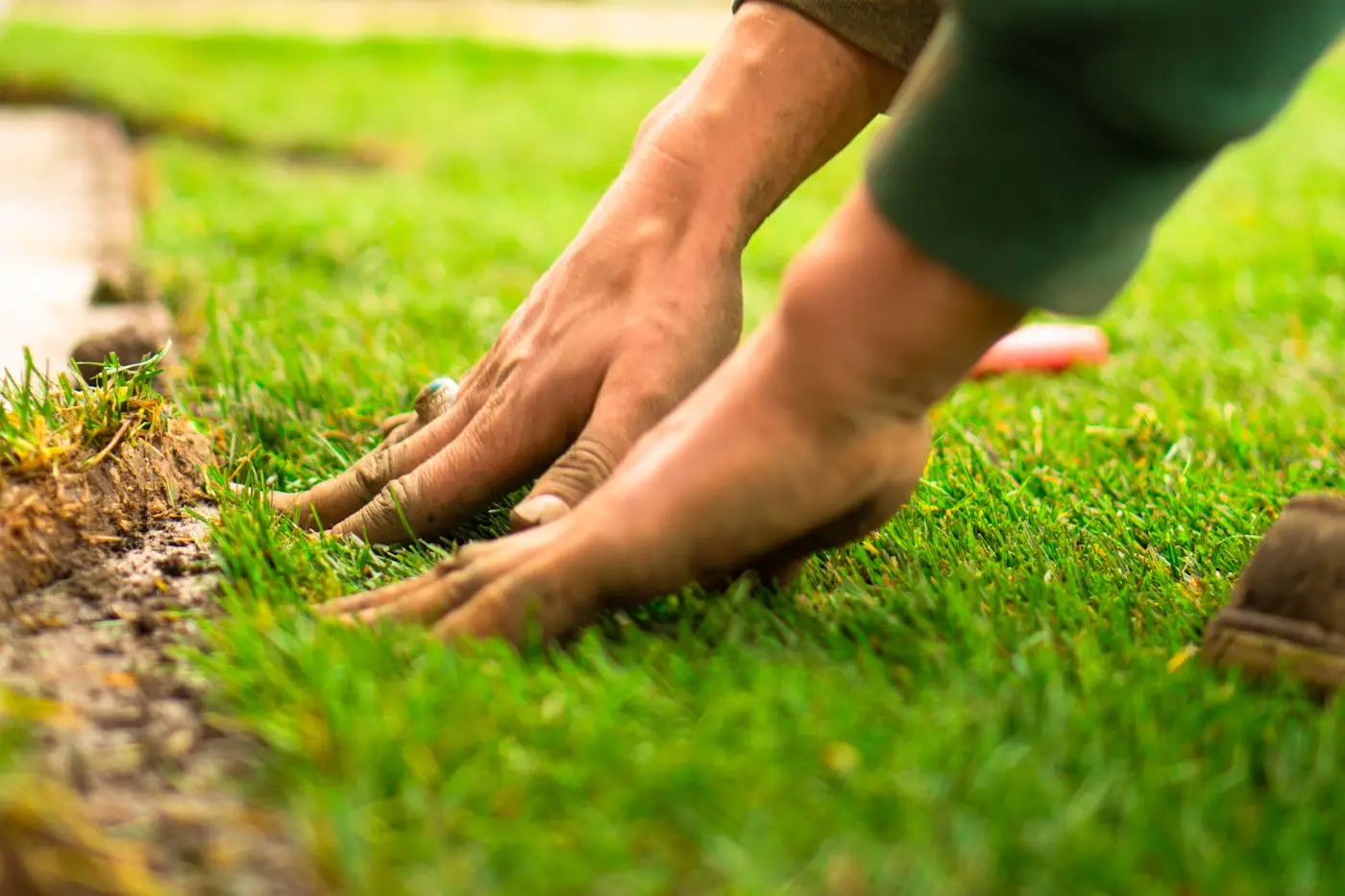
Most people who ask about top dressing have seen it on a neighbour's lawn after a September renovation: the garden looks like someone has tipped a lorry-load of sandy soil across the grass and left it there. It is not the most reassuring sight if you have not seen it before. Within two to three weeks, the material has settled into the surface, the grass is growing through it, and the lawn looks better than it did before. That is what top dressing does: it changes the texture and structure of the soil beneath the grass by gradually introducing better-draining material into the root zone.
For Yorkshire lawns on clay soils, this matters more than it would in most of England. The clay soils of West Yorkshire, the Vale of York, and the South Yorkshire basin compact under garden use and hold water for months. A programme of annual hollow-tine aeration followed by top-dressing with sharp sand is one of the few treatments that genuinely improves Yorkshire clay over time rather than just managing the symptoms. It is not a one-season fix, but it is the right long-term strategy.
Quick answer: Top dressing is a mixture of sharp sand, compost, and fine loam applied to the lawn surface after scarification and aeration, then brushed in. Best timing in Yorkshire is late August to September. DIY material cost: 6 to 8 bags (40kg each) covers a medium lawn (around 100m²), costing £60 to £120 for material. Professional top dressing including labour typically runs £80 to £200 for a medium garden. Always do it after aerating, not as a standalone treatment.
What Top Dressing Actually Does to Yorkshire Clay
Top dressing works through two mechanisms, and understanding both explains why annual application produces cumulative improvement rather than a one-off fix.
The first mechanism is channel filling. When a hollow-tine aerator removes cores of clay from the lawn, it leaves channels that extend 8 to 10 centimetres into the soil. These channels need to be filled with something that will stay open and improve drainage: if they are left unfilled, clay from the surrounding soil walls gradually collapses back into them. Sharp sand brushed into these channels creates a lasting open structure. Rainfall and air can move through the sand far more freely than through clay. Over a single season, this noticeably improves surface drainage and root zone aeration. Over multiple seasons of annual aeration and top-dressing, the accumulating sand gradually changes the character of the upper soil layer.
The second mechanism is surface level improvement. Lawns develop slight undulations over years of use: areas that get worn sink slightly, roots create bumps and ridges, and mowing patterns can create low spots. Top dressing fills minor irregularities and produces a more level surface that is easier to mow consistently and drains more uniformly. For lawns in Leeds, Bradford, and Huddersfield where mild wet winters repeatedly saturate the clay and slight hollows become persistent puddles, this surface levelling effect has practical value every wet winter.
Yorkshire note: After a mild, wet winter of the kind Yorkshire regularly experiences, particularly in the areas west of the Pennines and across the Vale of York, clay lawns often show significant compaction and surface depression by the following autumn. Gardens in York and Harrogate that were aerated and top-dressed in September will typically have noticeably better drainage the following winter than those that were not. The improvement from a single season of treatment is visible; the improvement from five years of consistent annual treatment is dramatic.
The Best Top Dressing Mix for Yorkshire Clay
Not all top dressing materials are equal, and the mix that works best on Yorkshire clay is different from what you might use on a free-draining sandy soil.
The Yorkshire clay formula
The standard recommendation for Yorkshire clay lawns is a mix of approximately:
- 60 to 70% sharp sand (washed, horticultural grade; not builder's sand, which is too fine and can cap rather than improve clay)
- 20 to 30% fine composted organic matter (well-rotted garden compost or fine bark compost)
- 0 to 20% fine loam (optional, particularly useful for very sandy soils; less necessary on clay where the clay itself provides loam)
The sharp sand is the most important component for Yorkshire clay. Its angular particle structure does not compact into the clay like fine sand would, and it creates a permanent improvement in the channel structure. Builders' sand or fine plastering sand has rounded particles that pack down and can actually worsen drainage over time; do not use it as a substitute.
Pre-mixed vs DIY mixing
Ready-mixed lawn top dressing is available from garden centres and builders' merchants in 25kg to 40kg bags and typically runs at £7 to £15 per bag depending on the formulation. For a medium lawn of around 100 square metres, you will need approximately 6 to 8 forty-kilogram bags. This covers the cost of material at £60 to £120, and you can order to the nearest bag.
DIY mixing is cheaper but requires bulk buying sharp sand and compost separately and combining them. A bulk bag of sharp sand (approximately 800kg) runs £80 to £120 delivered in Yorkshire, and a bulk bag of compost (approximately 700kg) costs £60 to £90. For a large lawn or a garden where top dressing will be done every year, bulk buying and mixing on site saves money. For a single application on a medium-sized lawn, ready-mixed bags are more practical.
| Material option | Coverage | Approximate cost | Best for |
|---|---|---|---|
| Bagged ready-mix (40kg bags) | Each 40kg bag covers approx. 13 to 15m² | £7 to £15 per bag | Single application, medium lawns, no bulk storage |
| Bulk sharp sand + compost (mixed on site) | 800kg sand + 300kg compost covers approx. 200 to 250m² | £140 to £210 for bulk bags delivered | Large lawns, annual programme, value over multiple years |
| Professional supply and apply | Material included in quote | £80 to £200 for a medium garden including labour | No vehicle to transport bulk material, time-poor homeowner |
When to Top Dress a Yorkshire Lawn
Timing is critical and Yorkshire's climate makes the window narrower than many gardening guides suggest. The correct window is late August through September, ideally in the first three weeks of September.
The reasons for this specific timing:
- Soil temperature: top dressing done immediately after aeration and before overseeding requires the soil to be warm enough for grass seed to germinate. In Yorkshire, soil temperature drops below the 10-degree threshold for reliable germination from mid-October onwards. By September, soil temperature in most of Yorkshire is still 12 to 15 degrees, adequate for germination within 10 to 14 days.
- Moisture: Yorkshire's autumn rainfall begins reliably in September and October, providing the moisture needed to settle the top-dressing material into the surface and keep newly seeded areas moist for germination. Summer top dressing on a dry lawn is not effective: the material sits on the surface and does not integrate properly.
- Recovery time: renovating in September gives the lawn the whole of October and November to recover before the ground freezes and growth stops. The grass has several weeks of active growth to establish in the top-dressing material before being tested by winter conditions.
- Integration with aeration: top dressing must follow hollow-tine aeration. The channels created by aeration are the primary location where the top-dressing material needs to go. Aeration in September, followed immediately by top dressing, is the standard autumn renovation sequence for Yorkshire clay lawns.
Spring top dressing is possible and sometimes done as a light maintenance application, but it is not a substitute for the main autumn renovation. Spring conditions in Yorkshire are often too cold and wet through March and April for top dressing to integrate properly, and the shorter growing season before summer means less recovery time. Our Yorkshire lawn care calendar covers the full seasonal schedule for all lawn renovation tasks.
Step-by-Step: DIY Top Dressing a Yorkshire Lawn
Top dressing done in isolation, without first preparing the surface, produces poor results. This is the full sequence for a Yorkshire autumn renovation.
- Scarify first. Remove thatch and dead material using a mechanical scarifier before any other treatment. On a heavily thatched Yorkshire clay lawn, this alone will remove a significant volume of dead organic matter and open up the surface. See our lawn scarification service or the scarification guide for timing and technique. Do not top dress before scarifying: the material cannot integrate properly through a thick thatch layer.
- Aerate immediately after scarification. Hollow-tine aeration on the same day or within two to three days of scarification. The channels created by aeration are the primary delivery mechanism for the top-dressing material. Aeration without top-dressing is useful; top-dressing without prior aeration is significantly less effective because there are no channels to fill. Our aeration guide covers hollow-tine technique and hire options for Yorkshire.
- Calculate the material needed. Measure the lawn area (length x width in metres). At 3 to 5 kilograms per square metre applied at 6 to 8mm depth, a 100m² lawn needs 300 to 500 kilograms of material. That is 8 to 13 forty-kilogram bags. Round up rather than down; running short mid-application means an uneven coverage.
- Apply the material. Tip or shovel the top-dressing material across the lawn surface in small heaps, spacing them roughly 2 metres apart across the whole area. Then spread and level using a lute, drag mat, or the back of a rake. The aim is a consistent depth of 6 to 8mm across the whole surface, not a thick layer in some areas and nothing in others.
- Brush it in. Use a stiff broom, drag brush, or purpose-made drag mat to work the material into the aeration channels and down into the grass canopy. This is the most important step and the one most often skimped on. The material needs to be below the grass leaf tips, not sitting on top of them. Work in multiple directions across the lawn, including diagonally, to ensure complete penetration. This takes 20 to 30 minutes of vigorous brushing on a medium lawn and is physically demanding.
- Overseed immediately. Apply grass seed at 35 to 50 grams per square metre across the whole lawn. On bare or thin patches, apply at the higher end of the rate. See our overseeding guide for seed mix selection for Yorkshire conditions. Broadcasting seed over freshly applied top dressing gives the seed the best possible germination environment: direct soil contact, moisture retention, and protection from birds.
- Apply autumn fertiliser. A low-nitrogen, high-potassium autumn fertiliser applied now will support root establishment in the newly seeded areas and harden the existing grass for winter. See our fertiliser guide for product selection and application rates for Yorkshire soils.
- Water if needed. Yorkshire's autumn rainfall usually handles irrigation naturally. If there is a dry spell in the first two weeks after application, water the lawn every two to three days with a light application (15 to 20 minutes with a sprinkler on a medium lawn). Do not let the surface dry out completely during germination.
Professional Top Dressing: Cost and What to Expect
A professional gardener or lawn care company doing top dressing as part of an autumn renovation programme will typically include it within a package quote rather than pricing it separately. Here are the realistic numbers for Yorkshire in 2026.
| Service | Small lawn (up to 50m²) | Medium lawn (50-150m²) | Large lawn (150-400m²) |
|---|---|---|---|
| Top dressing only (material + labour) | £50 to £80 | £80 to £150 | £150 to £280 |
| Aeration + top dressing | £90 to £140 | £140 to £200 | £200 to £350 |
| Full autumn renovation (scarify + aerate + top dress + overseed + autumn feed) | £150 to £220 | £220 to £350 | £350 to £550 |
These are 2026 Yorkshire rates and will vary depending on access, soil condition, and the volume of material needed. A lawn that has never been aerated or top dressed before typically needs more material to fill significant compaction channels than one that has been maintained annually. Always ask for a fixed quote including materials rather than an open hourly rate for renovation work of this type.
Yorkshire note: After a typical mild wet winter in the Leeds, Bradford, or Sheffield area, where the clay lawn has been waterlogged for three to four months, the material volume needed for top dressing can be higher than the guidelines above suggest. Lawns that have sunk or developed hollow-sounding areas under foot have lost soil structure in those spots and may need localised deeper dressing to restore a level surface. A professional gardener assessing the lawn in advance of autumn renovation can identify these areas and price accordingly.
Why Top Dressing Must Follow Scarification and Aeration
This point is worth making explicitly because it is a source of confusion. Top dressing is not effective as a standalone treatment on Yorkshire clay. The surface of a compacted clay lawn is too dense and level for the material to integrate: it sits on the surface, gets displaced by rain or foot traffic, and dries into a thin surface crust that does not improve the underlying soil.
After scarification, the thatch layer is removed and the soil surface is open. After hollow-tine aeration, there are channels extending 8 to 10 centimetres into the soil. These channels are what make top dressing work: the sharp sand fills them and creates lasting open pathways through the clay. Without the channels, the sand sits on the surface. With the channels, it integrates into the structure where it can actually change the drainage and aeration properties of the root zone.
Think of it as a system: scarification opens the surface, aeration creates the channels, top dressing fills and extends those channels with better-draining material, and overseeding takes advantage of the improved growing conditions. Each step in the sequence depends on the previous one. Doing any single step in isolation reduces the effectiveness of all the others. The autumn renovation that produces lasting improvement on a Yorkshire clay lawn is the full programme, done in the right order, in the September window.
If your lawn has bare or damaged patches alongside compaction, see our guide on bare patch repair in Yorkshire for how to tackle specific problem areas as part of the wider renovation programme.
How Many Years Before You See Full Results
Realistic expectations matter here. A single season of top dressing will produce noticeable improvement in drainage and a better seedbed for overseeding. The lawn will look better and drain better the following winter. But the full structural improvement of the clay soil, where the repeated annual additions of sharp sand have genuinely changed the character of the root zone, takes three to five years of consistent annual treatment to fully manifest.
The typical trajectory on a neglected Yorkshire clay lawn:
- Year 1: scarification removes large thatch volume; aeration and top dressing produce visible improvement in autumn drainage; overseeding fills bare areas. Lawn looks noticeably better by the following spring.
- Year 2: second annual aeration and top dressing; fewer compaction channels needed as year-1 channels have partly stabilised; less bare ground to overseed; drainage improvement is clearly cumulative from the previous year.
- Year 3 onwards: the lawn is in a maintenance cycle rather than a renovation cycle. Annual treatment is lighter and less costly; the lawn resists winter waterlogging significantly better than before; the need for moss treatment reduces as grass outcompetes moss on the improved soil.
This is why the programme has to be annual. Doing it once and expecting permanent results will lead to disappointment on Yorkshire clay; the clay reasserts itself quickly if not managed. Doing it consistently for three to five years produces a lawn that requires only routine maintenance.
Ready to start the annual renovation programme?
Tell us where you are in Yorkshire and what the lawn looks like. We will connect you with a local gardener experienced with Yorkshire clay who can get the full programme done this autumn.
Get a free quote →Frequently Asked Questions
Is top dressing the same as overseeding a Yorkshire lawn?
No, they are separate treatments done at the same time. Top dressing applies a sand and compost mixture to improve soil structure and fill aeration channels. Overseeding applies grass seed to fill thin areas and thicken the sward. They work together: the top dressing provides the seedbed, and overseeding ensures the improved soil is colonised by grass rather than weeds. The standard Yorkshire autumn sequence is scarify, aerate, top-dress, overseed simultaneously.
How thick should top dressing be on a Yorkshire lawn?
Around 6 to 10mm per application, which is 3 to 6 kilograms per square metre. The grass blades should still be visible above the material after application. If the top dressing buries the grass, it is too thick and will smother the existing turf. After brushing in, the surface should look sandy but still green. On severely compacted clay, two lighter annual applications is better than one thick application that sits on the surface.
How long before you can use the lawn after top dressing in Yorkshire?
If no overseeding has been done, light use is fine within a week once the material settles. If overseeding has been done at the same time (the standard autumn renovation), keep foot traffic off the lawn for at least two to three weeks while seed germinates and new seedlings establish. Do not mow for at least two weeks; raise the blade height for the first cut. See our grass cutting guide for post-renovation mowing advice.
Does top dressing wash away in Yorkshire rain?
Not if applied correctly and brushed into the surface. Material that has been worked into the grass canopy and aeration channels below leaf tip height will stay in place through typical Yorkshire autumn rainfall. Material sitting on top of the grass blades is vulnerable to displacement; this is why brushing in thoroughly is the most important step in the application process. If you see material collecting at the lawn edges after rain, it was not worked in sufficiently during application.
Related Guides
- Lawn Aeration in Yorkshire: When, What It Costs, DIY vs Professional
- Lawn Scarification in Yorkshire: When to Scarify and What It Costs
- Lawn Overseeding in Yorkshire: When and How
- Lawn Fertiliser in Yorkshire: When to Feed and What to Use
- Bare Patch Repair: Fixing Problem Areas in Your Yorkshire Lawn
- Clay Soil Garden Guide for Yorkshire
- Soil Improvement in Yorkshire - top dressing in context of the wider soil improvement programme
- Yorkshire Lawn Care Calendar: What to Do Every Month
- Garden Maintenance Services
- Lawn Edging Service