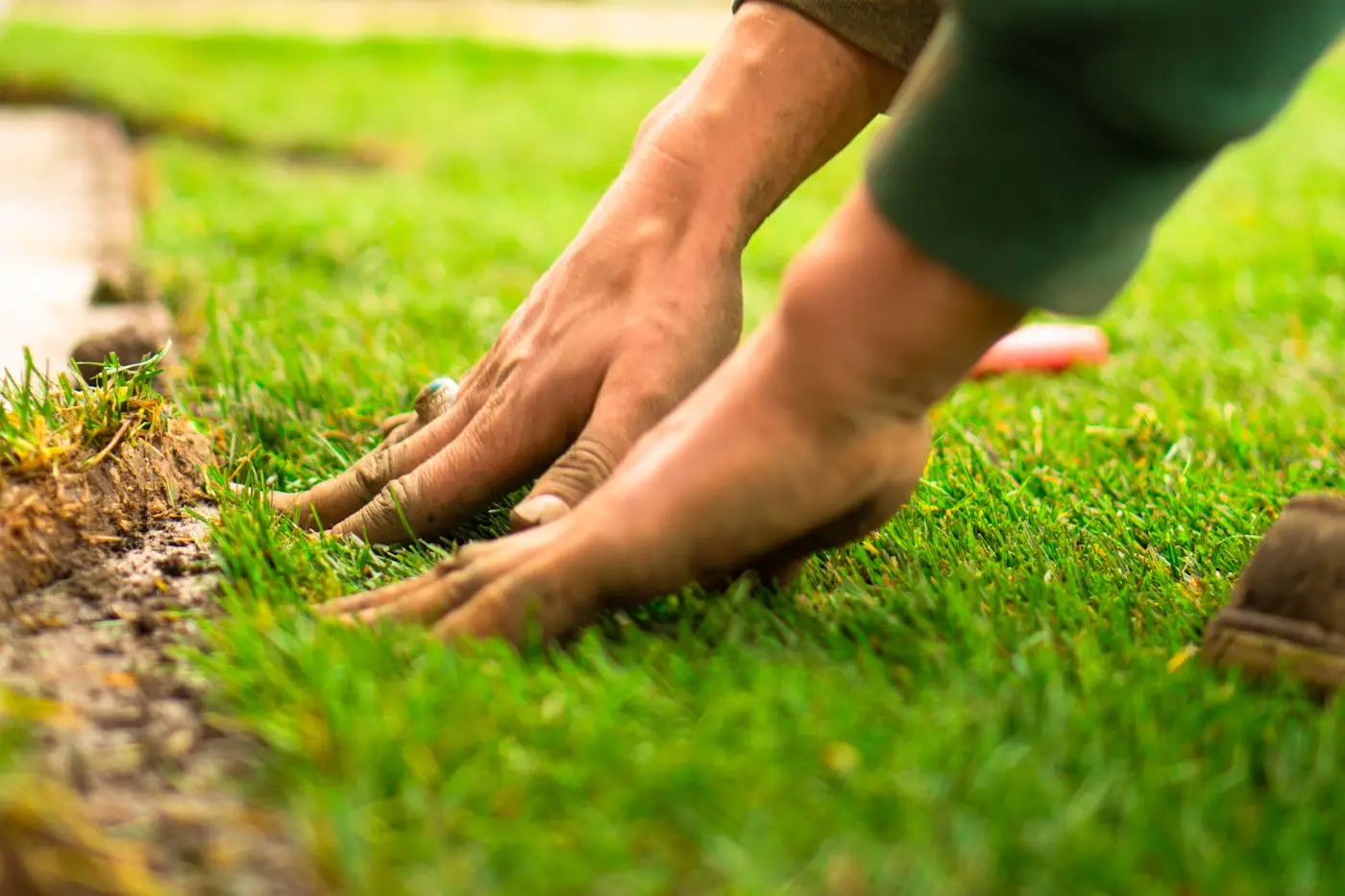
Bare patches on a Yorkshire lawn are rarely just a seeding problem. Yorkshire's clay soils, variable rainfall, and often north-facing garden orientations create conditions where grass genuinely struggles in specific spots, and throwing seed at the symptom without understanding the cause produces a patch that lasts one season before going bare again. The drought years of 2022 and 2023 left dead areas on thousands of Yorkshire lawns that still have not recovered properly, partly because they were patched too quickly and the underlying soil compaction was never addressed. This guide goes diagnosis first.
Quick answer: Before buying seed, identify the cause. Dog damage, compaction, shade, and drainage failure all need different fixes. For small patches on a known cause, DIY repair with seed costs £5 to £15. For professional repair across a whole lawn with aeration and overseeding, expect £60 to £180 for a medium-sized Yorkshire garden. September is the best repair window. If the same patch keeps coming back, stop reseeding and get the underlying problem sorted.
What Is Causing Your Bare Patch? Diagnosis First
| Cause | What you see | Key symptom | Fix |
|---|---|---|---|
| Dog urine | Round patch, often with greener ring around edge | Same spot consistently, especially near walls or fencing | Dilute and reseed; train dog or fence the area |
| Compaction + wear | Thin grass on a path or regular route; soil hard when pressed | Patch follows foot-traffic pattern; returns after seeding | Hollow-tine aerate, top-dress, then overseed |
| Drought damage | Brown areas that turned in summer and have not greened up | Often on south-facing or thin-soiled areas; roots shallow | Scarify dead material, fork over, overseed in September |
| Shade | Thin, sparse grass under trees or along north fence | Moss often present; grass finer than elsewhere | Overseed with shade mix; improve light if possible |
| Waterlogging | Grass yellows, roots rot; bare in low spots after wet winter | Standing water after rain; patch in same low area each year | Address drainage first; aerate; then reseed |
| Clay soil heave | Uneven surface; grass tears or lifts in patches | Frost heave or shrink-swell cracking in summer | Level and reseed; annual top-dressing improves clay over time |
| Buried rubble or debris | Bare patch that never grows regardless of seed | Resistance when pushing a fork in; patch never responds | Excavate, remove rubble, back-fill with topsoil, reseed |
| Fungal disease | Roughly circular patch with bleached or orange-tinged grass | Appears quickly, often after wet warm weather; mycelium sometimes visible | Improve drainage; reduce thatch; fungicide if severe |
Yorkshire-specific note: The combination of heavy Clay Measures soils and the wet winters followed by increasingly dry summers creates two specific damage patterns. First, shrink-swell: clay soil shrinks in dry summers and swells in wet winters, which over time cracks the root zone and leaves uneven patches. Second, post-drought bare spots that look dead but whose soil is deeply compacted from shrinkage. Simply reseeding a dried, compacted clay patch without aerating it first is usually wasted effort.
DIY Repair: Step by Step for Small Patches
For patches up to about half a square metre with a known, addressable cause, DIY repair is straightforward. The following sequence gives seed the best chance of establishing on a Yorkshire clay lawn.
Step 1: Clear the dead material
Use a hand rake or stiff-bristled brush to remove all dead grass, debris, and any thatch from the patch. You need to expose bare soil. If the patch has compacted clay visible with no living grass, scratch the surface with a hand fork or scarifying rake to a depth of 2 to 3 centimetres. For larger bare areas or persistent thatch problems across the wider lawn, our professional lawn scarification service is the more effective option. The goal is a rough, broken surface that seed can make contact with rather than a smooth clay pan that seed will slide off or dry out on.
Step 2: Loosen the soil
Push a hand fork into the centre of the patch and work it back and forth to break up the top 8 to 10 centimetres of soil. Do this across the whole patch in a grid pattern. Yorkshire clay benefits significantly from this physical opening up: even without a powered aerator, hand fork loosening creates channels that seed roots can penetrate. If the soil is very compacted and the fork resists going in, water the area and try again the following day when the clay has softened slightly.
Step 3: Improve the surface
Work a top-dressing of sharp sand mixed with compost (70:30 ratio) into the loosened surface. Use about 3 kilograms per square metre. This achieves two things: it gives seeds a better germination environment than raw clay, and it begins the long-term work of improving clay structure. Rake level. The finished surface should be about 1 centimetre below the surrounding lawn level to allow for the seed and light covering layer.
Step 4: Apply seed
Broadcast seed at 35 to 50 grams per square metre for repair work. Use the appropriate mix for your conditions (see the seed guide below). Press the seed into the surface with the back of a rake or by walking across a plank laid over the patch. Seed needs firm contact with the soil to germinate reliably; broadcasting and leaving it sitting loose on the surface wastes seed.
Step 5: Cover lightly and water
Scatter a thin layer of compost or topsoil over the seeded area - no more than 5mm. This protects the seed from birds and stops it drying out in the surface. Water gently with a watering can rose, not a hose at pressure, which washes seed out of position. Keep the patch moist for the first two weeks; in September, Yorkshire's returning autumn rains often do this for you. In spring repairs, manual watering during dry spells is essential.
Step 6: Protect and wait
Keep the patch away from foot traffic until the new grass has been mown at least twice - if you need help keeping the wider lawn cut during the recovery period, our lawn mowing service can take care of that. A bamboo cane boundary or some garden netting keeps dogs and children off it during the critical first month. If you have fencing that can be used to section off a corner of the garden temporarily, this is worth doing for larger repair areas. First mow: when the new grass reaches 5 to 6 centimetres, cut at 4 to 5 centimetres. Do not let it grow long and then cut hard - that sets back young plants significantly.
Seed Mix Guide for Yorkshire Lawns
| Lawn type | Recommended mix | Yorkshire notes |
|---|---|---|
| General-purpose, full sun, clay soil | 70% perennial ryegrass, 30% fescue | Good wear tolerance and recovery; matches existing sward in most Yorkshire gardens |
| Heavily shaded garden | 50-60% fine fescues, 20-30% browntop bent, remainder ryegrass | North-facing or tree-shaded Yorkshire gardens; fine fescues tolerate lower light |
| High traffic, children and dogs | 80-90% perennial ryegrass, 10-20% fescue | Ryegrass recovers fastest from wear; essential for family gardens |
| Ornamental or show lawn | High fescue/bent mix, minimal ryegrass | Requires better drainage than clay allows naturally; not recommended on clay without significant soil improvement |
| Drought-prone, south-facing | 60% hard fescue, 25% chewings fescue, 15% ryegrass | Hard fescues have deeper roots and better drought resilience; useful after 2022-23 damage |
When buying seed for repair work, match the mix to your existing lawn as closely as possible. A patch repaired with a completely different species of grass will look noticeably different in texture and colour once established. If you do not know what your current lawn is - which is true for most inherited Yorkshire gardens - a general-purpose ryegrass-fescue blend is the safest match.
Cost: DIY vs Professional Lawn Patch Repair
| Approach | What is included | Typical cost |
|---|---|---|
| DIY small patches | Seed (bag covers 20-50m²), top-dressing, hand tools | £10 to £25 per repair area |
| DIY full lawn overseed | Seed, top-dressing, autumn feed, hire of scarifier | £80 to £150 for medium lawn |
| Professional spot patching | Diagnosis, surface prep, seeding of 3-6 patches | £40 to £80 per visit |
| Professional full renovation | Scarify, hollow-tine aerate, overseed, top-dress, autumn feed | £130 to £200 for medium Yorkshire lawn |
| Drainage repair + renovation | Drainage assessment, remediation works, then full renovation | £300 to £800+ depending on cause and scope |
When to Hire a Professional
The decision to call a professional rather than DIY is clearer than people often expect. These are the situations where professional help genuinely pays:
- The same patch keeps failing: if a bare area has been reseeded twice and returned to bare each time, something is stopping grass from establishing. A professional assessment identifies whether it is compaction, drainage, a buried obstruction, or a disease issue. You cannot fix a problem you have not diagnosed correctly.
- More than a quarter of the lawn is affected: at this scale, individual patching becomes less efficient than full-scale renovation. Whole-lawn overseeding after hollow-tine aeration produces a far more even result than trying to patch a heavily degraded lawn one area at a time.
- The lawn is waterlogged in the same areas every year: bare patches caused by drainage failure will return every time without drainage remediation. Our guide on garden drainage in Yorkshire explains what the options are, from targeted slit drains to French drains and soakaways, and when each is appropriate.
- The lawn has significant level differences: uneven lawns caused by clay heave, frost movement, or settling over buried material are difficult to correct by seeding alone. Levelling requires turf lifting, soil addition or removal, consolidation, and professional turfing or overseeding, which is a job for someone with experience of Yorkshire clay movement.
- The garden aesthetics matter significantly: if the lawn is visible from the main living areas, or if you have invested in other garden improvements such as garden lighting or new paving that make the lawn the centrepiece, professional renovation that produces an even, professional finish is worth the investment over DIY patchwork that takes two seasons to look right.
Yorkshire-Specific Timing: When to Repair
The timing question comes up consistently, and the answer for Yorkshire is different from the national advice you will find on most seed packets. Seed packets are typically printed for a national market optimised for the south of England. Apply that timing in Yorkshire and you will be seeding four to six weeks earlier than conditions actually support.
September is the primary repair window for Yorkshire lawns. Soil temperatures across most of the county stay above 12 degrees Celsius through September, which is within the reliable germination range for all standard lawn grass species. Autumn rainfall removes the irrigation burden. The grass you establish in September has the whole of October through to the following spring to root deeply before its first summer. Patches seeded in September are typically fully established and mowing-ready by October, and indistinguishable from the surrounding lawn by the following June.
Late April to May is the secondary window. Soil temperatures have typically reached 10 degrees Celsius by late April in South and West Yorkshire, and by mid-May in the Dales, Harrogate, and higher-lying North Yorkshire gardens. The risk is late frost: a frost after germination kills young seedlings. Do not overseed in April if you are above 150 metres elevation in Yorkshire. The other risk is the dry period: seedlings established in May face June and July as their first summer, often without the rainfall needed to maintain the moisture that young roots need. If you seed in spring and a dry July follows, be prepared to water.
Avoid June, July, and August for repair work in all but exceptional circumstances. Summer seeding in Yorkshire fails more often than it succeeds: the soil dries out between the surface and a few centimetres down, which is exactly where young roots are operating. Even if germination happens, the seedlings are unlikely to survive a typical Yorkshire July without significant irrigation. See our full Yorkshire lawn care calendar and our spring garden tidy guide for the wider seasonal context.
What to Do With Dog Damage Specifically
Dog urine patches deserve their own section because they are by far the most common bare-patch query in Yorkshire gardens, and the solution is specific.
Urine damage is caused by nitrogen concentration: the grass at the patch centre gets a nitrogen overdose, which burns the roots, while the grass at the edges gets a dilute dose that acts as a feed, producing the characteristic greener ring. Female dogs squat and deposit concentrated urine in one spot; male dogs mark smaller amounts in many places. The solution for the patch itself is straightforward: dilute the area with water as soon as possible after the event (within a few hours if you can), and the root damage is significantly reduced. For established patches, water the area thoroughly over several days to flush the nitrogen through the soil, then overseed when the soil is ready.
The longer-term answer involves habit and boundaries. If the same patch of grass is used repeatedly - typically near a wall, fence, or corner of the garden - covering or fencing that area while the grass recovers, and redirecting the dog to a gravel or bark chip area, is more sustainable than reseeding the same patch every six months. A simple temporary barrier along the garden fence line while the repair establishes is often all it takes.
Got a patchy Yorkshire lawn that needs sorting this year?
Tell us where you are and what the lawn looks like. We put your enquiry in front of a local gardener who can assess and repair it properly.
Get a free quote →Frequently Asked Questions
When is the best time to repair bare patches in a Yorkshire lawn?
September is best. Soil temperatures are still warm enough for reliable germination, autumn rainfall returns to keep seed moist, and new grass has a full winter and spring to establish before facing its first summer. Late April to May is the second-best window, but risks late frost in North Yorkshire and the Dales, and summer drought stress before the plants are established. Avoid summer seeding: it fails more often than it succeeds without consistent irrigation.
What seed mix should I use to repair a Yorkshire lawn?
For a general-purpose clay-soil Yorkshire lawn in full or light sun, 70 percent perennial ryegrass and 30 percent fescue is the right starting point. For shade, use a dedicated shade mix with 50 to 60 percent fine fescues. For high-traffic family lawns with dogs or children, 80 to 90 percent perennial ryegrass gives the fastest recovery from wear. Avoid fine ornamental mixes on heavy clay: they thin quickly in Yorkshire's waterlogged winters and drought summers without significant ongoing soil improvement work.
Why does my lawn keep getting bare patches every year in Yorkshire?
Recurring patches almost always point to an underlying cause. Compaction from repeated foot traffic, drainage failure in low spots, increasing shade from growing trees, dog damage in a favoured spot, or buried rubble preventing root penetration are the most common Yorkshire causes. Reseeding fixes the symptom for one season; diagnosing and addressing the cause is the only way to stop the cycle. See the diagnosis table earlier in this guide.
Can I repair large bare areas myself or should I hire a professional?
For patches up to half a square metre with a known cause, DIY is practical and cost-effective. For larger areas, multiple patches across the whole lawn, or patches caused by drainage failure, professional aeration and overseeding typically produces better and more lasting results. Professional equipment prepares the surface more thoroughly than hand tools, particularly on Yorkshire clay, and experienced repair diagnosis stops the repeating-patch problem.
How long does it take for grass seed to germinate in Yorkshire?
At September soil temperatures of 12 to 15 degrees Celsius, perennial ryegrass germinates in 10 to 14 days. Fine fescue mixes take 14 to 21 days. In spring at cooler soil temperatures, allow 14 to 28 days depending on species and conditions. Keep the area moist and off foot traffic until new grass reaches 5 to 6 centimetres. In Yorkshire's variable spring, a cold spell after seeding slows germination but does not usually kill viable seed.
How much does professional lawn patch repair cost in Yorkshire?
Spot patching of a few small bare areas as part of an autumn renovation visit is typically absorbed within a standard overseeding job priced at £60 to £150 for a medium lawn. Hiring specifically for multiple patch diagnosis and repair runs £40 to £80 per visit. Full-scale renovation with aeration, overseeding, and top-dressing of a medium Yorkshire garden is £130 to £200. Repairs involving drainage remediation are quoted separately and vary significantly based on the cause and scope of the drainage issue.