The short version: Yorkshire clay is not a problem you caused and cannot fully solve, but you can work with it. Annual hollow-tine aeration plus organic matter is the most reliable improvement programme. The best plants for Yorkshire clay are those that evolved on heavy ground: Viburnum, dogwood, astrantia, rudbeckia, hawthorn. Lawns go brown in summer from soil shrinkage and mossy in winter from poor drainage, both of which respond well to consistent annual care. If you have tried and failed, a professional aeration and scarification service makes a bigger difference on clay than on any other soil type.
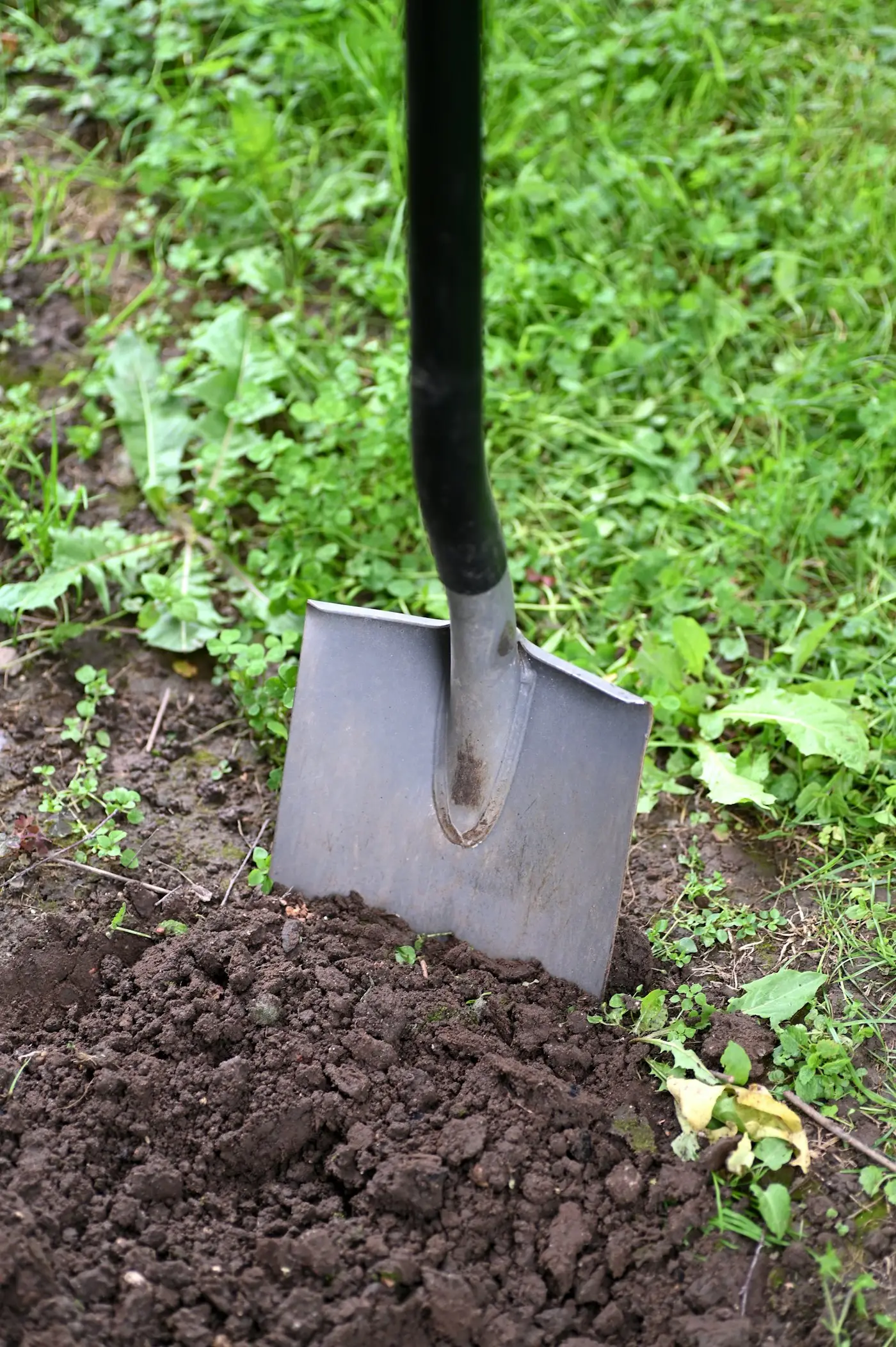
Why Yorkshire Gardens Are So Often Clay
If your garden waterlogged all winter and cracked all summer and you have been blaming yourself, stop. The soil beneath most Yorkshire gardens is clay as a geological fact, laid down over hundreds of millions of years long before anyone thought about growing a lawn on it. The Vale of York sits on deep Triassic and Permian clays deposited in ancient lakes and floodplains. South Yorkshire, from Barnsley through Rotherham to Wakefield, sits on Coal Measure clays, a different formation but equally dense. West Yorkshire has its own mix. Even Harrogate, which sits on the edge of the Millstone Grit uplands, has heavy clay valleys in the lower town and towards Knaresborough.
This matters because it means you are working against geology, not just against poor gardening decisions. The clay is deep, it is consistent across entire neighbourhoods, and it behaves in ways that frustrate gardeners who are used to lighter soils. Understanding why it behaves the way it does is the first step to working with it rather than against it.
Clay soil is made of microscopic flat particles, much finer than sand or silt. These particles pack together tightly, leaving tiny pore spaces that water moves through very slowly. When wet, clay swells slightly as water is absorbed between the particles, becoming plastic and sticky. When it dries, it contracts and cracks. The nutrients in clay are actually excellent, which is why clay-soil gardens, once improved, can be very productive. The issue is not fertility, it is physical structure.
Understanding that clay is not monolithic helps too. There is a spectrum from slightly heavy loam to pure blue-grey clay that a spade barely penetrates. Most Yorkshire domestic gardens sit somewhere in the middle, which means they are very manageable with the right approach. The techniques in this guide work on all of them.
Yorkshire's clay geology at a glance
- Vale of York (York, Selby, Doncaster, Hull) - Deep alluvial and floodplain clay, often with high water table
- South Yorkshire (Barnsley, Rotherham, Wakefield) - Coal Measure clay, dense and dark
- West Yorkshire (Leeds, Bradford, Wakefield) - Mixed Coal Measure and glacial till clays
- Harrogate and surrounds - Mix of clay valleys and lighter gritstone soils on higher ground
- East Riding - Chalk Wolds (lighter) versus Holderness coast (dense boulder clay)
How to Identify Clay Soil in Your Garden
The definitive test is simple. Take a handful of soil from about 10cm down - not the very surface, which can be misleading if it has been dressed with compost - and wet it slightly if it is dry. Then squeeze it hard in your fist and open your hand. If it holds the shape of your fist, you have clay. Then roll it between your fingers. If it feels smooth and plastic, almost waxy, it is clay. If it feels gritty, it has significant sand content. If it crumbles, it is probably a loam or sandy soil.
The squeeze test is reliable but here are the supporting signs that confirm a clay garden:
- Surface waterlogging after rain - water sits on the surface for hours or even days rather than draining away within an hour
- Deep cracks in summer - in a dry July or August, clay gardens develop surface cracks sometimes several centimetres wide and 20-30cm deep. This is the soil shrinking as it loses moisture
- Sticky, boot-clogging soil in winter - clay in wet conditions sticks to boots, spades, and mower wheels in large chunks
- Shiny, compressed surface when pressed - pressing the back of a spade onto wet clay polishes the surface. Sandy or loamy soils do not do this
- Slow, late spring - clay retains cold. Your borders stay cold and wet long after lighter-soil gardens have started into growth
- Moss on the lawn - heavy moss, especially in winter and spring, is a reliable indicator of poor drainage and compaction, both of which are clay hallmarks
The Drainage Test
For a more objective test, dig a hole about 30cm deep and 30cm across. Fill it with water and note the time. Come back an hour later. If the water has drained completely, you have reasonable drainage. If it has barely moved, you have heavy clay. If the hole has filled with groundwater from below, you have a high water table too, which requires more serious drainage intervention.
On most Yorkshire clay gardens, the water in the test hole will still be sitting there after an hour. Some will drain completely within two to three hours; others will still have water in them the following morning. Both of these responses confirm clay, but they indicate different severity.
How Yorkshire Clay Behaves Through the Year
Clay is not the same problem in every season. Understanding its seasonal behaviour helps you plan your gardening around it rather than fighting it at the wrong time.
Winter (November to February)
Waterlogged, compacted underfoot, prone to surface poaching. Every footstep on a wet clay lawn compresses the soil further and damages grass roots. Moss establishes in the wet, airless conditions. Avoid walking on the lawn in wet weather where possible. This is the period when the damage accumulates that you will be dealing with in spring. For a full seasonal task list for Yorkshire gardens through the winter months, see the winter garden care guide.
Spring (March to May)
Slow to warm up and dry out, putting you 2-4 weeks behind lighter-soil gardens. Compaction from winter is visible in flat, mossy, patchy areas. Do not rush to work the soil; wait until it is no longer sticky and boot-clogging. Premature cultivation of wet clay destroys structure. The best spring job is waiting for the right moment, then scarifying and aerating.
Summer (June to August)
The clay dries, cracks, and shrinks. Lawns go brown as surface cracking severs roots and the grass goes dormant. This is not drought death, it is dormancy in most cases, and it reverses with autumn rain. Borders bake hard and become difficult to dig. Mulching in late spring helps retain moisture and prevents cracking in borders. Keep the lawn mower height up.
Autumn (September to November)
The best season for almost everything on clay. The soil has the right moisture content for aeration and digging, it is warm enough for overseeded grass to germinate, and the freeze-thaw of winter helps break down any clods you dig over. Annual lawn aeration, scarification, overseeding, and border organic matter addition all belong in autumn.
The Real Problem: Compaction and What It Does to Lawns
If your lawn goes mossy in winter and brown in summer, year after year, the underlying cause on a clay garden is almost always compaction. Compaction is what happens when the soil particles are pressed together by weight, eliminating the air pore spaces between them. On clay, this happens fast. The particles are flat and plate-like, and they stack together efficiently when pressure is applied. A few footsteps on a wet clay lawn, a mower pass every fortnight, a trampoline sat in one corner, children playing football, and the lawn surface layer becomes a near-impermeable mat.
Once compacted, the clay soil cannot breathe. Grass roots need oxygen in the soil to survive, and compacted clay provides almost none. The roots stay shallow, perhaps 2-3cm deep, because there is nowhere to grow. Shallow roots are easily stressed by drought (the surface dries out first), easily severed by soil cracking in summer, and easily displaced by moss, which does not need deep rooting to thrive in wet, airless conditions.
Here is what typically happens in a compacted Yorkshire clay lawn across a year. In late winter and early spring, the lawn sits wet. Moss has crept into any thin or bare areas created by summer drought or autumn scarifying. Come May, the lawn looks reasonable as the grass grows vigorously in good light. By July, if it is dry, brown patches appear in areas where roots are shallowest. By September, when you look properly at the lawn for the first time in months, there are bare patches, thin patches, patches that are 80% moss. You overseed the worst bits and it seems to help. But next year the cycle repeats.
The cycle repeats because the compaction was never addressed. Overseeding on compacted clay improves the lawn temporarily, but the new grass roots hit the same airless, impermeable soil and stay shallow, making the lawn just as vulnerable the following summer.
Scarifying versus Aerating: What Each Does
These two operations are often confused or treated as interchangeable. They address different problems and both are necessary on a clay lawn.
Scarifying is the removal of thatch - the layer of dead stems, runners, and moss that accumulates at the base of the grass. Thatch itself is not always a problem; a thin layer of 5-10mm is normal. But when it exceeds 15-20mm it acts as a physical barrier, preventing water and air from reaching the soil and creating a habitat for more moss. Scarifying is done with a machine that has rotating blades or tines that slice through the thatch and drag it out. On a clay lawn with established moss, the first scarification looks alarming. You will pull out huge quantities of material and be left with a thin, ragged-looking lawn. This is normal. It recovers.
Aerating addresses compaction in the soil itself, below the thatch layer. The most effective method on clay is hollow-tine aeration, where a machine removes plugs of soil from the lawn, leaving holes 10-15cm deep. These holes allow air, water, and nutrients to penetrate the compacted layer. When backfilled with horticultural grit or sharp sand and then top-dressed, they also gradually open up the soil structure around them as organic matter integrates over time.
Spike aeration, where a solid tine pushes into the soil without removing material, is much less effective on clay. The tine displaces the clay particles sideways, which can actually increase compaction at the sides of the spike. Hollow-tine is the right tool on clay every time.
Improving Clay Soil: What Actually Works
If you have spent any time searching online for clay soil advice, you will have read a long list of solutions. Some of them work. Some of them are pointless. Some of them actively make things worse. Here is the honest picture.
Hollow-Tine Aeration: Do This Every Year
For the lawn, hollow-tine aeration once a year, preferably in September or October, is the single most effective intervention you can make. The cores pulled from the lawn should be raked off and composted, and the holes either left open to collect topdressing material or backfilled immediately with a mix of sharp grit and fine compost. A light top-dressing of loam-based compost brushed into the holes after aeration accelerates the improvement significantly.
The effect is cumulative. After one year of aeration, you will notice some improvement in drainage. After three years of annual aeration, the lawn's resilience is transformed. The roots go deeper, the summer browning is less severe, the moss is less dominant. This is not a one-off fix; it is an annual maintenance programme.
For borders, aeration is done differently. Digging forks in deeply and levering them back to create fractures in the subsoil achieves a similar result. Do this in autumn and let winter frost finish the job.
Organic Matter: The One Thing That Reliably Works Over Time
Adding organic matter to clay soil is not exciting advice but it is true advice. Well-rotted garden compost, farmyard manure, leaf mould, and spent mushroom compost all help. They work by introducing large organic molecules that bind clay particles into aggregates, creating larger pore spaces and improving drainage. The process takes years, not weeks. The rule of thumb is: add organic matter every autumn for five years and the soil structure will be meaningfully better. Add it every autumn for ten years and you will have a genuinely good border soil.
The technique matters. Dig the organic matter into the top 20-30cm, do not just mulch the surface. On the surface, it improves moisture retention (which can be beneficial) but does not structurally improve the clay beneath. Mixed in, it begins the long process of aggregation.
One important note: mushroom compost is alkaline and can raise soil pH over time. For most Yorkshire gardens, which tend to sit around neutral to slightly acidic, this is not a problem. But if you have acid-loving plants, avoid mushroom compost.
Grit and Sand: When It Helps and When It Does Not
Adding sharp horticultural grit or coarse sand to clay borders is often recommended but rarely delivers the drainage improvement people hope for. The reason is simple: to genuinely alter the drainage characteristics of clay soil, you would need to add grit at a ratio of roughly 50:50 by volume - an enormous amount of material that is impractical and prohibitively expensive at garden scale. At the quantities most homeowners actually apply (a couple of bags dug into a border), the clay simply absorbs the grit and the drainage barely changes.
There is one context where grit unambiguously works: hollow-tine aeration holes. Backfilling the 10-15cm holes left by hollow tines with coarse grit creates genuine drainage channels from the lawn surface directly through the clay. The grit in the holes does not get absorbed and provides a long-lasting benefit. This is why a professional aeration service on a clay lawn includes backfilling with grit as standard.
Raised Beds: The Escape Route
For vegetable growing and any planting that needs specific drainage conditions, raised beds are the most practical solution on heavy clay. A 20-25cm deep raised bed filled with a quality growing medium sits above the clay entirely, giving you complete control over drainage, soil temperature, and structure. Vegetables that struggle in clay - carrots, parsnips, potatoes - grow perfectly well in raised beds above clay.
Raised beds also warm up faster in spring. Clay holds cold for weeks longer than lighter soils, but a raised bed above the clay starts warming with the first sunny days of March. Your growing season extends by three to four weeks, which on a Yorkshire latitude is significant.
The disadvantage of raised beds is cost and the visual formality they introduce. If you want a relaxed border look, raised beds with visible timber or brick edges can feel constrictive. The alternative for ornamental borders is to focus on plants that suit the clay, which is covered below.
When to Do Soil Improvement Work
The cardinal rule of clay soil management is: never work it when it is wet. Digging, rotovating, or even walking repeatedly on wet clay destroys the soil structure you are trying to improve. The clay particles smear together under pressure when saturated, eliminating pore spaces and creating an almost concrete-like layer when it dries.
Autumn is by far the best time for heavy soil improvement work in Yorkshire. From mid-September, the soil has had some rain after summer dryness and is moist but not saturated. Dig, add organic matter, aerate, and leave the surface rough. Winter frost breaks down the clods and does half the work for you. By spring, you have a soil that is significantly easier to work than it would have been if you had tried to improve it in spring when it is still cold and wet.
If you must do planting work in spring, wait for the moment when the soil stops sticking to your boots when you walk across it. That is the signal that the clay has dried enough to work without causing damage.
The clay improvement calendar
- September: Scarify lawn, hollow-tine aerate, top-dress, overseed
- October: Dig borders, add organic matter, leave surface rough
- November: Add bulky organic matter if you have more. Plant bare-root shrubs and trees
- March: Wait. Do not rush. Let the soil tell you when it is ready
- April: Light forking, planting once soil stops clogging boots
- May-June: Mulch borders to conserve moisture before summer cracking begins
Lawn Care on Yorkshire Clay
A good lawn on Yorkshire clay is absolutely achievable. Thousands of Yorkshire homes have good lawns. The difference between a lawn that works and one that fails is usually a consistent programme of annual care rather than any single intervention. Here is what that programme looks like.
Scarify Annually in September or October
On a clay lawn, moss and thatch accumulate faster than on lighter soils. Annual scarification in autumn removes this material before it smothers the grass over winter. A petrol-driven scarifier is the only realistic tool for this on a clay lawn of any size; the electric models designed for light domestic use lack the power to pull thatch from a dense clay surface.
Scarify when the lawn is slightly moist but not waterlogged. Set the blades to just nick the surface on the first pass, then go over again at a slightly deeper setting in the opposite direction. Rake off all the material you remove and compost it. The lawn will look worse for two weeks. This is normal. The grass recovers.
Aerate Every Year in Autumn
As covered above, hollow-tine aeration in September or October is the most effective annual lawn treatment for clay. If you are doing it yourself, hire a hollow-tine aerator (some tool hire companies stock them; they are the machines that pull out plugs of soil). If you are having it done professionally, make sure the quote specifies hollow-tine, not spike aeration. The difference on clay is significant.
After aerating, apply a topdressing of a 60:40 mix of sharp sand and loam-based compost, work it into the holes with a stiff brush, and then overseed any bare or thin areas. This sequence - scarify, aerate, topdress, overseed - is the annual programme that transforms clay lawns over three to five years.
Overseed Thin Patches
Yorkshire clay lawns tend to thin out in the same places year after year: high-traffic paths across the lawn, areas under trees, the strip along the fence where the mower clips repeatedly, and anywhere the soil sits particularly wet in winter. Overseeding these areas in September, immediately after scarifying and aerating, gives the new grass the best chance of establishing before winter. Use a hardwearing grass seed mix designed for shady or wet conditions rather than fine ornamental fescues, which do not tolerate clay well.
Rake the overseeded areas lightly to improve seed-to-soil contact, water well if there is no rain forecast, and fence off the area from foot traffic for at least four weeks.
Mowing Height on Clay
Mowing height has a bigger impact on clay lawns than on any other soil type. Cutting grass short on clay exposes the soil surface and accelerates drying and cracking in summer. In wet periods, short grass offers less protection against foot traffic damage and compaction.
The general guidance for Yorkshire clay lawns: never cut below 4cm during the growing season. In dry summer periods, raise the cutting height to 5-6cm. In autumn and spring when the lawn is growing well and the weather is moderate, 4cm is fine. Never cut wet grass on clay; the mower wheels compact the surface and the clippings clump rather than dispersing.
When to Restrict Access
The most damage to a clay lawn happens in two windows: immediately after heavy rain, and during the first warm-but-wet weeks of spring when the soil is thawing but still saturated. If you can restrict access during these periods, you will reduce compaction significantly. This is not always practical with children and dogs. The realistic version is: avoid mowing in wet conditions, discourage cutting across the lawn at angles that create permanent wear lines, and fence off newly seeded areas for at least a month.
Planting for Clay Soil
The mistake most clay-garden owners make is choosing plants for their appearance first and their soil tolerance second, then spending years watching them struggle. The better approach is to start with what clay does well, and there is a genuinely good range. Yorkshire clay is nutrient-rich, moisture-retentive, and stable. Plants that evolved on heavy ground thrive in it with almost no help. Here is what actually works.
Shrubs for Yorkshire Clay
Viburnum opulus (Guelder rose) is the best performing shrub on heavy clay in Yorkshire. It is native to the county, grows vigorously on clay, produces good spring flowers, and has excellent autumn berry and leaf colour. It tolerates poor drainage better than almost any other ornamental shrub. The compact variety 'Compactum' suits smaller gardens.
Dogwood (Cornus) - particularly Cornus alba and its cultivars - thrives on moist, heavy clay and is actively recommended for wet spots. The winter stem colour of varieties like 'Elegantissima' (white variegated leaf, red stems) and 'Sibirica' (bright red stems) brings excellent winter interest to a clay border. Coppice hard every other year in March to keep the stem colour vivid.
Elder (Sambucus) grows natively on Yorkshire clay and is one of the most vigorous plants you can put in a heavy, wet border. The ornamental varieties, particularly Sambucus nigra 'Black Lace' with its very dark, finely cut foliage, bring drama to a large clay border. They are tough, quick to establish, and unfazed by winter waterlogging.
Hawthorn (Crataegus) is perhaps the most clay-tolerant ornamental tree-shrub available. Both common hawthorn (Crataegus monogyna) and midland hawthorn (Crataegus laevigata) are native to Yorkshire and grow naturally on clay. The ornamental cultivars, including 'Paul's Scarlet' with its double pink-red flowers, perform equally well. Hawthorn hedges also provide excellent wildlife habitat and are significantly cheaper to maintain than beech or laurel hedges on wet ground.
Philadelphus (mock orange) grows well on clay soils and rewards with exceptional early-summer fragrance. It is drought tolerant once established, which means it handles the summer baking of Yorkshire clay without complaint after the first couple of years.
Roses are often overlooked on clay but actually perform very well. Roses prefer a heavy, moisture-retentive soil to sandy, free-draining soil. Yorkshire clay, amended with organic matter, is close to ideal rose ground. Shrub roses and English roses (David Austin) in particular do well; hybrid teas need slightly better drainage but manage on most Yorkshire clay with decent organic matter content.
Perennials for Yorkshire Clay
Astrantia is arguably the perfect perennial for a Yorkshire clay border. It flowers from June through August, tolerates both wet winters and dry summers once established, thrives in partial shade under trees, and spreads reliably without becoming invasive. Astrantia major and its cultivars - 'Roma' (pink), 'Ruby Wedding' (deep red), 'Shaggy' (white) - are all reliable on clay.
Helenium (sneezeweed) is a late-summer perennial that performs brilliantly on moisture-retentive clay soils. The rich moisture keeps its flowering prolonged well into September. Varieties like 'Moerheim Beauty' (bronze-red) and 'Sahin's Early Flowerer' (orange-yellow) are reliable Yorkshire performers. It does best in full sun.
Rudbeckia (black-eyed Susan) and Echinacea both tolerate clay well, providing late summer and autumn colour when much else has gone over. They prefer reasonable drainage but cope with temporary winter wetness once established.
Persicaria thrives in moist, heavy soils. Persicaria amplexicaulis with its long, deep-red or pink flower spikes from July through to November is particularly good. It is large, vigorous, and makes a strong statement in a clay border.
Salvia nemorosa and Salvia 'Caradonna' grow well on heavier soils in Yorkshire and provide reliable early summer colour. Avoid the South African salvias that need sharp winter drainage.
Geranium (hardy cranesbill) varieties are almost universally clay-tolerant. Geranium 'Rozanne', G. psilostemon, G. macrorrhizum (shade tolerant, good ground cover), and the native Geranium pratense all work on heavy clay.
Trees for Yorkshire Clay
Native trees are your safest choices on heavy clay because they evolved here. Oak (Quercus robur) grows naturally on clay across Yorkshire and is superbly adapted. It is a long-term commitment and not suitable for small gardens, but for medium to large plots it is the most appropriate tree. Ash (Fraxinus excelsior) grows on clay, though ash dieback disease means new planting carries risk. Field maple (Acer campestre) is a better alternative, tolerating heavy clay well and giving excellent autumn colour. Silver birch grows on clay if the drainage is not extreme, providing light, graceful structure and good wildlife value.
For ornamental trees, Amelanchier lamarckii (snowy mespilus) grows on moist, slightly acid clay and has excellent multi-season interest: white spring blossom, good summer foliage, and fiery autumn colour. Crab apple (Malus) cultivars are generally clay-tolerant and productive for wildlife. Sorbus aria (whitebeam) and Sorbus aucuparia (rowan) are both suited to Yorkshire clay conditions.
What to Avoid on Waterlogged Clay
Mediterranean herbs - lavender, rosemary, sage, and thyme - require sharp winter drainage and will rot on Yorkshire clay if planted directly into the border. They can be grown in raised beds or large containers with grit-enriched compost. Alpines need the same sharp drainage and are not border plants for clay. Bulbs such as tulips and dahlias that are left in the ground over winter rot on waterlogged clay; they are better lifted and stored. Wisteria prefers a slightly lighter soil and struggles on extreme clay. Lavender is a common Yorkshire gift shop purchase that dies in Yorkshire gardens for exactly this reason.
Quick plant guide for Yorkshire clay
- Excellent choices: Viburnum, dogwood, elder, hawthorn, roses, astrantia, helenium, rudbeckia, persicaria, geranium, oak, field maple, Amelanchier
- With care (may need raised conditions): Echinacea, salvia, silver birch, crab apple
- Avoid in heavy wet clay: Lavender, rosemary, alpines, tulips left in ground, wisteria, Mediterranean herbs
Professional Help: When to Call a Gardener
There are tasks that a motivated homeowner can manage on a clay garden with the right knowledge and a reasonable level of fitness. And there are tasks where professional help genuinely makes the difference between an intervention that works and one that does not. Clay soil is unforgiving of the wrong tools and timing, and the investment in professional work often lasts longer and costs less per year over time.
Annual Aeration and Scarification
The most important annual jobs for a clay lawn - hollow-tine aeration and scarification - both require self-propelled, petrol-driven machines. Consumer-grade electric scarifiers are too weak to pull thatch from compacted clay. Spike aerators, which most hire shops stock, are the wrong tool for clay. A professional with a commercial hollow-tine aerator and a petrol scarifier will do in two hours what a homeowner with the wrong tools cannot achieve in a full day.
On a medium Yorkshire garden, a combined annual autumn lawn service (scarify, hollow-tine aerate, topdress, overseed) typically costs £180-£350. This is the most cost-effective professional lawn service on clay because the results compound year-on-year. The lawn that receives this treatment every autumn for three years is transformed relative to the lawn that does not.
For a regular garden maintenance arrangement that includes annual lawn care, most local Yorkshire gardeners include aeration and scarification as a seasonal service within ongoing contracts.
Clay Soil Preparation for New Borders
If you are creating a new border on Yorkshire clay, professional soil preparation pays dividends for decades. Mechanical rotovation to break up compaction, incorporation of large quantities of organic matter, and sometimes the installation of a sub-surface drainage layer are all involved. A professional gardener or landscaper will have the equipment to do this effectively; a homeowner with a border fork is looking at a full weekend of backbreaking work for an inferior result.
Professional borders and planting services include soil assessment, preparation, and planting selection suited to the specific conditions of your garden. For a clay border starting from scratch, this is often the right approach. See our guide to finding a local gardener in Yorkshire for tips on what to look for.
Drainage Solutions for Chronically Waterlogged Gardens
If your garden sits in water for days after heavy rain, or if areas of the lawn stay permanently wet through the winter months, you may have a drainage problem that goes beyond what surface aeration can fix. French drains, soakaways, and land drainage systems channel water away from the garden and into a suitable outfall. These are construction operations that require proper design and professional installation.
A French drain consists of a perforated pipe laid in a gravel-filled trench that intercepts the flow of surface and near-surface water and redirects it. On Yorkshire clay, this is often the solution for gardens on slopes or areas close to the water table. A local drainage contractor or an experienced landscaper can advise on the options and costs for your specific situation. Prices vary significantly with the scale of the problem and access conditions.
Weed Control on Clay
Persistent weeds establish faster and deeper on clay than on lighter soils. Perennial weeds like bindweed, dock, and ground elder develop extensive root systems in the clay that are nearly impossible to remove by hand. Professional weed control treatments, applied at the right time with the appropriate formulations, are often the only practical solution for an established weed problem on clay ground.
Pricing Guidance
For a full guide to what professional gardening services cost in Yorkshire, including hourly rates, day rates, and job-specific pricing, see our complete UK gardener cost guide. For the lawn-specific services most relevant to clay gardens, the indicative costs are:
| Service | Typical cost (Yorkshire, 2026) |
|---|---|
| Hollow-tine aeration (medium garden) | £80-£150 |
| Scarification (medium garden) | £80-£150 |
| Full autumn lawn service (scarify + aerate + topdress + overseed) | £180-£350 |
| New border preparation (per sq m) | £15-£35/m² |
| French drain installation | £600-£2,500 depending on length and depth |
| Garden clearance (to start fresh) | £200-£500 |
Yorkshire-Specific Notes: Why Different Parts Have Different Clay Problems
Yorkshire is a large county with significantly varied geology across its regions. The clay in your garden depends on where in Yorkshire you live, and the practical problems you face differ accordingly. Understanding this helps you calibrate your expectations and your approach.
Vale of York: Deep Floodplain Alluvium
The Vale of York, which runs north to south through the county and includes York itself, Selby, Doncaster, and much of the East Riding lowlands, sits on deep floodplain alluvium and lacustrine deposits. These are soils laid down in ancient lakes and river systems, and they tend to be deep, heavy, and relatively uniform in their clay content. The water table in many Vale of York gardens is also relatively high, particularly in low-lying areas close to the rivers Ouse, Aire, Wharfe, and Derwent.
Gardens in this area are typically the most affected by winter waterlogging, sometimes staying wet from October through March in wet years. The clay here is often a blue-grey colour at depth, indicating anaerobic conditions - lack of oxygen - that tell you the water table has been high for extended periods. Drainage improvement here sometimes requires more than surface aeration; land drains or soakaways may be needed in the worst affected plots.
The upside of Vale of York clay is that it is nutritionally excellent. Once drainage is improved, it grows things very well indeed.
South Yorkshire: Coal Measure Clay
The coal mining belt of Barnsley, Rotherham, and Wakefield sits on Coal Measure clay, a geological formation that underlies the carboniferous coal seams. This clay is denser and darker than Vale of York alluvium, often with a characteristic dark grey or black colouration from its organic carbon content (effectively geological lignite mixed into the clay matrix). It is one of the most challenging soils to work in Yorkshire.
Coal Measure clay has a very high plasticity index - meaning it changes dramatically between its wet and dry states. In winter it can be almost liquid at the surface while being rock hard 30cm below. In summer it cracks into angular blocks that are genuinely difficult to break down without significant organic matter incorporation. South Yorkshire lawns typically show the most dramatic summer browning and cracking in the county.
The good news is that Coal Measure clay responds well to the organic matter programme described in this guide, and there is a strong tradition of productive gardening in the region. Allotment gardening in Barnsley and Rotherham is long-established precisely because growers learned to manage this clay productively over generations.
Harrogate and the Millstone Grit Transition
The Harrogate area sits at the transition between the Magnesian Limestone ridge to the east, the Millstone Grit moors to the west, and the clay vale to the south and east. Garden soil in Harrogate itself varies dramatically within short distances. The higher town and the areas towards Knaresborough tend to have a mix of clay and lighter, stonier soils derived from grit and limestone. Lower-lying parts of Harrogate, particularly towards the Stray and the valley floors, sit on heavier clay.
If you live in Harrogate and are unsure of your soil type, the drainage test (see above) is particularly useful because you cannot reliably predict your soil type from postcode alone in this area. Some Harrogate gardens have workable loam; others have dense clay. The testing methodology described in this guide will give you a definitive answer for your specific plot.
Bradford and West Yorkshire
West Yorkshire's urban areas from Bradford through Leeds to Wakefield sit on a mixture of glacial till clays and Coal Measure clays, often with layers of grit and siltstone from the millstone formations. The glacial till in particular - clay deposited by retreating ice sheets - tends to be stony, giving Bradford and lower Airedale gardens a mix of clay and rock that can make digging very hard work. Water drainage in this area is often better than pure Coal Measure clay because the stones create natural channels, but compaction is still a significant problem on any lawn.
East Riding: Chalk Wolds versus Holderness Clay
The East Riding presents the sharpest soil contrast in Yorkshire. The Yorkshire Wolds, the chalk upland running from the Humber northwards to Flamborough Head, has thin, free-draining chalk and limestone soils that are almost the opposite of clay - they drain fast, warm up early, and require irrigation in summer. Gardens on the Wolds face a different set of challenges from the rest of Yorkshire.
The Holderness plain, which runs from Bridlington south to Hull and the Humber, is quite different: dense boulder clay deposited by glaciers grinding over the underlying chalk. Holderness clay is heavy, cold, and slow-draining. Gardens in the Hull area and the coastal Holderness towns often have very similar clay problems to Vale of York gardens, including a relatively high water table in low-lying areas.
If you are in Hull or the Holderness area and your garden sits on the flat, dark clay typical of the plain, this guide is fully applicable. The Wolds gardens can set it aside; their challenge is much more the need for irrigation and moisture retention rather than drainage.
Clay soil in your part of Yorkshire?
Find a local gardener who knows your area's specific clay conditions and has the equipment to improve it.
Get a free local quote →Frequently Asked Questions About Clay Soil in Yorkshire
Is my garden clay soil?
Do the squeeze test: take a handful of damp soil from about 10cm down and squeeze it hard. If it holds the shape of your fist and feels smooth and plastic when you rub it between your fingers, it is clay. Supporting signs include waterlogging after rain, deep surface cracks in dry summers, and a shiny wet surface when you press it with a spade. Most gardens in the Vale of York, South Yorkshire, and West Yorkshire sit on clay as a geological fact, so the odds are in favour before you even test.
How do I improve clay soil in my garden?
The single most effective approach is adding organic matter every year. Garden compost, well-rotted manure, or leaf mould dug into the top 20-30cm over several autumns will gradually improve structure, drainage, and workability. Hollow-tine aeration in autumn opens channels that let water drain and air penetrate. Grit can help in small raised beds but rarely makes a meaningful difference across a whole border. Avoid working clay soil when it is wet, as this destroys structure rather than improving it.
Why does my lawn go brown in summer?
On Yorkshire clay, summer browning is usually caused by soil shrinkage rather than true drought. As clay dries out, it cracks and contracts, severing grass roots. The lawn goes dormant rather than dead in most cases, and colour returns after autumn rain. Mowing too low makes it worse, as does compaction from winter foot traffic that restricts rooting depth. Annual autumn aeration and higher mowing heights in dry periods help significantly. If you have a lawn that goes completely brown by July every year, that is a compaction problem at root level that aeration will address over two to three seasons.
Can I grow vegetables on clay soil?
Yes, but the most practical approach is raised beds. Clay soil is actually very nutritious, and vegetables in raised beds filled with a compost-enriched growing mix above the clay thrive. Direct sowing into heavy clay is difficult because seed germination is poor in cold, wet soil and seedling roots struggle to penetrate. A 20-25cm deep raised bed bypasses those problems entirely. Brassicas, onions, and beans tolerate direct clay planting better than carrots, parsnips, or potatoes, which need freer-draining conditions for a good crop.
How often should I aerate my clay lawn?
On clay, hollow-tine aeration once a year is the minimum. Most professionals recommend aerating in September or October when the soil is moist but not saturated. If your lawn carries heavy foot traffic from children, dogs, or frequent use, a second lighter aeration in spring is worthwhile. Spike aeration with solid tines is much less effective on clay and can actually compact the soil around the spike holes; hollow tines that remove a plug of soil are always preferable on heavy ground.
When is the best time to work with clay soil?
Autumn is the best time for most soil improvement work on clay in Yorkshire. Digging, adding organic matter, and aeration are all best done September through November, before the ground becomes waterlogged or frozen. Winter freeze-thaw cycles then help break down any clods you have turned over. Avoid working clay in spring when it is still wet and sticky. Wait for the moment when the soil stops sticking to your boots before you start spring planting or cultivation.
Why is my garden always waterlogged after rain?
Clay particles are very fine and pack together tightly, leaving tiny pore spaces that water moves through very slowly. This natural impermeability is made significantly worse by compaction, which closes off what little drainage space exists. Long-term solutions include organic matter incorporation (which creates larger pore spaces), annual hollow-tine aeration, and sometimes a French drain or soakaway for chronically wet areas. Raised beds bypass the problem for growing. In severe cases where water stands for days, a drainage survey and installed land drain system may be the only permanent solution.
How much does lawn aeration cost in Yorkshire?
Professional hollow-tine aeration of a medium Yorkshire garden typically costs £80-£150, including topdressing with horticultural grit or sand brushed into the holes. A combined autumn service - scarify plus aerate plus overseed - on a medium garden runs £180-£350. These are the most cost-effective professional investments you can make in a clay lawn because the results improve each year. See our full guide to gardener costs in Yorkshire for the complete breakdown across all service types.
What plants work best in Yorkshire clay gardens?
Shrubs: Viburnum opulus, dogwood (Cornus), elder, hawthorn, Philadelphus, and roses all thrive on clay. Perennials: astrantia, helenium, rudbeckia, persicaria, and hardy geraniums perform well. Trees: native oak, field maple, Amelanchier, and rowan (Sorbus aucuparia) are all clay-tolerant. Avoid plants that need sharp winter drainage, such as Mediterranean herbs (lavender, rosemary), alpines, and bulbs left in wet ground over winter.
Should I add sand to clay soil?
Adding a small amount of sharp horticultural grit to clay borders rarely makes a meaningful difference to drainage. To genuinely change clay soil drainage you would need to add grit at roughly a 50:50 ratio by volume - impractical and expensive at garden scale. Organic matter is a far more realistic and effective approach. The one context where grit works well is backfilling hollow-tine aeration cores, where it creates genuine drainage channels from the surface directly through the clay layer. This is the standard professional practice and genuinely improves drainage where it is needed most.
Do I need to scarify a clay lawn?
Yes, annual scarification is particularly important on clay lawns because moss and thatch accumulate faster than on lighter soils. Clay's poor drainage and tendency to remain cold and wet in spring creates ideal conditions for moss, which outcompetes grass in patchy, aerated areas. Scarifying in September removes the thatch layer and allows overseeding to take hold before winter. On a heavy clay lawn that has not been scarified for several years, the first scarification will pull out a lot of material and can look alarming, but the grass recovers well if followed by overseeding and a light top dress.
Can I lay turf on clay soil?
You can, but ground preparation is critical. Hollow-tine aerate the clay first, backfill the cores with grit, and lay a 5-10cm layer of topsoil or compost-enriched growing medium over the surface before laying the turf. Without this preparation, the turf roots will hit the clay pan within 12-18 months and the lawn will deteriorate. Good ground preparation adds cost upfront but makes a significant difference to the long-term result. See our garden maintenance services for help with lawn preparation and lawn edging after laying.
Related Guides
- Lawn Seeding in Yorkshire - starting a new lawn from seed on clay soil
- Gravel Garden Yorkshire - an effective drainage surface for clay gardens
- Soil Improvement in Yorkshire - the full practical guide for improving Yorkshire soils
- Lawn Care in Yorkshire: A Full Seasonal Guide
- Lawn Moss Treatment in Yorkshire - essential on clay soil
- Lawn Top Dressing in Yorkshire - how to improve clay lawns after aeration
- How Much Does a Gardener Cost in the UK? (2026)
- How to Find a Reliable Gardener in Yorkshire
- Garden Maintenance Services
- Borders and Planting Services
- Weed Control Services
- Garden Clearance Services
- Lawn Edging Services
- Rockery Garden Design in Yorkshire - a well-draining alternative for heavy clay gardens
- Yorkshire allotment guide - clay management on allotments
- Garden pest control in Yorkshire - slugs and snails thrive in wet clay conditions