If you're planning a rockery in Harrogate, Scarborough, or Knaresborough, local landscapers can source appropriate limestone or sandstone, advise on drainage for alpine plants, and build a natural-looking feature that suits Yorkshire's landscape character.
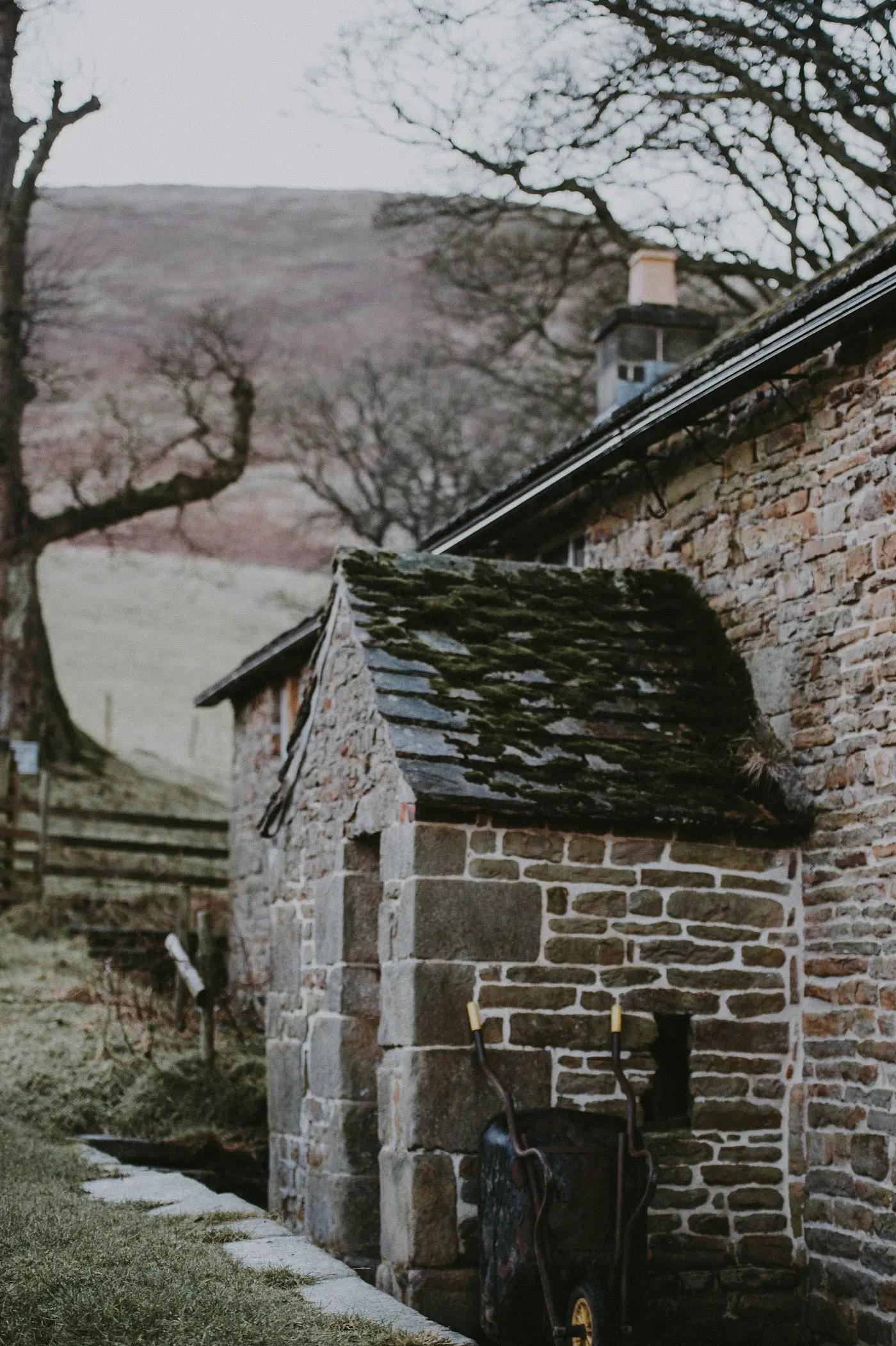
There is a reason rockeries feel at home in Yorkshire gardens. The county sits on top of some of the finest building stone in England - Millstone Grit from the Pennine quarries, Carboniferous limestone from the Dales fringe, sandstone from across the West Riding - and that stone weathers into natural-looking garden features in a way that imported or manufactured materials never quite do. The climate helps too: Yorkshire's cool summers, high rainfall, and cold winters match the conditions that true alpine plants evolved in. A properly drained rockery planted with good alpine species in a Yorkshire garden can look spectacular in spring and be essentially self-sustaining for years with minimal intervention. The key word is properly drained - and that is where most rockery failures begin.
Which stone should I use for a Yorkshire rockery garden?
Millstone Grit and Yorkshire sandstone from Pennine quarries are the best choices for most of West and South Yorkshire - native to the geology, naturally weathering, and locally sourced at reasonable cost. Carboniferous limestone from the Dales suits alkaline-loving alpines. Avoid artificial reconstituted stone, which never develops genuine patina.
Yorkshire sandstone and Millstone Grit
Millstone Grit - the coarse, iron-stained sandstone that forms the backbone of the Pennine hills from Keighley to the Peak District border - is the most appropriate rock for a rockery garden across most of West and South Yorkshire. It is native to the geology, it weathers in a way that develops lichens and natural patina within a few years, and it is abundant enough that locally sourced pieces do not carry the transport premium of imported stone. Pennine quarries and local stone merchants stock usable rockery pieces; salvage yards often have weathered pieces with established lichens that look decades old from the moment they are placed.
The aesthetic of Millstone Grit suits the industrial and semi-rural character of Yorkshire gardens very naturally. In the Pennine edge towns - Holmfirth, Marsden, Hebden Bridge, Keighley - it is the native rock, and a rockery built from it reads as an extension of the landscape rather than an imported feature. In the Leeds and Bradford suburbs, it looks equally at home: the Victorian and Edwardian builders of those cities quarried from the same Pennine beds, and the material connects the garden to the built character of the neighbourhood.
Limestone
Carboniferous limestone - the pale, densely bedded rock of the Yorkshire Dales - is the traditional material for specialist rock garden planting. Its alkaline pH suits the broadest range of alpine and rock garden plants, and its natural fissures and bedding planes create the crevice planting conditions that many alpines prefer. It is heavier and denser than Millstone Grit, which makes it more stable when set, and it weathers to a silver-grey that is visually distinctive.
The practical consideration is cost: Yorkshire limestone suitable for rockery use is more expensive than local sandstone, partly because the best pieces come from Dales quarries rather than local Pennine sources and partly because larger decorative pieces are priced as landscape features. If your plant list includes alkaline-loving species - many saxifrages, dianthus, and lewisia - limestone is worth the premium. For a general-purpose rockery planted with the most adaptable alpines, good-quality Millstone Grit performs equally well and costs less.
Magnesian Limestone from the belt that runs through the east of West Yorkshire - around Wetherby, Boston Spa, and Tadcaster - is an alternative that is sometimes available from local demolition or agricultural sources. It is less regular in form than Dales limestone but weathers attractively and is genuinely local to the eastern limestone fringe of Yorkshire.
Reclaimed stone
Reclaimed stone - old flagstones, redundant dry-stone wall pieces, gate post offcuts - gives the most weathered and established appearance fastest, because the stone already carries 50-100 years of weathering and biological colonisation. For a garden adjacent to a stone-built Yorkshire house or cottage, reclaimed local stone creates a continuity between the building and the garden that newly quarried material cannot replicate. Reclamation yards across Yorkshire typically stock usable rockery pieces, and demolition salvage sometimes makes large volumes available cheaply. The main variable is quality of form: reclaimed stone is less predictable in shape than quarried material, and you may need to sort more pieces to find the right shapes for a rockery.
What not to use
Reconstituted stone - the moulded concrete-aggregate blocks sold as artificial rockery stone - does not work for Yorkshire rockery gardens. It never develops genuine natural patina; the surface texture and colour remain static in a way that reads as artificial to anyone familiar with real stone; and it does not provide the same thermal mass and root-cooling properties that real stone gives in summer. The initial cost saving is quickly offset by the aesthetic result. If genuine stone is not immediately affordable, a smaller rockery built from real stone is a better outcome than a larger feature built from artificial material.
Tufa - the porous calcium carbonate rock sometimes used in specialist alpine gardens - is appropriate in certain contexts (particularly for growing lime-loving alpines in crevice form) but it is expensive, non-native, and unnecessary for a standard Yorkshire rockery planting. Leave it for specialist alpine collections.
What is the biggest mistake when building a rockery on Yorkshire clay?
Building a rockery directly on clay without a drainage layer underneath is the most common reason Yorkshire rockeries fail. Without drainage, alpine plants sit in waterlogged soil through winter and rot at the crown - this is a construction failure, not a plant failure.
The single most common reason rockeries fail in Yorkshire gardens is inadequate drainage preparation. A rockery built directly on Clay Measures clay - which underlies most of Leeds, Bradford, Wakefield, and much of the West Riding - creates a planting structure that behaves like a container with no drainage hole. Winter rain saturates the growing medium, cold water sits around the crowns and roots of alpine plants for weeks, and they rot. This is not a plant failure - it is a construction failure. The plants are doing exactly what they should in the conditions they are given.
The Yorkshire clay problem is well-documented in the clay soil Yorkshire guide. For a rockery specifically, the solution is straightforward but cannot be skipped: excavate the site, install a drainage layer, and fill with a lean grit-based growing mix that will not hold excess water around plant roots. The garden drainage Yorkshire guide covers the broader context of drainage problem-solving across the county.
How do I build proper drainage under a Yorkshire rockery?
Excavate 30-40cm of clay, lay 10-15cm of hardcore as a drainage base, add 5cm of coarse horticultural grit as a transition layer, then fill with a 50:50 mix of horticultural grit and loam-based compost. On flat ground with poor drainage, raise the whole structure 20-30cm above surrounding soil level.
- Excavate 30-40cm depth across the rockery footprint. This removes the worst of the clay from the root zone and creates space for the drainage and growing layers below the stone.
- Lay 10-15cm of hardcore or crushed stone as a base drainage layer. Compacted hardcore creates the physical void space that allows water to drain away from the growing medium above. Do not use fine material that will compact to form an impermeable layer - use coarse crushed stone or recycled concrete aggregate.
- Add a 5cm layer of coarse horticultural grit directly above the hardcore. This transitions between the drainage base and the growing medium and prevents fine particles migrating down and blocking the drainage layer over time.
- Fill with rock-planting mix. The ideal mix for a Yorkshire rockery is 50% horticultural grit (sharp, coarse, not fine building sand) and 50% loam-based compost or good quality topsoil. Peat-based compost is not appropriate - it retains too much moisture and becomes hydrophobic when it dries. The resulting mix should feel free-draining when wet: squeeze a handful and it should not hold its shape or release water.
- On flat, low-lying ground with particularly poor drainage, raise the entire rockery structure 20-30cm above the surrounding soil level. The additional height increases the depth of free-draining medium and moves the root zone further from the saturated clay below.
Slope is your friend
A rockery built on an existing slope has a natural drainage advantage over a flat-site construction. Water moves away from the growing medium under gravity rather than sitting in it. If your site has any natural gradient - even 1 in 10 - orient the rockery to use that slope rather than fighting it. The plants will establish faster and the drainage performance will be significantly better than on a flat-built structure of identical construction.
How do I set stones to make a Yorkshire rockery look natural?
Bury two-thirds of each stone below the surface, tilt each stone slightly back into the slope, and use only one stone type throughout. These three principles are the difference between a rockery that looks placed and one that looks like a natural outcrop that has always been there.
A rockery set correctly does not look like a collection of stones placed on a mound - it looks like a natural rock outcrop that has always been there. The difference lies in how the stones are positioned.
The most important principle is burial depth. Each stone should be set with approximately two-thirds of its volume below the surface of the growing mix. A stone that sits on top of the mix looks placed; a stone that is partially buried looks embedded. The visible face of the stone is just the exposed portion of something that extends into the ground. This also dramatically improves stability - a deeply set stone is far less likely to rock or tip than a surface-set one.
The second principle is tilt. Each stone should lean slightly back into the slope rather than tilting forward or sitting level. This serves two functions: it looks more natural (natural outcrops have their strata lines running at angles, not perfectly horizontal), and it directs rainfall towards the plant roots rather than away from them. A stone that tilts back by 5-10 degrees from vertical creates a microclimate behind it where water collects and drains slowly into the root zone of any plant growing at its base - exactly the condition that many alpines prefer in nature.
The third principle is grouping. Stones of similar character should be grouped together as if they share a common geological origin, because in nature they do. A rockery that mixes limestone, sandstone, and granite looks like a collection of samples rather than a natural feature. Choose one stone type and use it throughout. Vary the sizes within the type - a mix of large, medium, and small pieces of the same stone gives scale and interest - but keep the material consistent.
What plants should I choose for a Yorkshire rockery?
The most reliable plants for Yorkshire rockeries are aubrieta, arabis, saxifrage, sedum, sempervivum, creeping thyme, dianthus, and Phlox subulata - all fully hardy and preferring the sharp drainage a correctly built Yorkshire rockery provides. Yorkshire's cool, wet climate is actually ideal for true alpines, which evolved in similar conditions to the Pennine edge.
Alpine classics for Yorkshire conditions
The following plants are fully hardy in all but the most extreme Yorkshire upland conditions (the high Pennine tops above 400m where minimum temperatures may reach -20C in severe winters). All tolerate, and prefer, sharp drainage, which the correctly constructed rockery provides.
- Aubrieta: the classic spring-flowering cascading rock plant. Purple, pink, and red forms are all reliable in Yorkshire. Shear back hard after flowering to prevent woodiness and encourage dense new growth for the following season. Fully hardy, long-lived, and self-seeds into stone crevices.
- Arabis (rock cress): white-flowering in March and April, complementing aubrieta in the spring peak. A. alpina subsp. caucasica 'Flore Pleno' is the most reliable double form. Shear after flowering as with aubrieta.
- Saxifrage: a large genus with species suited to various aspects. The mossy saxifrages (Section Saxifraga) form cushions and tolerate partial shade - good for north-facing rockery pockets. Kabschia saxifrages prefer a sheltered sunny position and flower in February-March, giving early colour. All need excellent drainage.
- Sedum: drought-tolerant once established, excellent for dry, sunny pockets between stones. Sedum spurium, S. album, and S. acre (biting stonecrop - native to Yorkshire limestone outcrops) all work well. Good late-season interest into October.
- Sempervivum (houseleeks): architectural rosette-forming succulents, fully hardy in all Yorkshire conditions. They tolerate extreme drainage and can be grown in almost no growing medium - pressed into stone crevices with a handful of grit they will establish and spread. Virtually indestructible once placed.
- Thyme (Thymus): creeping thymes are excellent rockery plants - mat-forming, fragrant, and covered in small flowers in June and July. T. serpyllum and its cultivars, and T. 'Doone Valley' (variegated with lemon fragrance), both establish well in Yorkshire rockeries.
- Dianthus (alpine pinks): the cushion-forming alpine species - D. alpinus, D. deltoides (maiden pink), D. gratianopolitanus - are fully hardy and produce fragrant flowers in June. They need alkaline conditions and excellent drainage. Good on limestone-based rockeries; may need pH checking on acid gritstone-based mixes.
- Phlox subulata (moss phlox): forms dense mats covered in flowers in April and May, cascading over stone edges. Pink, white, and lilac forms are all available. Shear lightly after flowering. Fully hardy and long-lived.
Dwarf bulbs for spring colour
Planting small bulbs through a rockery in autumn gives a flush of colour from February through to May, before the main alpine flowering season gets underway. Crocuses (Crocus tommasinianus and C. chrysanthus varieties) naturalise freely in rockery conditions and increase year on year. Miniature narcissus - N. 'Tete-a-Tete', N. 'Jetfire', N. 'February Gold' - are reliably perennial in Yorkshire rockeries and carry their heads well above the alpine mats in March. Dwarf iris reticulata varieties (I. 'Harmony', I. 'Katharine Hodgkin') flower in February and March in a correctly drained rockery, providing intense blue and yellow before almost anything else in the garden is moving. Scilla siberica, planted in drifts through the stone gaps, provides a vivid mid-blue in March that is particularly effective against pale Millstone Grit.
Small ornamental grasses for texture
A small number of fine-textured grasses adds movement and contrast to a Yorkshire rockery planting. Festuca glauca (blue fescue) forms dense silver-blue tufts that read as a foil to flowering alpines throughout the season. Carex oshimensis 'Evergold' (a compact sedge with gold-striped leaves) provides year-round interest including through winter when the alpines are dormant. Both are fully hardy and appropriate for Yorkshire conditions. Keep grass planting to one or two specimens in a medium rockery to accent rather than dominate - the stone and flowering plants should remain the visual focus.
Plants to avoid in Yorkshire rockeries
Any alpine or rock plant labelled as needing frost-free overwinter conditions will fail in an exposed Yorkshire rockery. Tender gazanias, osteospermums, and half-hardy mesembryanthemums are sold alongside alpines in garden centres but are not appropriate for permanent rockery planting in Yorkshire. If minimum winter temperatures in your area reach -10C (which they can in the Pennine towns), even plants labelled as "borderline hardy" should be treated with caution unless they are in a very sheltered, well-drained south-facing position.
Lewisia cotyledon, while visually spectacular in seed catalogues, is tricky in Yorkshire's wet winters. It needs good drainage and, critically, protection from prolonged winter wet sitting on the rosette (which rots). If you want to include it, plant it in a near-vertical crevice so water runs off the rosette, or on a south-facing slope with maximum drainage. It is achievable in Yorkshire but demands more care than the reliably robust plants listed above.
Native Yorkshire plants for rockery planting
Beyond the standard alpine catalogue, Yorkshire's native flora offers plants that are genuinely at home in a rockery built from local stone. The county sits on two distinct rock types that support very different native plant communities, and choosing plants that match your stone gives a rockery an ecological coherence - as well as an aesthetic one - that a generic alpine planting cannot.
On acid Millstone Grit and Pennine moorland soils, heathers are the native ground-cover plant. Common heather (Calluna vulgaris) and bell heather (Erica cinerea) grow across the West and South Yorkshire moors and establish well in a rockery with a free-draining, slightly acidic growing mix. Calluna cultivars such as 'Robert Chapman' (strong bronze and gold foliage colour through winter) and 'H.E. Beale' (double pink flowers from August into October) extend interest well beyond the main alpine season. Cross-leaved heath (Erica tetralix) tolerates wetter and more exposed conditions than the other heathers and suits higher Pennine sites around Holmfirth, Saddleworth, and the upper Calder valley. These plants are native to the Yorkshire landscape and look exactly right in a gritstone rockery because they are the actual moorland plant community, not an import.
On Carboniferous limestone soils - the Dales fringe, the Magnesian Limestone belt running through Wetherby, Boston Spa, and Tadcaster, and the chalk of the East Riding - the native flora is entirely different. Wild thyme (Thymus polytrichus) grows naturally on the limestone pavements of Malham and Gordale Scar and is one of the best mat-forming rockery plants for a limestone-based build. Bloody cranesbill (Geranium sanguineum) is a native of Yorkshire limestone grassland, producing vivid magenta flowers from June to August with no special attention. Mossy saxifrage (Saxifraga hypnoides) forms dense cushions on limestone outcrops across the Dales and is excellent planted into the crevices of a rockery built from the same material. Bird's-foot trefoil (Lotus corniculatus), while common enough to seem unremarkable, produces bright yellow flowers from May to September and naturalises freely in rockery conditions without any intervention.
If your garden is on the Magnesian Limestone fringe around Wetherby, Boston Spa, or Knottingley, the local ecology gives you a genuinely rich palette of native plant choices that establishes readily and needs minimal intervention after planting. These plants have been growing in similar conditions across this part of Yorkshire for thousands of years. Choosing them over imported alpines is not just an ecological preference - it is the low-maintenance option. For help specifying a planting scheme matched to your stone type and local soil, the borders and planting service covers plant sourcing and installation.
What ongoing maintenance does a Yorkshire rockery need?
A correctly built Yorkshire rockery needs three annual tasks: a grit top-dressing in autumn to protect plant crowns from winter wet, removal of weed seedlings from stone crevices, and periodic division or cutting back of vigorous spreaders such as aubrieta. This is far less work than an equivalent area of lawn or herbaceous border.
A correctly drained and well-planted Yorkshire rockery needs very little ongoing maintenance - this is one of its genuine advantages over lawn or herbaceous borders. The annual work consists of three tasks:
Grit top-dressing in autumn. A 2-3cm layer of horticultural grit applied around plant crowns in October or November does two things: it prevents winter wet sitting against the crowns of plants that are vulnerable to crown rot, and it suppresses weeds that would otherwise colonise the exposed growing medium. A 25-litre bag of horticultural grit covers approximately 10 square metres of rockery surface at the right depth. This single annual task is the most important maintenance action for a Yorkshire rockery.
Removal of self-seeding weeds and colonising plants. Even in a grit-topped rockery, opportunistic seedlings - hairy bittercress, groundsel, annual meadow grass, and the occasional willing dandelion - will find their way into stone crevices. Remove these by hand while they are small: a seedling pulled before it flowers takes seconds; the same plant, if left to root between stones, may require significant effort to extract without disturbing the stone. An annual or twice-annual weed control sweep through the rockery for weed seedlings is the main ongoing work.
Division or removal of over-spreading plants. Over time, vigorous spreaders - aubrieta, arabis, and some sedums - will expand to overwhelm smaller or slower-growing neighbours. Cut back the most aggressive spreaders annually after flowering. Every three to five years, lift and divide any mat-forming plants that have grown too large, replanting the youngest, most vigorous portions and discarding the woody centre. This is the same principle as dividing perennials in a herbaceous border and is straightforward for rockery species.
What does professional rockery installation cost in Yorkshire?
A professionally installed medium rockery (4-8 square metres) in Yorkshire typically costs £800-£1,500 in total, covering labour (£400-£800), locally sourced Yorkshire stone (£80-£180 per tonne), growing mix, and plants. A smaller 3-4 square metre feature runs £400-£800 professionally installed. Drainage preparation is included in a proper installation and should never be skipped.
Rockery installation in Yorkshire is a job where professional input makes a significant difference to the long-term result. The drainage preparation and stone-setting stages, in particular, are difficult to do well without experience - stones set incorrectly look wrong immediately and are difficult to correct without starting again. A professional with rockery construction experience will also handle the physical weight of the stone safely, which is a practical consideration for any pieces over 30-40kg.
For a comprehensive cost picture, see the UK gardener cost guide. Yorkshire-specific rockery installation typically runs as follows:
| Work | Typical Yorkshire cost (2026) | Notes |
|---|---|---|
| Small rockery (2-4 sq m) | £250-£500 labour | Plus stone and plant costs; typically one person, one day |
| Medium rockery (4-8 sq m) | £400-£800 labour | Two-person team, one to two days including drainage prep |
| Large rockery or feature (8+ sq m) | £700-£1,500+ labour | Project-priced; includes drainage excavation, stone placement, fill |
| Yorkshire sandstone / gritstone | £80-£180 per tonne | Local Pennine stone; prices vary by quarry and piece size |
| Carboniferous limestone | £150-£350 per tonne | Dales source; premium for large decorative pieces |
| Horticultural grit and growing mix | £40-£90 per cubic metre | Mixed on site; grit costs more than soil component |
| Planting (per 10 plants) | £80-£160 including plant cost | Alpine plants are generally modest in price individually |
The total investment in a professionally built medium rockery - labour, stone, growing mix, and planting - typically runs £500-£1,200. Against a feature that will look good for 15-20 years with minimal annual maintenance, that is a favourable long-term cost. For the garden design stage, the garden design service covers planning and specification. For installation, the garden makeover service handles rockeries as part of broader garden transformation projects. For planting after the structure is built, the borders and planting service covers plant sourcing and installation to specification.
For related hardscape projects that often accompany a rockery - gravel paths through the garden, patio laying, and complementary stone work - see the garden path laying Yorkshire guide and the gravel garden Yorkshire guide. If drainage is a wider garden issue beyond the rockery site, the garden drainage Yorkshire guide covers the full range of solutions. For low-maintenance garden approaches more broadly, that guide covers how rockeries fit into a garden designed to minimise ongoing work.
Frequently Asked Questions
What stone should I use for a Yorkshire rockery?
Yorkshire sandstone and gritstone from Pennine quarries is the most appropriate and sustainable choice for gardens across the West and South Riding. It is native to the geology, weathers naturally to develop lichens and character, and looks right in both stone-built villages and suburban gardens. Carboniferous limestone is a good choice if you want to grow alkaline-loving alpines and suits gardens on the Magnesian Limestone fringe near Wetherby or Boston Spa. Reclaimed stone gives the most weathered appearance fastest. Avoid artificial reconstituted stone: it never develops natural patina and looks dated quickly.
Can I build a rockery on top of Yorkshire clay?
Not without drainage preparation underneath. Building a rockery directly on clay creates a planting medium that holds water around plant roots in winter and rots alpine plants. Excavate 30cm of clay, lay 10-15cm of hardcore as a drainage base, add coarse grit as a transition layer, and fill with a 50:50 mix of horticultural grit and loam-based compost. On flat, low-lying ground, raise the whole structure 20-30cm above the surrounding soil level for additional drainage depth. See the clay soil Yorkshire guide for background on why Yorkshire clay behaves this way.
Which alpine plants survive Yorkshire winters?
The Yorkshire climate suits true alpines very well - they evolved in cold, wet, high-rainfall conditions similar to the Pennine edge. Aubrieta, arabis, saxifrage, sedum, sempervivum, thyme, dianthus, and Phlox subulata are all fully hardy and perform reliably in Yorkshire rockeries. Dwarf bulbs - crocus, miniature narcissus, dwarf iris reticulata, Scilla - give spring colour through the stone gaps. Avoid tender plants labelled as needing frost-free conditions or winter protection - they will not survive an exposed Yorkshire rockery in most winters.
How much does it cost to build a rockery garden?
A DIY rockery using locally sourced Yorkshire sandstone costs roughly £150-£400 in materials for a small feature (2-4 square metres). A professionally built medium rockery with drainage preparation, stone setting, growing mix, and planting runs £500-£1,200 in Yorkshire. The drainage preparation is the most important investment - cutting this step is the main reason rockeries fail. See the borders and planting service for help with planting a completed rockery structure.
What is the best stone for a Yorkshire rockery?
Millstone Grit and Yorkshire sandstone from Pennine quarries are the most appropriate choices for most gardens in West and South Yorkshire - native geology, naturally weathering, locally sourced. In the Skipton and Ilkley areas, where limestone country begins, Carboniferous limestone from Dales quarries is available and suits alkaline-loving alpines. Reclaimed stone gives the most weathered, established appearance. Avoid reconstituted artificial stone - it never looks right.
What plants are best for a rockery garden in Yorkshire?
Aubrieta, arabis, saxifrage, sedum, sempervivum, creeping thyme, alpine dianthus, and Phlox subulata are all proven performers in Yorkshire rockeries - fully hardy, drainage-loving, and well-suited to Yorkshire's cool wet climate. Add dwarf bulbs (crocus, miniature narcissus, dwarf iris reticulata) for spring colour through the stone. Blue fescue (Festuca glauca) adds fine-textured foliage contrast. Yorkshire's climate is closer to the natural habitat of true alpines than southern England, which is an advantage once the drainage foundation is right.
How much does a rockery cost to build?
A small DIY rockery in Yorkshire costs roughly £300-£500 in materials - locally sourced Pennine gritstone or sandstone, horticultural grit, growing mix and alpine plants. A professionally built medium rockery (4-8 square metres) including drainage preparation, stone setting and planting typically costs £800-£1,500. The drainage layer is the most important cost not to cut: correct preparation prevents crown rot in alpine plants and is always cheaper than rebuilding a failed rockery. For planting specification and installation, the borders and planting service covers plant sourcing and rockery planting.
What plants work best in a Yorkshire rockery?
Drainage-loving alpines that evolved in similar Pennine-edge conditions work best: aubrieta, saxifrage, sedum, sempervivum, thyme and dianthus are the most reliable. Moorland natives such as heather and creeping thyme suit exposed West Yorkshire sites around Bradford, Halifax and Skipton. For Dales limestone rockeries, alkaline-loving species including lewisia and specialist saxifrages perform well. Add dwarf bulbs - crocus, miniature narcissus, iris reticulata - for spring colour between the stones. Yorkshire's cool, wet climate is closer to true alpine habitat than southern England, which is an advantage for these plants once drainage is correctly set up.
How do I build a rockery on a slope?
A sloped site is ideal for a rockery: gravity handles drainage naturally, which gives it a significant advantage over flat-site construction. On a Pennine garden slope in Bradford, Halifax or Skipton, excavate 20-30cm of clay from the planting pockets between stones and fill with a 50:50 horticultural grit and loam-based compost mix. Set stones with their strata lines running back into the slope, tilting each stone slightly back so it directs rainfall towards the plant roots. Bury two-thirds of each stone for stability and a natural outcrop appearance. No hardcore drainage base is needed on a genuinely sloped site - the gradient provides it. See the garden design service for help planning a slope rockery layout.
What stone is best for a garden rockery?
Locally sourced stone is always best - it weathers naturally, suits the landscape character of the garden, and avoids long transport costs. In Yorkshire, Millstone Grit and sandstone from Pennine quarries are the traditional choice for West and South Yorkshire gardens. Carboniferous limestone from the Dales suits alkaline-loving alpine plants and weathers to a distinctive silver-grey. Avoid reconstituted artificial stone, which never develops natural patina. Reclaimed stone - old flagstones and dry-stone wall pieces - gives the most instantly established appearance and connects the garden to the built character of a stone Yorkshire house.
Can I add a rockery to a small garden?
Yes - a small rockery works well in a garden as compact as 4 square metres. In a small Yorkshire garden, use one stone type (3-5 statement pieces of gritstone or limestone), choose smaller alpine plants such as sempervivum, miniature saxifrage and creeping thyme rather than vigorous spreaders like aubrieta, and use raised construction if drainage is poor. A wall pocket rockery built against an existing boundary wall uses minimal floor space and creates a significant vertical planting feature. The key constraint is not size but drainage: even a small rockery needs correct drainage preparation to keep alpine plants healthy through Yorkshire winters.
What is the difference between a rock garden and a rockery?
The terms are used interchangeably in domestic gardens, but there is a traditional distinction: a rock garden is a larger-scale feature replicating a natural rocky landscape, sometimes with winding paths and varied habitats, while a rockery is a smaller decorative feature using stones to create planting pockets for alpine and rock plants. In a Yorkshire garden context, both refer to the same type of construction. The more important distinction is construction quality: whether the feature has correct drainage preparation and properly set stones determines long-term success, regardless of what it is called.
Which native Yorkshire plants and moorland species work in a rockery?
Yorkshire's native flora gives you plants that are genuinely at home alongside locally sourced stone. On acid Millstone Grit and Pennine moorland soils, heathers are the natural choice: common heather (Calluna vulgaris) and bell heather (Erica cinerea) grow across West and South Yorkshire moors and establish well in a slightly acidic rockery mix. Calluna cultivars extend colour and foliage interest into October with no special attention. On Carboniferous limestone soils - the Dales fringe, the Magnesian Limestone belt through Wetherby and Tadcaster - native species include wild thyme (Thymus polytrichus), bloody cranesbill (Geranium sanguineum), mossy saxifrage (Saxifraga hypnoides), and bird's-foot trefoil. These plants evolved on Yorkshire limestone and establish readily in a rockery built from the same material. Matching your plant palette to your stone type - acid moorland species on gritstone, limestone natives on Dales stone - gives your rockery ecological as well as aesthetic coherence. See the borders and planting service for help specifying a planting scheme to match your stone type and local soil.
How much does a 3 to 4 square metre rockery cost in Yorkshire?
A 3 to 4 square metre rockery is the most common size for a domestic Yorkshire garden: large enough to be a genuine focal point, manageable as a first project. For a professionally installed feature of this size - drainage preparation, locally sourced Yorkshire stone, grit-based growing mix, and alpine planting - expect a total cost of £400 to £800. Stone is typically the largest variable: Yorkshire sandstone or gritstone at £80 to £180 per tonne keeps costs lower; Dales limestone at £150 to £350 per tonne costs more. Labour for a two-person team to excavate, prepare drainage, set stones and fill with growing mix runs roughly £250 to £500 for a feature of this size. DIY construction using locally sourced stone reduces the total to £150 to £400 in materials, though correct drainage preparation and stone-setting are where the quality difference shows and where cutting corners costs more to fix later. See the cost table above for a full breakdown of individual components.
Related reading
- Gardening on Yorkshire clay soil: the complete guide
- Garden drainage in Yorkshire: solving wet garden problems
- Low-maintenance garden ideas for Yorkshire
- Garden path laying in Yorkshire: stone and gravel options
- Gravel garden Yorkshire: design and plant guide
- How much does a gardener cost in the UK? (2026)
- Garden design across Yorkshire
- Garden makeover service
- Borders and planting service
Get a quote for your Yorkshire rockery.
60-second assessment. A local gardener with rockery experience will price the drainage prep, stone, and planting for your specific site.
Start the assessment