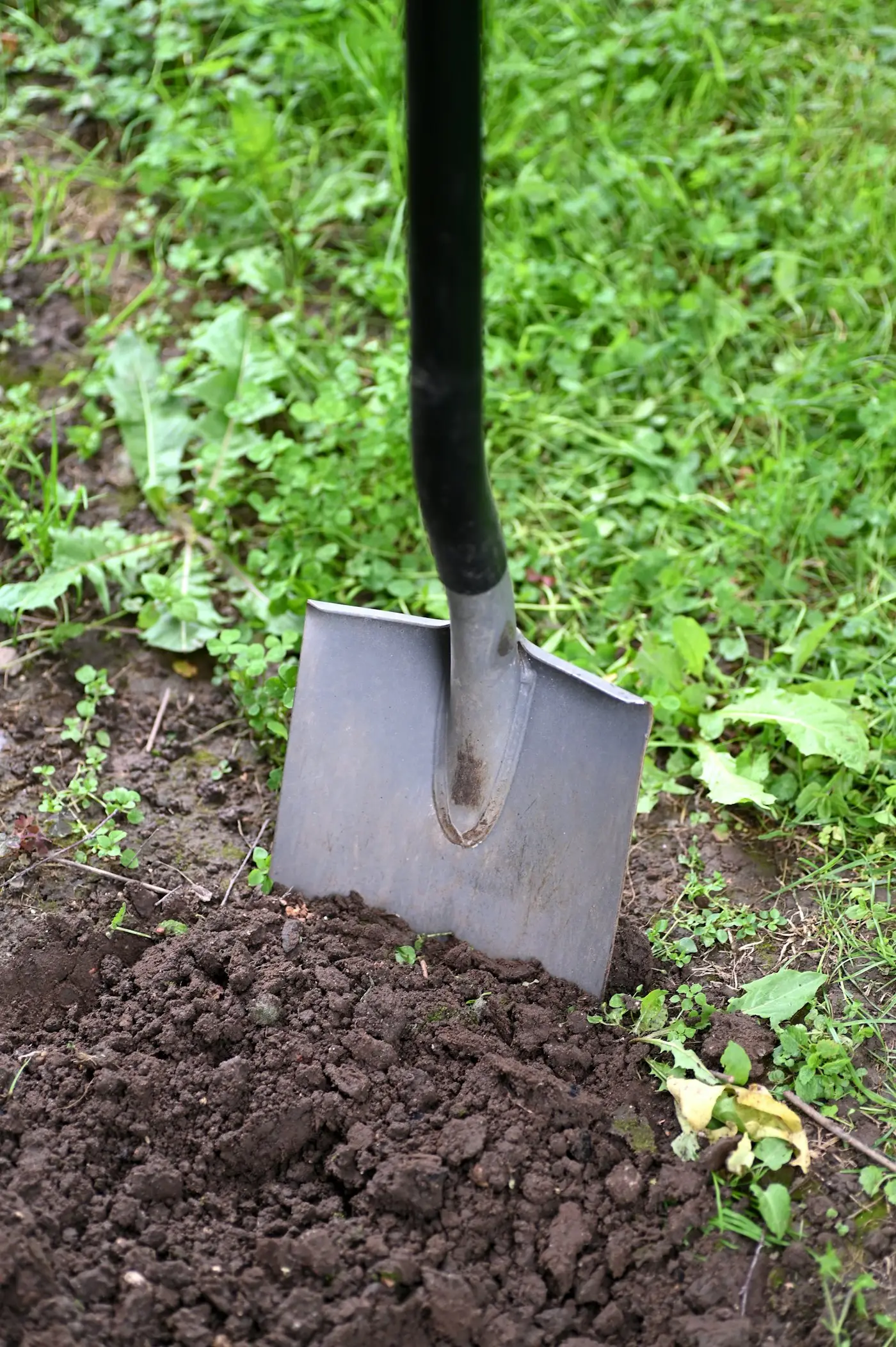
Yorkshire's soil problems are not random. They are geological. Where you live in Yorkshire largely determines what soil you have, what goes wrong with it, and what the practical improvement options are. The heavy clay that dominates West Yorkshire, South Yorkshire, and the Vale of York behaves completely differently to the free-draining gritstone soils of the Pennine fringe, or the shallow chalk of the Wolds. Treating all of them the same way is why a lot of well-intentioned soil improvement work fails to deliver.
This guide is a companion to the detailed clay soil guide which covers Yorkshire's clay geology, behaviour through the seasons, and plant selection in depth. If clay soil is your primary problem, read that guide first. This guide covers the practical improvement actions across all four Yorkshire soil types, with the specific products, quantities, costs, and timing for each.
Test your soil before you do anything else
The single most useful thing you can do before spending money on soil improvement is a pH test. It takes five minutes and costs £3-5 for a kit from any garden centre. Knowing your soil pH tells you whether your soil is acid, neutral, or alkaline - and this directly affects which plants will thrive and which will struggle regardless of how well you feed or water them.
Most Yorkshire homeowners are dealing with clay soils at pH 6.5-7 (neutral to slightly acid), or Pennine gritstone soils at pH 5.5-6.5 (moderately acid). Chalk and limestone areas in the Wolds and Dales are typically alkaline at pH 7.5-8.
Why does this matter in practice? Roses prefer slightly acid soil (pH 6-6.5) and generally perform well on Yorkshire clay without amendment. Brassicas prefer neutral to slightly alkaline (pH 6.5-7). Acid-lovers - rhododendrons, camellias, blueberries - need pH below 6 and simply will not perform on Yorkshire clay or chalk regardless of how you treat them. Understanding your pH prevents the classic mistake of spending money trying to grow plants that will always be unhappy in your soil.
For a more comprehensive picture, a soil analysis service (NRM or Wynnstay are both used across Yorkshire; approximately £15-25 per sample) additionally tests nitrogen, phosphorus, potassium, organic matter percentage, and particle size. Worth doing before any significant investment in a new vegetable garden or formal border programme.
Yorkshire's four soil types
Which soil type do you have?
- Heavy clay - most of West Yorkshire, South Yorkshire, the Vale of York, Humber lowlands. Sticky when wet, cracks when dry, slow-draining.
- Gritstone / sandy loam - Pennine fringe: Hebden Bridge, Holmfirth, Saddleworth, upper Dales valleys. Light, free-draining, acidic (pH 5.5-6.5), low nutrients.
- Chalk / limestone - Yorkshire Wolds and Dales (particularly limestone pavements). Alkaline (pH 7.5-8), free-draining, often shallow.
- Alluvial clay - floodplains of the Ouse, Wharfe, Aire, and Calder. Extremely heavy when wet, waterlogged in winter, cracks hard in summer. Deepest clay in Yorkshire.
Improving clay soil: the most common Yorkshire problem
Clay soil in Yorkshire is nutrient-rich and moisture-retentive, which are genuine advantages once you manage the drainage and compaction problems. The full scientific background on why clay behaves the way it does is in the clay soil guide. This section focuses purely on what to actually do about it.
Step 1: Sort drainage before anything else
No amount of compost helps a soil that sits waterlogged. If your garden or border holds standing water for more than a few hours after heavy rain, that is a drainage problem that needs to be addressed before any other soil improvement will work. The options, in order of cost:
- Raise bed levels - the simplest solution where it is practical. Raise beds 15-20cm above existing soil level with imported topsoil and compost mix, creating a layer of free-draining growing medium above the clay. This is the right approach for vegetable patches and new ornamental beds. Cost: quality topsoil at £40-70 per cubic metre delivered; a 10 sqm bed raised 20cm needs approximately 2 cubic metres.
- Break drainage through planting holes - for individual plant installation, dig the planting hole deeper than needed and break through into the subsoil with a fork or crowbar, then fill the extra depth with coarse gravel to create a drainage sump below each plant.
- Install a French drain - for gardens with persistent waterlogging across a large area. A perforated pipe in a gravel-filled trench intercepts and removes water. Cost: £800-2,000 depending on trench length and depth. See the Yorkshire drainage guide for options and costs in detail.
Step 2: Break up compaction
Compaction is what prevents organic matter from doing its job. In borders, use a digging fork to break up the top 20-30cm in autumn. Drive the tines in, lever back, and move along the border methodically. Leave the surface rough over winter - frost breaks down the clods for you and finishes the job with no extra effort.
Do not walk on wet clay soil. Every footstep on saturated clay compacts the structure you are trying to build. The rule is straightforward: if the soil clings to your boots in a lump, it is too wet to work. Wait until it stops doing that before you dig, plant, or even walk across bare soil. This is the most frequently ignored piece of clay soil advice, and ignoring it costs more improvement progress than almost anything else.
Step 3: Add organic matter every year
This is the core of clay soil improvement and it works by a process that takes years, not weeks. Organic molecules bind clay particles into aggregates, creating larger pore spaces that drain better, hold more air, and allow deeper root penetration. The effect is cumulative: year one shows modest improvement; year five shows dramatic improvement; year ten gives you genuinely good border soil.
What to add and how much: dig in 7-10cm of well-rotted garden compost or farmyard manure to the top 20-30cm of soil in autumn. For a 20 sqm border, you need approximately 1.5-2 cubic metres of organic matter per year. This sounds like a lot. It is a lot. But this is the treatment that works, and reducing the quantity reduces the improvement proportionally.
Green manures are a useful supplement: sow phacelia, mustard, or winter rye in September on cleared beds, dig in the following March. They add organic matter, prevent bare soil from compacting over winter, and their root systems open up the soil structure at minimal cost (seed packet: £3-5 per 100 sqm).
Step 4: Horticultural grit in the right places
Adding grit across an entire clay border rarely delivers the drainage improvement people expect - you would need to add it at 25-30% of total soil volume (roughly 1-2 tonnes per 10 sqm border) to make a meaningful difference, which is impractical and expensive. However, in two specific situations, grit genuinely helps:
- Backfilling hollow-tine aeration cores on lawns - this is the professional standard treatment for clay lawns. The cores (10-15cm deep, removed by the aerator) are filled with coarse grit or a 60:40 grit-to-sand mix, creating drainage channels that persist in the clay. This is effective and is why professional aeration on clay always includes backfilling.
- Individual planting holes - working sharp grit into the backfill mix when planting shrubs or perennials (25-30% grit by volume in the planting hole backfill) improves local drainage around each root ball while the plant establishes.
Improving sandy and gritstone soils (Pennine fringe)
Sandy and gritstone soils in the Pennine-fringe towns - Hebden Bridge, Holmfirth, Saddleworth, Haworth, and the upper Dales - have the opposite problem from clay. They drain too freely, warm up fast but dry out fast, and have low nutrient-holding capacity because nutrients leach through the coarse particles with every rainfall.
The improvement approach is almost the inverse of clay: the goal is to slow things down, retain moisture, and hold nutrients in the root zone for longer.
Organic matter: more of it, more often
Sandy soils need organic matter at a higher proportion than clay and need it replenishing more often because it breaks down faster. Aim for 10-15cm of compost or manure worked in annually, compared to 7-10cm on clay. Well-rotted farmyard manure is particularly good on light soils because it adds both organic matter and some nutrient content. Mushroom compost (slightly alkaline) suits most Pennine soils well, which tend to be acidic to start with.
Mulching for moisture retention
A 7-10cm layer of composted bark mulch applied to the soil surface in April, before it dries out, significantly reduces moisture loss through summer. Pennine gardens at altitude can dry out on the surface faster than Vale of York clay gardens despite higher rainfall, because fast-draining sandy soils lose surface moisture quickly. Mulching is particularly important for newly planted shrubs and perennials in their first two years. Cost: composted bark at £45-65 per cubic metre delivered; a 20 sqm border needs approximately 1.5 cubic metres for a 7cm layer.
Feeding more frequently at lower doses
On sandy soils, nutrients leach through the root zone with every significant rainfall. A single large application of fertiliser is wasted on light soil - most of it moves below the root zone before plants can use it. The more effective approach is smaller doses, more often: a balanced granular fertiliser (like Growmore or similar) at half the label rate, applied three times through the growing season instead of once, keeps a more consistent nutrient level in the root zone. Slow-release fertilisers are better on light soils than fast-release for the same reason.
Improving chalk and limestone soils (Wolds and Dales)
The Yorkshire Wolds and the limestone Dales present a different challenge: shallow, alkaline, free-draining soils over bedrock or rubble. Topsoil depth is often only 10-15cm before you hit chalk or limestone. These soils dry out fast, warm up early, and limit plant choice significantly.
Work with depth, not against alkalinity
Trying to acidify chalk soil so you can grow rhododendrons is a battle you will not win. Chalk is an almost unlimited reservoir of calcium carbonate, and any acidifying treatment is simply neutralised by the underlying rock over time. The practical answer is to grow chalk-tolerant plants - clematis, gypsophila, scabious, field maple, most brassicas, most herbs, lavender, and the majority of ornamental grasses. These plants evolved on alkaline, free-draining ground and thrive on it.
For the depth problem, raised beds are the most effective solution. A 30-40cm raised bed above the shallow chalk gives you control over the growing medium and avoids the rock entirely. This is the standard approach for vegetable growing on Wolds and Dales properties, where the native soil is simply too shallow for most food crops.
Mulching is critical on chalk
Chalk soils lose moisture rapidly because water drains straight through and the thin topsoil dries out in hours during warm weather. A thick (10cm) compost or bark mulch in April is essential. In a dry summer on the Wolds, unprotected soil can go from moist to bone dry within a week of the last rain.
Improving alluvial clay (floodplain gardens)
Alluvial clay along the Ouse, Wharfe, Aire, and Calder floodplains is the most challenging soil in Yorkshire for garden improvement. It is extremely heavy, has a high water table in winter, and cracks to depth in summer. The same improvement principles as regular clay apply (organic matter, aeration, drainage), but more intensively and with a greater emphasis on managing the water table rather than just surface drainage.
For gardens on alluvial clay that sit within the flood zone, professional drainage advice before significant soil improvement investment is strongly recommended. French drains on a high water table need to discharge somewhere, and the destination and gradient matter. A poorly installed drain on a flat alluvial plot can actually make drainage worse by concentrating water in the wrong place.
For planting on alluvial clay, the most resilient choices are native plants that naturally colonise floodplain margins: crack willow, alder, dogwood, elder, meadowsweet, and flag iris all evolved in exactly these conditions. They are not exotic choices, but they work where almost nothing else does reliably.
Products and costs: what to budget for
| Product | Size | Approximate cost delivered |
|---|---|---|
| Horticultural grit | 25kg bag | £4-6 |
| Horticultural grit | 1 tonne bulk bag | £45-70 |
| Well-rotted compost | Per cubic metre | £40-60 |
| Farmyard manure (well-rotted) | Bulk bag (~0.5m³) | £35-50 |
| Composted bark mulch | 1 cubic metre | £45-65 |
| Quality topsoil (screened) | Per cubic metre | £40-70 |
| Green manure seed (phacelia) | 100 sqm coverage | £3-6 |
| pH test kit | Garden centre kit | £3-5 |
| Soil analysis (full NPK + OM) | Per sample, lab service | £15-25 |
| Balanced granular fertiliser | 10kg bag | £10-18 |
When to work your soil
Timing soil improvement work correctly is almost as important as doing it at all. The best window for clay and alluvial soils is late September through November. At this point the soil has the right moisture content - moist but not saturated - for aeration, digging, and organic matter incorporation. Leave the surface rough and let winter frost break down the clods. By spring, you have measurably better structure than you would have achieved doing the same work in a wet April.
For sandy Pennine soils, the best window for organic matter incorporation is the same - autumn, before the soil becomes waterlogged. Mulching, however, belongs in spring: apply compost or bark mulch in March or April before the soil dries out and before weeds get a foothold.
The absolute rule for clay: do not work it when wet. The test is simple. Take a handful of soil and squeeze it. If it stays in a lump or clings to your hand when you open it, the soil is too wet to dig or plant. Wait. Working wet clay destroys the structure you are trying to build and can compact it for years. This principle applies to walking on it, mowing it, or rotovating it - not just digging.
Should you hire a gardener for soil improvement work?
If the problem is compaction or drainage, professional groundwork is almost always the right call. Hollow-tine aeration requires a commercial petrol-driven machine (not the consumer electric models, which are too weak for clay). French drain installation is a construction operation. Rotovation of a large area is physically demanding and requires the right machine settings for clay soil to work properly rather than smear the clay particles together.
If the problem is simply needing organic matter worked into the borders, a capable gardener can do a 20-30 sqm border in a half-day. At the current Yorkshire rate of £25-35 per hour, a 4-hour visit costs £100-140 in labour plus whatever you spend on organic matter. For many people that is a reasonable trade-off against a weekend of hard digging.
For lawn top dressing on clay - which follows hollow-tine aeration and involves brushing grit and compost into the aeration cores - professional work pays back clearly. The results on a professional clay lawn service are significantly better than DIY because of the machine quality and the skill in the topdressing application. See garden maintenance services for what an ongoing annual lawn programme looks like, and the raised bed vegetable garden guide for building above your soil rather than fighting it.
Frequently asked questions
Can I improve clay soil in one season?
You can make a meaningful start in one season, but you cannot fully transform heavy clay in a single year. The most you can achieve in year one is: breaking up compaction with hollow-tine aeration, adding organic matter to the top 20-30cm, and installing drainage if it is a waterlogging problem. After one autumn of this treatment, drainage and workability will be noticeably better. The deeper structural improvement - more pore space, better root penetration, genuinely easy digging - takes three to five years of consistent annual treatment. Each year builds on the last.
What is the difference between topsoil and compost?
Topsoil is the upper layer of natural soil, screened and sometimes blended. Its quality varies enormously - good topsoil is loamy and weed-seed-free; poor topsoil can be heavy clay or subsoil in disguise. Compost is decomposed organic material that improves soil structure and feeds soil biology, but does not add the mineral content that topsoil provides. For filling a new raised bed or replacing damaged topsoil: use a mix of quality topsoil and compost (roughly 60:40). For improving an existing border: add compost annually, not topsoil on top of topsoil - layering topsoil on clay without working it in creates an impermeable interface that makes drainage worse.
Is it worth doing a soil test?
Yes, for most Yorkshire gardens. A basic pH test kit (£3-5) takes five minutes and tells you whether your soil is acid, neutral, or alkaline - which directly affects which plants will thrive. A full soil analysis from a lab service like NRM or Wynnstay (£15-25 per sample) additionally tests nutrient levels, organic matter content, and particle size. This is worth doing before significant investment in a new border or vegetable garden, if plants are consistently performing poorly despite good care, or if you suspect contamination on a recently built or industrial site. For an average established garden, a pH test kit is usually sufficient.
How deep does my soil need to be for vegetables?
For most vegetables, a minimum of 25-30cm of good growing medium is needed. Leafy crops (lettuce, spinach, kale) and onions manage in 20cm. Root vegetables - carrots, parsnips, and potatoes - need 30-45cm of loose, stone-free soil. On shallow chalk or shallow clay, the practical solution is raised beds of 30-40cm depth filled with a quality growing mix above the native soil. Even on deep clay, a raised bed improves germination and early-season growing temperature significantly. See the raised bed vegetable garden guide for the full approach.
Why does my lawn die every summer?
On Yorkshire clay, summer die-back is usually soil shrinkage and compaction rather than true drought death. As clay dries it cracks and contracts, severing shallow grass roots. The grass goes dormant rather than dying in most cases and recovers with autumn rain. If the same patches die every year, those areas have the worst compaction and shallowest root depth. The fix is hollow-tine aeration in September to decompact the soil and allow roots to grow deeper. On sandy Pennine soils, true drought stress is more likely - the fix here is organic matter worked into the root zone and mulching in spring. Mowing too short in dry periods makes both problems significantly worse.
Soil problems in your Yorkshire garden?
Find a local gardener who knows your area's specific soil conditions and has the equipment to improve it properly.
Get a free local quote →Related guides
- Clay Soil Gardening in Yorkshire: The Complete Guide
- Garden Drainage in Yorkshire: French Drains, Soakaways, and Solutions
- Lawn Top Dressing in Yorkshire: How to Improve Clay Lawns After Aeration
- Raised Bed Vegetable Gardens in Yorkshire
- Garden Composting in Yorkshire: Making and Using Compost
- Garden Maintenance Services in Yorkshire
Gardeners in your area
We cover the whole of Yorkshire. Click through to the local page for your area: