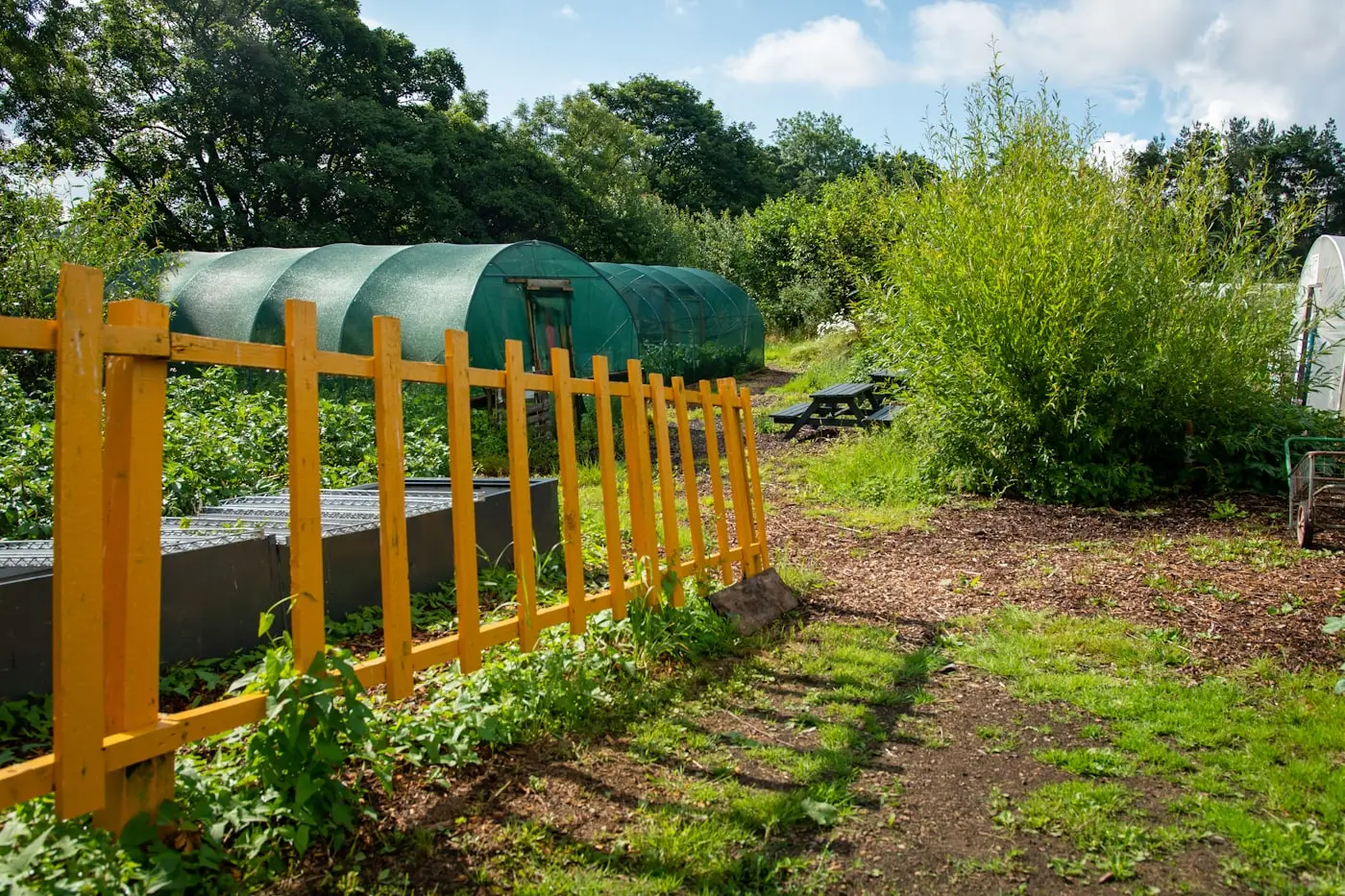
If you're setting up a raised bed vegetable garden in York, Harrogate, or Ripon, local kitchen garden specialists can recommend the right bed heights, soil blends, and crop rotations for your growing conditions.
If you have tried to grow vegetables in a Yorkshire garden and been frustrated, the soil is almost certainly the reason. Most of the county sits on heavy clay - it drains slowly, compacts under foot traffic, stays cold well into spring, and provides a difficult environment for most vegetable root systems. Raised beds solve this problem by taking it off the table: you fill the bed with a controlled growing medium, you never walk on it, and the native soil below becomes irrelevant to what happens above it. In Yorkshire, this is not a nice-to-have. For most gardens outside the sandier Wolds and the Vale of York, it is the single change that makes the difference between a productive vegetable garden and an annual source of disappointment.
This guide covers everything you need to get started: what to build, what to fill it with, what to grow, when to plant (and why Yorkshire's frost-date variation matters more than most guides acknowledge), and how to involve a local gardener if the building, filling, or ongoing management is more than you want to tackle alone.
Why Raised Beds Work Particularly Well in Yorkshire
To understand why raised beds are so effective in Yorkshire, it helps to understand what the native soil is doing and why it is hostile to vegetables. The majority of the county's gardens sit on Carboniferous or Jurassic clay-rich geology. This produces a soil that retains water (good in principle, but too much of it during Yorkshire's wet winters and springs), compacts badly when worked or walked on (destroying the air spaces that root systems need), warms very slowly in spring (cold soil delays germination and root development by several weeks compared to lighter soils), and has a pH that tends toward acidic (which many vegetables do not enjoy).
The compaction problem is compounded by the way most people garden. Every time you walk onto a vegetable bed to plant, weed, harvest, or water, you compact the soil directly below your feet. Clay compacts much more readily than sandy or loamy soil - within a couple of seasons of regular foot traffic, a clay vegetable bed can be as hard as concrete just below the surface crust. Root systems cannot penetrate this, drainage is blocked, and the vegetable plants suffer regardless of how much you fertilise or water.
Raised beds eliminate all of this in one go. The frame of the bed keeps you out of the growing area - you reach in from the paths around the beds rather than stepping onto the soil. You fill the frame with a growing medium you have chosen and mixed, not the native clay. The bed's height lifts the root zone above the level where surface drainage problems have their worst effect. The increased surface area exposed to air means the bed warms faster in spring than ground-level clay. And because you are never compacting it, the soil structure you build in year one stays intact and improves progressively as worms and organic matter do their work.
What to Build: Materials and Dimensions
Width and length
The most important dimension is width: 1.2 metres for a bed you can access from both sides. This lets you reach the centre comfortably from either edge without stretching awkwardly or stepping in. If the bed runs against a wall, fence, or greenhouse and you can only access it from one side, reduce the width to 60-70cm. Beds that are too wide are the most common raised bed mistake - you end up stepping into them to reach the middle, undoing the no-compaction benefit.
Length is flexible. 2.4 metres is a practical standard because it corresponds to full-length timber and means no cuts, but 3 or 4 metres works equally well. Very long beds with no cross-supports can bow outward over time under the pressure of the soil - a cross-brace or two cross-pieces at the base of a bed longer than 3 metres is good practice.
Four standard beds (each 1.2m x 2.4m) gives you 11.5 square metres of growing space - enough to produce a meaningful proportion of vegetables for a family of four through the season if managed well. You can do a great deal with two beds. Start with two, learn what works, and add more the following year rather than building six and then feeling overwhelmed.
Depth
30cm is the workable minimum - enough for most salad crops, herbs, and shallow-rooted plants. For a more versatile bed that can grow root vegetables (carrots, parsnips, beetroot) and support deeper-rooted plants without stressing them, 40 to 45cm is better. The extra depth also creates a larger buffer of growing medium that retains moisture longer in dry spells, which is genuinely useful in Yorkshire summers when a week without rain is enough to stress a shallow bed.
Materials
For vegetable beds, the material choice matters for two reasons: longevity and food safety.
Untreated oak is the best timber choice. Naturally durable, it will last 15 to 25 years without any treatment, and nothing leaches into the soil or your food. The cost is higher than softwood but the lifespan makes it better value over time. Green (unseasoned) oak is significantly cheaper than seasoned and performs equally well in the ground - it will season in place. Boards rather than sleepers are easier to handle and level.
Untreated larch is the runner-up: naturally durable, slightly less expensive than oak, and will last 10 to 15 years. As with oak, no treatment needed and no leaching concern.
Pressure-treated softwood (the green-tinged timber sold at most builders' merchants) uses modern copper-based preservatives that are far safer than the old CCA treatments. Most growers avoid it for food beds out of preference rather than proven risk, but if budget is a real constraint it is not unreasonable to use it - line the inside faces with heavy-duty polythene if you want a belt-and-braces approach. Avoid anything that smells strongly of preservative or has an oily or blackened surface - that suggests creosote or old-style treatments that you genuinely do not want near food.
Old railway sleepers are a popular aesthetic choice but carry a specific food-safety concern: many genuine old sleepers are creosote-treated. Creosote is a wood tar derivative that contains polycyclic aromatic hydrocarbons (PAHs), some of which are carcinogenic, and it does leach into soil in contact with moisture. Do not use old creosoted sleepers for vegetable beds. New hardwood sleepers (oak or Douglas fir) are fine.
Galvanised steel beds are an increasingly mainstream choice. They look clean and modern, last indefinitely, warm up faster in spring than timber (which can be an advantage in Yorkshire's cold springs), and require zero maintenance. The main objection is aesthetics - they do not suit all garden styles - and cost, which is higher than timber for equivalent size.
Composite or recycled plastic lumber is the longest-lasting option and requires no maintenance. It does not rot, does not split, and the better products last 25 years or more. Opinions vary on the look and on the environmental credentials, but for purely practical purposes it performs well.
What to Fill Them With: The No-Dig Approach
The no-dig method, developed by Charles Dowding on his Somerset market garden and extensively documented over 30 years of practice, has transformed how many gardeners think about raised beds. The basic principle is: disturb the soil as little as possible, build it from the top down with organic matter, and let the biology do the work.
The standard fill mix
A good general-purpose raised bed growing medium is approximately:
- One third quality topsoil (mineral content, structure, good weight)
- One third well-rotted garden compost or leaf mould (organic matter, drainage, moisture retention)
- One third well-rotted farmyard manure (fertility, organic matter, biological activity)
The critical qualifier on topsoil is quality. Cheap bulk topsoil sourced from construction sites or roadworks can be low in organic matter, compacted, full of weed seeds, or at a pH that needs correcting. Buy from a local horticultural supplier who can tell you its source and composition. Ask for topsoil tested to BS3882 standards - that gives you a baseline assurance of quality.
For a bed 1.2m x 2.4m x 40cm deep, you need roughly 1.15 cubic metres of fill. For four beds, that is approximately 4.6 cubic metres - a significant volume to source and move. A gardener building your beds can coordinate delivery and placement, which is considerably easier than trying to move several tonnes of compost in wheelbarrows by yourself.
The pure compost approach
The purist no-dig approach fills raised beds with compost only - no topsoil. This gives exceptional growing conditions in year one and two because the compost is rich, free-draining, and biologically active. The downside is that it breaks down and compacts more rapidly than a topsoil-compost mix, so you need to top the beds up by 5 to 10cm each autumn to maintain the depth. Most growers find the pure compost approach works extremely well but requires more ongoing investment in compost.
Installation: no digging required
This is the part that surprises most people. You do not need to dig up or remove the grass or clay beneath your raised bed. Place the frame directly on the ground surface, lay a thick layer of cardboard (overlapping joins to prevent gaps) on the base to suppress the grass and weeds below, and fill on top. The cardboard suppresses what is underneath, breaks down within one to two seasons, and the worms and soil life from the native soil below gradually work their way up through the decomposing cardboard into the growing medium above. After two seasons, the distinction between the native soil and your bed fill begins to blur in the best possible way - you have built fertility from the top down rather than fighting the clay from the bottom up. See the clay soil gardening guide for more on working with Yorkshire's native soil conditions.
What to Grow: Yorkshire's Best Bets
Not every vegetable crop performs equally in Yorkshire's climate. The county's reputation for cool, damp summers is not entirely fair - Sheffield's Don Valley gets decent summers - but the Pennine influence on the west side, the cold North Sea air that affects the east, and the genuine altitude variation from the Dales down to the Vale of York means some crops are more reliable than others.
Crops that love Yorkshire
Courgettes are the most dependable warm-season crop for Yorkshire beginners. They are vigorous enough to shrug off a cool week, produce abundantly from just two or three plants, and do not need the extended warm summers that struggle-crops like outdoor tomatoes and peppers require. Give them a sheltered spot in full sun and keep them watered - they will repay you with more courgettes than you know what to do with from July through October.
Potatoes are genuinely well-suited to Yorkshire's climate. The cool, damp conditions that make the county challenging for Mediterranean crops are exactly what maincrop potatoes like. In a raised bed, the drainage and loose structure of the growing medium is ideal for tuber development. First earlies in the ground (under fleece) from mid-March in South Yorkshire, April in North Yorkshire; maincrops in April and May. Harvest earlies in June-July; maincrops in August-September.
Brassicas are a Yorkshire staple for good reason. Autumn kale, purple sprouting broccoli, cabbages, and sprouts all suit the cool, moist conditions. Sow indoors in April-May, plant out in June-July, and harvest through autumn and winter. Purple sprouting broccoli is particularly worthwhile - it produces from February through April when almost nothing else is ready, and it is genuinely hard to buy locally. Plant brassicas deeper than they were in their pots to support the stem, net them against pigeons and cabbage whites, and they need relatively little attention through the season.
Salad leaves in a cut-and-come-again mix are the easiest possible starting point. Sow thickly in April (or even March under fleece), cut the leaves when they reach 8-10cm, and the plants regrow from the base - typically giving two to four cuts per sowing. Succession sow every three to four weeks through to August for a continuous harvest from April to November. Salad leaves are shallow-rooted and ideal for the top 15cm of a bed, which means you can grow them in the same bed as taller crops using the vertical space efficiently.
Garlic is low effort and highly reliable in Yorkshire. Plant individual cloves in October, 10-15cm apart and 5cm deep, and harvest the following July when the leaves start to yellow and fall. Yorkshire's cold winters actually benefit garlic - the extended cold period (vernalisation) promotes bulb development. Hardneck varieties (Chesnok Red, Messidrome, Lautrec Wight) tend to perform particularly well in colder climates and produce larger bulbs with better flavour than softneck supermarket types.
Climbing beans (French and runner beans) can be very productive in a sheltered Yorkshire garden but need wind protection in exposed Pennine positions. The Pennine winds that funnel through valleys in West and South Yorkshire can damage the flowers before they set - if your garden is exposed, grow climbing beans on the sheltered side of a fence or wall, or grow the dwarf bush varieties instead, which are less wind-sensitive.
Crops that need more care in Yorkshire
Outdoor tomatoes are possible but unreliable. A sheltered south-facing bed will produce decent tomatoes in a warm summer; in a cool summer, the fruit may not ripen on the vine. Grow early-maturing varieties (Tumbling Tom, Ferline, Tigerella) rather than large beefsteak types, and if you want reliable tomatoes every year in Yorkshire, a small greenhouse or polytunnel is a worthwhile investment.
Sweetcorn needs warmth to ripen cobs fully and struggles in the north of the county. In South Yorkshire in a good summer it is achievable. Plant in blocks rather than rows (for wind pollination), grow a quick-maturing variety (Swift, Earlibird), and start indoors in May rather than direct sowing outdoors.
Melons, cucumbers, aubergines, and peppers all need greenhouse conditions in Yorkshire. Attempting them outdoors is an annual exercise in optimism and disappointment. Grow them under glass where they are genuinely excellent crops.
Yorkshire Timing: Last Frost Dates and Why They Vary
National planting guides say tender crops go out "after the last frost" - typically given as mid-May. In Yorkshire, this is an average that conceals significant variation across the county, and getting it wrong means a late frost killing plants you have spent weeks raising from seed.
| Area | Approximate last frost (average) | Notes |
|---|---|---|
| South Yorkshire (Sheffield, Rotherham, Doncaster) | Late April to early May | Urban heat island effect; lower elevation than the west of the county |
| West Yorkshire (Leeds, Bradford, Wakefield) | Early to mid-May | Slightly cooler than South Yorkshire; Pennine influence on the west side |
| Vale of York (York, Selby, Northallerton) | Early to mid-May | Relatively sheltered; occasional late air frosts from the east |
| North Yorkshire (Harrogate, Ripon, Thirsk) | Mid-May | Elevation increases risk; check local Met Office data for your specific location |
| Yorkshire Dales and Moors | Mid to late May; can extend to June at altitude | Above 200m elevation frost risk extends significantly; fleece essential for tender crops |
The practical implication: do not trust a general "plant out after mid-May" rule without considering where specifically in Yorkshire you are. In the Dales, planting courgettes out in mid-May can mean losing them to a late May frost. In Sheffield, you may be safe from late April. Check the BBC or Met Office forecasts for your specific location and keep fleece ready to cover tender plants for the first two weeks after planting out, regardless of when you do it.
The fleece rule: always buy more than you think you need
A roll of horticultural fleece (the lightweight spun polypropylene type, not the heavy frost blanket) is the most useful piece of kit for a Yorkshire kitchen gardener. It adds approximately 3-4 degrees of frost protection, speeds up soil warming in spring, and can extend the harvest season in autumn. Buy a 10-metre roll and use it liberally. Lay it directly over emerging seedlings, drape it over frames over newly planted tender crops after planting out, and drape it over autumn brassicas on nights when late frosts are forecast. A roll costs under £10 and will earn its keep many times over.
Common Beginner Mistakes
Beds too wide to reach the middle
If you cannot comfortably reach the centre of the bed without leaning uncomfortably or stepping in, the bed is too wide. The 1.2-metre standard exists for a reason - do not exceed it for beds accessed from both sides.
Soil too shallow
A 15-20cm deep bed is not enough for most vegetable crops. Root systems need depth, drainage relies on depth, and moisture retention improves with depth. Aim for 40cm minimum if you are building once and want versatility. The extra materials cost is worthwhile.
Planting tender crops too early
The temptation in a warm April is real, but one late May frost after you have planted courgettes, beans, and basil is a genuinely dispiriting way to spend an evening (covering everything with fleece at 10pm) or a genuinely annoying way to start June (buying replacement plants). Wait the extra two weeks. The plants you have raised from seed indoors will catch up quickly once they are in warm soil.
No slug management plan
Yorkshire is slug country. A raised bed full of lush, well-watered young vegetable plants is a slug destination. Having no plan for slug management means losing seedlings overnight in wet weather. Copper tape around the frame perimeter, nematode biological control in spring and autumn, and evening patrols after rain are the standard toolkit. Do not let this be an afterthought - implement it from the day you plant.
Not adding compost annually
The growing medium in a raised bed breaks down over time as plants take up nutrients and as organic matter decomposes. Top up your beds with 5-10cm of compost or well-rotted manure each autumn, either dug lightly in or left on the surface as a mulch (the no-dig approach). A bed that is not topped up progressively loses fertility and structure year on year.
Underestimating watering needs
Raised beds drain better than ground-level beds - which is the point - but this also means they dry out faster in dry spells. Yorkshire may not be the driest county, but a warm July week without rain will stress an un-mulched raised bed significantly. Mulch the surface of the bed (a layer of compost, straw, or grass clippings) to retain moisture, and check soil moisture at 5cm depth every day or two in dry weather rather than assuming the surface appearance reflects what is happening below. For anyone managing multiple beds or away from home regularly, a drip irrigation system on a timer removes the guesswork; see the garden irrigation Yorkshire guide for what is involved and what it costs.
How a Gardener Can Help
Raised beds are one of the areas where the involvement of a skilled local gardener adds real, quantifiable value - not just for the heavy initial work but for ongoing support through the season.
The initial build and fill is hard physical work. Sourcing, delivering, and positioning several cubic metres of topsoil, compost, and manure; building the bed frames level and square; and organising the cardboard base layer is a full day's work for one person and a half day with two. A gardener with experience in raised bed construction will also advise on siting (full sun, sheltered from Pennine wind, close enough to a water source), frame joinery, and material choices based on what they have seen hold up well in Yorkshire conditions. Garden makeover services often include raised bed installation as part of a broader redesign.
Ongoing maintenance through the growing season - fortnightly visits for weeding, succession sowing, slug management, feeding, and harvesting support - is valuable particularly for households where time is limited. A fortnightly visit of two to three hours keeps raised beds producing at their maximum rather than going to seed, being overwhelmed by weeds, or producing a glut of courgettes that could have been harvested a week earlier. See the garden maintenance and borders and planting services for what ongoing support looks like.
A gardener who understands Yorkshire's growing conditions and your specific garden's microclimate - which direction faces south, where the wind comes from, where the frost sits on cold nights - is considerably more useful than generic gardening advice that does not account for the fact that your garden is on the windward side of a Pennine valley at 150 metres elevation.
What It Costs
| Job | Typical cost (2026) | Notes |
|---|---|---|
| Build and fill 4 standard beds (1.2m x 2.4m x 40cm) | £400-£800 | Materials variable; oak or larch at higher end, composite at lower; includes labour |
| Fill material only (4 beds) | £150-£300 | Topsoil, compost, manure mix; supplier and access dependent |
| Planting design and initial planting | £80-£150 | One-off visit; includes plan, seed or plant selection guidance, initial planting |
| Fortnightly maintenance visit (growing season) | £30-£60 per visit | Weeding, succession sowing, slug management, harvest support |
For broader context on Yorkshire gardener pricing, see the how much does a gardener cost guide and the Yorkshire garden jobs by season guide for what work happens when through the year.
Related reading
- Borders and planting across Yorkshire
- Garden design across Yorkshire
- Garden makeovers across Yorkshire
- Garden maintenance across Yorkshire
- Garden makeover costs
- How much does a gardener cost in the UK?
- Yorkshire garden jobs by season
- Gardening on clay soil in Yorkshire
- Container gardening in Yorkshire - an alternative to raised beds for smaller spaces
- Yorkshire allotment guide - raised beds on allotments and plot management
- Small garden ideas for Yorkshire - raised beds work well in compact plots
Frequently Asked Questions
Why are raised beds particularly good for Yorkshire gardens?
Most Yorkshire gardens sit on heavy clay that drains poorly, compacts under foot traffic, and warms slowly in spring. Raised beds bypass all of this - you fill them with a controlled growing medium, you never walk on them, and the native clay below is irrelevant to what grows above. For vegetable growing in Yorkshire, they are the most effective single change most gardeners can make.
What size should raised beds be?
1.2 metres wide for beds accessed from both sides - any wider and you cannot reach the centre without stepping in. 60-70cm wide for beds against a wall or fence. 40-45cm deep is the recommended minimum for a versatile bed that can grow root vegetables and maintain moisture in dry spells. Length is flexible - 2.4 metres is a common standard for timber efficiency.
What is the best soil mix for raised beds?
Roughly one third quality topsoil (to BS3882 standard), one third well-rotted compost or leaf mould, and one third well-rotted farmyard manure. Buy topsoil from a supplier who can tell you its source - cheap bulk topsoil is often low fertility and full of weed seeds. Top up with 5-10cm of compost each autumn as the organic matter breaks down.
When should I start planting in Yorkshire raised beds?
Hardy crops (salad, peas, broad beans) from March under fleece in most of Yorkshire. Tender crops (courgettes, climbing beans, basil) should not go out until after your local last frost - late April in South Yorkshire, mid-May in West and North Yorkshire, late May in the Dales at altitude. Rushing by two weeks and losing plants to a late frost is the most common first-season mistake.
What vegetables grow best in Yorkshire raised beds?
Courgettes (the most reliable warm-season crop), potatoes (Yorkshire's cool damp climate suits them perfectly), brassicas (kale, purple sprouting broccoli, cabbages - true Yorkshire crops), salad leaves (cut-and-come-again from April to November with succession sowing), and garlic (plant October, harvest July - very reliable). Avoid outdoor tomatoes, sweetcorn, melons, and peppers unless you have a greenhouse.
What wood should I use for raised beds?
Untreated oak (15-25 year lifespan, no leaching) or untreated larch (10-15 years) are the best timber choices for vegetable beds. Avoid creosoted old railway sleepers entirely. Pressure-treated modern softwood is safer than the old treatments but most food growers prefer to avoid it. Galvanised steel and composite lumber are both excellent long-lasting alternatives if timber does not appeal.
How much does it cost to have a gardener build raised beds?
Building and filling four standard raised beds costs £400 to £800 depending on materials. Oak timber at the higher end, composite at the lower. Fill material (topsoil, compost, manure) for four beds runs £150-£300. Ongoing fortnightly maintenance through the growing season costs £30-£60 per visit. See the gardener cost guide for broader pricing context.
Do I need to dig the ground before installing raised beds?
No. Place the frame directly on the ground surface, lay cardboard underneath to suppress grass and weeds, and fill on top. The cardboard breaks down within a season or two and the soil life from below gradually works up through it. This is the no-dig approach and it works extremely well - you do not need to dig or remove the Yorkshire clay beneath the bed.
How do I deal with slugs in Yorkshire raised beds?
Yorkshire's wet climate means slugs are a genuine problem. Copper tape around the frame perimeter, nematode biological control (watered into the growing medium in April and September), and evening patrols with a torch after rain are the most effective tools. Ferric phosphate slug pellets are safe around food crops and wildlife. Have a plan in place before planting - losing seedlings overnight is demoralising and preventable.
Need help in your Yorkshire garden?
Whether it is fruit tree pruning, knotweed assessment, or installing raised beds - tell us what you need and we put your enquiry in front of a local Yorkshire gardener.
Get a free assessment