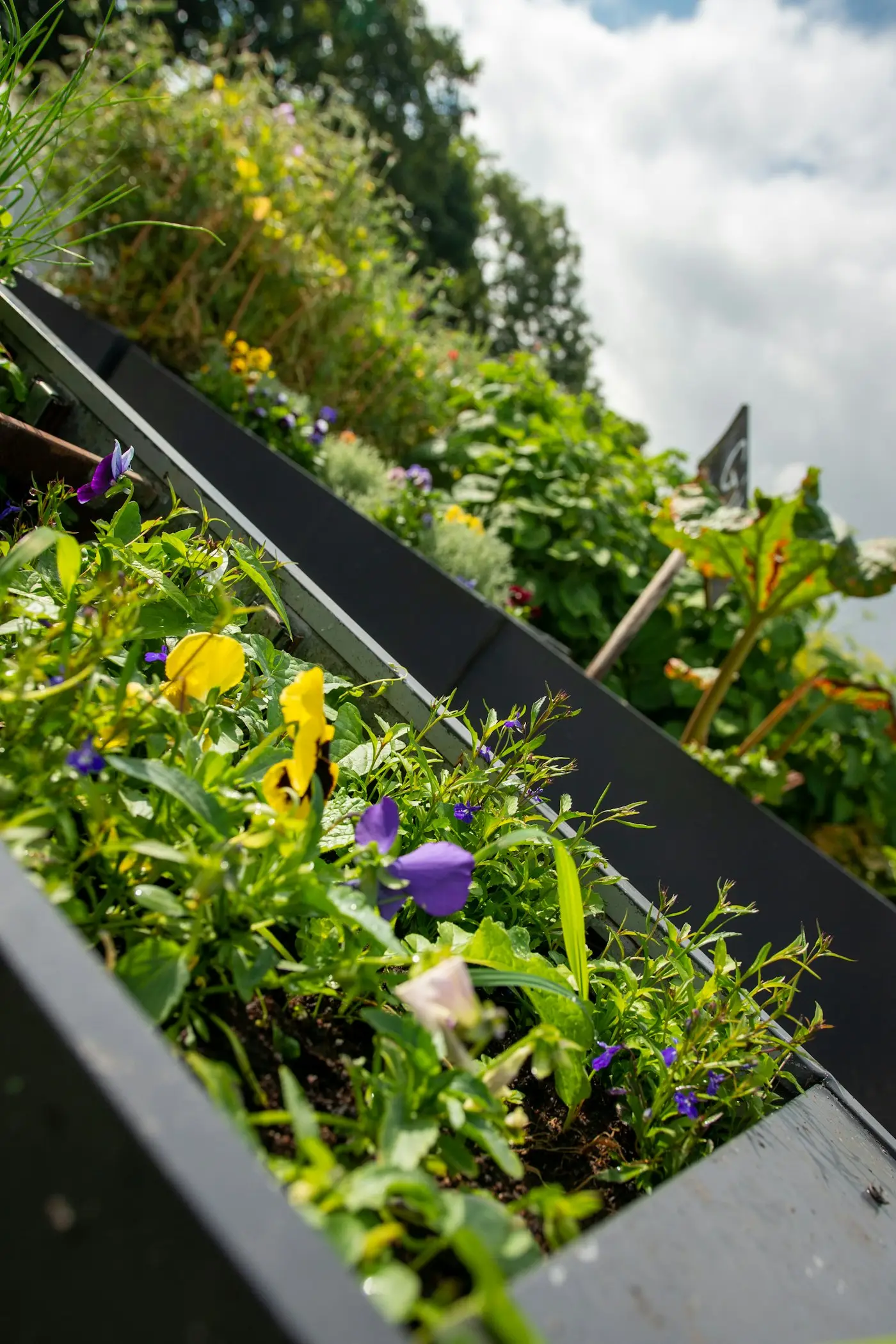
Container gardening is ideal for smaller urban plots, and is popular in Leeds, Bradford and Huddersfield.
Container gardening is not a compromise in Yorkshire - it is, for a large part of the county, simply how gardening works. Leeds, Bradford, Halifax, Huddersfield, Sheffield, and the ring of towns around them are built on terraced housing. Millions of those homes have a small paved back yard, a concrete front step, and no soil garden to speak of. Add to that the growing number of flat conversions, new-build apartments, and holiday cottages across the Dales, the Moors, and the city fringes - all with outdoor spaces measured in square metres, all needing to look presentable without full garden infrastructure - and container growing is not a niche activity. It is the reality for a significant share of Yorkshire homeowners.
The specific challenge in Yorkshire is the winter. Containers are more exposed than garden borders: roots that would survive a Yorkshire frost safely insulated in the ground are far more vulnerable in a pot. Get the container choice and plant selection wrong, and the first hard frost of November will break the pots and kill the plants in a single night. Get it right, and a well-chosen set of containers in a Yorkshire yard looks good every month of the year with very little intervention.
This guide covers container choice for Yorkshire's climate, what to plant season by season, feeding and watering in practice, and some specific advice for holiday let and Airbnb properties where appearance matters and personal attention is limited. For growing vegetables in containers or raised beds, see the growing vegetables in Yorkshire guide.
Why Yorkshire Winters Make Container Choice Critical
Yorkshire's frost-risk period runs from late October to mid-April in most of the county. In elevated positions - the Pennine fringe, the moors above 200m, the exposed ridges around Halifax and Huddersfield - frost can occur any month except July and August. In sheltered urban positions in Leeds city centre or the Don Valley in Sheffield, mild winters sometimes pass without significant frost, but you cannot plan on it.
The problem for containers is not air frost per se - it is the freeze-thaw cycle. Water is absorbed into a porous container wall (terracotta, low-fired ceramic), expands when it freezes overnight, and fractures the pot from the inside. A single hard frost of -5 degrees Celsius can crack a terracotta pot in one night. Over a Yorkshire winter with repeated freeze-thaw events from November to March, even modestly porous containers suffer.
The secondary problem is root exposure. A plant in a container has its roots surrounded on all sides by the pot wall - there is no insulating mass of soil around them the way a border plant enjoys. Roots are more frost-sensitive than above-ground growth. Plants rated frost-hardy in the ground - Agapanthus, for instance - can lose their roots to frost in a container even when the top growth would survive perfectly well if it were garden-planted.
Container Types: What Lasts and What Does Not
| Container type | Frost risk | Weight | Lifespan in Yorkshire | Verdict |
|---|---|---|---|---|
| Standard terracotta | High - absorbs water, cracks in freeze-thaw | Heavy | 2-5 years outdoors in Yorkshire | Needs winter protection or indoor storage |
| Frost-proof terracotta | Low - denser firing reduces water absorption | Very heavy | 10-20+ years | Good but expensive and very heavy |
| Glazed ceramic | Low if glaze is intact | Heavy | 10-20+ years if undamaged | Good choice if glaze is not chipped |
| Fibreglass | None | Light | Indefinite outdoors | Best practical choice for Yorkshire |
| Wooden half-barrel | None (wood insulates roots well) | Heavy when planted | 5-10 years before rot | Good insulation but limited lifespan |
| Plastic / resin | None | Light | 5-15 years depending on UV quality | Practical and cheap; less attractive |
The practical answer for most Yorkshire paved yards: fibreglass containers in a stone, lead, or terracotta finish give you the look of traditional materials without the winter risk. They are also light enough to move indoors or reposition easily. For permanent structural containers (a large statement pot that stays in one spot all year), frost-proof terracotta or glazed ceramic works well and looks better up close. For balconies with weight limits, fibreglass or resin are the only sensible choices.
If you want to keep terracotta in Yorkshire
Raise standard terracotta on feet to keep the base drainage hole clear and prevent the base sitting in water. Wrap the pot body in horticultural fleece from November to March - this is not purely aesthetic; it genuinely reduces the freeze-thaw damage. Alternatively, move terracotta pots into a frost-free shed or greenhouse for winter, replacing them with fibreglass containers for the cold months. Even porous terracotta will last years longer with these simple measures.
What to Plant: Season by Season
Spring (March to May): bulbs, early colour
The easiest way to guarantee spring colour is to plant tulip bulbs in October in deep containers (at least 30cm deep - tulips need depth). Choose late-season tulips such as Queen of Night, Angelique, or the Darwin hybrids that flower May rather than April, avoiding the worst of Yorkshire's late frosts which can brown early-flowering tulips. Layer bulbs with wallflowers (Erysimum) planted above for a double-layer display. Primulas, pansies, and violas fill containers from February through April and are reliably frost-tolerant.
Also in spring: pot-grown hellebores, early narcissus (choose miniature types for small containers), and muscari (grape hyacinth) give good early interest. Move these on to a less prominent position once they go over in late May.
Summer (June to September): the main season
This is when Yorkshire containers do their best work. The long summer days and, in sheltered urban yards, real warmth, suit a wide range of bedding and tender perennials.
- Pelargoniums (zonal geraniums): the single most reliable container plant for Yorkshire summers. Drought-tolerant, long-flowering (May to October), available in a wide colour range. Not fully hardy - bring them in before first frost or treat as annuals. A cool frost-free shed keeps them through winter.
- Fuchsias: excellent in partial shade, which many Yorkshire terrace yards have due to surrounding walls and buildings. Hardy fuchsias (Fuchsia magellanica and its cultivars) can overwinter in situ in mild Yorkshire positions; tender fuchsias need bringing in.
- Begonias (tuberous): superb for shaded positions. Rich colour, long season, no deadheading needed. Lift tubers before first frost, dry, and store in dry compost or vermiculite.
- Calibrachoa and petunias: trailing plants for hanging baskets and the edges of large containers. Both are annuals in Yorkshire - plant fresh from May, compost in October.
- Osteospermum: good for sunny exposed positions - the kind of south-facing terrace yard that bakes in summer. Drought-tolerant, daisy flowers from May to October.
Autumn (September to November): extending the season
Many summer containers look tired by late August. Refreshing them in early September with autumn plants extends the display by 6-8 weeks into November:
- Ornamental grasses - particularly Pennisetum setaceum (fountain grass) and Panicum - give movement and texture through October and November.
- Sedums (Hylotelephium) carry good late colour and attract the last bees of the season through September and October.
- Rudbeckia (black-eyed Susan) is reliably hardy and flowers from August to October. Works well mixed with ornamental grasses in a large container.
- Japanese anemone - elegant, self-sufficient, hardy, and flowers late September to November in sheltered positions.
- Dwarf dahlias: pinch out through summer to keep compact, then let them go for a final display in September. Lift and store tubers before first frost.
Winter (November to February): keeping something alive
Winter containers in Yorkshire need to survive, not thrive. The goal is something that looks presentable from the back door through the darkest months.
- Skimmia japonica: the standout performer for Yorkshire winter containers. Glossy evergreen leaves, red berries from autumn through spring, tolerates shade (which many Yorkshire yards have in winter when the sun is low), genuinely frost-hardy. Plant one male (Skimmia japonica 'Rubella' is a good choice - red flower buds all winter) with two females for berry production.
- Winter-flowering heathers (Calluna and Erica): mounded low-growing evergreens with pink, white, or red flowers from November to March. Fully hardy, good for grouping with other winter plants.
- Hardy cyclamen (Cyclamen coum and hederifolium): flowers through the darkest months, marble-patterned leaves attractive between flowerings. Fully hardy and surprisingly tough.
- Evergreen ivy: trailing out of containers, providing structure and year-round coverage. Variegated forms add light to dark corners through winter.
- Dwarf conifers: structural anchor plants for winter containers. Use as a centrepiece with smaller seasonal plants around the base.
- Winter-flowering pansies (Viola): bred to flower in cold conditions and will flower through mild Yorkshire winters even in January and February, dormant only in the hardest frosts.
Perennial Containers for Yorkshire: Plants That Come Back
Not everything in a container has to be seasonal. Some plants live happily in containers for several years with annual maintenance.
Agapanthus
Agapanthus - the blue or white globe-flowered South African lily - thrives in containers in Yorkshire if the roots are protected November to March. In a large container, a deep mulch or wrapping of bubble wrap or fleece around the pot is usually sufficient in a sheltered city yard. In exposed positions above 150m elevation, bring the container into a frost-free shed for winter. After 3-4 years in the same container, divide and repot in spring. Drought-tolerant once established - the restriction of a container suits Agapanthus's tendency to flower more freely when its roots are slightly confined.
Japanese maples (Acer palmatum)
Japanese maples in containers are magnificent: spectacular spring and autumn colour, interesting winter silhouette. They need two things in Yorkshire: protection from the east wind (which scorches the emerging spring leaves) and a sheltered position out of the coldest winter exposure. The roots are frost-sensitive in containers - mulch the surface and wrap the pot in winter. Water regularly in growing season; Japanese maples in containers are surprisingly thirsty. Do not let the container dry out in summer.
Ornamental grasses: Hakonechloa macra
Hakonechloa macra (golden Japanese forest grass) is the ideal permanent container plant for a shaded Yorkshire yard. It tolerates the shade typical of enclosed terrace spaces, provides cascading gold-green texture all summer, and is reliably hardy in Yorkshire winters. The 'Aureola' cultivar gives the most striking variegation. Divide every 3 years in spring to keep it vigorous.
Pittosporum
Pittosporum tenuifolium and its cultivars (particularly 'Silver Queen' and 'Tom Thumb') make excellent long-term container shrubs in sheltered Yorkshire positions. Evergreen, neat habit, small fragrant spring flowers. Hardy down to about -10 degrees Celsius - reliable in most of Yorkshire's cities but a risk in elevated or very exposed positions. Clip lightly in late spring to maintain shape.
Feeding and Watering: The Practical Reality
Containers dry out much faster than garden soil. A large container in full sun during a Yorkshire summer can need watering daily. The test: push a finger 2cm into the compost - if it feels dry at that depth, water thoroughly until it drains freely from the bottom. For most Yorkshire terrace yards, which are often sheltered from rain by surrounding walls, relying on rainfall alone will kill plants in summer.
Reducing the watering burden
- Self-watering pots with a reservoir in the base are worth considering for busy households or holiday properties. A good reservoir lasts 2-4 days in a warm Yorkshire summer.
- Water-retaining gel crystals (e.g. Swell-Gel) mixed into the compost at planting time absorb and release water over time. Most effective in the first season; they degrade over time.
- Slow-release granular fertiliser (Osmocote is the best-known brand) mixed into the compost at planting time significantly reduces the feeding burden. One application at potting lasts 5-6 months through the growing season.
Feeding
One pest worth knowing about in Yorkshire container gardens is vine weevil. The grubs feed on plant roots in the compost from late summer through winter, and the first sign is usually a healthy-looking plant that wilts and collapses suddenly. Annual repotting lets you check the compost for the white C-shaped grubs. For full identification and treatment detail, see the vine weevil in Yorkshire gardens guide.
Container compost has a finite nutrient supply - it is exhausted within 6-8 weeks of planting. After that, plants depend on supplementary feeding. A liquid tomato fertiliser (high in potassium and phosphorus, which promotes flowering) applied every 10-14 days through the growing season is the standard approach for flowering containers. Balanced liquid feed (equal N-P-K) suits foliage plants and newly planted containers during establishment. Permanent plants (Japanese maples, Agapanthus, shrubs) benefit from a slow-release general fertiliser (Osmocote or similar) applied in April and again in July.
Container Gardening for Holiday Lets and Airbnb Properties
If you own a holiday cottage in the Dales, a short-let flat in Harrogate, or an Airbnb conversion in the North York Moors, container appearance matters for guest perception. First impressions include the outdoor space, and a tired or empty container at the front door is a small but real signal. The challenge: you are not there to water and maintain.
The practical approach for holiday lets:
- Keep it simple. Two or three large containers with reliable low-maintenance plants outperform a dozen fussy small pots. Skimmia japonica, hardy evergreen grasses, and a single bold seasonal display (summer pelargoniums, autumn heathers) are maintainable without daily attention.
- Self-watering pots for summer. For a holiday let where guests come and go, self-watering containers with a reservoir visible to guests (and instructions to top it up) provide 3-4 days of drought protection between fills.
- Twice-yearly professional replanting. A spring visit (late April or May) to replant summer annuals, and an autumn visit (September or October) to swap for hardy evergreens and winter interest. Between these, a guest who waters as requested is sufficient for most maintenance.
- Annual maintenance visit. A local gardener visiting once or twice per year for feeding, dead-heading, and general tidying costs £60-120 per visit and keeps the containers in significantly better condition than no maintenance at all.
What It Costs: Container Gardening Pricing Guide
| Item | Typical cost range | Notes |
|---|---|---|
| Ready-planted summer hanging basket or planter (retail) | £15-40 each | Garden centre planted baskets; quality varies widely |
| Professional initial planting of a terrace or courtyard (4-8 containers) | £80-200 | Includes sourcing and planting; plants charged on top at cost |
| Seasonal container swap (spring or autumn visit) | £60-120 per visit | Labour only; plants charged at cost. Most effective as a twice-yearly service |
| Fibreglass container (medium, 40-50cm) | £35-80 | Quality varies; buy from specialist garden suppliers not DIY sheds for durability |
| Frost-proof terracotta (large, 50-60cm) | £60-200+ | Significant weight; delivery cost often adds £20-40 |
| Slow-release fertiliser granules (1kg) | £8-14 | Osmocote or equivalent; one application per container per season |
For more on what a regular gardening service costs across Yorkshire, see the garden maintenance services page.
Related reading
- Growing vegetables in Yorkshire - including container veg
- Raised bed vegetable gardening in Yorkshire
- Low-maintenance garden ideas for Yorkshire
- Autumn garden care in Yorkshire - preparing containers for winter
- Winter garden care in Yorkshire - what to do (and what not to do)
- Garden maintenance services across Yorkshire
Frequently Asked Questions
What containers last best in Yorkshire winters?
Fibreglass is the most practical year-round choice: no frost risk, lightweight, and available in convincing stone, lead, and terracotta finishes. Glazed ceramic is frost-proof when the glaze is undamaged. Standard terracotta cracks in freeze-thaw cycles unless raised on feet and wrapped November to March. Frost-proof terracotta is reliable but very heavy and significantly more expensive.
What is the easiest thing to grow in pots in Yorkshire?
Pelargoniums for summer colour - drought-tolerant, long-flowering, reliable. Skimmia japonica for year-round structure and winter interest - shade-tolerant, frost-hardy, and attractive every month. Hakonechloa macra (golden forest grass) for a permanent shaded yard container that needs minimal attention. These three cover most situations without demanding daily attention.
Can I get a gardener to look after my containers?
Yes. A twice-yearly container swap service (spring and autumn) is the most efficient approach - a local gardener replants for the new season, takes away spent plants, and leaves the containers looking fresh. Costs £60-120 per visit plus plant materials. Between visits, basic watering is all that is needed for most summer and winter container selections. Some gardeners also offer monthly maintenance visits for feeding, deadheading, and top-up planting if needed.
What do I do with tender plants in October in Yorkshire?
Move them before first frost - typically late October in most of Yorkshire. Pelargoniums, tender fuchsias, and begonia tubers go into a cool frost-free shed or garage (minimum 3-5 degrees Celsius, light not essential for dormant plants). Water sparingly through winter - once every 2-3 weeks for pelargoniums and fuchsias. Dahlia tubers: lift, dry for a few days, then pack in dry compost or vermiculite in a cool frost-free place. Annual bedding (petunias, calibrachoa) is not worth overwintering - compost and replant fresh in May.
Want help getting your Yorkshire containers right?
Whether it is a terrace yard in Leeds, a holiday cottage in the Dales, or a flat balcony in Sheffield - we connect you with local gardeners who know Yorkshire's seasons and can keep your containers looking good all year.
Get a free assessment