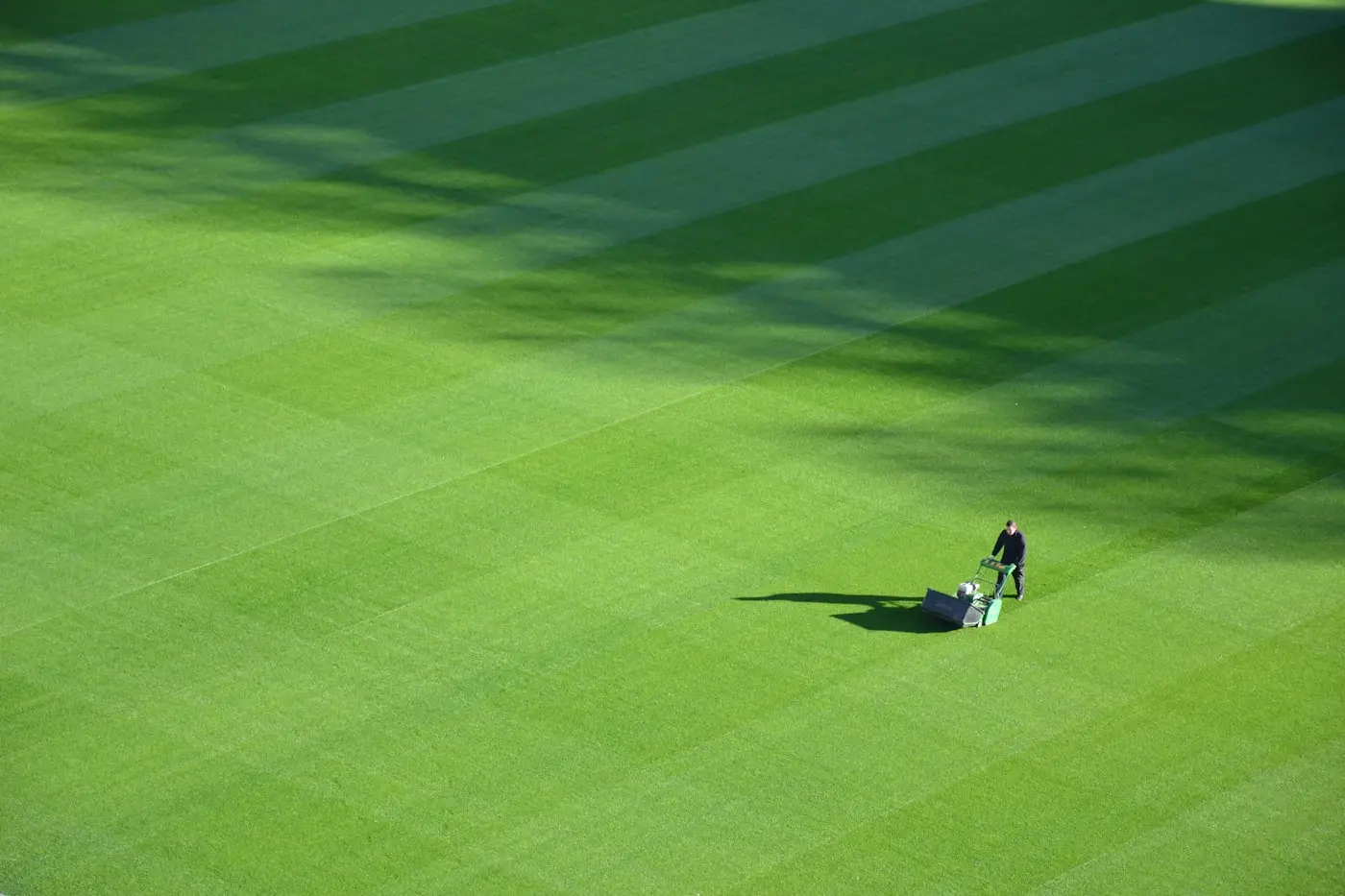
Grass growth and cutting schedules vary across Yorkshire microclimates, and lawn care professionals in York, Harrogate, and Wakefield can advise on the timing that suits your soil type and aspect.
Most Yorkshire lawns should see their first cut of the year in late March to mid-April, and their last cut in October. That gives you roughly seven months of mowing season, compared with nine or ten months in southern England. National lawn care guides rarely acknowledge this gap, which is why so many Yorkshire homeowners either start too early on waterlogged clay or stop too late and leave the lawn long and soft going into winter. This guide works through the calendar month by month, with specific notes for the different zones across the county.
For the full annual lawn care picture, including fertilising, aeration, and moss treatment, see the lawn care guide for Yorkshire. This guide focuses specifically on mowing timing and technique.
Why Yorkshire is Different from National Mowing Guides
The standard UK advice is to begin mowing when soil temperature reaches 8 degrees Celsius. That threshold is correct as a principle, but it misses two things that matter enormously in Yorkshire.
First, Yorkshire clay. The heavy clay soils that dominate West Yorkshire, South Yorkshire, and much of the Vale of York retain cold far longer than sandy or loam soils. An air temperature of 8C can coexist with saturated, semi-frozen clay at root level. A mower on wet clay does not just cut grass - the wheels compress the soil, create ruts, damage the soil structure, and set up the compaction and drainage problems that fuel moss growth later in the year. The 8C soil temperature rule assumes the soil is workable. Yorkshire clay frequently is not, even when the thermometer says otherwise.
Second, altitude and geography. Yorkshire is not one climate. The Vale of York - York itself, Harrogate, Thirsk, Easingwold - sits in one of the UK's warmest and driest inland zones. In a good year, these lawns can be ready for a first cut by the third week of March. The Pennine fringe west of Leeds, Bradford, and Huddersfield can easily be three to four weeks behind that. The Moors edge around Helmsley, Pickering, and Whitby is different again - colder springs, more persistent frost, and a growing season that can be noticeably compressed versus the lowlands.
The wet-lawn test
Before taking the mower out any time from March through to May, walk across the lawn in normal shoes. If your feet sink noticeably, if the ground gives way under your weight, or if you can see your footprints in the surface after you have walked on it - wait another week regardless of the temperature. The same test applies after any heavy rain at any point in the season. Yorkshire clay has a long memory for compaction damage.
Month-by-Month Mowing Calendar for Yorkshire
The following calendar applies to a typical household lawn on or near clay soil at low to moderate altitude (under 200 metres). Adjust later by two to four weeks for high-ground gardens on the Pennines, Dales, or Moors fringe.
| Month | Mow? | Cutting height | Notes |
|---|---|---|---|
| January | Almost never | 75mm+ if at all | Only in an unusually dry, mild spell. Most Yorkshire years: leave it. |
| February | Rarely | 75mm+ | Ground usually still too wet or frost-affected. Wait. |
| March | Watch for first growth | 60-65mm | Vale of York / Harrogate: late March possible in a good year. Don't scalp. Clay must be firm. |
| April | Yes, weekly by mid-April | 50-60mm | Proper season starts. Drop height gradually. Still raise for any wet spell. |
| May | Yes, weekly minimum | 40-50mm | Peak growth begins. If you miss a week, cut at a higher setting first to avoid scalping. |
| June | Yes, weekly | 35-45mm | Ryegrass varieties (dominant in Yorkshire mixes) grow fast. Don't miss weeks. |
| July | Yes, weekly | 35-45mm | In dry spells, raise to 45-50mm and leave clippings to reduce moisture loss. |
| August | Fortnightly usually fine | 40-50mm | Growth slows. Extended dry spells may stop growth entirely. Don't cut just to cut. |
| September | Fortnightly or 3-weekly | 40-50mm | Still growing but slowing. Good time for scarification if due - see below. |
| October | Final cuts | 50-60mm | Start raising height. Aim to finish by late October. Clear leaf fall before cutting. |
| November | Usually done | -- | Pennines / Dales / Moors edge: finished by early-to-mid October. Lowlands: only if growth is still active. |
| December | No | -- | Leave it alone. Walking on frozen or waterlogged clay causes structural damage. |
The First Cut of the Year
The first cut sets the lawn up for the rest of the season, which means getting it wrong costs you for months. There are four rules that apply regardless of when you start.
Rule 1: Never cut wet
This matters on any lawn but is critical on Yorkshire clay. Mower wheels on wet clay create ruts that do not recover quickly, and the compaction underneath them restricts drainage for months. If you have to press your heel into the lawn to check and it leaves a visible impression, it is too wet. The grass will wait another week. The damage from cutting wet will not.
Rule 2: Do not scalp the first cut
The temptation in spring is to cut low to get the lawn looking tidy after a winter of growth. Resist it. The first cut of the year should be at 60mm minimum. Drop the height by 5mm increments over two to three subsequent cuts until you reach your summer target height. Cutting from 80mm to 30mm in one pass scalps the grass, removes the leaf area that fuels root development, and creates brown patches that take weeks to recover.
Rule 3: Check for winter damage before mowing
Walk the lawn in March before the first cut and look for bare patches, areas of standing water, frost heave, and moss encroachment. Winter on Yorkshire clay frequently produces all four. Bare patches from winter moss die-off are an opportunity for repair: scratch the surface lightly and overseed before you start the mowing season. This is far easier to do before the grass has grown back around the edges. See the lawn seeding guide for what to use and when to sow.
Rule 4: Scarify and aerate before the season begins if they are due
If your lawn had significant moss or thatch last year, scarification and aeration done in early spring (before the main mowing season starts) give the lawn a reset before it puts energy into summer growth. This is the spring alternative to autumn renovation. It is less effective than autumn treatment but far better than leaving compacted thatch in place for another full season.
Peak Season Mowing (May to July)
Yorkshire grass grows fast in May and June. The ryegrass varieties that dominate most Yorkshire lawn mixes - chosen for their hardiness on clay-heavy, higher-rainfall soils - are fast-growing when conditions are right, and conditions are right from May through to mid-July. Missing a week in May can mean the grass has gone from 40mm to 70-80mm, at which point cutting back to 40mm in one pass removes too much green leaf and causes the "yellowing" effect that people mistake for disease or drought.
The one-third rule is worth committing to: never remove more than one-third of the grass height in a single cut. If you come back after two weeks and the grass is 70mm, cut to 47mm. Come back four days later and drop to 40mm. It takes more visits but the lawn stays consistently healthier through the season.
In July dry spells, which affect the Vale of York particularly, raise the cutting height slightly and consider leaving clippings on the surface rather than collecting them. The clippings act as a light mulch that reduces surface moisture loss. On Yorkshire clay that drains poorly, mulching clippings in wet conditions has the opposite effect - they mat on the surface and promote moss - so this is specifically a dry-spell technique.
The Last Cut of the Year
Getting the autumn exit right matters as much as getting the spring entry right. Three rules apply.
Aim for late October, not November
It is tempting to keep mowing into November if the grass is still growing. Yorkshire has mild autumns most years, and there is usually some growth visible through October. But cutting into November leaves the grass short going into the cold months, which removes the insulating effect of leaf area and leaves the soil surface exposed to frost and moss colonisation. Finish the season at 50-60mm, ideally by the last week of October. Higher-ground gardens on the Pennines, Dales, or Moors fringe should aim to finish by mid-October.
Clear leaf fall before cutting
Autumn on Yorkshire clay means leaves from beech, oak, ash, and sycamore lying on wet grass for weeks. Mowing through leaf cover does not remove leaves - it shreds them and leaves wet fragments that sit on the surface, mat together, exclude light from the grass underneath, and create exactly the conditions moss needs to establish. Clear leaves first, then mow. If the leaf fall is heavy, consider a separate leaf-clearing visit before each mowing visit through October.
Allow two weeks after iron sulphate moss treatment before the final cut
If you have applied iron sulphate or a combined weedkiller and moss killer in autumn - which is standard practice for Yorkshire clay lawns heading into winter - wait at least two weeks before the final mow of the year. The moss needs time to die fully and turn black before you mow over it. Mowing through freshly killed moss that has not fully dried out just spreads it around. Let it blacken, then mow. Then, if you are doing a full autumn renovation, see the moss treatment guide for the scarification step that should follow.
Moss, Clay, and the Mowing Connection
Moss is a persistent problem on Yorkshire clay lawns, and mowing timing directly affects how bad it gets. Mowing on wet clay compacts the soil, which reduces drainage, which keeps the surface moist for longer, which is exactly the environment moss prefers. Cutting too short going into winter removes frost protection and leaves bare soil patches where moss colonises faster than grass can recover in spring.
Mowing discipline alone does not fix a moss problem - it requires moss treatment, and usually scarification and aeration as part of a proper renovation cycle. But consistent mowing at the right height and in the right conditions is what stops a treated lawn from reverting within two seasons.
Iron sulphate and mowing: the timing conflict
Never apply iron sulphate if a gardener takes it on of mowing. The mowing stresses the grass at the same time as the iron sulphate is being absorbed through the leaf. Wait at least a day after mowing before applying, and then wait two full weeks after application before mowing again. This gives the moss time to die and the grass time to recover from both the treatment and the cut. Getting this sequence wrong is one of the most common reasons Yorkshire lawn moss treatments produce disappointing results.
Hiring a Gardener for Regular Mowing
Fortnightly mowing contracts are the standard model across Yorkshire and they work well for most household lawns. A typical fortnightly contract runs £25-45 per cut for a standard back garden, depending on size, access, and whether clippings are collected and removed. Some gardeners price by the hour (£25-35/hr is the Yorkshire range for 2026 - see the gardener cost guide for detail), which works if your lawn is unusual in shape or if mowing is done alongside other tasks as part of a broader visit.
When setting up a mowing contract for a Yorkshire clay garden, there are two things worth asking specifically.
First: will the gardener skip a visit or adjust timing if the ground is too wet? A rigid calendar rota that puts a mower on waterlogged clay every two weeks regardless of conditions is creating compaction problems. A good gardener knows this and adjusts. A mowing-only contractor on a price-per-cut model may not have the same incentive.
Second: will clippings be collected or mulched, and does the gardener adjust this by season? On Yorkshire clay, mulching clippings is fine in dry conditions but causes surface mat problems in wet periods. The clippings need to come off when the lawn is wet. Ask before agreeing to a mulching-only arrangement.
For our grass cutting service across Yorkshire, we match households with experienced local gardeners who know the difference between clay soils in the Vale of York and the Pennine fringe. See also lawn mowing service prices in Yorkshire for a full breakdown. The garden maintenance service covers mowing alongside other seasonal tasks for homeowners who want a single managed relationship rather than a mowing-only contract.
Frequently Asked Questions
When should I start mowing my lawn in Yorkshire?
Late March to mid-April for most of Yorkshire. The Vale of York and Harrogate area can be ready in late March in a good year. The Pennines fringe, Dales, and Moors edge are typically three to four weeks later. Wait until the ground is firm enough not to leave ruts under the mower wheels. First cut at 60-65mm regardless of when you start.
What height should I cut my Yorkshire lawn?
First cut: 60-65mm. Through April: drop gradually to 50-60mm. Peak season (May to July): 35-45mm for a standard household lawn. In dry spells, raise by 5-10mm. Going into autumn: raise back to 50-60mm for the final cuts of October. Never remove more than one-third of the grass height in a single pass.
When is the last cut of the year for Yorkshire lawns?
Late October for most of Yorkshire, with the final cut at 50-60mm to protect roots from frost. Higher-ground gardens on the Pennines, Dales, or Moors fringe: aim to finish by mid-October. Do not cut short going into winter. Clear leaf fall before each autumn cut. If you have applied moss treatment, wait two weeks before the final cut.
Why does Yorkshire clay affect when I can mow?
Clay retains water and cold far longer than lighter soils. You can have 8C air temperature but still have saturated, compaction-prone clay at root level. Mowing wet clay creates ruts, compacts the soil, restricts drainage, and sets up the conditions that let moss dominate. The test: if your feet sink noticeably on the lawn, it is too wet to mow regardless of the temperature.
Should I hire a gardener for regular lawn mowing in Yorkshire?
Fortnightly grass cutting contracts at £25-45 per cut work well for most Yorkshire households. Ask whether the gardener adjusts for wet conditions (important on clay), and whether clippings are collected in wet weather rather than mulched. For broader garden upkeep alongside mowing, see the garden maintenance service. For mowing-specific enquiries, see lawn mowing services in Yorkshire.
Related reading
- Lawn care in Yorkshire - full seasonal guide
- Lawn scarification in Yorkshire
- Lawn aeration in Yorkshire
- Lawn moss treatment in Yorkshire
- Lawn seeding and overseeding in Yorkshire
- Lawn mowing services across Yorkshire
- How much does a gardener cost in the UK?
- Garden maintenance across Yorkshire
Find a local gardener for regular mowing
Tell us your postcode and we put your enquiry in front of an experienced local gardener. No call centres, no national franchises.
Need a Yorkshire gardener?
Tell us what you need and we put your enquiry in front of a local gardener. No call centres, no national franchise - direct contact with someone who knows Yorkshire gardens.
Get a free assessment