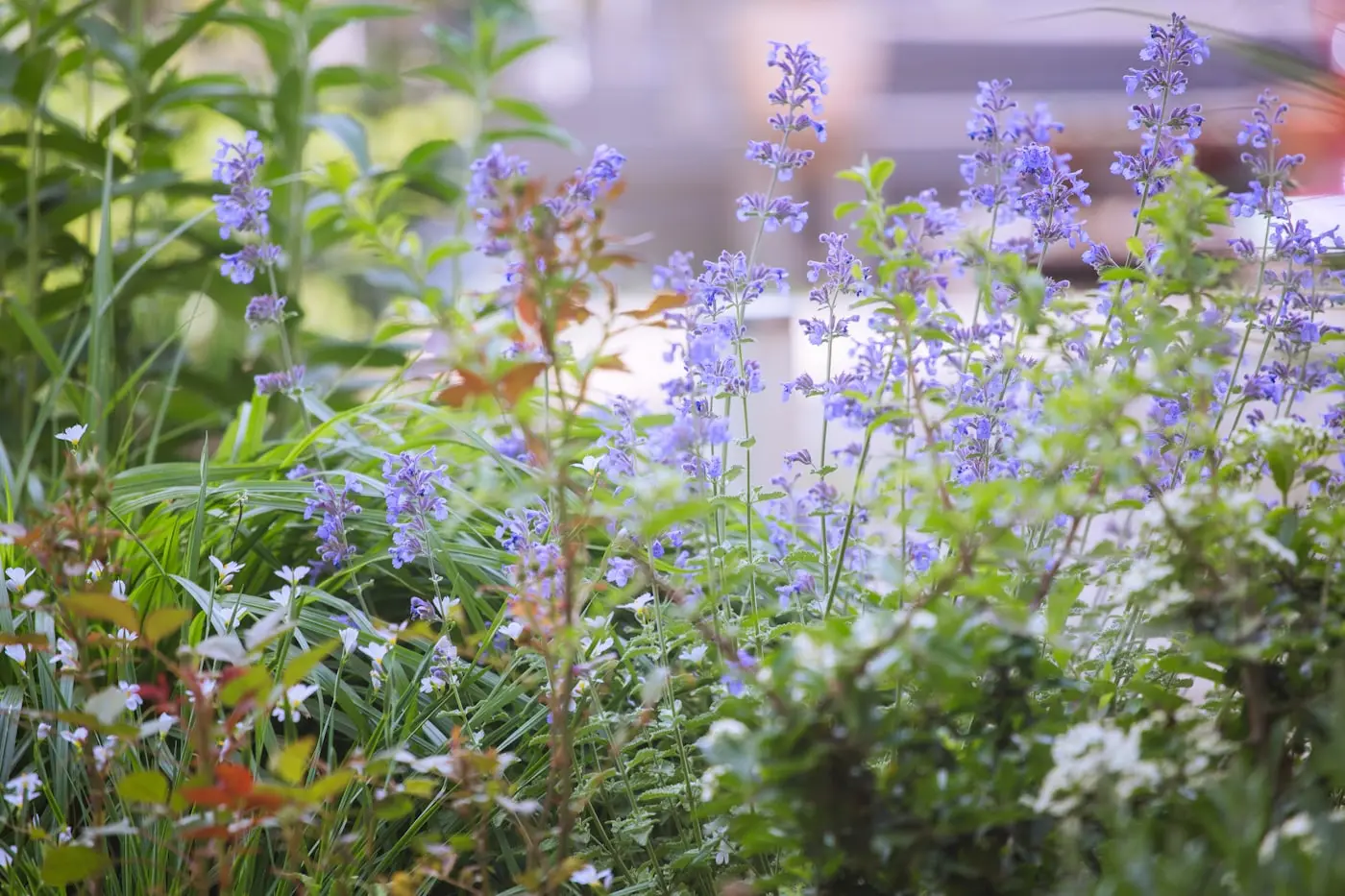
Autumn colour is celebrated in gardens right across Yorkshire, from Ripon to Knaresborough and Northallerton.
September and October in Yorkshire can be genuinely beautiful gardening months - long, low-angled light, cooler temperatures that mean flowers last longer than in summer heat, and the rich tawny colour palette of the season. But most garden borders fade fast after August. The delphiniums are over, the roses are giving their last few blooms, and if you have not planned specifically for autumn colour, there is not much left. The solution is deliberate autumn planting: a selection of perennials, half-hardy annuals, and late-season bulbs that carry the garden from September through to the first frosts. In Yorkshire, those frosts typically arrive in mid-October to early November in most locations, giving you a genuine six to eight week autumn flowering season to play with.
The best autumn flowering plants for Yorkshire gardens
Asters (Symphyotrichum species)
Asters are the defining perennial of the Yorkshire autumn border. Flowering from late August through October in most positions, they produce clouds of small daisy flowers in purple, violet, pink, and white that are among the most attractive and insect-rich plantings of the autumn garden. The main challenge for Yorkshire gardeners is powdery mildew, which affects many aster cultivars in the humid conditions of a Yorkshire late summer. The key is variety selection: choose mildew-resistant cultivars from the outset rather than attempting to manage mildew on susceptible varieties.
The best mildew-resistant asters for Yorkshire include Symphyotrichum 'Little Carlow' (compact, violet-blue, outstanding performance in northern gardens), Aster x frikartii 'Monch' (lavender-blue, long-flowering, reliable), and Symphyotrichum 'Veilchenkonigin' (taller, violet, good in clay soil). Avoid the old tall Michaelmas daisy varieties in the novi-belgii group unless you are prepared for a mildew management programme. Plant in spring, divide every three years to maintain vigour, and give them a well-drained to moderately retentive position. On Yorkshire clay, incorporating grit around the planting zone improves drainage and reduces mildew risk by improving air circulation around the base of the plant.
Dahlias
Dahlias are the flamboyant counterpoint to the daisy simplicity of asters - complex, large-flowered, and available in a range of that moves from refined dinner-plate forms to spiky cactus types to the spherical pompons. They flower from late July or August through to the first frost, making them valuable for both the late summer and the autumn garden. In Yorkshire, dahlias need to be started in spring (tubers into pots under cover in April, hardened off and planted out after the last frost in late May) and either lifted after the first autumn frost or protected in situ with a thick mulch.
For most Yorkshire gardeners, lifting tubers in October and storing them through winter is the reliable approach. After the first frost blackens the foliage, cut stems back to 10cm, carefully fork up the tubers, shake off excess soil, and allow them to dry for several days in a greenhouse or shed. Store packed in barely damp compost or vermiculite in a frost-free location through winter. The best varieties for Yorkshire's conditions are those that flower freely and are not too dependent on high heat to initiate flowering. Bishop of Llandaff (red, single-flowered, dark foliage), Jowey Winnie (pompon, pink, very floriferous), and Cafe au Lait (large informal decorative, cream-pink) are all reliable performers in Yorkshire gardens.
Rudbeckia (black-eyed Susan)
Rudbeckia is one of the most reliable late-season border plants for Yorkshire and one of the most underused. The classic gold-and-black daisy flowers appear from July and continue without pause until the first hard frost. Rudbeckia fulgida var. sullivantii 'Goldsturm' is the benchmark cultivar - compact (60cm), extremely free-flowering, and genuinely tough in Yorkshire's clay soils and variable seasons. Rudbeckia hirta cultivars (typically grown as annuals) produce larger flowers in a wider range of colours including mahogany, bronze, and bicolours that complement the umber and russet tones of the Yorkshire autumn.
Both species are tolerant of Yorkshire's wetter growing conditions, which distinguishes them from some American prairie species that prefer drier soils. Planted in spring and left to self-seed (which 'Goldsturm' does modestly and tidily), a rudbeckia colony becomes progressively more floriferous each year without becoming invasive. Cut back to the ground in February rather than autumn - the seed heads are attractive through winter and provide food for finches in the colder months.
Sedum and hylotelephium
The upright sedums (correctly Hylotelephium for the border perennial types) carry their flat-topped flowerheads from August through October, transitioning from bud to flower to russet seedhead in a season-long sequence of interest. 'Herbstfreude' (Autumn Joy) is the most widely grown, with dusty pink flowers turning to copper-red as the season progresses. 'Purple Emperor' has outstanding dark foliage from spring through summer before the dusky pink flowerheads open in August. 'Matrona' is taller with pink flowers and reddish stems throughout the growing season.
All are genuinely suited to Yorkshire conditions, tolerating the wet winters and cool summers of the county without difficulty. They prefer well-drained soil - the Magnesian Limestone gardens near Wetherby, Boston Spa, and the eastern fringe of the county are ideal - but they perform adequately on improved Clay Measures soil with good organic matter incorporated. The seedheads remain attractive through winter and should be left until February before cutting back.
Japanese anemone (Anemone x hybrida)
Japanese anemone is one of the most reliable and attractive plants for the Yorkshire autumn border. Flowering from August through October in single or semi-double white, pale pink, or deeper pink forms, it is fully hardy across the county, thrives in the partial shade that many Yorkshire gardens offer (particularly east-facing gardens that receive morning sun only), and handles Yorkshire clay soil without difficulty. 'Honorine Jobert' (white, single, 120cm) is the most elegant and widely available. 'Konigin Charlotte' (semi-double, soft pink) is slightly shorter and very reliable. 'September Charm' is a good single-flowered pink that has performed well in Yorkshire trial gardens.
The main consideration with Japanese anemone is its running root system. Once established, it spreads through the border via underground rhizomes. This is a virtue in a large border where ground cover is wanted, but it can be problematic in a smaller garden where it may crowd out neighbouring plants. Contain it with a buried barrier of solid plastic edging if the garden is small, or position it where its spreading habit fills a difficult area - under trees, in a dry shady corner, on a bank.
Helenium (sneezeweed)
Helenium bridges the late summer and autumn seasons, typically flowering from July through September in Yorkshire with some cultivars continuing into October. The rich, warm colour palette - golds, bronzes, russets, and mahogany - mirrors the changing foliage of the season and makes helenium one of the most aesthetically satisfying late-season choices. 'Moerheim Beauty' (rich bronze-red) and 'Sahin's Early Flowerer' (gold and russet, earlier than most, starting in June in Yorkshire) are both reliable and widely available.
Helenium loves moisture-retentive soil - which is a genuine advantage in Yorkshire's Clay Measures gardens - and it performs particularly well in the lower-lying, moister gardens of the Aire and Calder valleys. Divide every two to three years to maintain vigour and floriferousness. 'Chelsea chop' - cutting the stems back by one third in late May - delays and prolongs flowering on vigorous varieties, spreading the display from July into October.
The late-summer gap: August in Yorkshire
August is the month most consistently underplanted in Yorkshire borders. June and July get the attention (roses, delphiniums, lupins), and September is correctly identified as an autumn colour target, but August is often a gap between the two. Helenium, rudbeckia, and the earlier-flowering dahlias all cover this gap. So does Echinacea purpurea, which flowers from July through September in Yorkshire. Planning specifically for August - listing what is flowering in your border in that month and filling the gaps - is one of the highest-value border improvements a Yorkshire gardener can make.
Planting in spring for an autumn show
Most of the best autumn-flowering perennials for Yorkshire need to be in the ground by late spring to flower well in their first season. Plant asters, helenium, rudbeckia, and Japanese anemone from April to June for flowering that same year. Dahlias should go out after the last frost date - in most Yorkshire gardens, this means late May to early June. Starting dahlia tubers in pots under cover in April, then hardening off and planting out in late May, gives plants the longest possible growing season before the Yorkshire autumn.
For perennials bought as bare-root plants or lifted divisions from other gardens, autumn planting (September to October) can work well - the soil is still warm enough for root establishment, and the plants can settle in before the growing season begins in spring. Container-grown plants from a nursery can be planted at any point in the growing season, but summer planting requires consistent watering until the roots are established. Yorkshire's variable summer rainfall means this is not always reliable without supplementary watering.
Autumn bulbs for spring flowering: the Yorkshire planting window
While planning for autumn colour, it is worth planting for next spring at the same time. Autumn is the season for planting spring-flowering bulbs, and the timing in Yorkshire differs slightly from general UK advice due to the county's soil temperatures and frost risk. For detailed guidance on timing and species selection, the Yorkshire bulb planting guide covers the full season. The key Yorkshire-specific points:
- Tulips: plant in October to November in Yorkshire, not September. Yorkshire's clay soils stay warm longer than lighter soils, increasing tulip fire risk if planted too early. Waiting until late October is genuinely good practice in the county.
- Narcissus and alliums: plant from late September. These are less sensitive to soil temperature and can go in earlier than tulips.
- Crocus, muscari, and other small bulbs: plant from September through October, 5 to 8cm deep in well-drained positions. On heavy Yorkshire clay, incorporate grit in the planting zone for crocus and other small bulbs that prefer sharp drainage.
Cutting back and soil preparation for next year
The question of when to cut back autumn-flowering plants divides Yorkshire gardeners. The traditional approach is to clear the border in late autumn - cutting everything back in October or November, removing debris, and leaving the border tidy through winter. The ecological approach, now strongly recommended by conservation bodies including the RHS, is to leave seed heads and spent stems standing through winter, providing habitat for beneficial insects and food for seed-eating birds, then cutting back in February.
In the Yorkshire context, the ecological approach has an additional practical argument: spent stems and seed heads provide some insulation and protection to the crowns of borderline-hardy plants - dahlias left in situ, tender salvias in sheltered spots - through the winter. Cutting back in November exposes those crowns to potentially severe January and February frosts without any protection. Leaving the debris until February, then cutting back as growth begins to emerge, gives crowns the maximum winter protection.
The exception is any diseased material - dahlia tubers affected by rot, aster stems showing mildew, any obviously pest-damaged growth. Remove diseased material promptly rather than leaving it to overwinter and spread spores or larvae. For all other material, the February cut-back is the better practice in Yorkshire's climate.
For a comprehensive guide to the tasks that keep a Yorkshire garden performing well into the season, the autumn garden jobs guide and the autumn garden care guide both cover the full programme. For professional help with border maintenance through the season, the garden maintenance service can be scheduled for quarterly or monthly visits to keep planting and cutting on schedule.
Frequently Asked Questions
When do the first frosts typically arrive in Yorkshire?
In the sheltered eastern vale (York, Beverley), late October to early November. On the Pennine foothills and at elevation, late September to mid-October. Dahlias should be lifted or protected by mid-October in most Yorkshire gardens; tender plants need protection earlier in higher positions.
Do dahlias survive Yorkshire winters in the ground?
Not reliably without protection. Yorkshire's cold, wet winters cause tuber rot in most gardens. The reliable approach is to lift tubers after the first frost, dry, and store in frost-free conditions, then replant in May.
What are the best aster varieties for Yorkshire?
Symphyotrichum 'Little Carlow', Aster x frikartii 'Monch', and Symphyotrichum 'Veilchenkonigin' are the most mildew-resistant and reliable in Yorkshire conditions. Avoid the tall Michaelmas daisy varieties in the novi-belgii group, which are the most mildew-prone.
When should I plant autumn bulbs in Yorkshire?
Tulips: late October to November. Narcissus and alliums: from late September. Crocus and small bulbs: September through October. Tulip planting is deliberately delayed in Yorkshire because warm autumn soils increase the risk of tulip fire disease.
Does Japanese anemone grow well in Yorkshire?
Yes - it is one of the most reliable autumn perennials for Yorkshire, flowering August through October, fully hardy, shade-tolerant, and happy on clay soil. The main consideration is its spreading habit; contain it where this would be problematic.
What is the difference between sedum and hylotelephium for autumn colour?
Botanically, the upright border sedums used for autumn colour have been reclassified as hylotelephium. 'Herbstfreude', 'Purple Emperor', and 'Matrona' are all hylotelephium. The name 'sedum' is still widely used in UK garden centres. Both names refer to the same plants.
Get a border planted for autumn colour.
Our borders and planting service handles everything from design to soil preparation to plant installation across Yorkshire.
Get a quote