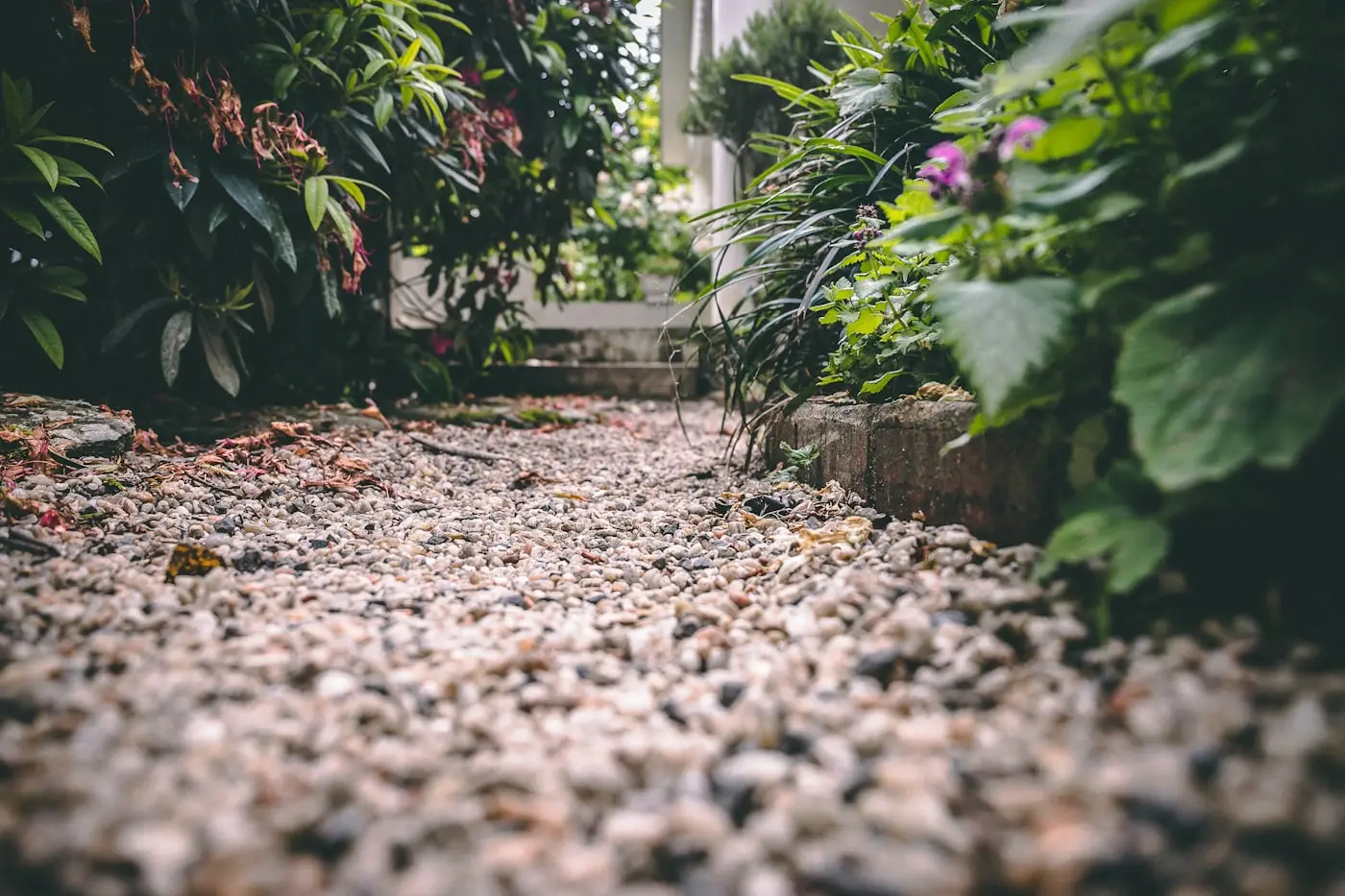
Block paving is a popular driveway choice for homeowners across Yorkshire, including in Leeds, Sheffield and Doncaster.
Block paving is one of the most popular choices for driveways and garden paths across Yorkshire, and it is not hard to see why. The individual block format allows for a range of patterns and styles, individual blocks can be lifted for access to pipes or cables below, and the finished surface suits the older housing stock of Yorkshire's towns and cities well. A clay brick driveway in front of a Victorian terrace in Headingley or a sett-paved path through a Harrogate garden looks as if it belongs there in a way that plain concrete never quite manages.
But block paving in Yorkshire has a specific problem that tends not to feature in national guides: the clay. Most of Bradford, Leeds, Wakefield, Barnsley, Rotherham, and Sheffield sits on heavy clay subsoil. Clay is not a kind substrate for block paving. It holds water, swells when saturated, and contracts in dry spells, causing the sub-base above it to move in ways that a correctly installed sub-base can accommodate - but a skimped one cannot. The block paving horror stories that Yorkshire homeowners share - driveways sinking within three years, edges lifting, surfaces becoming uneven after one winter - are almost always the result of the same error: inadequate sub-base depth and preparation on clay.
This guide covers the real costs of block paving in Yorkshire in 2026, the planning rules that trip people up on driveways, the material options, and what separates an installation that lasts 25 years from one that starts to fail before the installer's guarantee has expired.
The Quick Answer: Block Paving Costs in Yorkshire 2026
Installed block paving in Yorkshire costs £80-250 per square metre depending on material and site conditions. A typical front driveway of 40 square metres costs £3,200-10,000. Here is how the numbers break down by material type:
| Material | Installed cost per m2 | Typical 40m2 driveway | Notes |
|---|---|---|---|
| Concrete block paving | £80-150/m2 | £3,200-6,000 | Most common, best range of colours and patterns |
| Clay brick paving | £120-180/m2 | £4,800-7,200 | Warmer appearance, suits Victorian housing stock |
| Natural stone setts | £150-250/m2 | £6,000-10,000 | Heritage look, exceptional durability |
These figures include ground preparation, sub-base, edging, block laying, and jointing. They do not automatically include skip hire for spoil removal (typically £200-350 for a driveway job), kerb installation at the highway boundary, or dropped kerb works if required. Any quote that does not specifically address sub-base specification and drainage for a Yorkshire clay site should prompt detailed questions before you agree to proceed.
What Drives Block Paving Costs Up
Excavation: the big hidden cost on Yorkshire clay
A driveway installation is not a surface job. Before any block is laid, the existing ground needs excavating to sufficient depth to accommodate the sub-base, bedding layer, and block. The required depth varies by use: for a pedestrian garden path, 150-175mm is adequate. For a domestic car driveway, the standard is 200-250mm from finished surface to natural ground. On Yorkshire clay, going to 250mm is consistently the better choice.
Excavating a 40m2 driveway to 250mm depth removes roughly 10 cubic metres of material - approximately 14-16 tonnes of clay spoil. That has to go somewhere, which usually means a skip. On many Yorkshire properties, the side passage or access route to the front drive is the width of a gate, which means everything comes out by wheelbarrow. Difficult access adds significantly to excavation time and therefore labour cost.
The clay itself also works against efficient excavation. It sticks to tools, it is heavy, and in wet conditions (which Yorkshire provides generously) it is nearly impossible to work with cleanly. Any paving contractor quoting a Yorkshire clay driveway should be allowing for the specific demands of the substrate, not pricing as if they were digging in sandy loam.
Sub-base specification: where cheap jobs fail
The sub-base is the structural layer between the natural ground and the block surface. For domestic driveways, the standard is MOT Type 1 crushed aggregate (hardcore) compacted in layers to a total depth of 100-150mm above the clay. On Yorkshire clay, 150mm is the minimum. The hardcore needs to be laid in layers and mechanically compacted with a plate compactor - not just tipped and spread. Uncompacted sub-base settles under load, which means your driveway settles with it.
Above the sub-base goes a 30-40mm bedding layer of sharp sand or grit, on which the individual blocks are laid and vibrated into place with a plate compactor. The jointing sand is then swept into the gaps. This is the standard method for flexible block paving (as opposed to mortared or rigid block paving, which uses a mortar bed and pointed joints - more expensive and less repairable).
The reason so many Yorkshire block paving installations fail within five years is simple: contractors skip on sub-base depth to bring the quote price down, or they use inadequate compaction equipment, or both. The surface looks fine on day one. After one or two Yorkshire winters - with the freeze-thaw cycles that the county's climate provides reliably - the clay has moved, the sub-base has shifted, and the blocks are no longer level. The fix requires lifting everything, correcting the sub-base, and relaying. It is not a repair that can be achieved by relevelling individual blocks.
The question to ask every Yorkshire block paving contractor before signing
Ask: "What sub-base depth are you specifying for this job, and how are you managing drainage?" The answer for a driveway on Yorkshire clay should be 150mm of compacted MOT Type 1, with drainage designed so surface water does not pool on or within the sub-base. If the contractor cannot answer this specifically - or quotes a lower sub-base depth than 150mm - find someone else. The sub-base is the single most important element of any block paving installation, and it is the one you will never see once the blocks are down.
Pattern complexity
Standard running bond (blocks laid in rows with staggered joints) and herringbone patterns are the most common for driveways and are the most efficient to lay. Herringbone at 45 or 90 degrees is slightly more wasteful at edges due to more cutting, but is widely regarded as the most stable pattern for vehicle traffic as the interlocking angle distributes load well. Basket weave, soldier courses, and mixed patterns require more planning and more cutting, which adds to labour time. Decorative borders in a contrasting colour or size also add to cost - both in materials and in the additional cutting and attention required at the junction between field and border.
Edging and kerbs
Block paving requires a rigid edge restraint to prevent the blocks at the perimeter from spreading and the jointing sand from being washed out. On driveways, this is typically a concrete haunched kerb on the outer edges and a bull-nosed kerb at the transition to the road or footpath. On garden paths and patios, a concrete edging block, a steel edge restraint, or a soldier course of blocks set in concrete all work. The edging is not a cosmetic detail - without it, the paving will migrate outwards over time. Include it in any specification and budget for it.
Dropped kerb and highway connection
Creating or widening a dropped kerb (the lowered section of pavement where a driveway meets the road) requires permission from the local highway authority - in Yorkshire this means the relevant council's highways department (Leeds City Council, Bradford MDC, Sheffield City Council, Wakefield MDC, North Yorkshire Council, etc.). The council typically charges £300-700 for the permission and specification, and the physical work is done either by their approved contractor or by a contractor who has been approved to work on the highway. Expect to add £800-1,500 to the block paving project cost for a new or modified dropped kerb.
Block Paving Materials: Which Suits Yorkshire?
Concrete block paving
Concrete blocks are the workhorse of the block paving market. They are manufactured to consistent dimensions, available in a huge range of colours and surface finishes (smooth, textured, tumbled), and competitively priced. The better manufacturers - Marshalls, Brett, Tobermore, and Pavestone among others - produce blocks that are dense, frost-resistant, and colour-stable over many years. The cheaper imports available through some contractors are less consistent in quality and more prone to colour fading and surface spalling in Yorkshire's freeze-thaw conditions.
For Yorkshire's climate, specify blocks with a minimum compressive strength of 50N/mm2 and ask that they meet the requirements of BS EN 1338 (the British and European standard for concrete paving blocks). This is not pedantic box-ticking - it is the specification that ensures the blocks you are buying are genuinely frost-resistant and dimensionally consistent. A contractor confident in the quality of their materials will have no objection to specifying this; one who is substituting cheaper product may push back.
Clay brick paving
Clay engineering bricks used for paving are a different product from wall facing bricks. Paving clay bricks are fired at higher temperatures, which produces a denser, harder unit that is more resistant to wear and frost. The warm red and buff tones of clay brick paving suit the Victorian and Edwardian housing stock that makes up much of Leeds, Bradford, and the mill towns of West Yorkshire particularly well, and they develop a character over time that concrete blocks cannot replicate.
The cost premium over concrete blocks is real - typically 20-30% more per square metre installed. But for a period property in Headingley, Roundhay, Harrogate, or York where the appearance of the front drive is visible and matters aesthetically, clay bricks earn their price. They are also slightly more durable at the surface level than concrete blocks, which can chip and abrade at exposed arris edges over time.
Natural stone setts
Natural stone setts - small, dense blocks of granite, sandstone, or similar stone, typically 100x100mm or larger - are the heritage option. They are what paved Yorkshire's town centres and mill yards before concrete was invented, and many of those original installations are still in service more than a century later. Their durability is genuinely exceptional; a sett installation on a correctly prepared sub-base will outlast any concrete or clay alternative by decades.
The premium price reflects both the material cost and the additional laying time. Setts are not dimensionally consistent (natural stone varies), which means each block needs to be individually bedded and levelled. The effect is beautiful - a natural variation and depth of surface that manufactured products cannot match - but it takes more time and more skill. For a garden path or a feature area, natural stone setts are a serious option. For a large driveway, the cost is significant: expect £150-250/m2 installed, and budget accordingly.
The Yorkshire-Specific Planning Rules for Driveways
A rule change in 2008 means that paving over a front garden or driveway with an impermeable surface now requires planning permission if the area is greater than 5 square metres and surface water drains to the public highway. This catches a significant number of Yorkshire homeowners by surprise. The rule applies regardless of whether you are in a conservation area or not - it is a national change that applies universally in England.
In practice, the options to avoid a planning application are: use a permeable paving system (permeable concrete blocks, resin-bound aggregate, or similar products that allow rainfall to pass through the surface into the sub-base and ground below), or ensure that surface water from the driveway drains to a permeable area on your own property (a lawn, a planted border, or a soakaway) rather than to the road or pavement. The second option is often achievable with modest grading of the finished surface and does not require a fundamentally different paving product.
Permeable concrete block paving is increasingly available and the major manufacturers produce it - Marshalls AquaFlow, Brett Omega Flow, and similar products have wider joints and a permeable sub-base specification that allows rainfall infiltration. These products cost marginally more than standard block paving (roughly 10-15%) and require a modified sub-base that retains water temporarily before infiltration, but they are a straightforward solution to the planning requirement and a genuinely good drainage approach for Yorkshire's clay where conventional drainage can be expensive to install.
Common Block Paving Problems in Yorkshire
Settlement and lifting
The most common problem with block paving in Yorkshire is settlement - areas of the surface sinking below the surrounding level, creating a dip that collects water and eventually causes adjacent blocks to tip and rock. Less common but equally problematic is frost heave - areas lifting after a hard winter as ice in the sub-base expands. Both are symptoms of inadequate sub-base depth or compaction, often combined with poor drainage allowing water to saturate the sub-base through autumn and winter.
Individual sunken or lifted blocks can be relevelled by lifting the block, adjusting the bedding sand below, and replacing. But if a larger area is affected, the problem is in the sub-base, not the surface, and relevelling the blocks without addressing the underlying cause is treating a symptom. The full fix is excavation, sub-base correction and recompaction, and relaying. See our garden drainage guide for more on how water management affects hard surfaces in Yorkshire gardens.
Weeds and ants
Weeds growing through block paving joints are a near-universal complaint, particularly in Yorkshire's damp conditions where weed seeds germinate readily in moist jointing sand. Ants also commonly establish colonies in the sand beneath block paving, and their excavations around ant hills can cause localised surface instability. Both problems are best addressed preventatively with polymeric jointing sand, which sets firm and resists both weed germination and ant disturbance far more effectively than ordinary kiln-dried sand.
For established weeds, a proprietary path weedkiller applied in spring and autumn keeps the problem manageable. A systemic weedkiller (glyphosate) works well on established weeds but has no residual effect - weeds will regrow from windblown seed within a season. Path weedkillers that combine a contact active ingredient with a residual soil-acting component are more effective for season-long control. Regular sweeping to remove debris before it can decompose into a weed-friendly layer in the joints helps significantly.
Discolouration and staining
Oil and fuel staining from parked vehicles is a common issue on block paving driveways. Fresh oil stains can be lifted with a proprietary oil stain remover and a stiff brush. Older, set-in stains are harder to remove fully. A patio and driveway cleaner applied with a pressure washer addresses general surface soiling and algae growth. For persistent staining, a specialist driveway cleaning service using commercial-grade products gets results that domestic products cannot match. Our patio guide covers algae treatment approaches that apply equally to block paving surfaces.
Finding a Reputable Block Paving Contractor in Yorkshire
Block paving contracting is an unregulated trade - anyone can set up as a paving contractor. That makes finding a good one more important and more difficult than for regulated trades. Here is a practical approach for Yorkshire homeowners.
- Get a minimum of three written quotes. Insist that each quote specifies: excavation depth, sub-base depth and material, bedding layer specification, jointing sand type, edging specification, and how drainage will be managed. Quotes that do not address these points are incomplete.
- Ask specifically about sub-base compaction. A plate compactor (whacker plate) should be used to compact the sub-base in layers. Hand tamping is not adequate for a driveway.
- Ask for references from driveway jobs completed at least two years ago in Yorkshire. Two years gives time for one or two winters to reveal any sub-base or drainage problems. Recent references are less useful.
- Check that the contractor has public liability insurance. Ask for the certificate, not just a verbal assurance.
- Be wary of cash-only quotes at a significant discount from the others. Reputable contractors invoice properly and carry insurance; those who cannot or will not are cutting costs somewhere in the job as well.
Once the block paving is installed, the garden around it often needs attention. Border work beside a new path or driveway, lawn repairs from the installation traffic, and general tidying after a contractor has been on site are all work we cover. See our garden makeover service for the full scope, or our garden design service if you are planning the whole outdoor space. For the broader picture of what a garden makeover project costs, our garden makeover cost guide gives Yorkshire-specific figures.
Frequently Asked Questions
How long does block paving last in Yorkshire?
Well-installed block paving on a correctly prepared sub-base lasts 20-30 years. The blocks themselves rarely fail - it is the sub-base and drainage that determine lifespan. Poor installation on Yorkshire clay can show settlement and lifting within 3-5 years. Natural stone setts on a correct sub-base will outlast any concrete or clay product.
Do I need planning permission for block paving a driveway in Yorkshire?
If the area exceeds 5 square metres and drains to the highway, you need permission for an impermeable surface. Use permeable block paving or direct drainage to your own lawn or soakaway to avoid the planning requirement. Rear garden paths and patios are generally covered by permitted development.
Why is my block paving sinking or lifting in Yorkshire?
Almost always the cause is inadequate sub-base depth or drainage. Yorkshire clay swells when saturated and contracts in dry periods, moving whatever sits above it. The only lasting fix is excavation, sub-base correction, drainage improvement, and relaying - surface relevelling is a temporary measure.
Concrete blocks or clay bricks for a Yorkshire driveway?
Concrete blocks offer more style variety at lower cost. Clay bricks have a warmer look that suits period properties and are marginally more durable at the surface. Natural setts are the premium heritage option. For most Yorkshire driveways, concrete blocks from a quality manufacturer are the practical choice; clay bricks earn their premium on period properties where appearance matters.
How do I stop weeds growing in my block paving?
Polymeric jointing sand is the most effective preventative - it cures firm and resists weed germination and ant disturbance far better than ordinary sand. For established weeds, a combined contact and residual path weedkiller applied in spring and autumn, followed by rejoing with polymeric sand, gives the best long-term result.
Related reading
- Garden design - planning paths and hard surfaces as part of the whole garden
- Full garden makeover - hard landscaping and planting together
- Patio laying costs in Yorkshire - comparing block paving with slab options
- Garden path laying in Yorkshire - costs and materials for paths and walkways
- Garden drainage in Yorkshire - why it matters for block paving
- Garden makeover costs - what a full garden transformation costs in Yorkshire
Ready to improve your Yorkshire garden?
We handle the garden and planting work around new driveways, paths, and hard landscaping. Tell us what you need.
Get a free assessment