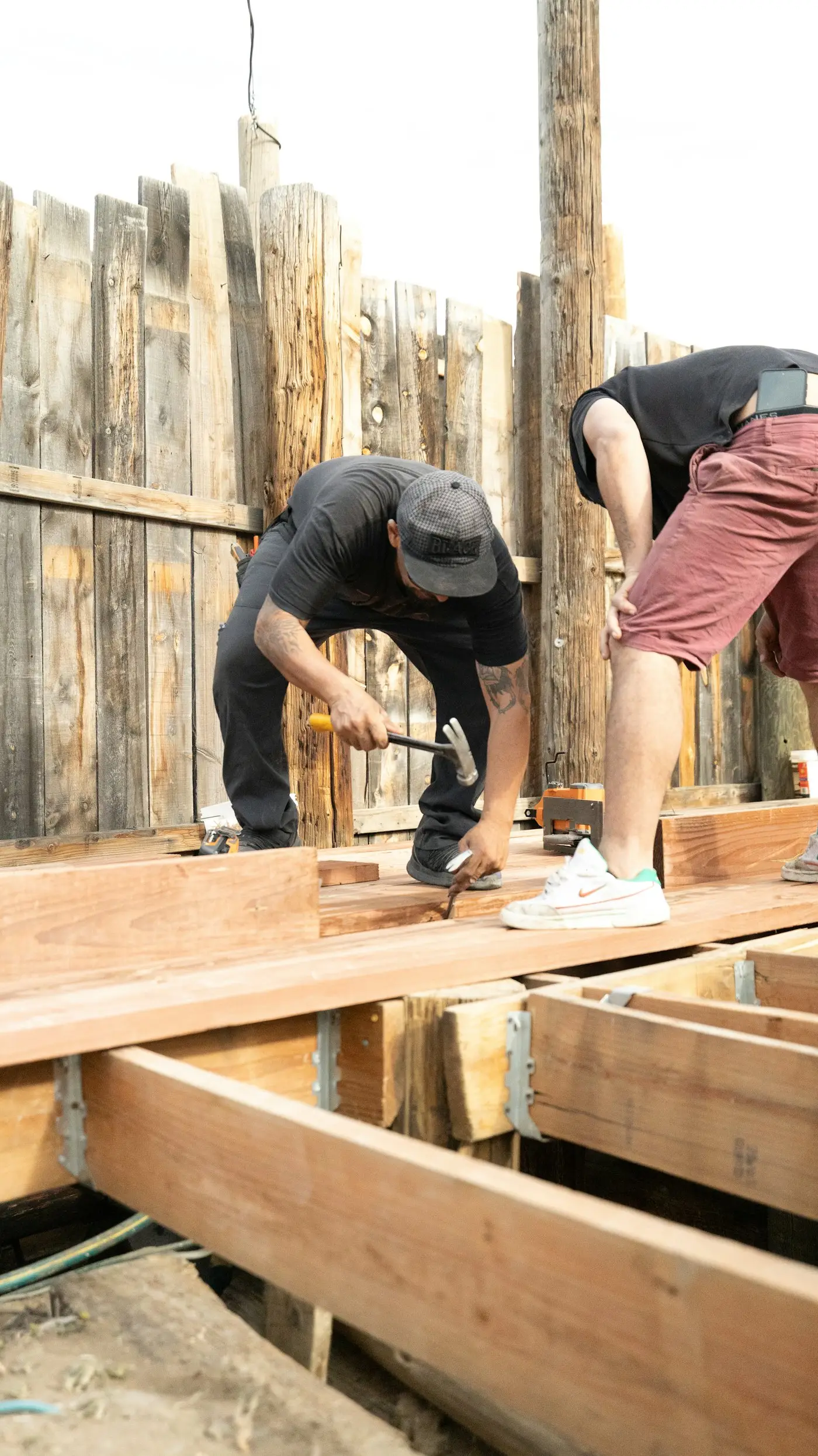
Decking is one of the most common garden projects in Yorkshire, and decking repair is one of the most common calls we receive. The problem is not poor installation - it is Yorkshire's climate. Above-average rainfall, long damp autumns and springs, and the tendency of northern gardens to include north or north-east-facing decking areas that never fully dry out create perfect conditions for rot, algae, and warping. Understanding what is happening to your decking, what it will cost to fix, and whether repair or replacement is the right call will save you from spending money on a repair job that will just fail again in two years.
Common Yorkshire decking problems
Rot: the primary problem in Yorkshire gardens
Timber rot is the dominant decking problem across Yorkshire. The fungal decay organisms responsible need three things: moisture, oxygen, and organic material (i.e., the wood itself). Yorkshire provides consistent moisture. The key factors that determine how quickly rot sets in are:
- Ventilation under the boards - air circulation allows timber to dry between rain events; no ventilation means permanently damp timber
- Timber grade and treatment - UC4 (Use Class 4) pressure-treated timber designed for ground contact is significantly more resistant than basic UC3 decking boards
- Board orientation - boards with flat grain at the surface cup and trap water; boards installed with the heart side up shed water better
- Gap between boards - tight gaps trap debris and moisture; 5-6mm gaps allow drainage and airflow
- Aspect - north and north-east-facing decks in Yorkshire can go months without drying out in autumn and winter
Rot typically starts in the end grain of boards (where the timber is most absorbent), in places where debris accumulates (around posts, against walls, in the corners of board joints), and at the bottom of posts where they meet the ground or a concrete footing.
Algae and moss
Green algae and moss on decking are almost universal in Yorkshire within three to five years of installation. They are not just unsightly - algae makes decking dangerously slippery. A north-facing Yorkshire deck in a shaded garden can develop algae cover within a single season. This is primarily a surface problem: if the algae is removed and the underlying timber is sound, the deck is structurally fine. The challenge is persistent regrowth.
Warped and cupped boards
Timber moves as it dries and wets. Yorkshire's cycle of wet winters and drier summers causes more expansion and contraction than in more stable climates. Boards that were flat when installed gradually warp, cup, or twist. Heavily cupped boards trap more water than flat ones, accelerating rot. Boards that have been screwed down too tightly cannot move with moisture changes and crack. Warped boards are usually a sign of inadequate timber grade or poor installation - not something that can be permanently fixed by swapping individual boards without addressing the underlying causes.
Unstable posts and subframe
Deck posts that sit in, on, or near soil are the most vulnerable structural element. Posts in contact with soil in Yorkshire's damp conditions typically last eight to fifteen years before significant rot develops, even with treatment. A post with soft, crumbling timber at its base is a safety issue, not just a cosmetic one. Any decking that flexes significantly underfoot, has visible lean, or shows cracked or separating frame joints needs structural assessment before it is used.
Repair cost guide
| Repair type | Typical Yorkshire cost | Notes |
|---|---|---|
| Individual board replacement (labour) | £15-40/m2 | Plus materials: £8-25/m2 for pressure-treated softwood |
| Partial repair (5-10 sqm of boards) | £200-500 total | Assumes sound subframe |
| Post replacement | £80-150 per post | More if concrete breaking required |
| Joist replacement | £40-80 per joist | Requires lifting boards in the affected area |
| Pressure washing and treatment | £80-200 | Cleaning plus decking oil or preservative |
| Full rebuild (average 15-20 sqm) | £1,500-4,000 | Softwood; composite or hardwood higher |
| Full rebuild with composite boards | £2,500-6,000+ | For average 15-20 sqm; longer-lasting in Yorkshire conditions |
Repair vs replace: a decision tree
The key question when assessing damaged decking is: is the subframe sound?
If the joists, beams, and posts are solid and dry and the rot is confined to surface boards, repair is the right call. If you probe the structural timber with a penknife or sharp implement and it sinks in more than a few millimetres, the structure is compromised. Replacing the boards on a rotten subframe is a waste of money - you will be back to the same state in two to three years.
Good candidates for repair
- Decking less than eight to ten years old with isolated board rot
- Sound subframe confirmed by probing joists and posts
- Algae or moss growth on otherwise structurally intact boards
- Loose or lifted boards where fixings have failed
- Boards split or cracked on surface but not rotten through
Good candidates for full replacement
- More than 40% of surface boards are rotten or heavily damaged
- Joists or beams probe soft at multiple points
- Posts are soft at base or visibly leaning
- Deck is over twelve to fifteen years old and has had minimal maintenance
- Deck feels springy or unstable underfoot
- Significant level difference has developed (deck has sunk in places)
The north-facing deck problem in Yorkshire
A north or north-east-facing deck in a typical Yorkshire garden can be in shade for nine months of the year. Without direct sun, softwood decking boards never fully dry out between rain events from October to March. This is the primary reason north-facing softwood decking in Yorkshire typically lasts eight to twelve years rather than fifteen to twenty. If you are replacing a north-facing deck, composite boards on an aluminium sub-frame is worth the additional cost for the improved longevity.
Pressure treating vs replacing: when to treat and when to replace
Pressure washing and treating with decking oil or preservative makes sense when:
- The timber is fundamentally sound but weathered and grey
- There is algae or moss growth on otherwise intact boards
- The decking is less than eight years old and has not been treated before
Treatment will not help when:
- Rot has penetrated past the surface of the board
- The board is soft or spongy when pressed
- The board surface is breaking down into fibres
- There is visible brown cubic rot (a pattern of cracking in the timber surface)
Surface treatment on rotten timber is cosmetic. It will look better briefly and then fail. Replacement is the only real fix once rot has gone below the surface.
Timber grades and what matters in Yorkshire
Not all pressure-treated timber performs the same. The relevant standard for decking in Yorkshire is Use Class (UC), which describes the conditions the timber is designed to resist:
- UC3 - above ground, exposed to wetting and drying. Standard for most decking boards. Adequate in many situations but less resistant in Yorkshire's persistent damp.
- UC4 - ground contact. Significantly more resistant to decay. Worth specifying for posts and ground-level joists in Yorkshire conditions; worth considering for boards on north-facing or shaded decks.
When getting quotes for decking repair or replacement in Yorkshire, ask specifically about the treatment class of the timber being used. A contractor who does not know the answer is buying on price rather than specification.
Frequently asked questions
How much does decking repair cost in Yorkshire?
Individual board replacement costs £15-40 per square metre in labour (plus materials at £8-25/m2). A partial repair of 5-10 sqm of rotten boards on a 20 sqm deck might cost £200-400 total. A full structural rebuild for an average 15-20 sqm deck costs £1,500-4,000+.
Why does decking rot so quickly in Yorkshire?
Yorkshire's wet climate means decking is persistently damp, especially in autumn and winter. North and north-east-facing decks are particularly vulnerable as they rarely get direct sun to dry out. Poor ventilation under boards, inadequate timber grade, and tight board gaps that trap moisture all accelerate decay.
How do you know if decking needs replacing rather than repairing?
Repair makes sense when rot is isolated to a few boards and the subframe is sound. Replace when rot has reached the joists or posts; when more than 40% of boards are affected; when the subframe is over 12-15 years old without treatment; or when the decking feels unstable or spongy underfoot.
Is composite decking better than timber in Yorkshire?
Composite decking is significantly more resistant to rot and algae. It costs more upfront (£60-120/m2 for materials vs £15-40/m2 for treated softwood) but the subframe still needs to be timber or aluminium. In Yorkshire's damp conditions, composite boards on an aluminium subframe is the most durable long-term solution, particularly for north-facing positions.
How do you stop algae and moss on decking in Yorkshire?
Ensure the boards can dry out by maximising air circulation and trimming back overhanging plants. Annual pressure washing removes growth. A proprietary decking cleaner with algaecide suppresses regrowth for a season. In really shaded positions, anti-slip strips or a different surface material may be more practical than fighting algae annually.
Get a quote for your decking repair or replacement.
Tell us what you have and a local Yorkshire specialist can take your enquiry and call you with honest advice and a price.
Start the assessmentRelated reading
- Decking installation service
- Pressure washing service
- Decking installation cost in Yorkshire
- Pressure washing cost in Yorkshire