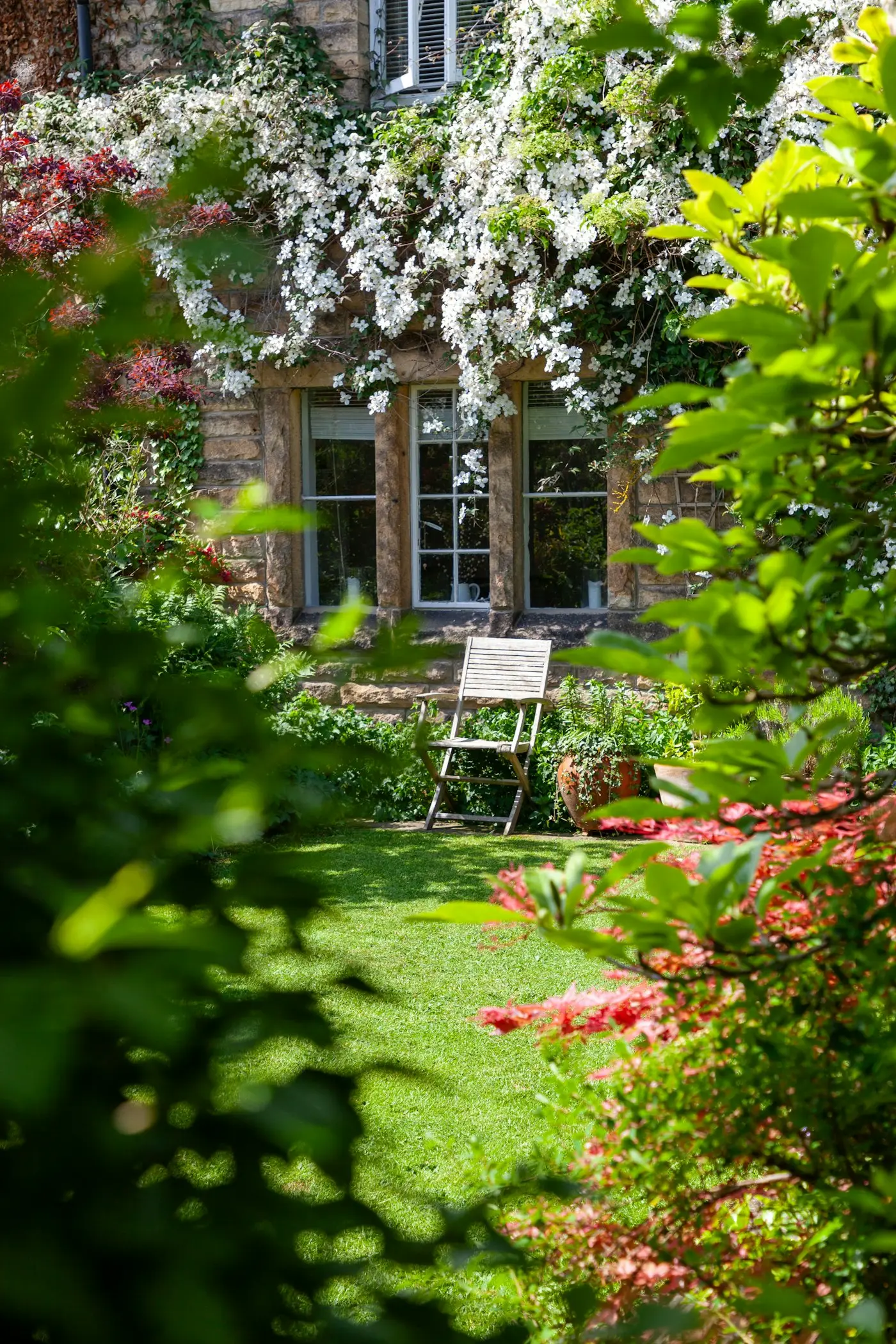
Bradford's gardening reputation is underrated. The district contains some of the most varied garden territory in Yorkshire: from the terraced rows of Manningham where small back gardens get squeezed into tight urban plots, through the substantial Victorian villa gardens of Heaton and Shipley, up to the open moorland edge at Ilkley where large plots look out over the Wharfe Valley and the classic white-flowered Rhododendrons thrive on acid gritstone soil. Garden design here is not one challenge but many, and the approach that works on a gentle Ilkley slope will be completely wrong for a small Wibsey courtyard.
What most Bradford gardens share is the Pennine climate: substantial rainfall, cool summers, and frost risk that extends later into spring than most southern guides acknowledge. This shapes every design decision from hard landscaping material choice (what can withstand repeated freeze-thaw cycles?) to planting selection (what will still look good after a grey, wet October?). A designer who understands Bradford's climate is not applying a generic template - they are making specific choices driven by local conditions.
Bradford's Garden Landscape: From the Aire Valley to Ilkley Moor
The Bradford Metropolitan District covers a surprisingly large and varied area. At its heart, the city centre and inner suburbs of Manningham, Heaton, Great Horton, and Wibsey present typical dense urban housing patterns with small gardens and tight site constraints. Moving outward, the character changes significantly. Shipley and Bingley are mill-town settlements along the Aire Valley with a mix of Victorian terraces and inter-war semis, many with reasonable-sized gardens on modest gradients. Further west and north, the landscape opens dramatically: Ilkley occupies the southern edge of Ilkley Moor and looks out over the River Wharfe, with large properties, generous plots, and a genuinely distinctive growing environment influenced by the nearby moorland.
The elevation range across the district is substantial. The Aire Valley floor is around 100 metres above sea level. Ilkley Moor rises to over 400 metres. Most of Bradford's residential suburbs sit on slopes between these extremes, and that elevation difference translates directly into temperature and rainfall differences. A garden in Heaton at 200 metres gets notably more rain and cooler nights than a garden in the Aire Valley at Saltaire. Designers who are not familiar with this variation may underestimate its significance.
Bradford's Soils: Acid Gritstone and Valley Clay
Millstone Grit is the dominant underlying geology across most of Bradford district, particularly on the higher ground and slopes. This produces soils that are acid (typically pH 5.0 to 6.0), relatively free-draining on slopes, and low in nutrients compared to the richer clays of the Vale of York to the east. In valley bottoms - particularly along the Bradford Beck and the lower Aire - soils tend to be heavier, often with alluvial deposits that compact easily and can waterlog in wet weather.
The acid soil chemistry is significant for plant selection. It is excellent news for ericaceous plants: Rhododendrons and Azaleas are genuinely at home in Bradford's natural soil, as are Pieris, Calluna (heather), Erica, Kalmia, and most blueberry and cranberry varieties. These plants would need special raised beds with imported ericaceous compost in a limestone garden like Harrogate, but in Bradford they can simply be planted into the existing soil. It is less good news if you want alkaline-loving plants, which will need raised beds with imported compost to perform well.
Bradford's acid soil: an advantage, not just a constraint
Many Bradford homeowners treat their acid soil as a problem to be corrected. A better approach is to treat it as an opportunity. The range of shrubs and flowering plants that genuinely thrive in acid soil is substantial and often very beautiful: Rhododendrons, Kalmia, Pieris japonica, blueberries, and heathers all produce spectacular spring colour without any soil amendment. A designer who works with Bradford's natural soil chemistry rather than against it will produce a planting scheme that is both lower maintenance and more ecologically appropriate.
What Garden Design Costs in Bradford
| Scope | Typical Cost | What's Included |
|---|---|---|
| Concept drawings only | £350-£850 | Site visit, measured survey, initial concept sketches. Useful starting point before committing to a full design. |
| Full design (plan only, no build) | £600-£2,200 | Measured survey, scaled planting plan, hard landscaping layout, materials specification, plant list. |
| Small urban garden (Manningham, Wibsey, central Bradford) | £3,500-£8,000 | Design and build. Typically 30-60 sqm. Paving or decking, raised planters, boundary screening. Hard landscaping dominant. |
| Medium suburban garden (Heaton, Shipley, Bingley) | £8,000-£16,000 | Design and build. Typically 80-200 sqm. Patio, paths, planted borders, structural planting, possible decking or pergola. |
| Large garden (Ilkley, Burley in Wharfedale, larger Shipley properties) | £16,000-£28,000+ | Full design and build including significant hard landscaping, extensive ericaceous planting schemes, possible level changes and drainage works. |
| Planting refresh (existing structure retained) | £1,800-£5,500 | New planting scheme for existing beds. Particularly effective in Bradford where switching to acid-suited plants can transform a struggling scheme. |
Bradford's strong low-maintenance preference means hard landscaping costs are often proportionally higher here than in cities with more planted-border culture. Paving and decking typically account for 50 to 65% of design-and-build budgets for medium Bradford gardens. For a detailed breakdown of hard landscaping costs, see our hard landscaping guide for Yorkshire.
The Bradford Garden Design Process
Stage 1: Site visit and brief
On an initial site visit in Bradford, a good designer will check soil pH (or arrange a test), assess drainage, note which direction the plot faces, and look for any drainage problems on the ground. Bradford's clay-rich valley areas often have compacted subsoil that needs addressing before any planting scheme will succeed. The brief conversation for a Bradford garden frequently involves the tension between wanting something that looks impressive and wanting something that does not require constant attention - a good designer will find plant selections and design approaches that satisfy both.
Stage 2: Design and layout
For Bradford's steeper plots in the suburbs rising toward Ilkley Moor, the layout stage involves similar decisions to Sheffield's hillside gardens: how much terracing, where retaining features sit, and how different levels connect. For the flatter valley properties in Shipley or Bingley, the design challenge is more about creating interest through planting structure and material choice rather than managing gradient. Bradford's higher rainfall means drainage planning should be part of the design brief, not an afterthought.
Stage 3: Planting design
A Bradford planting scheme that ignores the acid soil is doing its client a disservice. The most effective Bradford planting designs lean into what the soil does well: ericaceous shrubs for spring structure and colour, hardy perennials for summer interest, and evergreen structure plants that hold the garden through Bradford's grey winter months. Planting should be selected for full frost hardiness - Bradford's cold winters and late spring frosts mean that anything rated as marginally hardy in national guides should be treated as tender and given winter protection.
Stage 4: Implementation
Bradford's wet climate means timing matters for hard landscaping work. Extended wet spells can delay concrete and mortar work; paving laid in frost risks damage before it cures. Most Bradford contractors schedule major hard landscaping work for the drier months (April to October) where possible. Planting is best done in autumn for shrubs and perennials, spring for anything tender. The hard frost risk in Bradford's higher suburbs can extend to mid-May, so tender plants should wait until the risk has clearly passed.
Garden Styles Common in Bradford
Low-maintenance hard landscaping gardens
By far the most common brief in Bradford. Families across Heaton, Wibsey, Idle, and the newer estates of Fagley and Greengates want an outdoor space that looks well-kept without requiring significant ongoing time. The practical design response is a high ratio of hard to soft surfaces: a good-quality patio, perhaps a deck, paths that connect spaces clearly, and relatively contained planted areas that can be managed in a few hours per month. When planting is included, it should be structural and low-intervention: yew hedging, ornamental grasses, Hardy Geranium, and reliable evergreen shrubs rather than annual-heavy borders that demand regular replanting.
Garden rooms and outdoor entertaining
The garden-as-outdoor-room brief has grown strongly across Bradford's suburban owner-occupier areas. A well-designed garden room area - sheltered seating, good-quality paving, possibly a pergola or garden structure, fire pit or outdoor heater provision - transforms how a family uses their outdoor space. Bradford's climate means shelter from westerly wind and rain is genuinely important: a well-positioned pergola or screen can make a Bradford garden usable for outdoor eating 3 to 4 months more per year than an exposed plot. This is worth investing in at the design stage.
Modern minimalist gardens
In Bradford's more affluent suburbs - Heaton, Shipley, Baildon - there is growing demand for contemporary gardens with clean lines, high-quality materials, and a sophisticated but low-fuss planting palette. This style works well on Bradford plots: the millstone grit stone of the local landscape lends itself to use as a design material, and locally sourced gritstone paving or walling has a natural quality that concrete alternatives cannot replicate. A minimalist Bradford garden might combine gritstone paving, a small rill or water feature, clipped Taxus hedging, and a single structural tree species planted in a bold grouping.
Ericaceous specialist gardens
In Ilkley, Burley in Wharfedale, and the moorland-edge properties of Baildon and Menston, some of the most striking Bradford district gardens take full advantage of the acid soil to create ericaceous showpiece planting. Large Rhododendron species and hybrid cultivars can reach specimen scale within 10 to 15 years in these conditions; combined with Azaleas, Pieris, and a backdrop of birch or Scots pine, they create gardens that are genuinely spectacular in April and May. This style requires a large plot and a willingness to wait several years for the plants to establish, but the results in the right setting are remarkable.
What is Bradford's soil like and how does it affect planting?
Millstone grit is the dominant underlying geology across much of Bradford district, producing acid, free-draining soils on the higher ground and slopes. In valley bottoms and lower-lying areas, soils tend to be heavier and slower to drain. Acid soil is very suitable for ericaceous plants - heathers, Rhododendrons, Azaleas, Pieris - which are at home in Bradford's natural soil chemistry. If you want to grow chalk-loving or alkaline-preferring plants, you will need raised beds with imported compost. A simple pH test at the start of a design project will tell you exactly where your plot sits and should be standard practice for any designer working in the Bradford area.
Ready to design your Bradford garden?
Tell us about your plot and we put your enquiry in front of local designers who cover Bradford and the BD postcode area.
Start the assessmentFrequently Asked Questions
How much does garden design cost in Bradford?
For a typical Bradford garden design and build, expect to pay £4,500 to £12,000 for a medium-sized plot. Larger detached properties in Heaton, Shipley, or Bingley run from £12,000 to £22,000 or more. Victorian terrace gardens in central Bradford areas typically cost £3,500 to £8,000 for a full design and build. Design-only fees without implementation are usually £500 to £2,200.
What plants thrive in Bradford's Pennine climate?
Bradford's high rainfall and acid millstone grit soils favour moisture-tolerant, frost-hardy plants. Rhododendron, Azalea, Pieris, Calluna (heather), and Kalmia all thrive without soil amendment. Hardy perennials that perform well include Astilbe, Persicaria, Geranium (most species), Hosta, and Hemerocallis. Mediterranean drought-tolerant plants are generally less suited to Bradford's wet climate.
How do I deal with Bradford's high rainfall in a garden design?
Specify permeable paving or gravel paths to prevent surface pooling; ensure lawn areas have proper drainage; use raised beds for vegetables to guarantee free drainage; and select wet-tolerant plants for lower-lying areas. A good designer will incorporate drainage planning as a standard part of the design brief rather than treating it as an add-on.
What is the most popular garden design style in Bradford?
Low-maintenance design is the most common brief. Busy families across the district want gardens that look well-kept without demanding hours of upkeep. In practice, this means more hard landscaping relative to planted borders, and when planting is included, structural evergreens and robust perennials rather than high-maintenance annual-heavy schemes.
Do I need planning permission for garden changes in Bradford?
Most domestic garden landscaping does not require planning permission. Exceptions include walls over 1 metre adjacent to a highway, substantial outbuildings, non-permeable front garden hard surfaces over 5 sqm, and works on listed buildings. Bradford Metropolitan District has several conservation areas; check with Bradford Council if your property may be within one. Ilkley properties in particular may have heritage restrictions.
What garden design approach works for Bradford's Victorian terraces?
Small Bradford terrace gardens (30 to 60 sqm) benefit from designs that maximise the feeling of space through clever levels, good screening for privacy, and year-round planting interest without constant intervention. Raised planters along walls add planting capacity without reducing the usable floor area. High-quality paving that can withstand wet Bradford winters is worth investing in over cheaper alternatives that degrade quickly.
How long does a garden design project take in Bradford?
From initial site visit to completed garden, allow 3 to 8 months. The design phase typically takes 4 to 10 weeks. The build phase is 1 to 6 weeks depending on scope. Planting is best timed for autumn or spring. Bradford's cooler climate means frost risk can extend into late April at higher elevations, so tender plants should wait until mid-May before going out.
Can I create a kitchen garden in Bradford's climate?
Yes, but Bradford's climate requires adaptation. Raised beds are strongly recommended for drainage and faster spring warm-up. A polytunnel or cold frame extends the growing season meaningfully. Brassicas, leafy greens, and root vegetables perform very well. Tender crops like tomatoes need a sheltered south-facing position. Our Yorkshire garden drainage guide covers the groundwork needed for a productive garden in wet-climate areas.
For regular garden upkeep after your design is complete, see our guide to finding gardeners in Bradford - what maintenance costs across BD postcodes, and what Bradford's varied terrain demands from ongoing care.