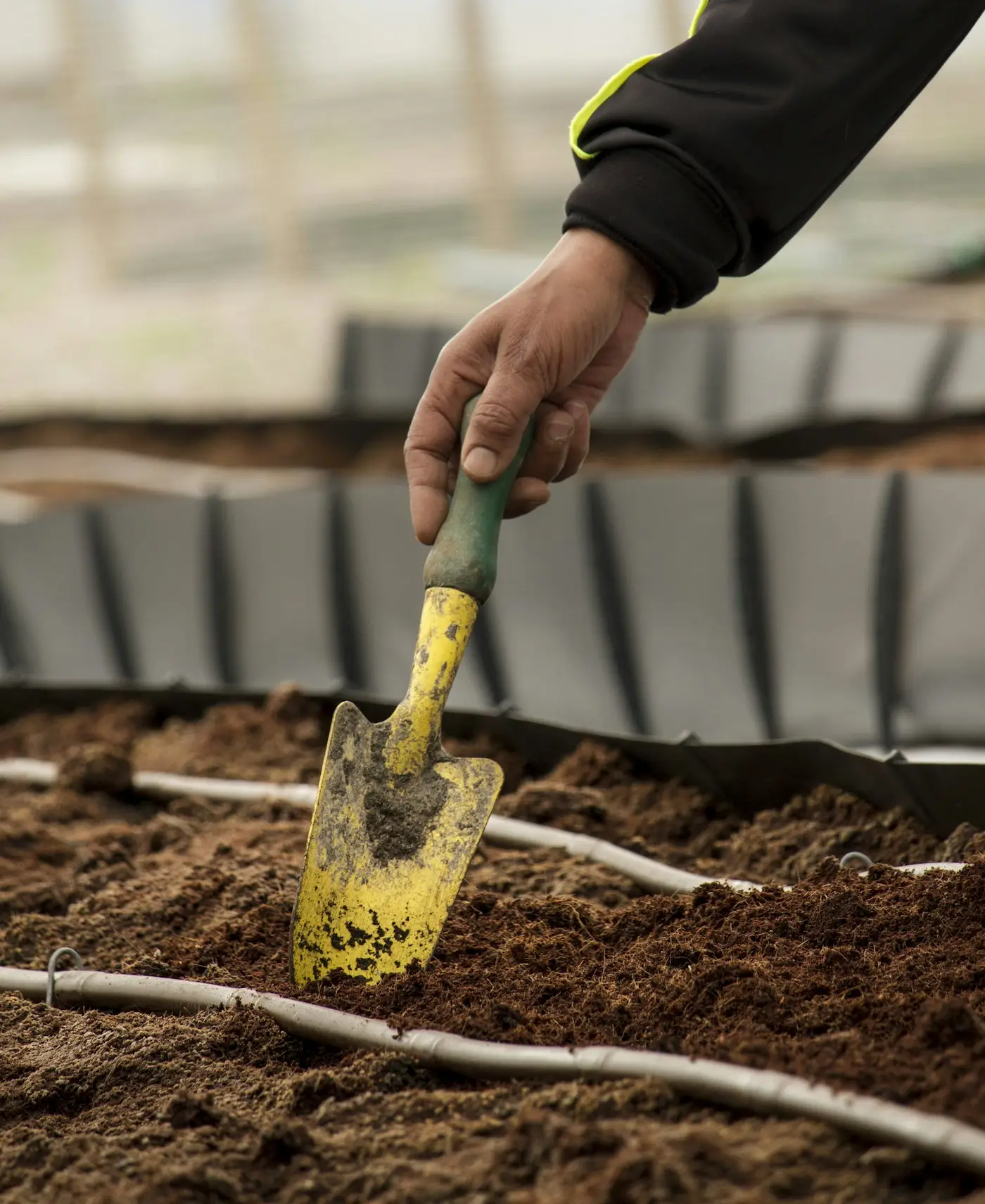
Bradford is one of the most varied cities in Yorkshire to work in as a gardener. The diversity runs in every direction - from Victorian back-to-back terrace yards in BD1 and BD3 where the entire garden is a stone-flagged courtyard with a single border, to exposed Pennine moorland-edge properties in Queensbury and Thornton where the growing season is weeks shorter than the city centre and the soil is thin, acid gritstone barely a spade deep. Between those extremes: Aire valley suburbs with heavy clay inherited from the Coal Measures, the distinctive terrace frontages of Saltaire's Victorian model village, interwar semis across Wrose and Idle with the straightforward suburban garden character common across West Yorkshire, and the more affluent detached properties along the Ilkley Road and Heaton corridor with properly established gardens and regular maintenance requirements. For the local overview and contacts, the Bradford town page has the essential information. This guide covers the practical specifics: what garden work in Bradford costs, what the city's varied conditions mean for maintenance, and how to find a reliable local gardener covering your BD postcode.
Bradford's Garden Landscape: What the Variation Means in Practice
Bradford covers more geographical and social variation in a single city than most Yorkshire towns across an entire district. That variation directly shapes what garden services here actually involve. Understanding which part of Bradford you are in - and what the soil, access and housing character mean for your specific garden - is the starting point for getting a realistic quote and the right person for the job.
Inner Bradford - Victorian terrace yards, BD1-BD5, BD7-BD8
The inner-city and inner-suburban Bradford postcodes cover the densest stock of Victorian back-to-back and through-terrace housing in West Yorkshire. The garden, where one exists at all, is often a small stone-flagged rear yard accessed via a narrow back alley or through the house itself. The space may be partly or entirely paved, with a single planted border or a strip of soil against the back wall. Maintenance in these spaces is different in character from conventional suburban garden work. It tends toward weed management in paved joints and borders, clearance of self-seeded growth (buddleja, elder, bramble and willow are prolific self-seeders in sheltered Bradford yards), cleaning of flagging and occasional pruning of shrubs or small trees that have grown against the rear wall.
Equipment access is a constant constraint in inner Bradford terraces. A wheelbarrow may not fit through the entry gate. A lawnmower is irrelevant. Everything is hand work, and green waste comes back out the same way it went in. A gardener familiar with the specific terrace streets of central Bradford - who has worked the narrow entries of BD3 and BD4 and knows the physical constraints before they arrive - will give a more accurate quote and a more reliable service than one who prices blind over the phone and then discovers the access on the day.
Manningham and the textile district - BD8, BD9
Manningham and the surrounding textile district have a mix of Victorian terraces, larger late-Victorian houses that were once occupied by mill owners and are now subdivided into flats or HMOs, and some interwar residential development on the edges. Garden access in this area follows the same terrace pattern as the inner city, but the larger Victorian properties along the main residential streets - particularly the Manningham Lane corridor - have rear gardens that are more substantial in size, often deeply overgrown and in need of significant clearance before any regular maintenance programme is viable. This is Bradford's highest-volume clearance territory.
Saltaire and Shipley - BD17, BD18
Saltaire is a UNESCO World Heritage Site - the Victorian model village built by industrialist Titus Salt along the Aire valley from the 1850s. The distinctive stone terrace frontages and the conservation area designation mean garden and hedge maintenance here needs to respect the character of the historic streetscape. Front garden presentation in Saltaire is taken seriously by the local authority and the residents' community; overgrown hedges and neglected frontages attract attention. A local gardener familiar with Saltaire's terrace planting character - compact front gardens with privet, lavender and rose frontages - will understand the presentation standard required without needing prompting. Shipley, immediately adjacent, has a more standard West Yorkshire suburban character with a mix of late-Victorian terraces and interwar semis.
The Aire valley floor in this area has heavier alluvial clay than the surrounding hillsides - drainage in lower-lying positions can be slow after wet winters, and lawns on flat clay in Shipley benefit from spring aeration. The valley slopes above Shipley and Baildon transition quickly into the exposed gritstone moorland character of Baildon Moor edge, where soil conditions change sharply from the valley floor.
Baildon and the moorland edge - BD17
Baildon sits at the edge of Rombalds Moor on the north side of the Aire valley. Properties on the upper streets above the village, and particularly those that back onto Baildon Moor itself, are at the extreme end of the Bradford garden spectrum - thin, acid, free-draining gritstone soil, persistent wind exposure from the southwest, a growing season several weeks shorter than the city centre, and the kind of exposed conditions where standard garden plants from a garden centre simply will not establish without significant soil preparation and wind protection. Heather, bilberry and moorland grass species grow naturally on Baildon Moor; a garden adjacent to the moor that is managed with these conditions in mind rather than against them will be far easier to maintain. Gardens on the lower Baildon slopes have a more tractable character, transitioning toward normal suburban conditions as you descend toward the village and the Aire valley below.
Queensbury, Thornton, Clayton - the west and northwest fringe
Queensbury, Thornton and Clayton represent Bradford's exposed upland fringe to the west and northwest of the city centre. These areas sit at significant elevation - Queensbury is one of the highest settlements in West Yorkshire - on gritstone moorland geology with acid, thin, free-draining soil and exposure to prevailing Atlantic weather from the west. Growing conditions here are genuinely harder than anywhere in the city centre: later springs, earlier autumns, more rain on the high ground, persistent wind on exposed aspects, and soil that compacts less readily than clay but is poor in nutrients without regular feeding. Planting in these positions needs to be chosen with the conditions in mind - tough varieties and native species that tolerate exposure rather than the ornamental planting that thrives in a sheltered Harrogate garden. Garden maintenance up here tends toward simpler upkeep of lawns, hedges and borders rather than complex ornamental management.
Wrose, Idle, Greengates, Eccleshill - interwar semis
The interwar suburban development across the northern and eastern suburbs of Bradford - Wrose, Idle, Greengates, Eccleshill, Thackley - represents the most straightforward garden maintenance territory in the Bradford district. These are typical West Yorkshire semis from the 1920s and 1930s: a front garden with path and low hedge, a rear garden with a lawn, some borders and a shed. Soil conditions are a mixed Carboniferous character that varies by plot but is generally workable. Access is standard for suburban gardens. This is where regular fortnightly maintenance contracts are the norm, and where the scheduling and workload is most comparable to a standard suburban garden anywhere in West Yorkshire.
Ilkley Road and Heaton corridor - more affluent residential
The Ilkley Road corridor and the Heaton area to the northwest of Bradford city centre represent the most consistently affluent residential belt in the district, with detached and large semi-detached properties, established gardens and a higher proportion of regular ongoing maintenance contracts than the inner city postcodes. These are gardens where the homeowner has invested in planting and expects consistent professional care. Soil in this area tends toward a gritstone character with better drainage than the valley floor, and the gardens often have established trees, formal hedges and ornamental planting that rewards skilled seasonal attention rather than simple mow-and-clear visits.
Bradford postcode coverage
BD1-BD6 (city centre, Manningham, Thornton, Wibsey, Fairweather Green, Heaton), BD7-BD8 (Great Horton, Lidget Green, Manningham), BD9 (Frizinghall, Heaton Moor), BD10 (Idle, Thackley, Greengates), BD13 (Queensbury, Thornton, Clayton), BD17 (Baildon, Shipley, Saltaire), BD18 (Shipley, Nab Wood). All BD postcodes covered.
What Garden Work Costs in Bradford
Bradford rates sit within the West Yorkshire band - consistent with Halifax and Huddersfield, and below Harrogate and York. For a Yorkshire-wide context, the garden maintenance prices in Yorkshire guide covers the full rate range. The table below covers working 2026 prices across the Bradford BD postcode area.
| Service | Bradford typical range (BD postcodes), 2026 | Notes |
|---|---|---|
| Hourly rate (maintenance) | £25-£35/hr | Contract rates lower end; one-off visits higher. Difficult access adds time. |
| Fortnightly maintenance visit | £35-£65 per visit | Medium garden on regular contract. Inner-city terrace access adds time and cost. |
| One-off lawn cut | £25-£55 | Flat accessible suburban garden lower end. Clay aeration needed on south Bradford plots. |
| Spring tidy (one-off) | £80-£200 | State of garden determines time. Overgrown inner-city clearances price separately. |
| Hedge trimming (standard domestic) | £35-£85 per visit | Standard boundary lower end; established larger hedges £80-£150. |
| Garden clearance (medium accessible plot) | £200-£450 | Standard suburban access. Inner-city terrace or heavily overgrown: from £500. Always get fixed quote after visit. |
| Lawn aeration (standard garden) | £55-£115 | Strongly recommended on south Bradford and valley-floor clay soils. Less critical on moorland-fringe gritstone plots. |
| Pressure washing (patio/paths) | £70-£160 | Bradford's stone-flagged surfaces in inner postcodes get heavy moss and algae growth. Often combined with clearance. |
Garden clearance is a larger proportion of total Bradford garden work than in most comparable Yorkshire towns. The city's industrial history and high proportion of rental and former-rental housing means a significant number of gardens have accumulated years of unchecked growth. Clearance in Bradford is often more involved than in a comparable Harrogate or York garden of the same size - the access is harder in terrace properties, the overgrowth is typically more established, and Japanese knotweed in some valley-floor locations requires specialist assessment rather than straightforward clearance. Always get a fixed-price quote after an in-person visit for any Bradford clearance job. Hourly estimates for unfamiliar inner-city plots can run significantly over what was discussed on the phone.
Soil Conditions Across Bradford: What You Are Working With
Bradford's geology is one of the most varied in West Yorkshire. The city sits across several distinct geological zones, and the soil type in your garden depends heavily on which part of the city you are in.
South Bradford and the Coal Measures zone - roughly south of the city centre through Wibsey, Wyke and the BD6 area - sits on the Coal Measures geology, which produces some of the heaviest clay soil in the district. This is slow-draining, prone to surface compaction under foot traffic, and bakes to a hard crust in summer dry spells. Lawn maintenance on Coal Measures clay requires spring aeration as a standard annual treatment, not an optional extra. A scarifying service in autumn before overseeding removes the dead thatch that traps moisture and feeds moss through winter. Without these, the surface compacts progressively over each growing season and turf quality declines year on year. Clay-tolerant plants do well here: hostas, astilbes, many shrub roses and most hedging species are well-suited. Mediterranean plants, lavenders, and species that need sharp drainage will struggle without significant soil amendment.
The Aire and Bradford Beck valley floors - running through Shipley, Saltaire and the lower parts of the BD2-BD3 area - have heavier alluvial clay deposited by centuries of river flooding. Valley-floor gardens in these areas can be slow to drain after a wet winter and benefit from raised beds or improved drainage for vegetable growing and sensitive planting. The topsoil can be relatively deep and fertile where it has been undisturbed, but in the inner city the ground has typically been built over and excavated repeatedly, and the soil character is unpredictable.
The gritstone moorland fringe in the north, northwest and west - Baildon, Queensbury, Thornton, Clayton - has a completely different character. Thin, acid, fast-draining gritstone soil with limited fertility and a natural vegetation of heather, bilberry and coarse moorland grasses. This is the soil of the Pennine uplands, not the valley floor. It responds poorly to standard garden centre planting unless soil conditions are improved with organic matter and acidic mulch. Native and acid-tolerant species - heathers, rhododendrons, azaleas, ornamental grasses suitable for exposed positions - establish more readily and require less intervention. Attempting to create a traditional English cottage garden on an exposed Queensbury plot without substantial soil improvement is an exercise in repeated disappointment.
Bradford's Clearance Work: What to Expect
No other type of garden job is as consistently booked in Bradford as clearance. The volume reflects the city's specific history: decades of rapid population change, high rental turnover, housing stock that passed through periods of low investment and deferred maintenance, and inner-city properties where gardens were not a priority for multiple successive occupants. The result is a large inventory of Bradford gardens that have not been properly maintained in years, some for much longer.
What clearance work actually involves in Bradford varies considerably by postcode. In the interwar semis of Idle or Wrose, clearance of a neglected rear garden typically means cutting back overgrown grass and brambles, removing self-seeded shrubs, clearing a full skip of accumulated green waste, and leaving a blank canvas ready for maintenance or replanting. That is straightforward work for an experienced gardener, and it prices within the standard range for medium-plot clearance. In an inner-city BD3 terrace with access only via a narrow back alley, the same volume of overgrowth may take twice as long to remove because every piece of cut material has to be carried out by hand through a 3ft gateway. That physical constraint is legitimate and affects the price.
The most complex clearance scenarios in Bradford are those involving established self-seeded trees. Buddleja, elder, sycamore and willow self-seed readily in sheltered Bradford yards and can reach significant size if left unchecked for several years. Removing a 15ft elder that has grown through a rear fence and into a neighbouring property requires more than a gardener with a handsaw - it requires an arborist assessment if it is close to structures, careful management of the removal to avoid damage to surrounding surfaces, and proper licensed disposal of the woody material. Always ask the gardener to clarify exactly what will and will not be included in their clearance quote, and whether any of the work is beyond their standard scope.
For the garden clearance service page with more detail on what to expect, what is included and how to get a fair quote, that page covers the full Bradford picture alongside the rest of Yorkshire.
Finding a Reliable Gardener in Bradford
The basics apply everywhere: public liability insurance (not just a verbal confirmation - the certificate with insurer and policy number), a Waste Carrier's Licence for any job involving green waste removal, and references or photos of recent work in the Bradford area. In Bradford, there are practical additions worth asking about.
First: which part of Bradford have they worked in? The garden character in BD17 Baildon is nothing like BD3 Bradford moor. A gardener who has only worked the interwar semis of Idle is not automatically equipped to handle moorland-fringe exposure planting in Queensbury or Victorian terrace clearance in Manningham. Bradford's geographic range is wide enough that local knowledge by postcode genuinely matters. Second: access experience. Ask specifically whether they have worked narrow-entry terrace gardens in Bradford and how they handle access. If the answer is vague, they have probably not spent much time in the inner postcodes. Third: clearance experience. If the job is a clearance, ask what their approach is to self-seeded trees and whether they can deal with Japanese knotweed if encountered. A competent Bradford clearance gardener will have a clear answer; one who has not thought about it may leave you with an incomplete job or a problem that gets worse.
Bradford has a good supply of independent local gardeners working domestic rounds across the BD postcode area. The hedge trimming demand across the interwar suburbs is consistent and strong through the growing season. For clay-heavy south Bradford lawns, a moss treatment in autumn before aeration makes a visible difference to the spring green-up. Use the estimate form on this site to put your enquiry in front of a local Bradford gardener covering your specific postcode and type of work. For a comparison with premium North Yorkshire rates, the Harrogate gardeners guide covers what the step up in cost looks like and why.
Frequently Asked Questions
How much does a gardener cost in Bradford?
Bradford gardeners typically charge £25-£35 per hour for general garden maintenance in 2026. A fortnightly maintenance visit for a medium garden runs £35-£65 on a regular contract. Bradford rates sit within the West Yorkshire band, consistent with Halifax and Huddersfield, and below Harrogate. For a national comparison, see the how much does a gardener cost UK guide. For Yorkshire-wide rates including the West Yorkshire band comparison, see the garden maintenance prices in Yorkshire guide.
What is the soil like in Bradford gardens?
Bradford has significant soil variation by location. Valley-floor and south Bradford Coal Measures areas have heavy clay that waterlogs in winter and compacts in summer - aeration is standard. The moorland fringe in Queensbury, Thornton, Baildon and Clayton sits on thin, acid, fast-draining gritstone with a short growing season. The interwar suburbs of Wrose, Idle and Greengates have a mixed Carboniferous character that is broadly workable. Knowing your postcode helps a local gardener give you a realistic assessment of what your specific soil is doing and what it needs.
Why is garden clearance so common in Bradford?
Bradford's industrial history and high proportion of rental housing means many gardens have accumulated years of unchecked growth. Clearance volumes in Bradford are high relative to comparable Yorkshire towns - it is the most consistently booked single category of garden work in the city. Inner-city terrace clearances with difficult access typically run from £500 upwards; suburban clearances with flat access are in the £200-£450 range for a medium plot. Always get a fixed quote after an in-person visit. The garden clearance service page has more on what to expect.
Do Bradford gardeners work on Victorian terrace gardens?
Yes, and it is a large proportion of the work in BD1-BD8. Victorian terrace back gardens often have access only via a narrow back entry - equipment goes in by hand, waste comes back out the same way. Always describe your access clearly when you enquire. A local Bradford gardener who has worked the inner-city terrace streets will factor access in from the start. For the town-level overview, the Bradford gardeners page has local contact detail.
What is the best time to book a gardener in Bradford?
February or early March for an April growing season start. Spring demand is high across the interwar suburbs. Hedge trimming should be booked between August and February to avoid the bird nesting season. Clay-soil Bradford gardens benefit from early spring aeration and a one-off grass cut to reset the lawn height before growth starts. Clearance can be booked year-round.
What garden work gets booked most in Bradford?
Garden clearance on neglected plots is the highest-volume single category. After that: fortnightly lawn and border maintenance across the interwar suburbs; hedge trimming; one-off spring tidies on terrace back gardens; and lawn aeration on south Bradford clay plots. The Ilkley Road and Heaton corridor generates the most consistent ongoing maintenance contracts.
Does Bradford have any Japanese knotweed in gardens?
Yes, in some valley-floor and beck-corridor locations. Properties adjacent to the Aire and Bradford Beck in Shipley, Frizinghall and parts of BD2-BD3 should be checked before clearance or landscaping work. Japanese knotweed requires specialist treatment - it cannot be removed by standard clearance. Ask specifically about it when you enquire if you think it may be present. A good Bradford gardener will identify it on inspection and direct you to specialist treatment.
Do Bradford gardeners cover Baildon and Shipley?
Yes. Baildon (BD17) and Shipley (BD18) are within standard Bradford rounds. Baildon on the moorland edge has thin acid gritstone soil and shorter growing season - different in character from valley-floor Bradford. Shipley and Saltaire have heavy alluvial clay typical of the Aire valley floor. Saltaire's conservation area character means hedge and front garden maintenance needs to respect the historic streetscape.
What does garden maintenance include in Bradford?
Standard garden maintenance covers lawn mowing, edge trimming, weeding, light pruning, path sweeping and tidying. For inner-city terrace properties, maintenance is more likely to mean weed management and small-space clearance than conventional mowing. Hedge trimming, clearance, hard landscaping and new planting are typically quoted separately. Confirm what is included for your property type when you first enquire.
How do I find a reliable gardener in Bradford?
Ask for public liability insurance documentation, a Waste Carrier's Licence for jobs with green waste, and references or recent work photos in the Bradford area. Ask which parts of Bradford they have worked in - local knowledge by postcode matters in a city with Bradford's range. Ask about experience with access constraints if you have a terrace property. Use the estimate form on this site to put your enquiry in front of a local gardener covering your BD postcode and job type.
Is lawn care harder in Bradford than in other Yorkshire towns?
On south Bradford and valley-floor clay, yes - compaction under foot traffic, slow drainage and summer baking all require more active management than standard soil. Aeration in spring and autumn is standard practice on Clay Measures ground. On the moorland fringe, the challenge is different: poor thin soil and wind exposure mean turf is slower to establish and recover, and grass mixes need to be chosen for exposure tolerance. The interwar suburbs have the most straightforward lawn maintenance profile in Bradford.
Related reading
- Garden maintenance prices in Yorkshire (2026)
- Gardeners in West Yorkshire: rates and coverage
- How much does a gardener cost in the UK? (2026 prices)
- Garden design in Bradford
- Garden maintenance across Yorkshire
- Hedge trimming across Yorkshire
- Garden clearance across Yorkshire
- Bradford - local gardeners overview
- Gardeners in Harrogate - North Yorkshire rates and conditions
- Gardeners in Halifax - West Yorkshire guide
- Gardeners in Leeds - rates and local conditions
- Gardeners in Huddersfield - Pennine hillside gardens
- Weed control across Yorkshire
Gardeners in nearby areas
We cover the full West Yorkshire and wider Yorkshire area:
We also publish local gardening guides for towns close to Bradford. If you are on the Bradford-Leeds corridor or out towards the Dales, see: gardeners in Shipley, gardeners in Bingley, gardeners in Guiseley, and gardeners in Yeadon for local pricing notes and availability.
For structural landscaping or a full redesign, see our guide to garden design in Bradford.
Request a gardener for your Bradford garden.
60-second assessment, local gardener, free estimate. Tell us your BD postcode and what you need.
Start the estimate