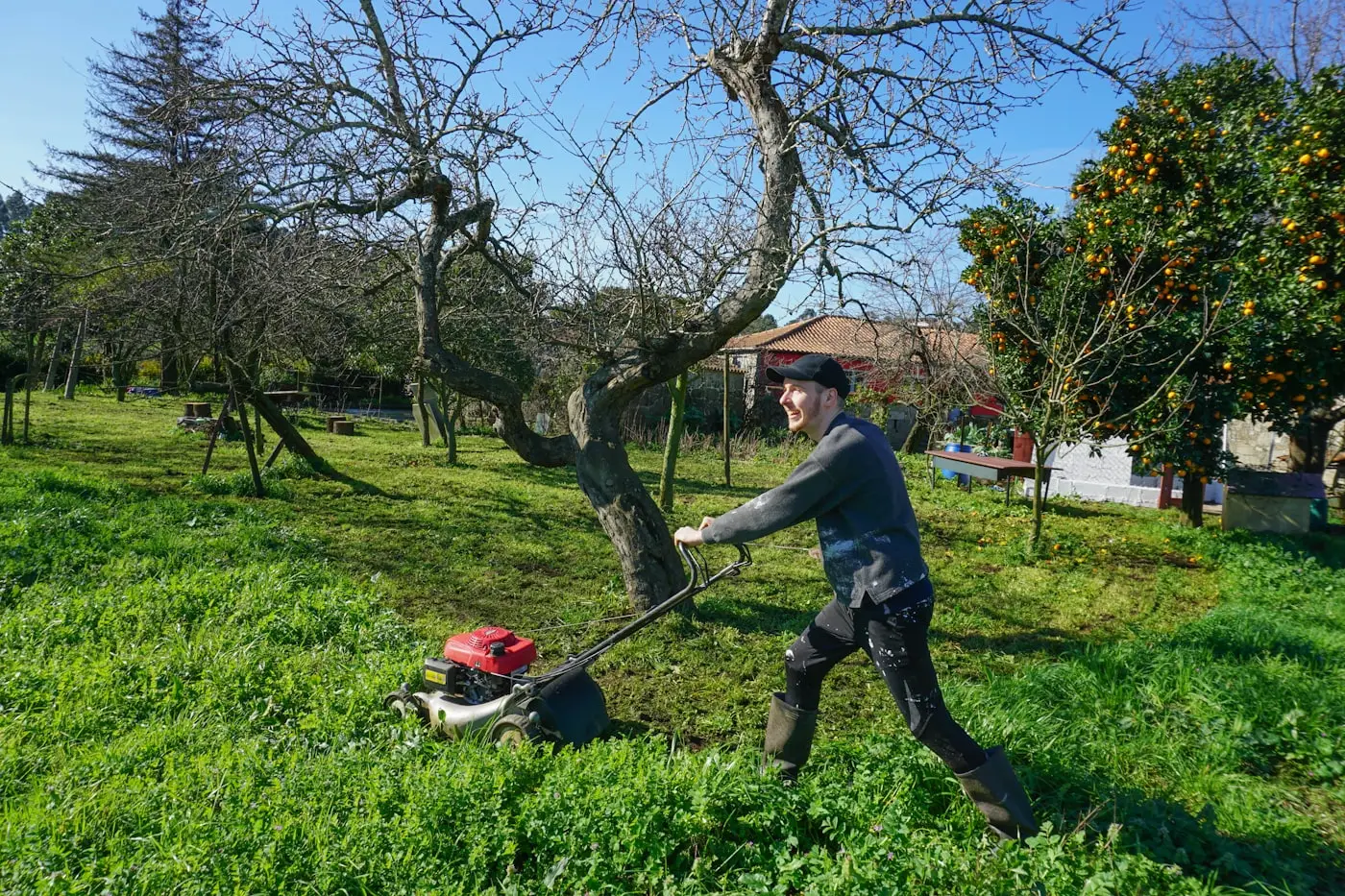
Harrogate is the most garden-conscious town in North Yorkshire, possibly in the whole county. The combination of above-average household incomes, a culture of floral display that goes back to the Victorian spa town era, adjacency to the RHS garden at Harlow Carr, and the very visible benchmark set by The Stray's maintained parkland means that residential garden standards here are higher than almost anywhere else in Yorkshire. That context shapes what garden maintenance in Harrogate actually involves: larger plots on average, higher expectations from homeowners, a strong leaning toward skilled seasonal work rather than basic mow-and-go visits, and prices that reflect the workload. For the local overview and how to contact a gardener in your HG postcode, the Harrogate town page has the essential detail. This guide covers the specifics: what the work costs, what Harrogate's particular conditions mean for maintenance, and how to find and vet a reliable local gardener in HG1, HG2 or HG3.
The Harrogate Garden Character
To understand what garden maintenance in Harrogate actually involves, you need to understand the three things that make this town's gardens different from the rest of North Yorkshire.
The Stray and what it demands of adjacent properties
The Stray is a 200-acre belt of protected open grassland that runs through the heart of Harrogate, a remnant of the ancient Forest of Knaresborough maintained for public use since the Stray Act of 1770. It is not just a park - it is the visual standard against which residential gardens on its perimeter are measured. Properties along the main Stray boundaries, particularly in HG1 and HG2, have their lawns and garden edges visible directly against the Stray's consistently maintained turf. A residential lawn with uneven edges, bare patches or overgrown hedge tips shows up immediately in contrast to that backdrop. The practical effect: gardeners working in the streets adjacent to The Stray are working to a higher aesthetic standard than is typical for most domestic gardens elsewhere. Hedge maintenance along boundary walls facing the parkland needs to be precise. Lawn edges need to be crisply cut. This is not vanity maintenance - it is what the location demands, and it is built into the work.
Harlow Carr and the local horticultural culture
RHS Garden Harlow Carr in HG3 is one of the four flagship RHS gardens in England and is the main RHS presence in the north. Membership is high across the Harrogate area - Harlow Carr draws visitors from across North Yorkshire and West Yorkshire, and its local membership numbers are among the highest of any RHS garden relative to the surrounding population. The practical effect of this on garden services is that a significant proportion of Harrogate homeowners - particularly across HG2 and HG3 - have well above average horticultural knowledge. They know when roses should be pruned, they can name the plants in their borders, they have opinions about soil conditioning and planting schemes. A gardener working the established residential streets of Harrogate is often dealing with an informed customer who will notice if seasonal pruning timing is wrong or if the wrong technique is used on a formal hedge. That can be a good thing - it leads to better conversations and better outcomes - but it does mean that the level of expertise expected from a Harrogate gardener is higher than the baseline. Harrogate homeowners also tend to invest in their outdoor spaces beyond the basics: garden lighting is a common addition in the larger HG1 and HG2 properties, where evening entertaining on patios and terraces is a real part of how the garden is used.
Valley Gardens and the floral display tradition
Valley Gardens in HG1 maintains one of the best annual floral displays in Yorkshire - bedding schemes, formal borders, and a historically maintained landscape that has set the tone for residential planting expectations in the town since the Victorian era. The Harrogate floral display culture - which includes the famous crocus carpet along The Stray each February and March and the daffodil displays in spring - translates into a residential gardening culture that places high value on seasonal bulb planting, formal border maintenance and year-round colour in front and rear gardens. This is worth understanding when you are looking for a gardener: the most sought-after Harrogate gardeners are those who manage seasonal planting as a continuous programme rather than those who simply maintain what is already there.
Harrogate Soil: What the Limestone Means in Practice
Most of Harrogate sits on Magnesian Limestone and Millstone Grit geology. The soil this produces is free-draining, neutral-to-alkaline, and significantly different in character from the heavy clay that dominates Bradford, Leeds and much of West Yorkshire. Understanding this difference is important for anyone managing a garden in the HG postcodes, or assessing what kind of gardener you need.
Free-draining alkaline soil has specific implications for what grows and how it behaves. On the positive side: waterlogging is rarely an issue, the soil warms quickly in spring allowing an earlier growing season start, and a wide range of garden plants thrive in neutral-to-alkaline conditions - roses, clematis, lavender, most formal hedging species and vegetable growing all do well. The limestone character particularly suits the formal planting traditions of the Victorian villa gardens in HG1 and HG2.
The challenges: the same free-draining character means lawns dry out faster in summer than those on heavier clay soils. A dry spell in June or July can stress Harrogate lawns that would survive the same period without damage on a clay-based plot elsewhere in Yorkshire. South and southwest-facing lawns on well-drained aspects can go thin and yellow by late July without irrigation. Spring aeration and overseeding in April is worthwhile on most Harrogate lawns - not because of drainage issues but because it helps retain moisture through the summer growing season and keeps turf density consistent. An annual scarification in autumn removes the fine thatch layer before overseeding so seed-to-soil contact is good.
Acid-loving plants - rhododendrons, azaleas, heathers, pieris - will not thrive in Harrogate's alkaline ground without ericaceous compost and consistent maintenance. Many Harrogate gardeners encounter inherited acid-lovers planted into alkaline soil by previous owners, slowly yellowing through iron deficiency. A gardener who understands the soil chemistry will identify this on inspection; one who does not will keep watering a failing plant without addressing the cause. Gardens in the rural fringe around Pannal, Beckwithshaw and the Crimple Beck valley may have a slightly heavier gritstone character with a more acid tendency - particularly in lower valley positions - but the alkaline limestone profile is broadly representative of the HG1-HG2 core area.
Harrogate postcode coverage
HG1 (central Harrogate, Duchy Estate, Oatlands, Bilton, Starbeck), HG2 (Hookstone, Pannal Ash, Rossett, Jennyfields, south Harrogate), HG3 (Harlow Carr corridor, Killinghall, Ripley, Burnt Yates, Pateley Bridge area), HG5 (Knaresborough). All covered. Rural fringe villages - Pannal, Burn Bridge, Beckwithshaw, Follifoot - covered as part of the standard HG network.
The Main Property Types and What They Mean for Maintenance
Victorian villas and Edwardian townhouses - Duchy Estate, Oatlands, Valley Gardens streets
The most demanding maintenance profiles in Harrogate are found in the Victorian and Edwardian residential areas of HG1 and HG2. The Duchy Estate, developed from the 1880s, has a concentration of large detached and semi-detached properties with generous front and rear gardens, stone boundary walls and formal hedge frontages. The streets around Valley Gardens and the older parts of Oatlands have a similar character. These gardens were designed to be maintained professionally - the scale and the level of formal planting assumes regular skilled attention. Typical features: formal front hedges of privet, yew or box; rose beds; larger rear lawns than the house frontage suggests; established ornamental planting including shrubs and trees that require proper seasonal pruning rather than indiscriminate cutting.
These are not simple fortnightly-mow gardens. A Duchy Estate or Valley Gardens property done properly requires a gardener with genuine horticultural knowledge - someone who knows when to prune roses (late winter into early spring, after the worst frosts), how to maintain a formal yew hedge without hard-cutting into old wood, and how to manage established shrubs that have built up considerable size over decades. The hours on a full maintenance visit for a large HG1 Victorian property can run considerably longer than an equivalent-size newer plot, and pricing should reflect that.
1930s semis - Birstwith Road, Killinghall Road, Harlow Moor corridors
The interwar development corridors to the north and west of Harrogate centre - Birstwith Road, Killinghall Road and the wider Harlow Moor area - have a different character from the Victorian core. These properties were built for middle-class households in the 1920s and 1930s and typically have larger rear gardens than the equivalent period elsewhere in Yorkshire - a full-length lawned area, established fruit trees, and in many cases a kitchen garden or vegetable plot that reflects the era's more productive approach to domestic gardening. By 2026 many of these rear gardens have mature trees that need regular management and fruit gardens that need skilled seasonal attention. The lawns are often among the largest in the residential HG1-HG3 area and take proportionally more time to maintain at a good standard.
Rural fringe villages - Pannal, Burn Bridge, Beckwithshaw
The rural villages within the HG postcode area have a different scale again. Properties in Pannal, Burn Bridge and Beckwithshaw frequently have larger plots than anything in the town itself - sometimes running to half an acre or more - with informal planting, meadow areas, orchards and vegetable gardens rather than the formal ornamental character of the Victorian town-centre properties. These gardens often need a different skill set from the formal topiary and rose-bed maintenance of the Duchy Estate: more emphasis on practical land management, orchard pruning, meadow cutting and naturalistic planting that requires understanding of what to leave as well as what to cut. The soil in these village positions can include heavier gritstone clay in the lower Crimple Beck positions, and drainage issues are more likely here than in the free-draining town centre.
What Garden Work Costs in Harrogate
Harrogate sits at the premium end of the North Yorkshire pricing band. Rates here are consistently above Bradford, Leeds and Halifax, and broadly in line with or slightly above York for equivalent work. The premium is justified by larger average plot sizes, higher expected standards, and the more skilled maintenance that Harrogate's established gardens require. For a broader Yorkshire-wide comparison, the garden maintenance prices in Yorkshire guide has the full picture. The table below covers working 2026 rates for HG1-HG3.
| Service | Harrogate typical range (HG1-HG3), 2026 | Notes |
|---|---|---|
| Hourly rate (maintenance) | £25-£35/hr | Contract rates lower end; one-off visits higher. Large Victorian gardens and formal hedge work at upper end. |
| Fortnightly maintenance visit | £50-£90 per visit | Medium-to-large garden on regular contract. Large period plots over an acre can run higher. |
| Half-day maintenance visit | £100-£180 | Medium established garden. Complex ornamental planting adds time. |
| One-off lawn cut | £35-£70 | Standard accessible garden. Large interwar rear lawns on Birstwith Road etc. higher. |
| Spring tidy (one-off) | £120-£280 | Victorian garden with established borders will run higher than a simpler plot. Always get a fixed quote. |
| Hedge trimming - standard domestic | £50-£110 per visit | Standard boundary privet or laurel. Established formal hedges (yew, beech, hornbeam) run £100-£350 depending on length and height. |
| Formal hedge - Victorian property | £100-£350 | Large Duchy Estate or Oatlands yew or beech hedge at full length. Annual trim only - more frequent cutting shortens the quotes considerably. |
| Garden clearance (medium plot) | £250-£550 | Flat accessible garden. Period property rear garden clearance: from £600. |
| Lawn aeration (standard garden) | £70-£140 | Worthwhile on all Harrogate lawns. Free-draining limestone soil means summer drought stress more likely than waterlogging. |
| Rose pruning (established bed) | £60-£130 | Often priced separately from general maintenance. Victorian Harrogate has a high density of established rose beds. |
One pricing dynamic specific to Harrogate worth understanding: the expectation of quality work rather than simply completed work. In most other Yorkshire towns, a gardener who mows the lawn, trims the edges and weeds the borders has done what was asked. In the established residential streets of HG1 and HG2, homeowners often expect a visit to leave the garden looking as well as it can - not just tidied, but properly maintained. That is a difference of judgment and skill, not just effort, and it is reflected in the rate. A gardener who works to that standard commands the upper end of the range; one who does not will not hold their Harrogate rounds for long.
Hedge Maintenance in Harrogate: More Complex Than Most
Harrogate has a higher proportion of formal established hedges than almost any other town in Yorkshire. The Victorian and Edwardian development of HG1 and HG2 used hedges extensively as boundary markers, and many of these - yew, beech, hornbeam, privet and box - are now mature and of significant size. Managing them correctly is not straightforward.
Yew is the most demanding. It is also the most rewarding when maintained properly: a well-kept yew hedge is one of the most handsome garden features in English horticulture, and Harrogate has a lot of them. The challenge: yew is slow-growing and responds poorly to hard cuts into old brown wood. The correct approach is annual trimming in late August (after the nesting season), taking only the current year's growth, maintaining the shape without penetrating into the older wood. A gardener who cuts too hard into an established yew hedge can take years to recover. Always ask whether a gardener has specific experience with mature yew before letting them near an established boundary. The hedge trimming service page has more on technique and seasonal timing for Yorkshire's common hedge species.
Beech and hornbeam hedges in Harrogate are also common, particularly as rear boundary hedges in the larger Victorian properties. These tolerate harder cutting than yew but should still be managed in late summer. Both retain their dead leaves through winter if not cut after leaf-fall, which is either an attractive feature (many Harrogate gardeners value it for winter privacy) or a nuisance depending on your preference - worth discussing with your gardener upfront. Box hedging in formal front gardens, common in the Duchy Estate and Oatlands streets, needs at least two cuts per year and should be checked for box blight, which has become a significant problem across Yorkshire over the last decade.
Finding a Reliable Gardener in Harrogate
The standard vetting process applies everywhere in Yorkshire: ask for proof of public liability insurance (the certificate with insurer name and policy number, not a verbal confirmation), confirm a Waste Carrier's Licence for any job involving green waste removal, and ask to see photos of recent work in the Harrogate area specifically. In Harrogate, there are additional questions worth asking before you commit.
First: soil and plant knowledge. Ask whether they understand the alkaline limestone character of Harrogate soil and what it means for planting choices and lawn management. Ask whether they have managed acid-loving plants in alkaline ground before and what their approach is. A gardener who gives you a blank look has not spent much time working the established HG1-HG2 gardens. Second: formal hedge experience. Ask specifically what hedge species they have maintained in Harrogate and how they approach a mature yew or established beech boundary. The answer will tell you immediately whether they have the relevant experience. Third: seasonal programme awareness. Ask how they approach the year - when they would prune roses, when they would expect to carry out bulb planting, when hedge trimming fits in the calendar. A gardener working in Harrogate who does not have clear answers to these questions is probably not one who has built a serious local reputation in the HG postcodes.
Beyond those specifics: book in January or February for the start of the growing season. Regular slots in Harrogate's established garden areas are genuinely limited - the best local gardeners have committed rounds and take on new work only when existing customers leave or their capacity grows. If you wait until April to look, your choice will be more limited. For one-off jobs - a clearance before a sale, a single hedge trim - turnaround is faster, but the more skilled the job, the more in advance you should book. Always insist on a fixed-price quote after an in-person visit for any clearance or large hedge job; hourly estimates for unfamiliar Victorian garden plots in Harrogate can run considerably over what was discussed on the phone.
The garden maintenance service page and the garden clearance page have more on what to expect from each type of job across Yorkshire.
Areas We Cover Near Harrogate
Harrogate is the main centre for the HG postcode network, but coverage extends across the surrounding towns and villages. Each has its own character:
- Knaresborough (HG5) - directly east of Harrogate, with its own distinct garden character including the dramatic limestone gorge landscape, some unusual tiered gardens on the cliff approaches to the Nidd, and standard suburban planting in the wider HG5 area. Strong demand for regular maintenance and hedge work.
- Ripon (HG4) - cathedral city north of Harrogate. Smaller on average than Harrogate gardens, more varied in character between the historic centre and the newer development on the A61 corridor. See the Ripon town page for local detail.
- Wetherby (LS22) - on the southern edge of the Harrogate hinterland. Market town with a mix of period and modern residential properties. Good-sized gardens in the older parts of town.
- Pannal, Burn Bridge, Beckwithshaw - rural fringe villages in HG3 with larger plots and informal planting. Covered as standard from the Harrogate network.
- Killinghall, Ripley - north of Harrogate on the B6165 corridor. Village properties, some substantial grounds. Covered as part of HG3.
- Pateley Bridge (HG3) - Nidderdale village at the head of the Nidd valley. Limestone and gritstone soils, similar altitude considerations to upper Dales gardens. Gardeners working this corridor typically cover Harrogate and the wider HG3 area.
Frequently Asked Questions
How much does a gardener cost in Harrogate?
Harrogate gardeners typically charge £25-£35 per hour for general garden maintenance in 2026. A fortnightly maintenance visit for a medium-to-large garden runs £50-£90 on a regular contract. Half-day visits run £100-£180. Harrogate rates sit at the top of the North Yorkshire pricing band - above Bradford, Leeds and Halifax - reflecting larger plot sizes, higher expected standards, and more skilled maintenance demands on established period gardens. For a national comparison, see the how much does a gardener cost UK guide. For a Yorkshire-wide comparison, see the garden maintenance prices in Yorkshire guide.
What soil type do Harrogate gardens have?
Most of Harrogate sits on Magnesian Limestone geology producing free-draining, neutral-to-alkaline soil. This is the key difference from Bradford and Leeds: Harrogate lawns dry out quickly in summer rather than waterlogging in winter. Aeration in spring is worthwhile on most HG1-HG2 lawns. Acid-loving plants struggle without ericaceous compost. Lime-tolerant species - roses, clematis, lavender, yew, beech, hornbeam - thrive. Rural fringe villages around the Crimple Beck valley may have heavier gritstone character with a more acid tendency.
Why does living near The Stray affect garden maintenance in Harrogate?
The Stray is 200 acres of protected parkland running through central Harrogate, maintained to a consistently high standard. Properties adjacent to it have their lawns and hedges visible directly against that public green. In practice this means the acceptable standard for residential gardens on the Stray perimeter is higher than elsewhere - uneven edges, bare lawn patches or untidy hedge tips show up conspicuously. A gardener working these streets understands the presentation standard the location demands without needing to be told. For the local overview of coverage, see the Harrogate town page.
What types of Harrogate garden need the most maintenance?
Victorian villas and Edwardian townhouses in the Duchy Estate, Oatlands and the streets around Valley Gardens have the most demanding profiles: formal front hedges, rose beds, large established rear gardens with mature ornamental planting. The 1930s semis on Birstwith Road and Killinghall Road corridors have very large rear lawns and often mature fruit gardens requiring consistent seasonal attention. Rural fringe properties around Pannal and Beckwithshaw have the largest plots but less formal planting - more emphasis on land management, orchard work and meadow areas.
What is the best time to book a gardener in Harrogate?
January or February for the April growing season start. Regular maintenance slots in the established garden streets of HG1 and HG2 fill quickly. The best gardeners in the area have committed rounds and take on new work selectively. Waiting until April to enquire limits your options considerably. For hedge trimming, book between August and February to avoid the bird nesting season. Clearance jobs can be booked year-round with shorter lead times.
What garden services are most in demand in Harrogate?
Fortnightly grass cutting and border maintenance from April to October; formal hedge maintenance for the town's high density of yew, beech, hornbeam and privet boundaries; seasonal bulb planting and management; rose pruning; and one-off lawn renovation for gardens where summer drought stress has created thin or patchy turf. Garden clearance on period properties prior to sale is also consistently requested in the Harrogate market.
Does Harlow Carr RHS garden affect what Harrogate homeowners expect?
Yes. High local membership of the RHS means a significant proportion of Harrogate homeowners across HG2 and HG3 have above-average horticultural knowledge. They know plant names, seasonal timing, and correct technique. A gardener working Harrogate needs to be able to have an informed conversation about what they are doing and why. That is an asset for both parties when the gardener is genuinely skilled - but it does set a higher baseline expectation than most other Yorkshire towns.
Do Harrogate gardeners cover Knaresborough and the villages?
Knaresborough (HG5) is directly adjacent and within any Harrogate-based gardener's standard round. The rural fringe villages - Pannal, Burn Bridge, Beckwithshaw, Killinghall, Ripley - are all covered as part of the wider HG network. Rural fringe properties often have larger plots requiring different skills from the formal ornamental maintenance typical of town-centre Victorian gardens.
What does garden maintenance include in Harrogate?
Standard garden maintenance covers lawn mowing, edge trimming, weeding of borders, light pruning, path sweeping and general tidying. In Harrogate's larger established gardens, it is worth agreeing explicitly what is included in a regular visit versus what triggers a separate quote. Scope expands quickly on a large ornamental plot. Hedge trimming, rose pruning, garden clearance and new planting are typically priced separately. Confirm in writing what is covered before the first visit.
How do I find a reliable gardener in Harrogate?
Ask for public liability insurance documentation, a Waste Carrier's Licence for jobs with green waste removal, and references or photos of recent work specifically in the HG postcodes. Ask about experience with alkaline limestone soil and formal hedge species. Ask how they approach the seasonal maintenance calendar. Use the estimate form on this site to put your enquiry in front of a local Harrogate gardener covering your postcode and the type of work you need.
Is lawn care harder in Harrogate than in other Yorkshire towns?
Different rather than harder. Harrogate's free-draining limestone soil means drainage is less of an issue than on Bradford or Leeds clay, but summer drought stress is more likely. South-facing lawns can go thin and yellow by late July in dry spells. Spring aeration, overseeding, and a targeted lawn treatment in September keeps turf quality consistent through the season. The higher aesthetic standard expected in established Harrogate residential streets also means consistent professional attention is needed to keep lawns at the level the area demands - fortnightly visits through the growing season rather than occasional ad-hoc cuts.
What do hedge maintenance costs look like in Harrogate?
Standard domestic boundary hedge trimming runs £50-£110 in Harrogate. Victorian Harrogate has a high proportion of mature formal hedges - established yew, beech, hornbeam, privet and box - that are larger and more technically demanding than standard newer-development boundaries. Full-length established yew or beech hedges on period properties can run £100-£350 for an annual trim. Always get a fixed quote after a site visit for established formal hedges.
How much does garden clearance cost in Harrogate?
Garden clearance in Harrogate typically runs £250-£550 for a medium accessible plot. Large Victorian rear garden clearances - where the plot is significantly larger than the house frontage suggests - can run from £600 upwards. Always get a fixed price after an in-person visit. Harrogate clearance rates sit slightly above the West Yorkshire average, consistent with larger average plot sizes in the HG area.
Related reading
- Garden maintenance prices in Yorkshire (2026)
- Garden maintenance in North Yorkshire: prices and towns
- How much does a gardener cost in the UK? (2026 prices)
- Garden maintenance across Yorkshire
- Hedge trimming across Yorkshire
- Garden clearance across Yorkshire
- Harrogate - local gardeners overview
- Gardeners in Knaresborough
- Gardeners in Ripon
- Gardeners in Bradford - West Yorkshire rates and conditions
- Gardeners in York - rates and local conditions
- North Yorkshire gardeners guide - region-wide overview
- Yorkshire Dales gardeners guide
- Weed control across Yorkshire
For structural landscaping or a full redesign, see our garden design Harrogate page.
Request a gardener for your Harrogate garden.
60-second assessment, local gardener, free estimate. Tell us your HG postcode and what you need.
Start the estimate