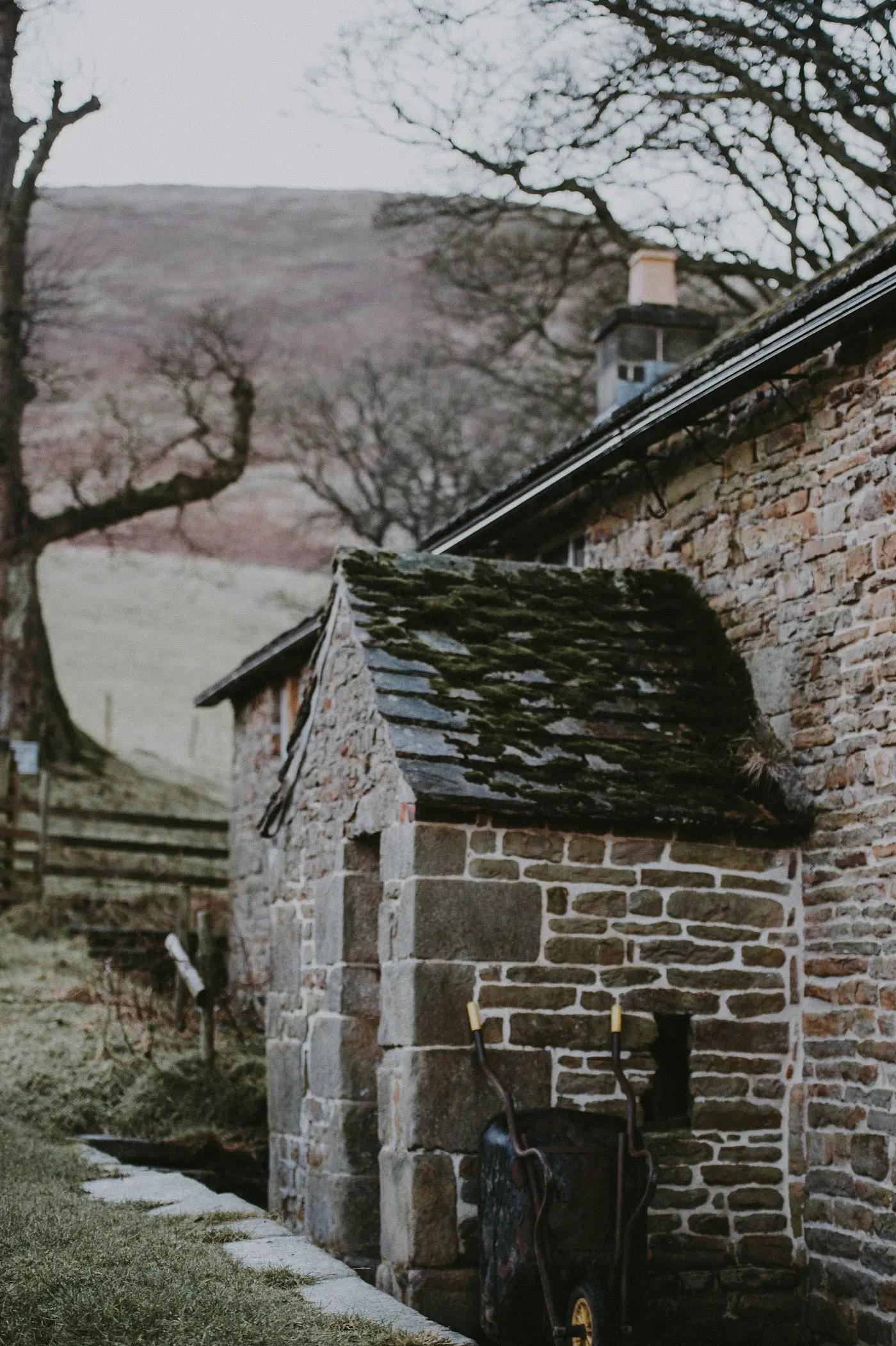
Huddersfield sits at the confluence of the Colne Valley and the Holme Valley, in the Pennine foothills west of the main West Yorkshire conurbation. The town itself occupies the valley floor around HD1, but the residential areas spread steeply up the hillsides in every direction: Lindley and Fixby to the north, Almondbury and Dalton to the south-east, Marsden and Slaithwaite along the Colne Valley to the west, Holmfirth and Meltham in the Holme Valley to the south. Many of these hillside streets have gardens on slopes that would be considered dramatic in any other part of Yorkshire. Some are genuinely terraced - cut into the hillside on multiple levels with retaining walls between them. Others simply tilt at 20 or 30 degrees from boundary to boundary. The combination of steep terrain, Pennine rainfall exceeding 1,000mm per year, acidic millstone grit soils on the higher ground, and the wet moss-prone conditions of north-facing valley sides makes Huddersfield gardening specific in a way that rewards a gardener who knows the area.
Gardening in Huddersfield: Soil, Terrain, and Rainfall
The first thing to understand about Huddersfield gardens is the soil variation with altitude. On the valley floors of the Colne and Holme valleys - the lower parts of HD3, HD4, and HD9 - the soil is a richer clay-loam, deposited alluvially over time and considerably more fertile than the hilltop ground. These valley-floor gardens grow well with most conventional plant choices and have adequate moisture retention through summer dry spells. The drainage in low-lying valley plots can be sluggish in winter, but nothing like the severe waterlogging of Hull's flat clay or the flash-flooding risk of the Calder valley plots around Wakefield.
On the hillsides and at higher elevations - across much of HD4 (Almondbury, Castle Hill), HD7 (Marsden, Slaithwaite, Golcar), and the higher parts of HD9 (Holmfirth, Scholes, Meltham) - the soil changes dramatically. Here the underlying geology is millstone grit: coarse, acidic, thin, free-draining to a fault. The pH of undamended hilltop soil in Huddersfield can be 5.5 or below. This level of acidity rules out a wide range of garden plants that assume neutral soil, but it opens up others: heather, rhododendron, azalea, pieris, blueberries, and the acid-tolerant ferns that thrive in these conditions do exceptionally well. If you have a hillside Huddersfield garden and your roses or vegetables keep failing, the soil pH is the most likely culprit. A Huddersfield gardener who knows the HD7 or HD4 areas will test or assess your soil as a routine first step.
Huddersfield's rainfall is significantly higher than most of Yorkshire. The Pennine catchment area receives over 1,000mm of rain annually, with some of the higher HD7 and HD9 areas exceeding 1,200mm. For comparison, York and Hull typically receive 650-700mm per year. The practical consequence for your garden is that moisture-demanding plants grow vigorously, lawns stay green through most summers, and surfaces stay damp for extended periods after rain. That persistent surface moisture is what drives the consistent moss and algae colonisation on stone paths, patios, and steps across Huddersfield. It is not a sign of a badly maintained garden - it is simply what happens in this climate. Managing it is an ongoing task that should be built into your maintenance routine rather than treated as a crisis every few years.
The steep terrain is the third major Huddersfield gardening variable. Many gardens in Almondbury, Lindley, Golcar, and the Holme Valley hillside streets are on slopes where a standard domestic lawn mower either cannot operate safely or requires significant effort. Some plots are completely terraced: two or three level sections separated by retaining walls, steps, and sometimes quite elaborate stone structures inherited from the Victorian or Edwardian textile magnate families who originally developed the hillside suburbs. Castle Hill (HD4) with its Iron Age hill fort backdrop has some of the most dramatically positioned gardens in West Yorkshire, with panoramic views across the valley that come with correspondingly dramatic slopes. Working these gardens takes longer than a flat plot of the same area, and any quote that does not account for the gradient is not an accurate quote.
Huddersfield's textile heritage left a particularly distinctive garden legacy in the Victorian villa areas of Edgerton, Birkby, and Lindley: large, formally laid out gardens with mature specimen trees, extensive shrubberies, stone walls, and in some cases ha-has and formal kitchen garden areas. These are extraordinary gardens to own and demanding to maintain properly. The University of Huddersfield's proximity has also introduced a younger demographic to many previously neglected properties, with a preference for contemporary low-maintenance planting and clean modern garden design - a very different style from the Victorian formality of the established villa gardens a mile away.
Gardening Services Available in Huddersfield
The full range of professional gardening services operates across Huddersfield's HD1-HD9 postcodes:
- Regular garden maintenance: fortnightly mowing (with appropriate equipment for slopes), edging, border weeding, and pruning. The foundation service. In Huddersfield's high-rainfall environment, growth is vigorous and regular grass cutting matters more than in drier areas.
- Hedge trimming: Huddersfield's established gardens have significant hedge boundaries. Beech, hornbeam, privet, and laurel are all common across the HD postcodes. Victorian villa gardens often have formally maintained hedges that need twice-yearly professional attention to stay sharp.
- Garden clearance: hillside clearance is a specific skill in Huddersfield. Getting arisings off a steep plot without damaging retaining walls or terracing takes experience. Always get a fixed quote after a site visit for hillside Huddersfield clearance work.
- Moss and algae treatment: Huddersfield's high rainfall makes this the most frequently requested add-on service. For lawns, a dedicated lawn treatment programme tackles moss at the root rather than just clearing surface growth. Stone paths, patios, and steps all develop persistent moss and algae that needs periodic chemical or pressure treatment.
- Lawn renovation: relevant for valley-floor gardens that waterlog in winter, and for hilltop gardens where the grass struggles on thin acidic grit soil. Different interventions for different conditions.
- Soil improvement: liming acidic hilltop soils, adding organic matter to grit-based borders, selecting acid-tolerant species for HD4 and HD7 gardens.
How Much Does a Gardener Cost in Huddersfield?
Huddersfield rates sit within the West Yorkshire band. For a full national and regional comparison, see the how much does a gardener cost UK guide.
| Rate type | Huddersfield (HD1-HD9), 2026 | Notes |
|---|---|---|
| Hourly rate (maintenance) | £25-£35/hr | Hillside plots may carry a small premium for physical difficulty |
| Day rate (7-8 hrs) | £150-£250 | Full working day; clearance or heavy maintenance |
| Fortnightly maintenance visit | £35-£70 per visit | Medium garden; larger hillside plots will take longer |
| One-off lawn cut | £25-£60 | Flat or mild slope; steep hillside plots priced on assessment |
| Hedge trimming (standard) | £40-£100 per visit | Standard privet/laurel; formal Victorian villa hedges higher |
| Moss and algae path treatment | £40-£120 | Depends on area. Recurring maintenance included in contracts. |
| Garden clearance (medium plot) | £200-£450 | Steep overgrown hillside plots: £500-£700. Fixed quote after site visit. |
The Huddersfield rate is consistent with West Yorkshire broadly. The one area where Huddersfield sometimes attracts a slight adjustment is for genuinely steep hillside plots where the physical effort and access constraints add time to every visit. This is not a premium on the hourly rate - it is simply that the job takes longer, and the quote reflects that. If you have a steeply sloped garden, get an in-person assessment before accepting a quote based on square meterage alone.
What to Look for in a Huddersfield Gardener
In Huddersfield, local area knowledge matters more than in flatter, more uniform towns. The difference between maintaining a terraced hillside garden in HD7 Golcar and a Victorian villa in HD3 Edgerton is significant: different access, different soil, different plant palette, different equipment needs. Here is the core checklist:
- Public liability insurance: Ask to see the certificate. £2m minimum. Non-negotiable.
- Waste Carrier's Licence: Required by law for removing garden waste. Hillside clearance in Huddersfield generates significant arisings - make sure the gardener can legally dispose of them.
- Hillside experience: Ask directly whether they have worked on sloped Huddersfield gardens. Safe mowing on steep slopes, access to terraced sections, working on wet grit soil - these are all specific skills. A gardener who has only worked flat suburban plots will underestimate both the time and the physical effort involved.
- Soil knowledge: Do they know the difference between HD4 hilltop acidic grit and HD3 valley-floor clay-loam? Will they assess your soil pH before recommending plants? Huddersfield's range of soil conditions means you cannot assume a one-size approach works.
- Moss and algae management: Is path and patio moss treatment something they offer as a routine maintenance inclusion, or only as a separate job? Given Huddersfield's rainfall, you want it built in.
- Photos of recent Huddersfield work: Comparable hillside gardens, comparable conditions. The best evidence of what they will deliver in your specific garden.
Castle Hill and Huddersfield's most dramatic garden positions
Castle Hill (HD4) overlooks the Colne Valley with views that on a clear day extend to the Pennine moors beyond. The gardens on the hillside streets below the hill are among the most dramatically positioned domestic plots in West Yorkshire. The thin acidic grit soil and steep slopes make them demanding to maintain, but the payoff in terms of aspect, light, and views is considerable. If your garden is on or near Castle Hill, a gardener who has worked this specific area knows what to expect: wind exposure, free-draining but acidic soil, spectacular autumn colours from the moorland-edge species that do well here, and the persistent Pennine rainfall that keeps everything lush but also everything mossy.
Seasonal Gardening Guide for Huddersfield
Spring (March-May)
Huddersfield springs are cool and wet. Late frosts are possible until mid-April on the higher ground - do not rush tender planting before the last frost date has reliably passed. The key spring tasks are: clearing any winter moss from paths and patios before it dries and seeds further; raking the lawn once it is firm enough to walk on (avoid working waterlogged slopes); and assessing any erosion that has occurred on steep beds over the winter - slope gardening in high-rainfall areas can shift soil significantly over a wet winter. For acidic hilltop gardens, spring is the time to add lime if you want to grow vegetables or roses: chalk or garden lime added in March gives the soil time to react before the growing season. Acid-lovers like rhododendrons and azaleas come into their spectacular bloom from late April - they need nothing from you at this point other than a mulch of ericaceous compost around the base.
Summer (June-August)
Huddersfield summers are cooler and wetter than the Vale of York. Your lawn will rarely turn brown in Huddersfield - the Pennine rainfall keeps it growing and green even through July. The main summer tasks are fortnightly mowing (on slopes, follow the contour to reduce strain on both equipment and operator), regular weeding of borders (vigorous growth means weeds keep up with desirable plants), and the first hedge cut in late June or July. Stone paths and patio slabs that were treated in spring will be growing moss again by August on north-facing or shaded Huddersfield plots - a light brush or a dilute algaecide spray keeps this manageable without requiring a full pressure wash. On valley-floor gardens with adequate moisture, summer is the peak planting season: hostas, astilbe, and hardy geraniums fill out quickly and dramatically.
Autumn (September-November)
Huddersfield autumn is spectacular - the combination of woodland-edge species on the hillsides, the valley colouring, and the low Pennine light make October particularly dramatic. Autumn is the time for any lawn renovation work on valley-floor plots: scarify to remove the thatch built up through the wet season, aerate compacted areas, overseed, and top-dress before the main winter wet arrives. For hillside gardens, focus on clearing fallen leaves promptly: on a slope, leaves mat quickly and prevent moisture from draining away from plant bases. The second hedge cut should happen in September. Tender perennials should be moved under cover or protected with fleece as night temperatures drop - Huddersfield's altitude means first frosts arrive earlier than in the lower towns.
Winter (December-February)
Huddersfield winters are cold and wet, with significant frost frequency on the higher-altitude HD7 and HD9 areas. Snowfall is more common here than in the lower-lying parts of West Yorkshire. Most established Huddersfield gardens are planted with species that are properly winter-hardy for this altitude - anything that has survived a Holmfirth winter is genuinely tough. Winter is the planning season: identifying what has failed, deciding what to add in spring, and organising any structural garden work - retaining wall repairs, step improvements, path relay - before the growing season locks you out of access. If moss has built up significantly on paths and patios through autumn, a dry February day is often the right time for a pressure wash treatment before the spring growth cycle accelerates it further.
Frequently Asked Questions
How do I find a reliable gardener in Huddersfield?
Word of mouth from a neighbour who has used someone for a full growing season is the most reliable starting point. If you do not have that, a local introduction service is better than a national platform. Ask for proof of public liability insurance, a Waste Carrier's Licence, and examples of recent Huddersfield work. See the Huddersfield gardeners page for local coverage.
How much does a gardener in Huddersfield charge in 2026?
Huddersfield gardeners typically charge £25-£35 per hour for general garden maintenance in 2026. Day rates run £175-£300. Fortnightly maintenance visits run £35-£70 for a medium garden on a contract rate. Steep hillside plots take longer to maintain and quotes should reflect that. See the UK gardener costs guide for full detail.
Why is there moss on every stone path and patio in my Huddersfield garden?
Huddersfield receives over 1,000mm of rainfall per year and surfaces stay damp for extended periods. Moss and algae colonise stone surfaces in these conditions consistently. Manage it with regular light brushing, periodic algaecide treatment, and pressure washing when it builds up significantly. A Huddersfield gardener will factor moss control into your routine maintenance.
My Huddersfield garden is on a steep hillside. Can a gardener work on it safely?
Yes. Experienced Huddersfield gardeners work on sloped plots regularly. Make sure the gardener either visits before quoting or is clearly told about the gradient and access constraints. Steep hillside gardens take longer than flat plots of the same area - quotes that ignore this are inaccurate.
What soil type does Huddersfield have and how does it affect gardening?
Hilltops and moorland fringes (HD4, HD7, HD9 upper areas) have thin, acidic millstone grit soil - great for heathers, rhododendrons, and blueberries; limiting for vegetables and roses without lime addition. Valley floors (lower HD3, HD4) have richer clay-loam alluvial soil. Both are manageable once you know which you have.
What gardening services are most booked in Huddersfield?
Regular maintenance, moss and algae treatment on stone surfaces, hedge trimming, and garden clearance for overgrown hillside plots. Victorian villa areas in Edgerton and Birkby generate significant demand for formal hedge and shrub maintenance.
Are there specific plant recommendations for a Huddersfield garden?
For acidic hilltop soil: heather, rhododendron, azalea, blueberries, acid ferns. For wet hillside conditions: astilbe, hostas, hardy geraniums. For shaded north-facing slopes: epimedium, hellebores, ivy. Avoid drought-tolerant Mediterranean plants on west-facing Huddersfield hillsides.
How much does a garden clearance cost in Huddersfield?
A standard medium garden clearance runs £200-£450. Steep overgrown hillside plots can reach £500-£700 for a two-person team. Always get a fixed quote after a site visit - remote estimates for hillside Huddersfield clearance are unreliable.
What are the red flags when hiring a gardener in Huddersfield?
A quote well below the local rate (£25-£35/hr) with no explanation; refusing to show public liability insurance; quoting hillside clearance by phone without visiting; no examples of recent Huddersfield work; and reluctance to confirm scope in writing. Hillside plots in particular are impossible to estimate accurately without a site visit.
Do Huddersfield gardeners offer regular maintenance contracts?
Yes. Most Huddersfield gardeners run fortnightly maintenance rounds from April to October at a fixed monthly fee. Regular contracts are the best arrangement for Huddersfield hillside gardens: the gardener builds knowledge of the specific slopes, drainage patterns, and problem spots over multiple seasons.
How does Huddersfield's high rainfall affect my garden compared to drier parts of Yorkshire?
Over 1,000mm per year versus 650-700mm in York or Hull. Your lawn will rarely brown in summer. Moss and algae are persistent maintenance tasks on all stone surfaces. Damp-loving plants thrive; Mediterranean drought-tolerant species can struggle on exposed west-facing slopes. Work with the moisture rather than against it.
Related reading
- How much does a gardener cost in the UK? (2026 prices)
- Gardeners in Barnsley: local guide and rates
- Garden maintenance across Yorkshire
- Garden clearance across Yorkshire
- Hedge trimming across Yorkshire
- Huddersfield gardeners - town overview
- Gardeners in Bradford - West Yorkshire rates and conditions
- Gardeners in Sheffield - South Yorkshire rates and conditions
- Weed control across Yorkshire
Gardeners in other nearby areas
We cover the full West Yorkshire and wider Yorkshire area:
For gardeners in the Spen Valley and Calder corridor close to Huddersfield, see also: gardeners in Mirfield, gardeners in Cleckheaton, and gardeners in Heckmondwike. These towns share similar growing conditions with Huddersfield - heavy soils, variable Pennine rainfall, and strong demand for regular maintenance through the season.
For structural landscaping or a full redesign, see our garden design Huddersfield page.
Get a quote for your Huddersfield garden.
60-second assessment. If a local Huddersfield gardener takes your enquiry, they call you with a price for your specific garden and job.
Start the assessment