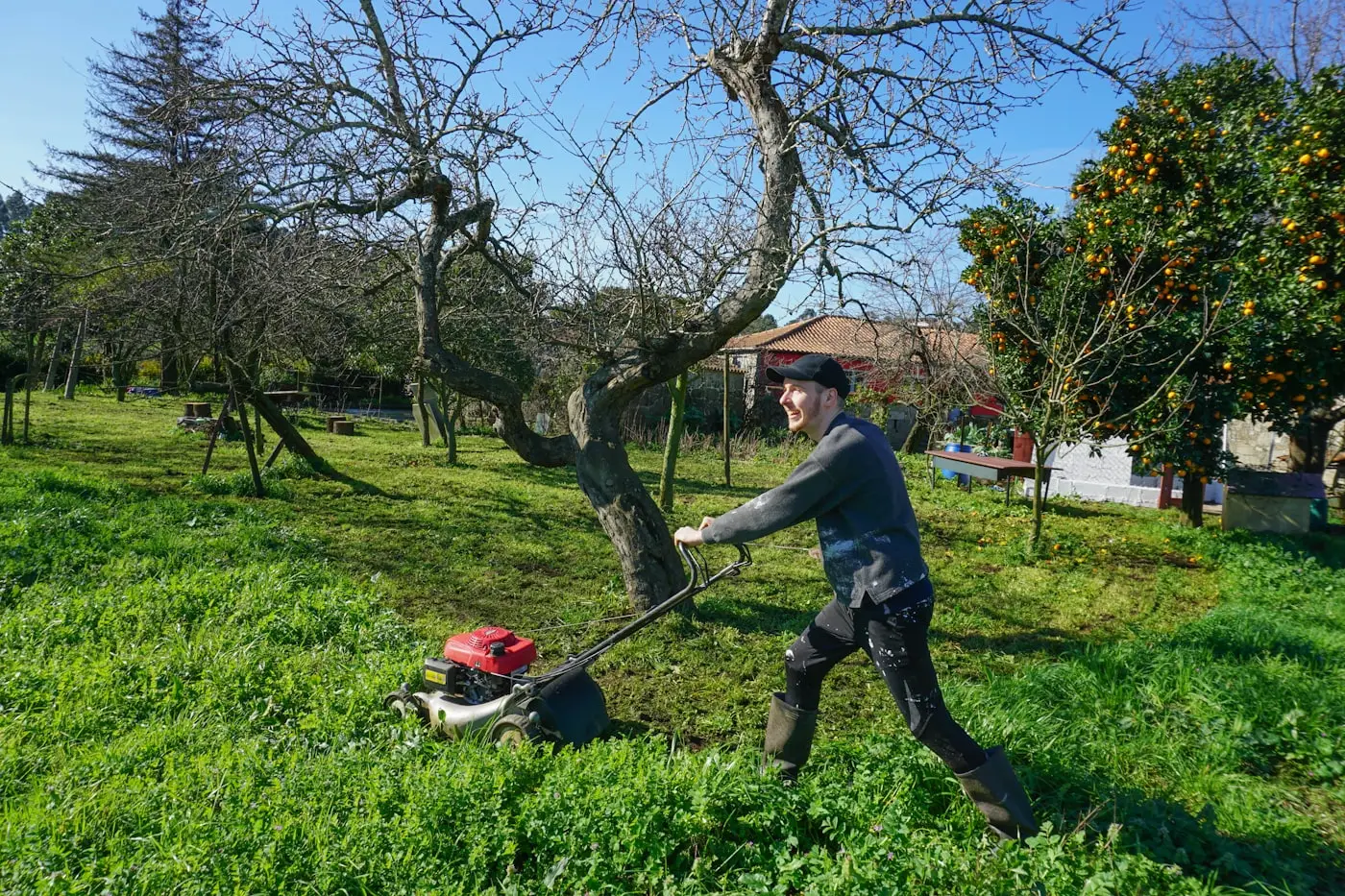
Elland sits in the lower Calder valley between Huddersfield and Halifax, one of the string of historic cloth-trading towns that line this stretch of the river. It is a town with real age - the old stone town centre, the medieval bridge over the Calder, and the industrial heritage along the riverbank give it a character that is distinct from the larger towns on either side. The HX5 postcode covers Elland itself along with Greetland and Stainland to the south and some of the fringe hamlets toward Lindwell. These areas have quite different garden conditions from the town centre streets, and a gardener who knows the full HX5 area will understand why.
If you are looking for a gardener in Elland, the most useful thing to understand before you start searching is that this is not a uniform town in gardening terms. The small back yards on Elm Street and West Street in the old town centre, the river-adjacent flat gardens that stay wet into April, and the larger open plots on Greetland Road and above toward Stainland are three quite different propositions. The right gardener for one may not be the right gardener for another. This guide covers what you actually need to know to find, evaluate, and hire effectively in HX5.
Gardening conditions in Elland
Elland's soil profile is shaped by the same Calder valley geology that affects all of Calderdale, with some local variations that matter for garden management. The valley floor near the river - the streets closest to the Calder, including the older town-centre areas and the riverside flat land - sits on alluvial clay. This soil is heavy, fertile, and slow to drain. Gardens in this zone stay cold and wet for extended periods after autumn and winter rainfall, and the Calder's occasional flood events mean the water table can be elevated even in years where actual floodwater does not reach residential properties.
If your garden is on the flat land near the river and your lawn develops significant moss through winter, this is the direct explanation. The combination of heavy soil, poor drainage, and cold wet conditions from October to March creates exactly what moss needs to establish. Standard mowing does not address this. What does help - and what makes a lasting difference over two to three seasons - is hollow-tine lawn aeration in autumn, followed by scarification to remove thatch, and overseeding with a grass mix that performs in damp, moderately shaded conditions. A gardener who has worked the valley-floor areas of Elland will recommend this proactively. One who only offers a mowing service without addressing the soil beneath is not solving the real problem.
On the hillsides above the town - the streets climbing toward Greetland Road and the upper areas toward Lindwell - conditions improve considerably. The mix of Millstone Grit and Coal Measures soils on the slopes drains better than the valley floor and is more workable across more of the year. Gardens in this zone tend to be more conventionally productive and need less specialist intervention for drainage, though they can dry out in a prolonged summer dry spell. The Stainland and Greetland area to the south of Elland proper has more open plots with rural character - larger gardens, more established trees and hedges, and a different set of maintenance priorities from the compact town-centre gardens.
The old town centre itself has a garden type that is genuinely unique to stone-built Yorkshire mill towns. On streets like Elm Street and West Street, and in the older terrace rows running off the town centre, many rear gardens are fully or partially flagged or cobbled with minimal cultivated ground. These are low-maintenance in one sense - there is not much to mow - but they accumulate moss on the flags, weeds between joints, and can look neglected quickly if not kept on top of. A gardener who understands this type of space and knows how to keep it tidy without treating it like a conventional lawn-and-borders garden is what you want for a town-centre HX5 property.
Elland Bypass and stone boundary walls
The A6025 Elland Bypass runs directly above some parts of the town, and properties below the bypass level can experience some noise and dust. More relevantly for gardening, the traditional boundary treatment in Elland is stone walling rather than hedging - many of the older properties have dry-stone or mortared stone boundaries that do not need trimming but do need periodic maintenance and occasional repointing. A good local gardener will know the difference between a wall that needs a mason and one that just needs some clearance work and vegetation removal at the base.
Finding a gardener in Elland
Elland is served by gardeners who cover the Calderdale area broadly - the same people who often cover Halifax, Brighouse, Sowerby Bridge, and Rastrick. That coverage is generally fine; the conditions across lower Calderdale are reasonably consistent. The key questions, as in any of these towns, are whether the gardener has worked in the specific part of Elland where your property is, and whether they understand the valley-floor soil conditions if your garden is near the river.
A direct recommendation from a nearby neighbour who has used the same gardener for more than one season is worth considerably more than any online review. If someone on your street or immediately adjacent has a garden that looks consistently well kept, it is worth asking who maintains it. For a broader guide to evaluating and vetting gardeners you find through other means, the Yorkshire gardener vetting guide covers the key steps. For the wider area context, the Yorkshire gardeners near me guide covers the main search approaches.
National lead platforms will appear in search results for Elland. They work by selling your contact details to multiple contractors simultaneously, which produces multiple phone calls in quick succession rather than a considered match. The gardeners most active on these platforms are not always the best in the area. A introduction service that connects you to a single local gardener covering your specific HX5 postcode is a calmer process and tends to produce better outcomes.
What garden work gets booked in Elland
Regular fortnightly garden maintenance from April to October is the most common arrangement across Elland. A typical fortnightly visit covers lawn mowing, border edging, weeding, path clearing, and light pruning. For the smaller town-centre gardens, this is usually an hour to ninety minutes per visit. For the larger Greetland and Stainland plots, it can be half a day or more.
Spring tidies are in demand from late March through May. For river-adjacent properties in Elland, the spring tidy is often heavier than in other towns because winter waterlogging leaves lawns compacted and moss-heavy and borders matted with dead wet growth. A proper spring reset on a valley-floor HX5 garden typically covers scarification of moss-affected lawn areas, cutting back and removing winter debris from borders, resetting lawn edges, and assessing what drainage work might be useful before summer. See the Yorkshire spring garden tidy guide for what a one-off reset involves.
Hedge trimming is consistently in demand across Elland's older streets. Where there are hedges rather than stone walls, they tend to be established privet and hawthorn that needs two cuts a year to stay manageable - typically June-July and September. For the Stainland and Greetland area properties with larger boundary hedges, the June cut is particularly important as growth through late May and June can be fast on the hillside. See the hedge trimming cost guide for typical pricing.
Lawn aeration and scarification is consistently requested on the valley-floor properties in autumn. The alluvial clay soil near the Calder compacts easily and drains poorly, creating the conditions for moss and thin grass that standard mowing does not fix. An autumn aeration and scarification cycle, followed by overseeding, is the correct treatment. Done consistently for two to three years, it makes a visible and lasting difference to how the lawn performs through the difficult Yorkshire winter months.
Garden clearance is in demand on properties that have been inherited, purchased after a period of tenancy, or left unmanaged for a season or more. On the valley-floor clay in Elland, root removal and soil clearance in heavy wet ground is significantly harder than on the lighter hillside soil. Always request a site visit and a fixed price for any clearance work rather than accepting an hourly estimate - the time involved on heavy clay is difficult to predict remotely. See the garden clearance cost guide for current pricing context.
For the town-centre properties with fully or partially flagged rear yards, general yard and edge maintenance - clearing moss from flags, removing weeds from joints, keeping any planted areas tidy - is a distinct service type that not all maintenance gardeners are comfortable with. If your garden is primarily flagged rather than grassed, check when enquiring that the gardener has experience with this type of space.
What it costs
Elland sits within the Calderdale rate band, broadly comparable with Halifax, Brighouse, and Sowerby Bridge. For the full regional comparison across Yorkshire, see the Yorkshire gardener cost guide.
| Rate type | Elland HX5, 2026 | Notes |
|---|---|---|
| Hourly rate (maintenance) | £25-£32/hr | Regular contracts at the lower end; one-off visits higher |
| Day rate (7-8 hrs) | £120-£170 | Full clearance, restoration, or larger Stainland/Greetland plots |
| Fortnightly maintenance visit | £35-£65 per visit | Contract pricing; small town-centre gardens lower, larger plots higher |
| One-off lawn cut | £25-£55 | Small back yards lower end; larger Greetland area gardens higher |
| Spring tidy (one-off) | £80-£190 | River-adjacent plots with heavy moss and compaction take longer |
| Hedge trimming (standard domestic) | £38-£90 per visit | Established terrace and hillside boundaries toward the higher end |
| Lawn aeration and scarification | £55-£135 | Autumn treatment; most relevant for valley-floor clay gardens |
| Garden clearance (medium plot) | £185-£440 | Fixed quote after site visit; heavy alluvial clay root extraction adds time |
What to look for when hiring
- Public liability insurance: Minimum £2m cover. Ask to see the certificate with the insurer name, policy number, and expiry date. Do not accept verbal confirmation alone.
- Waste Carrier's Licence: Required by law for removing green waste or soil from your property. Ask for the licence number on any clearance or waste-removal job.
- Knowledge of HX5 soil conditions: Ask specifically whether they have worked the valley-floor clay areas near the Calder and the better-draining hillside gardens toward Greetland. The two are genuinely different in how they need to be managed and a gardener who has worked both will give you a better assessment of your garden.
- Experience with flagged yards if relevant: If your garden is primarily flagged rather than grassed, check that they have worked with this type of space before. Moss removal from flags and weed clearance from joints requires different tools and technique from a standard lawn maintenance visit.
- In-person quotes for clearance: Valley-floor clay in Elland makes remote estimates unreliable for anything more than a standard maintenance visit. Any clearance, restoration, or larger job needs a site visit before a price is agreed.
- Written confirmation of scope: Agree in writing before work starts what is included, what extras cost, and what the notice period is for any changes.
Seasonal considerations for Elland gardens
The Yorkshire lawn care calendar applies across HX5 with some Elland-specific notes.
Late winter - February and March - is when valley-floor gardens near the Calder look their worst. Months of cold, wet weather with no growth to compensate produce lawns that are thin, moss-heavy, and compacted. The instinct is to wait until the lawn looks better before doing anything, but the more effective approach is to plan a spring treatment in February and have it carried out in late March or April. Hollow-tine aeration as soon as the soil is workable, followed by scarification and overseeding, gives new grass the longest possible window to establish before summer. Book this work in February - spring schedules in HX5 fill quickly.
The Calder valley position means Elland gets reasonable rainfall through spring and summer, which generally keeps hillside and upper-slope gardens looking reasonable without irrigation. Valley-floor gardens benefit from this too, though in a wet June the combination of heavy soil and good rainfall can mean the lawn is too soft to mow without leaving ruts. A good local gardener will judge when conditions are right to work rather than mowing on a schedule regardless of ground conditions - your lawn will benefit from that judgement.
Autumn - September and October - is the productive window for the key soil health work in HX5. Aeration and scarification on clay soils, the second hedge cut of the year, border clearance before everything dies back, and any structural work on the garden that needs dry conditions. Getting the main autumn treatment done in September rather than November means it is completed before the worst of the winter waterlogging sets in and while soil temperatures are still high enough for overseeded grass to germinate.
Barkisland Common above the town gives a completely different microclimate - windier, stonier, exposed - and gardens right on the common edge need different management from the valley gardens below. If your property is in that zone, mention it when speaking to any gardener: it changes the planting choices, the timing of works, and what is realistic to grow.
Regular maintenance vs one-off work
In Elland, the choice between a regular maintenance arrangement and one-off bookings depends on your garden type and what you want from it. Regular garden maintenance contracts - typically fortnightly from April to October - are the right choice if you want your garden to stay in consistent good shape without your regular involvement. The per-visit cost on a contract is lower than the one-off rate, and after a season your gardener will know your specific soil, your specific drainage patterns, and which parts of your garden need the most attention in each month. That accumulated knowledge is genuinely valuable, particularly on a valley-floor garden where the soil conditions change significantly across the seasons.
One-off work suits defined jobs: clearing an overgrown rear garden, cutting hedges that have not been touched in a few years, a spring reset before you sell the property. These are priced at the one-off rate, which is higher per hour than contract work. For the Yorkshire garden maintenance contracts guide, see the dedicated article for a full breakdown of what a good ongoing arrangement looks like and what to watch out for.
Frequently Asked Questions
How do I find a reliable gardener in Elland?
A direct recommendation from a neighbour who has used the same person for a full season is the most reliable route. If you do not have that, a local introduction service connecting you to one local gardener covering HX5 is better than a national platform. When you make contact, ask about public liability insurance, a Waste Carrier's Licence, and experience with both the valley-floor clay conditions near the Calder and the hillside gardens toward Greetland and Stainland.
How much does a gardener in Elland charge?
Typical rates in HX5 in 2026 run £25-£32 per hour for maintenance, with day rates of £175-£300. Fortnightly contract visits for a medium garden are £35-£65. Valley-floor clearance work on heavy alluvial clay sits toward the upper end of day rates. See the Yorkshire gardener cost guide for the full regional context.
What should I look for in a Elland gardener?
Insurance and waste licence documentation are the baseline. Then ask specifically about experience with the different parts of HX5: valley-floor clay near the Calder, hillside mixed soil toward Greetland, and town-centre flagged yards if your garden has a significant paved element. A gardener who has worked across the full HX5 area will understand why the same treatment works differently depending on where in Elland your property is.
What garden work gets booked most in Elland?
Regular fortnightly maintenance from April to October. Spring tidies from late March through May. Hedge trimming twice yearly. Lawn aeration and scarification in autumn on the valley-floor gardens near the Calder. See the Yorkshire lawn care calendar for the full monthly breakdown.
Do gardeners in Elland take on one-off jobs or only regular contracts?
Most will take on one-off jobs. April to September fills quickly, so book ahead for spring work. One-off clearances and hedge cuts are all available as standalone jobs. For valley-floor clearance on heavy clay, always request a fixed price after a site visit. The Yorkshire maintenance contracts guide covers what to expect from an ongoing arrangement.
Related reading
- How much does a gardener cost in Yorkshire? (2026)
- How to find and vet a gardener in Yorkshire
- Yorkshire lawn care calendar - month by month
- Lawn scarification in Yorkshire
- Lawn aeration for Yorkshire gardens
- Spring garden tidy in Yorkshire
- Garden maintenance contracts in Yorkshire
- Gardeners in Sowerby Bridge
- Garden maintenance across Yorkshire
- Lawn edging across Yorkshire
Gardeners in other nearby areas
We cover the full West Yorkshire and wider Yorkshire area:
Get a quote for your Elland garden.
60-second assessment. If a local HX5 gardener takes your enquiry, they call you with a price for your specific garden and job.
Start the assessment