Garden design · Elland, West Yorkshire
Elland garden design and landscaping.
Elland HX5 sits where the Calder Valley opens out, and your garden reflects that split: valley-floor plots carry flood history and alluvial soil, hillside gardens climb on thin acid gritstone. Getting it right means a designer who knows both conditions. Local designers quote you directly. Design from £500.
- Free initial estimates
- Local designers who quote directly
- Design from £500
- No call centres
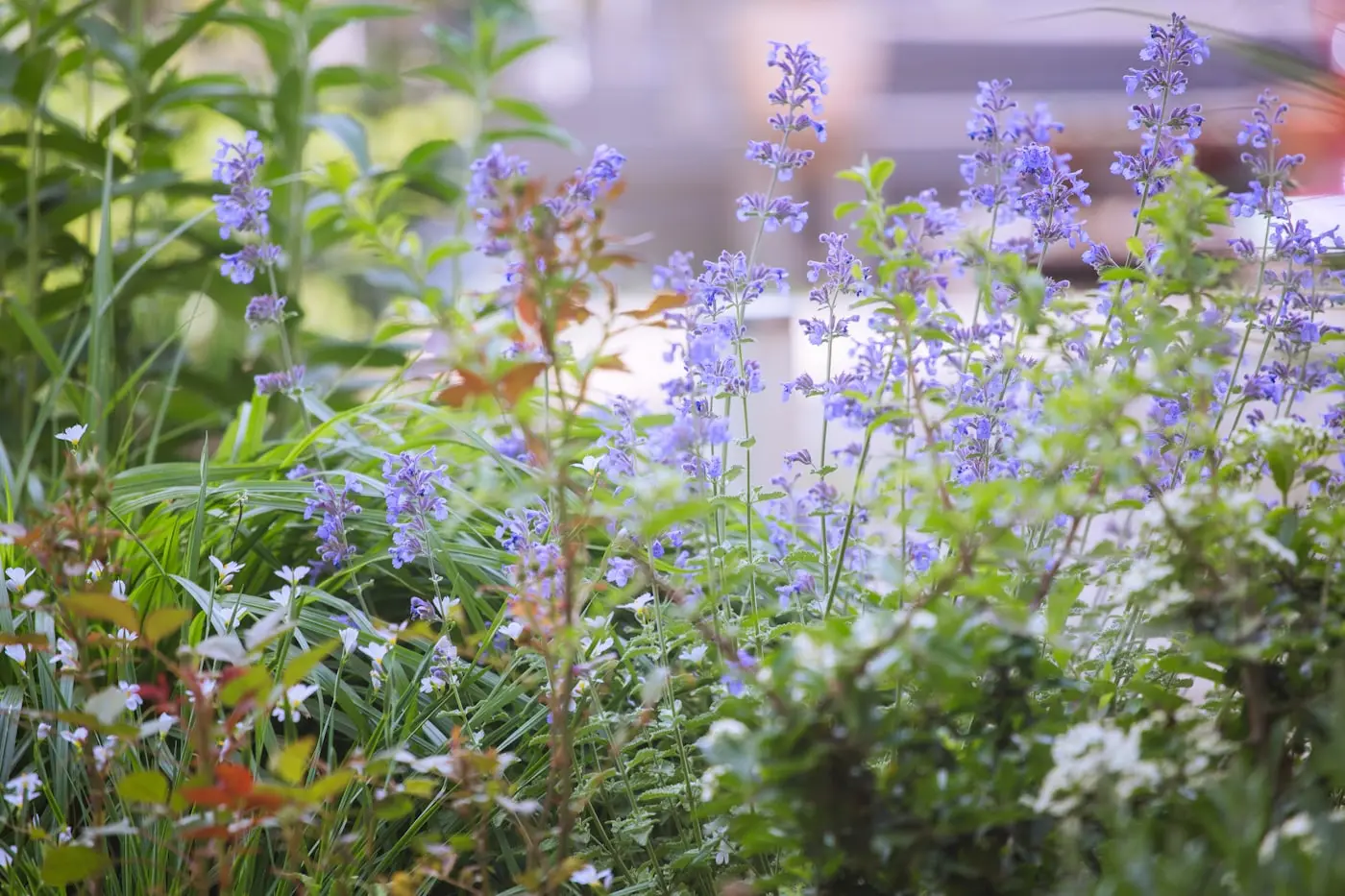
What garden design looks like in Elland
Elland occupies a distinctive position in the Calder Valley: the valley is wider and flatter here than further upstream at Mytholmroyd or Hebden Bridge, but the contrast between valley floor and hillside is still dramatic. Properties near the River Calder at the town's lower levels sit on alluvial flood deposits that are heavier and more fertile than the hillside soils above, but that have experienced significant flood events, most notably in December 2015 when the River Calder burst its banks across much of the lower Calder Valley. Properties climbing the hillside toward Greetland and West Vale sit on Millstone Grit, with thin, acid soil and proper slope to deal with.
This dual character is the defining fact of garden design in Elland. It is not one place with one soil type and one set of challenges. A Victorian terraced house on the flat near the town centre has completely different design requirements from a 1930s semi climbing the hillside. A good designer will assess your specific position, your soil pH, your aspect, and your flood history before making a single recommendation.
The industrial heritage of Elland also shapes the built fabric of many gardens. Victorian and Edwardian properties are common, with the classic features of that era: small rear yards, stone boundary walls, occasionally a longer strip of garden behind the back-to-back terraces. Redesigning these spaces to feel generous and contemporary while respecting the character of the building is a distinctive Elland design challenge.
For day-to-day garden care once your design is in place, the local gardeners in Elland page covers what to look for in a gardener here. For the full picture of what the garden design service involves across Yorkshire, that page is the starting point.
Costs and process for Elland garden design
A planting plan for a typical Elland HX5 garden runs £350-900. Full design with project management, where the designer coordinates contractors and manages the project through to completion, runs £900-3,500 or more. Flood-resilient redesigns for valley-bottom properties and steep terraced work on hillside plots both push toward the higher end. Full builds including hard landscaping typically cost £6,000-18,000+ for a mid-size garden. Designers quote directly; you deal with them without any intermediary fees.
The process starts with a site visit: the designer assesses your soil, drainage, aspect, flood history if relevant, and the plants and structures already on the plot. They produce a proposal, plant list, and costings. You then decide whether to implement it yourself or have the designer manage the whole project. For flood-resilient schemes and terraced hillside work, having the designer manage the structural phase is usually worthwhile because mistakes in drainage and retaining walls are expensive to correct.
Our Yorkshire garden designer cost guide covers what drives fees and what you can realistically expect at each price point.
Get your Elland garden sorted this season.
Tell us about your plot, your soil, and whether you are valley-floor or hillside. A local designer comes back with a real figure. Design from £500.
Start your free estimateThe full local guide
Elland's two garden environments
Valley-floor gardens: flood resilience and heavy soil
Lower Elland gardens near the Calder have a soil type that is genuinely productive once you understand it. The alluvial deposits are deeper and richer than the gritstone hillside above, but the flood risk is real and it changes how you design. The 2015 Boxing Day floods affected properties across the lower Calder Valley severely, and homeowners in flood-risk areas have increasingly recognised that a garden designed without flood considerations is one that will need periodic rebuilding.
Flood-resilient design for valley-bottom Elland plots starts with surface water management. Permeable surfaces, including resin-bound gravel, permeable block paving, and planted gravel gardens, allow water to infiltrate rather than pooling and directing flow toward the house or neighbouring properties. Raised productive beds on brick or concrete plinths protect your growing area from flood contamination. Plants chosen for moisture tolerance, including Iris pseudacorus, Gunnera, native willows, and moisture-tolerant grasses, can be incorporated as genuine design features rather than compromises. Structural elements in the flood zone should be robust: stone over timber, hardwearing materials over delicate ones.
The heavy alluvial soil benefits from structured raised beds for vegetables and cut flowers, where you can build up a good growing medium above the sometimes waterlogged ground level. These do not need to look utilitarian. Well-designed raised beds in stone or Cor-ten steel are a handsome feature of contemporary garden design and work particularly well against the industrial stone character of Elland's built fabric.
Hillside gardens: gritstone terracing and acid planting
Properties climbing the hillside from the valley floor, particularly toward Greetland and West Vale, have gardens on Millstone Grit slopes with thin, acid soil. This is genuinely different territory from the valley floor below. The soil pH runs 5.5-6.5 on most hillside plots, which means plants that would fail in a neutral Yorkshire garden thrive here: rhododendrons, camellias, and pieris can go in open ground, heathers are at home in the acid conditions, and ferns establish naturally in the shadier spots.
The slope is the primary design challenge on Elland's hillside plots. Access to materials, particularly topsoil, stone, and plants, is harder on a steep site. Retaining walls are often required to create level terraces, and the gritstone vernacular means local stone is both the practical and aesthetic choice. A well-executed terraced hillside garden in Elland is dramatically beautiful: multiple levels, each with its own character, connected by stone steps that suit the industrial village setting perfectly.
Growing season on the higher Elland hillside is slightly shorter than the valley floor, and wind exposure is greater. Plant choices need to reflect this: the windbreak value of a well-placed hedge or robust shrub planting is significant on an exposed slope.
What gets designed in Elland gardens
Victorian and Edwardian back garden redesigns
Many Elland properties are Victorian or Edwardian terraces with back gardens that were never designed in any meaningful sense. The typical starting point is a concrete or paving-slab surface, a rotary washing line, and a strip of soil around the boundary with whatever happened to grow there. Redesigning these spaces requires thinking about what the household actually wants from the garden: somewhere to sit, somewhere for children to play, somewhere to grow food, or a combination of all three in a modest space.
The design challenge is to make a small space feel generous. Strong structure helps: a consistent hard surface material rather than mixed paving, clear boundaries, one or two focal points rather than a collection of competing features. In a Victorian terrace garden, vertical space matters: wall-trained climbers, a pergola, raised beds against the back boundary wall. These all add depth without taking floor space.
Flood-resilient garden redesigns
For valley-bottom properties that have experienced flooding, a redesign brief specifically oriented around resilience is now a common request in Elland. The design does not need to look defensive or utilitarian. A well-designed flood-resilient garden is one that uses water as a design element, manages it intelligently, and recovers quickly from an event rather than requiring complete rebuilding. Stone surfaces, planted rain gardens, moisture-tolerant planting schemes, and raised productive areas can all combine into a garden that is genuinely attractive and genuinely practical.
Hillside terrace creation
On steeper Elland hillside plots, creating usable level space through terracing is often the primary brief. Level terraces retained by gritstone walls, connected by broad steps, transform an unusable slope into a multi-level garden with real character. The materials palette is important: local gritstone stone in the retaining walls, consistent paving that references the stone character, planting that softens the hard edges without obscuring the structure.
Cost guide for Elland garden design
Costs for valley-floor flood-resilient redesigns and hillside terracing both tend toward the upper end of ranges because of additional technical complexity. These are typical ranges for HX5 projects.
| Service | Typical cost | What it includes |
|---|---|---|
| Initial consultation | Free to £75-150 | Site visit, brief discussion, outline proposal. |
| Planting plan only | £350-900 | Scaled scheme, plant list, spacings. You implement. |
| Full design with project management | £900-3,500+ | Design, contractor coordination, planting oversight. |
| Flood-resilient garden redesign | £2,500-9,000+ | Permeable surfaces, raised beds, drainage, resilient planting. |
| Hillside terrace creation | £5,000-16,000+ | Retaining walls, steps, drainage, surfaces, planting. |
| Victorian yard redesign (small plot) | £3,000-9,000 | Hard surface, boundary planting, focal features. |
| Raised bed kitchen garden setup | £600-1,500 | 2-4 raised beds, improved soil, initial planting plan. |
For a full breakdown of what drives garden design costs across Yorkshire, see our gardening cost guide.
Plants that suit Elland's conditions
The acid gritstone hillside and the heavier alluvial valley floor need different planting strategies. Here is what works in each zone:
- Valley-floor moisture-tolerant plants: Iris pseudacorus (yellow flag iris) for wet margins, Gunnera manicata for dramatic bold structure in moist borders, Rodgersia for large-leaved architectural planting, moisture-tolerant grasses including Molinia caerulea (purple moor grass, native to the Pennines).
- Hillside acid-soil specialists: Rhododendrons and azaleas in open ground where the pH allows it, Calluna and Erica heathers native to the surrounding moorland, Dryopteris and Polystichum ferns for shaded gritstone slopes, hydrangeas in the acid moisture for long summer colour.
- Hardy perennials for both zones: Hardy geraniums (Rozanne, Patricia), epimedium for dry shade under established trees, hellebores for late-winter colour, alliums for spring.
- Structural plants: Native hawthorn and blackthorn for windbreak hedging that handles Calder Valley exposure, yew for topiary and formal hedging on more sheltered plots, cornus for winter stem colour in wetter ground.
Process: what to expect from an Elland garden designer
- Initial brief. You describe your garden, your position (valley floor or hillside), any flood history, your budget, and what you want from the space. Photos of the current state and any problem areas help considerably.
- Site visit. The designer assesses soil type and pH, drainage (particularly important for valley-floor plots), aspect and sun patterns, existing structures, and plants worth keeping.
- Proposal and costings. You receive a scaled proposal, plant list, and indicative costs. For flood-resilient or terraced projects, this includes drainage plans and retaining structure specification.
- Phasing. Hard landscaping and drainage comes first. Planting follows. For terraced hillside gardens, structural work in autumn and planting in spring gives the best establishment through the first growing season.
- Installation and establishment. The designer sources plants, oversees planting, and advises on aftercare through the first season.
Frequently asked questions about garden design in Elland
What soil does my Elland garden have?
Elland HX5 gardens vary significantly by position. Valley-floor gardens near the Calder have alluvial deposits: heavier, more fertile, potentially flood-affected. Hillside gardens toward Greetland sit on thin, acid Millstone Grit, pH 5.5-6.5. Gardens on the intermediate slopes often have a mixture. A soil pH test before planting is worthwhile and takes about 20 minutes with a basic kit.
How much does garden design cost in Elland?
A planting plan typically costs £350-900. Full design with project management runs £900-3,500+. Flood-resilient redesigns and hillside terracing add technical complexity and cost accordingly. Full builds run £6,000-18,000+. Designers quote directly with no call centre fees.
How do you make a garden flood-resilient in Elland?
Flood-resilient design raises productive elements on plinths, uses permeable surfaces to manage water infiltration, selects plants that tolerate temporary inundation, avoids timber structures in the flood zone, and builds clear drainage paths. It can be as attractive as conventional garden design; the principles just inform different material and plant choices.
What plants work well on Elland's hillside gritstone gardens?
On the acid Millstone Grit hillside, rhododendrons, azaleas, and heathers all thrive in open ground. Hardy ferns colonise shaded slopes naturally. Hydrangeas suit the moist acid conditions for summer colour. For structure, native hawthorn hedging handles hillside exposure well, and ornamental grasses including Molinia and Deschampsia are at home in the acid conditions.
Related services
Once your design is planted, regular garden maintenance keeps it in shape. For overgrown or neglected plots that need clearing first, see our garden clearance service. For new hedging once your boundary planting is in, see hedge trimming in West Yorkshire.
Related: Find a gardener in Elland
Areas near Elland we also cover
We cover garden design across the wider Calderdale area. For the larger Calder Valley town upstream, see Hebden Bridge garden design. For the town immediately east, see Brighouse garden design. For Sowerby Bridge to the west, see Sowerby Bridge garden design. The full garden design service page lists all towns we cover.