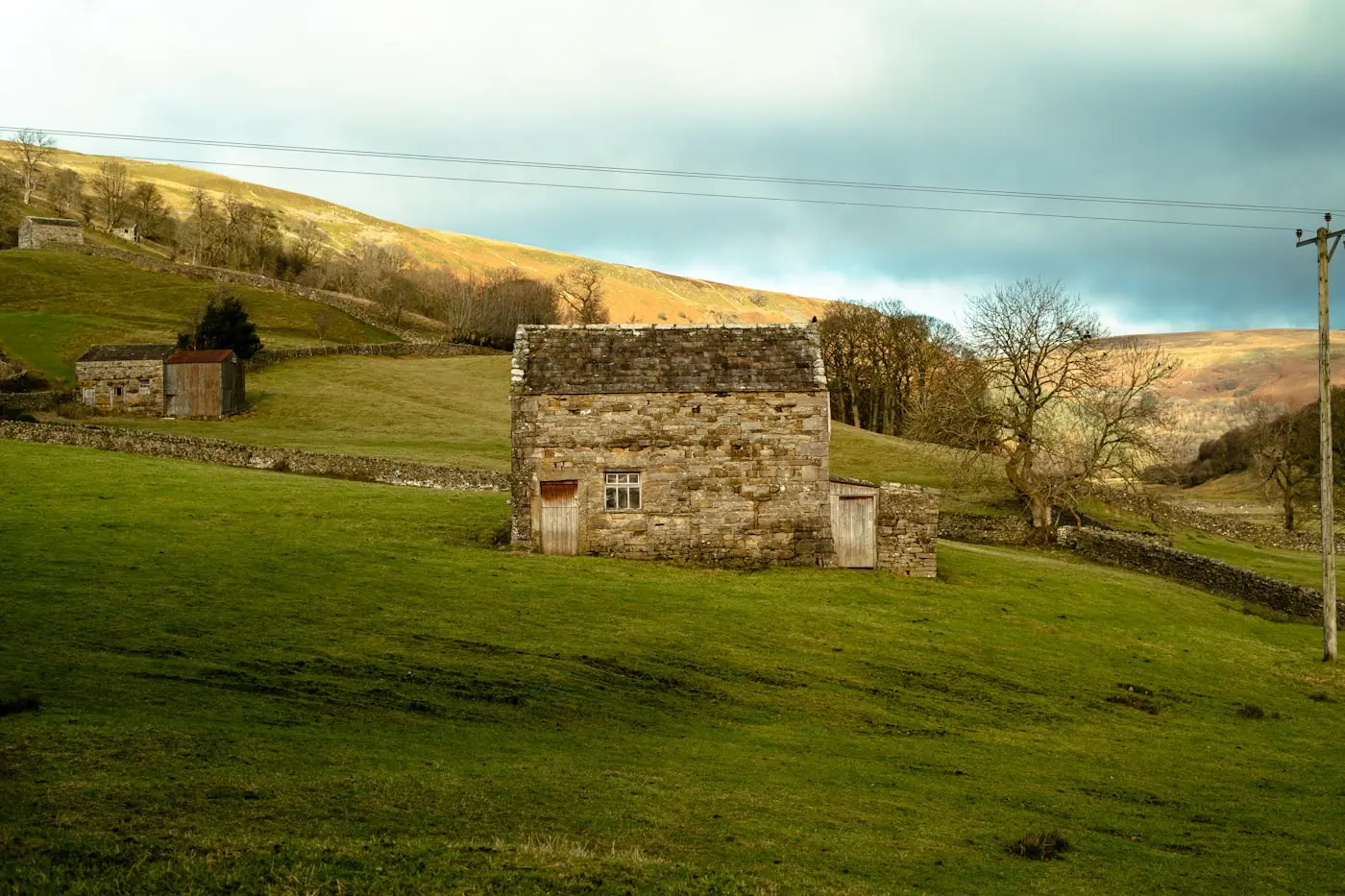
Halifax is the main town of Calderdale and one of West Yorkshire's most characterful places - steep Pennine valley sides, the River Calder cutting through the valley floor, an extraordinary industrial heritage in the wool trade and the Grade I listed Piece Hall at its centre. None of which makes it the easiest place to garden. The combination of high rainfall, compressed growing season, varied and often difficult soil, and a housing stock dominated by Victorian and Edwardian terraces with complex rear access creates a distinctive set of challenges for garden maintenance in HX1-HX3. The Yorkshire towns overview covers the Calderdale area broadly; this guide focuses specifically on what Halifax garden work costs, what the local conditions mean in practice, and how to find and vet a gardener who knows the area.
The Quick Answer: What Does a Gardener Cost in Halifax?
Halifax sits at the lower-to-mid end of the West Yorkshire pricing band. Rates here are cheaper than Harrogate, broadly in line with Bradford, and reflect the local income profile and the practical realities of the terrain. The figures below are working 2026 rates for HX1-HX3 and the wider Calderdale area.
| Service | Halifax typical range (2026) | Notes |
|---|---|---|
| Hourly rate (maintenance) | £25-£35/hr | Lower end for regular contract work; upper end for one-off visits and access-difficult terraced plots. |
| Lawn cut (one-off) | £25-£60 | Standard accessible garden. Add for steep slopes or no rear vehicle access. |
| Fortnightly maintenance visit | £40-£80 per visit | Small-to-medium terraced garden on regular contract. Larger suburban plots with open access higher. |
| Half-day maintenance visit | £80-£150 | Medium garden. Access-difficult plots add 20-30% to time on site. |
| Full-day rate | £150-£250 | Established for larger suburban plots or combined maintenance and clearance days. |
| Hedge trimming - standard domestic | £40-£120 | Simple front privet or laurel at the lower end. Established hawthorn boundary runs at the upper end and above. |
| Overgrown hawthorn hedge | £80-£200+ | Mature thorny hawthorn needing significant reduction. Always quote after site visit, not on the phone. |
| Spring tidy (one-off) | £100-£220 | Standard accessible terraced back garden. Larger suburban gardens or significantly overgrown plots higher. |
| Garden clearance (medium plot) | £200-£450 | Flat accessible garden. Steep or access-difficult plots can add significantly to clearance costs. |
The most important pricing variable in Halifax that does not apply in the same way elsewhere in West Yorkshire is access. A gardener in Bradford or Leeds can often drive to within a few metres of a rear garden. In Halifax's terraced streets - whether in Siddal, Southowram, Boothtown or the terraces on the valley sides above the town centre - the rear garden may only be reachable through a narrow back passage, up a flight of stone steps, or across a steep sloping yard. Every minute of carrying equipment and removing green waste through a ginnel rather than loading straight into a vehicle adds to the job time. Ask for an in-person estimate rather than a phone quote for any Halifax terraced property: the difference between what a gardener expects and what they find on arrival can be considerable.
The Maths: Is It Worth Paying a Gardener in Halifax?
Consider a typical Halifax terraced property with a rear garden around 40 sq metres - not unusual in Siddal, Northowram or the older streets below Beacon Hill. Left unmaintained for a season, that garden will typically need: one clearance session to cut back overgrown grass and weeds (three to four hours including green waste removal), a hedge trim on the hawthorn or privet boundary (one to two hours), and then fortnightly maintenance through the summer (perhaps 45 minutes per visit from April to October). Total: roughly 15-20 hours across the year.
At Halifax rates of £25-£28/hr on a regular contract, that runs to roughly £300-£560 per year - or around £6-£11 per week averaged out. The alternative - doing it yourself every fortnight through a compressed growing season, carrying equipment through a narrow ginnel, dealing with hawthorn thorns on established boundary hedges - is genuinely unpleasant work on a difficult Halifax terrace. For most people, the comparison is not between £400 and free: it is between £400 and several weekends of hard physical labour in a space designed to be awkward. The value of handing that over is real.
For the broader UK cost picture, the how much does a gardener cost in the UK guide puts Halifax's rates in national context. For day rate specifics, see the gardener day rate UK guide.
Halifax's Terrain: What the Valley Means for Your Garden
Halifax does not sit in a valley - it clings to the sides of one. The town centre around the Piece Hall and the covered market sits at around 80-100 metres above sea level, but the residential areas fan out steeply from there. Northowram and Shelf to the north-east are on high ground above 200 metres. Illingworth and Mixenden to the north-west are on the exposed Pennine plateau. Siddal and Southowram to the south-east hang on the valley sides above the Calder and Hebble Navigation. This topography has direct consequences for gardening.
Aspect and exposure
Gardens on the south and east-facing valley sides - Siddal, parts of Southowram, the streets below Beacon Hill - get decent sun and some shelter from the prevailing westerlies. These are the more straightforward Halifax gardens to maintain. Gardens on the north and west-facing valley sides and the exposed upland edges around Illingworth and Mixenden face the Pennine winds and get significantly less useful sunlight through the growing season. Grass grows more slowly, moss takes hold more readily, and the growing season is shorter. If your garden is on a north-facing Halifax hillside, your lawn will behave very differently from a south-facing garden 500 metres away.
Slope and drainage
Most Halifax gardens on the valley sides have a significant slope. This affects everything: lawns are harder to mow evenly on steep gradients, drainage can be problematic where the slope flattens into a terrace, and soil erosion is a long-term issue on bare borders on steeper aspects. Retaining walls - often the original stone sets and drystone boundaries of the Victorian terrace era - need maintenance alongside the planting. A garden on a steep Halifax hillside where the retaining walls have begun to shift or the drainage from the lawn has started to cause problems is a more complex job than a flat suburban plot, and the pricing should reflect that. Always describe your garden's slope and aspect when requesting an estimate.
Rainfall and growing season
Halifax receives around 1,100-1,200mm of rainfall per year - significantly more than the Vale of York (around 600mm) and above the Yorkshire average. The combination of high rainfall and Pennine elevation means the growing season is genuinely compressed. The last frost date in Halifax is typically mid-April to early May on the higher ground - sometimes later in a late spring. The first autumn frosts typically arrive in October. In practice, your main gardening window is late April to late September - about five months of productive growing compared to six or seven months for gardens in the sheltered Vale of York. This is worth factoring into any planting plan: tender plants that would thrive in a York garden with long warm autumns need more protection or seasonal lifting in Halifax. Conversely, the high rainfall and cloud cover mean drought stress is rarely the issue it can be for Harrogate lawns on free-draining limestone.
Halifax postcode coverage
HX1 (Halifax town centre, Siddal, Southowram, King Cross), HX2 (Illingworth, Mixenden, Ovenden, Shelf, Northowram, Boothtown), HX3 (Brighouse, Elland, Rastrick, Southowram east, Hipperholme). Upper Calder Valley: HX7 (Hebden Bridge, Mytholmroyd, Sowerby Bridge). All covered from the Calderdale network.
Soil in Halifax: Two Very Different Characters
Halifax straddles a geological boundary that produces two quite distinct gardening environments. Understanding which you are dealing with affects what will grow, how your lawn behaves, and what kind of maintenance is appropriate.
Valley floor: heavy clay and alluvial soil
The valley bottom along the River Calder - through Sowerby Bridge, around the industrial heritage areas near the Calder and Hebble Navigation, and along the valley floor through Elland and Brighouse - has heavy alluvial clay and silt soils deposited by the river over centuries. This soil is fertile and moisture-retentive but slow to drain and prone to compaction. In a wet Halifax spring - which is most springs - valley-floor gardens can become waterlogged for weeks at a time. Lawns on heavy clay in Halifax take longer to green up in spring, compact more readily under foot traffic, and need regular aeration to prevent moss and thatch build-up. The high rainfall on an already wet, poorly-drained soil is a challenging combination. If your lawn stays spongy into May and moss has taken hold along the lower edges, heavy clay on a poorly-drained valley position is almost certainly the explanation. Annual autumn lawn scarification and aeration makes a real difference on these plots. For a full seasonal lawn treatment programme covering Yorkshire's clay and acid soils, see our dedicated service page.
Valley sides and uplands: acidic millstone grit
Most of the terraced housing stock on the valley sides and the outlying villages on higher ground sits on Carboniferous Millstone Grit. This produces a thin, stony, free-draining, and notably acidic soil. pH values of 5.0-5.5 are not uncommon on the steeper millstone grit slopes. Acidic soil favours certain plants - rhododendrons and azaleas need no amendment to thrive in Halifax's grit soil, heathers do well, and many ericaceous plants can be grown without special compost. For lawns, though, acidic thin soil is challenging: grass struggles to establish a thick sward, moss is persistent, and fertiliser programmes need to be adjusted for the pH. Lime applications are sometimes appropriate before overseeding on the most acid Halifax hillside lawns. A gardener who knows Halifax soil will assess your ground and its depth on a first visit before recommending any lawn treatment programme.
Halifax's Housing Stock and What It Means for Garden Work
Victorian and Edwardian terraces: the access challenge
The largest and most distinctive segment of Halifax's housing stock is Victorian and Edwardian terraced housing - back-to-backs, through-terraces, and stepped hillside rows that were built as quickly as possible to house the workers of the wool trade. These properties define the character of streets across HX1 and HX2: Siddal with its long terrace rows above the Calder valley, the hillside streets of Pellon and Boothtown, the tightly-packed terraces of King Cross and the streets east of the Piece Hall.
For garden maintenance, the defining characteristic of these properties is access. The rear gardens - typically small yards or small-to-medium plots - are often only reachable through a back passage (ginnel) that may be as narrow as 70cm, through a shared rear yard, or up a steep flight of stone steps from the street. There is frequently no rear vehicle access. This means every piece of equipment arrives by hand, and every bag of green waste leaves the same way. A two-hour maintenance job on a flat suburban garden with rear vehicle access might take three hours on a Halifax terrace with a narrow ginnel and steps. Always describe your access situation in full when requesting an estimate. A gardener who gives you a quote over the phone without visiting is making assumptions that may not survive contact with reality.
1930s and post-war semis: Northowram, Hipperholme, Shelf
The interwar and post-war suburban expansion of Halifax reached the higher ground to the north and east of the town, producing ribbons of 1930s semis and post-war estates along the roads to Bradford and Brighouse. Northowram, Shelf, Hipperholme and the A644 corridor have a different garden character from the terraced town centre. These properties typically have open rear vehicle access, larger rear lawns, and more conventional access conditions - closer in character to Bradford or Bradford suburbs than to the terraced Halifax valley streets. Prices for these properties are at the standard Yorkshire rate without the access premium that terraced Halifax commands.
Outlying villages: Illingworth, Mixenden, Greetland, Ripponden
The outlying Calderdale villages range from ex-industrial settlements like Illingworth and Mixenden on the exposed upland north-west of Halifax to the greener, more prosperous villages of Greetland, Ripponden and Barkisland to the south-west. Village properties often have larger gardens, more informal planting, and a character closer to rural North Yorkshire than urban West Yorkshire. These are generally easier-access gardens, often with standard suburban or rural conditions. The higher altitude of Illingworth and Mixenden means the most exposed growing conditions in the Calderdale network - some of the shortest growing seasons and most wind-exposed plots in the area.
Hedges in Halifax: The Hawthorn Problem
If there is one garden maintenance task that defines Halifax more than any other, it is hedge trimming. Halifax has an extraordinarily high density of established hedge boundaries, a legacy of the Victorian terraces and their original boundary treatments. Hawthorn was the species of choice for Victorian Halifax boundary hedging - cheap, fast-establishing, stock-proof, and native. Privet was used extensively in the 1930s suburban expansion. The result is that in 2026, Halifax has thousands of gardens with mature hawthorn or privet boundary hedges that require annual or biennial maintenance.
Hawthorn in Halifax is a particularly significant undertaking. A hawthorn hedge that has been regularly maintained - trimmed once a year to keep it at 4-5 feet and a manageable width - is a perfectly workable garden boundary. A hawthorn hedge that has been left for three or four years, which is common on inherited or rented properties, can develop into a dense, thorny mass of considerable width and height that requires serious reduction work rather than a simple trim. Dense hawthorn is unpleasant to work with: the thorns are sharp enough to puncture gloves, the material is heavy, and removing the arisings from a large hawthorn reduction in a Halifax terrace with no rear vehicle access is a substantial physical task.
Prices for hawthorn hedge work in Halifax reflect this. A standard annual trim on a maintained hawthorn boundary runs £40-£80. A significant reduction job on a neglected established hawthorn - bringing it back from 8-10 feet to 4-5 feet across its full length - can run £100-£200 or more depending on length, access, and the volume of material to be removed. Always get an in-person quote for any hawthorn hedge work and be clear about whether you want a trim or a reduction. The two are very different jobs.
For the full picture on hedge maintenance across Yorkshire including species, seasonal timing, and what to expect from a professional job, see the hedge trimming service page.
Seasonal Advice for Halifax Gardens
Spring (April-May)
Halifax's spring arrives later than most of Yorkshire. Do not be tempted to start mowing until the grass is actually growing - on north-facing hillside plots and the exposed upland gardens around Illingworth and Mixenden, this can mean waiting until early May. The risk of mowing compacted, wet, slow-growing grass in late March is that you damage the sward without achieving any real tidying effect. On valley-floor gardens with heavy clay, the lawn may still be waterlogged in April. Wait for the ground to firm before mowing. April is the right time for any lawn aeration and overseeding - the soil is warming and the season ahead is long enough for newly seeded patches to establish before the autumn.
Spring is also the time to assess your hedges. Any reduction work on overgrown hawthorn or leylandii should be done before late March at the latest - once birds start nesting in hedges (typically from late March onwards), trimming or reduction is restricted by law until August. If your hedge is significantly overgrown and needs more than a light tidy, act in February or March or wait until August.
Summer (June-September)
The core growing season in Halifax runs June to September. Fortnightly grass cutting and edging is the standard maintenance rhythm for most gardens during this period. Halifax's high rainfall means grass grows fast - in a wet June or July, fortnightly may not quite keep pace on faster-growing lawns. On the plus side, drought stress is rarely an issue in Halifax: lawns that would go brown and thin in a Harrogate dry spell in July will typically stay green in Halifax's wetter climate. Watering established lawns is rarely necessary.
Late August and early September is the right window for the main annual hedge trim. The bird nesting season has typically ended by mid-August, hawthorn berries are forming but the hedge has stopped its main growth flush, and trimming now gives a neat finish that will hold through the winter. If your hedge is privet, a single late-summer trim is usually sufficient. If it is established hawthorn, discuss with your gardener whether one cut per year or two (early June and September) is right for the size and condition of your particular hedge.
Autumn (October-November)
Halifax's autumn is short and wet. Leaf clearance is a significant autumn task on any garden with deciduous trees - and the older terraced and suburban streets of Halifax have mature trees that produce substantial autumn leaf fall. Leaves on a Halifax lawn left for more than two or three weeks in wet autumn conditions will begin to kill the grass underneath through light exclusion and moisture retention. Fortnightly clearance visits through October and November are worthwhile on any garden with significant leaf fall. Autumn is also the right time for scarification and overseeding on lawns where moss has been a problem - getting seeded patches established before the frosts gives them a head start in spring.
Winter (December-March)
Most gardening in Halifax effectively stops between December and February. The Pennine climate brings significant frost, persistent cold, and wet conditions that make outdoor work unproductive and potentially damaging. This is the right time to book for the coming season - the gardeners who are best known in the Halifax area have committed spring and summer rounds that fill up over the winter. If you want fortnightly maintenance from late April, contact a gardener in January. If you wait until the first warm April weekend, you will find the good local gardeners are already fully committed.
Finding a Reliable Gardener in Halifax
The standard Yorkshire vetting checklist applies: proof of public liability insurance by insurer name and policy number (not a verbal confirmation), a Waste Carrier's Licence for any job involving green waste removal, and evidence of recent work in the HX postcodes. In Halifax, there are specific additional questions worth asking before you commit.
First, ask about experience with Halifax's access conditions. A gardener who has worked Halifax terraces will know what a narrow ginnel means for equipment and green waste removal. One who has only worked open-access suburban gardens will arrive unprepared and may revise their quote upwards on the day or simply decline the job. Ask directly whether they have worked properties with no rear vehicle access and narrow back passage access. If yes, ask how they handle green waste removal in that situation.
Second, ask about hawthorn experience. In Halifax, established hawthorn boundary hedges are extremely common and require specific skills and appropriate protective clothing. Ask whether they have reduced overgrown hawthorn before. The answer will tell you immediately whether they are the right person for a significant hawthorn job.
Third, ask about local soil knowledge. A gardener who knows Halifax will understand the difference between valley-floor clay and millstone grit hillside soil and will be able to give you an informed view of what your lawn needs without having to be told. One who is vague about this has probably not spent much time working the range of soils across the Calderdale area.
For garden maintenance across Yorkshire and a broader view of what to expect from professional garden care, the service pages have the detail. The UK gardener cost guide puts Halifax prices in national context.
Areas We Cover Near Halifax
Halifax is the main centre for the Calderdale network, covering the full HX postcode area and surrounding districts.
- Hebden Bridge (HX7) - upper Calder Valley, steep terraced gardens, acidic millstone grit soil, cottage planting and vegetable growing culture. Covered as part of the HX7 network.
- Brighouse (HD6) - east of Halifax on the Calder and Hebble Navigation, more open valley floor access, mix of Victorian housing and post-war development. Strong demand for regular maintenance and lawn care.
- Elland (HX5) - between Halifax and Brighouse on the valley floor, similar character to Brighouse with heavy clay valley-floor soil and mix of older and newer residential.
- Sowerby Bridge (HX6) - valley floor to the west, junction of the Ryburn and Calder valleys. Mix of terraced and newer development. Good demand for clearance and maintenance on older properties.
- Northowram and Shelf (HX3) - elevated ground to the north-east, more suburban in character, better access conditions than the valley terraces. Standard suburban maintenance profile.
Frequently Asked Questions
How much does a gardener cost in Halifax?
Halifax gardeners charge £25-£35/hr for general garden maintenance in 2026. A standard lawn cut runs £25-£60. A half-day visit runs £80-£150. A full day runs £175-£300. Hedge trimming starts at £40 for a simple domestic boundary and runs to £120 or more for larger hawthorn or privet boundaries. Access is the key pricing variable: terraced properties with narrow back passage access and no rear vehicle access cost more to service than open suburban gardens because carrying equipment and green waste adds significant time. For national context, see the how much does a gardener cost UK guide.
What is the soil like in Halifax gardens?
Two distinct types. The valley floor (along the Calder, through Elland and Brighouse) has heavy alluvial clay that drains slowly, compacts readily, and can waterlog in wet Halifax springs. The valley sides and higher ground (most of the terraced housing stock, Northowram, Shelf, Illingworth) sit on acidic Millstone Grit producing thin, stony, free-draining and quite acid soil. Both require specific management - the clay benefits from regular aeration, the grit from pH-appropriate lawn treatments. A gardener who knows Halifax will assess your ground on a first visit before recommending anything.
Why is garden access such an issue in Halifax?
Halifax has one of the highest proportions of Victorian and Edwardian terraced housing in Yorkshire. Rear gardens are often only accessible through narrow ginnels, up stone steps, or across shared yards with no vehicle access. This means equipment and green waste must be carried by hand - adding time and cost to any job. Always describe your access situation fully when requesting an estimate. A phone quote without a site visit cannot price a Halifax terrace accurately.
What hedge species are most common in Halifax?
Hawthorn and privet dominate, a legacy of Victorian and Edwardian boundary treatments. Halifax's high rainfall means both grow faster than in drier parts of Yorkshire - annual trimming is genuinely necessary. Overgrown hawthorn needing significant reduction is the most labour-intensive and frequently encountered hedge job in the area. Laurel appears in larger post-war gardens; leylandii is common in the 1970s-1980s suburban expansion. For seasonal timing and approach to each species, see the hedge trimming guide.
What hedge species are most common in Halifax gardens?
Hawthorn and privet dominate Halifax boundary hedging, a legacy of the town's industrial era housing stock. Victorian-era hawthorn hedges along terrace boundaries can be very dense, thorny and substantial - hedges that have been left untrimmed for several years can become significant clearance jobs rather than simple maintenance trims. Privet is widespread in front gardens of 1930s and 1950s semis. Laurel appears in larger post-war gardens. Leylandii - planted as fast screens in the 1970s and 1980s - is common in the suburban villages and often needs significant reduction work. The high rainfall in the Calder Valley means most hedges in Halifax grow faster than they would in drier parts of Yorkshire, so annual trimming is genuinely needed rather than optional.
When is the best time to book a gardener in Halifax?
January or February for the April-May growing season start. Halifax's compressed Pennine growing season means the main gardening push is concentrated into roughly five months (late April to September), and regular maintenance slots fill quickly once the season starts. Book hedge trimming for late August or September to work within the bird nesting season restrictions. Clearance can be booked year-round with faster turnaround in autumn and winter.
What garden maintenance is most in demand in Halifax?
Hedge trimming and garden clearance are the two most consistently requested services. Fast-growing hawthorn and privet boundaries combined with high rainfall and a significant proportion of older properties with neglected rear plots drives strong demand for both. Regular fortnightly lawn maintenance is the core of ongoing contracts. One-off spring tidy-ups for terraced back gardens are common, particularly on properties that have been empty or unused through winter.
Do Halifax gardeners cover the surrounding villages?
Yes. The Calderdale network covers Halifax town centre and the full HX postcode area - including Northowram, Shelf, Illingworth, Siddal, Southowram, Hipperholme, Brighouse, Elland, Sowerby Bridge, Greetland, Ripponden and Barkisland. The upper Calder Valley (Hebden Bridge, Mytholmroyd) is covered from the HX7 area. See the towns overview for full coverage detail.
How do I find a reliable gardener in Halifax?
Ask for public liability insurance documentation, a Waste Carrier's Licence for jobs with green waste removal, and evidence of recent work in HX postcodes. Ask specifically about experience with Halifax's access conditions (narrow ginnels, no rear vehicle access, steep slopes) and with the local hedge species - particularly established hawthorn. Always request an in-person estimate before committing to a price on any terraced Halifax property. Use the estimate form on this site to put your enquiry in front of a local gardener covering your HX postcode.
Related reading
- How much does a gardener cost in the UK? (2026)
- Gardener day rates in the UK (2026)
- Gardeners in Hebden Bridge - upper Calder Valley
- Garden maintenance across Yorkshire
- Hedge trimming across Yorkshire
- Yorkshire towns - local gardener overview
For structural landscaping or a full redesign, see our garden design Halifax page.
Request a gardener for your Halifax garden.
60-second form, local gardener matched to your HX postcode, free estimate. Tell us what you need.
Start the estimate