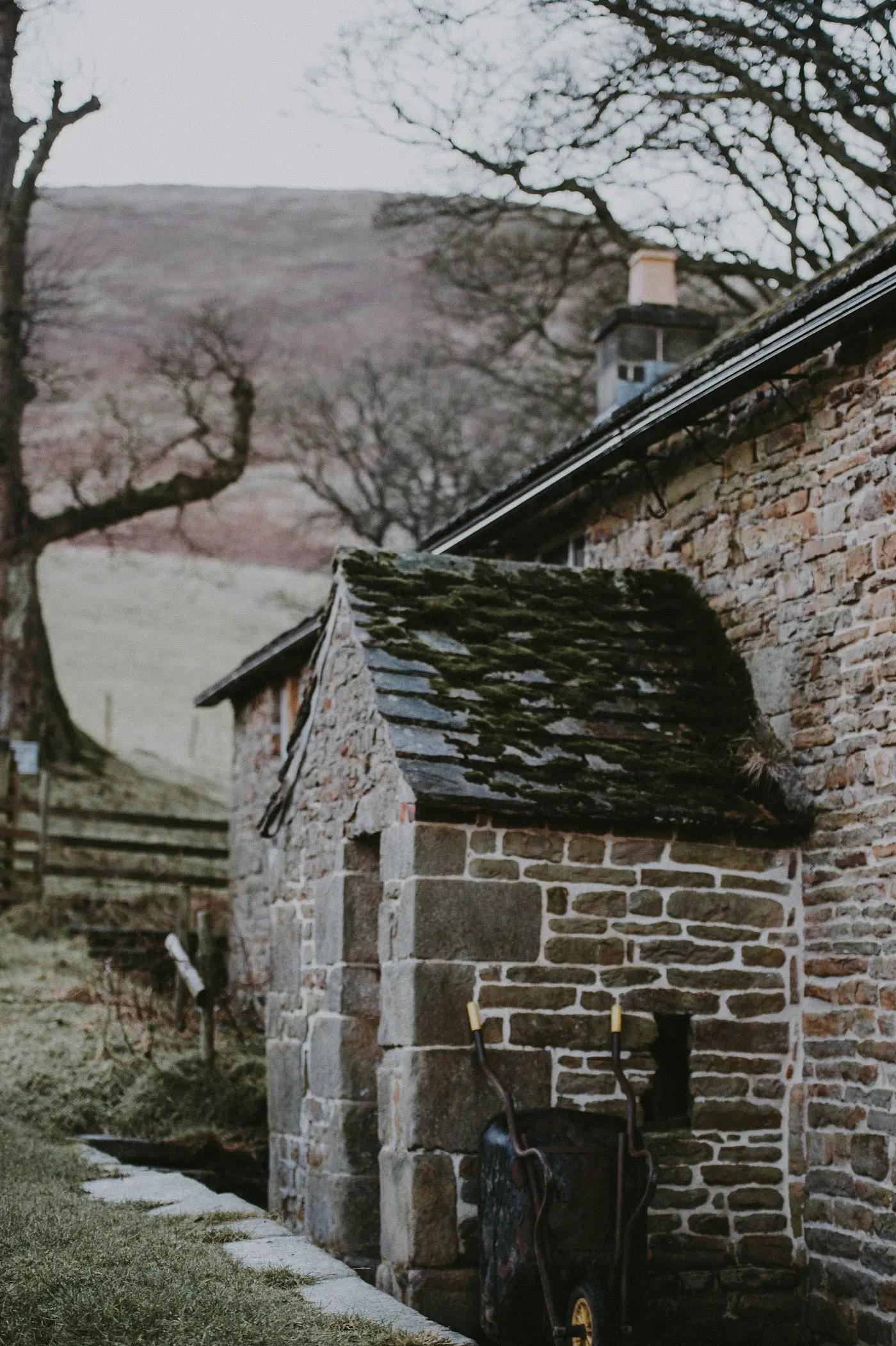
Hebden Bridge is one of the most photogenic and characterful small towns in West Yorkshire - stone streets stacked up precipitously steep valley sides, the Rochdale Canal threading through the valley floor, the surrounding moorland rising to over 400 metres in every direction. It is also one of the most genuinely distinctive places to garden in Yorkshire. The combination of very thin acidic soil, a narrow growing season compressed by Pennine elevation, gardens terraced into steep slopes with stone retaining walls, and a local culture with strong opinions about naturalistic and wildlife-friendly planting produces a garden maintenance environment that rewards experience and knowledge. The Yorkshire towns overview covers Calderdale broadly; this guide goes into the detail for HX7: what garden work costs, what the valley conditions mean in practice, and how to find a local gardener who actually knows the upper Calder Valley.
The Quick Answer: What Does a Gardener Cost in Hebden Bridge?
Hebden Bridge sits at the lower end of the West Yorkshire pricing band, reflecting the area's income mix and the relatively small scale of most gardens in the valley. Prices are broadly similar to Halifax and below Harrogate or York. The table below covers working 2026 rates for HX7 and the wider upper Calder Valley.
| Service | Hebden Bridge typical range (2026) | Notes |
|---|---|---|
| Hourly rate (maintenance) | £25-£32/hr | Regular contract at lower end; one-off visits and access-difficult valley-side plots at upper end. |
| Lawn cut (one-off) | £25-£55 | Standard accessible garden. Steep slopes and no rear vehicle access add to cost. |
| Fortnightly maintenance visit | £40-£75 per visit | Small-to-medium terraced garden on regular contract. Border-heavy gardens may take longer per visit than lawn-focused plots. |
| Half-day maintenance visit | £80-£140 | Medium garden including borders, raised beds and basic hedge maintenance. |
| Full-day rate | £150-£230 | Larger plots or combined maintenance and clearance days. |
| Raised bed preparation | £60-£130 per bed | Depending on size and condition. Very common request in Hebden Bridge given the vegetable growing culture. |
| Hedge trimming | £35-£100 | Many Hebden Bridge gardens use stone walls rather than hedges as boundaries, so hedge jobs are less frequent than in Halifax. |
| Stone wall maintenance (minor) | £50-£150 | Repointing, minor restacking of retaining walls. Major structural work quotes separately. |
| Garden clearance (medium plot) | £180-£400 | Overgrown valley-side plot. Add for significant access difficulty or heavy vegetation on steep ground. |
As in Halifax, access is the key variable. A property on a Hebden Bridge terraced street - Market Street, Valley Road, the steeply rising streets off Hangingroyd Road - may only have rear garden access through a narrow passage or down a flight of stone steps from the pavement above. Equipment arrives by hand and green waste leaves the same way. Always describe your access conditions when requesting an estimate: a phone quote without a site visit cannot account for an HX7 terrace properly.
The Maths: Is It Worth Paying a Gardener in Hebden Bridge?
A typical Hebden Bridge terraced garden is small by Yorkshire standards - perhaps 30-50 square metres, steeply terraced, with one or two raised beds, a small lawn area if any, borders, and a stone retaining wall or two. Left unattended for a season, a garden like this can become genuinely impenetrable: on the thin acidic soil with high rainfall, bramble, dock and buddleia establish quickly and grow vigorously. A plot left for two seasons may need a full clearance before any maintenance programme can begin.
At Hebden Bridge rates of £25-£28/hr on a regular contract, keeping such a garden tidy through the season - fortnightly maintenance visits from May to September, say eight or nine visits at an hour each - runs to roughly £160-£250 per year. The clearance cost if you let it go and come back to it after two seasons could easily run to three or four times that. The economics of regular maintenance versus periodic clearance are clear. Beyond money, the practical reality of maintaining a steep terraced garden in a narrow Pennine valley in your own time every two weeks through a short, unpredictable Yorkshire summer is not trivial work.
For the broader picture on UK gardening costs, the how much does a gardener cost UK guide puts these figures in national context. For day rate detail, the gardener hourly rate UK guide covers how rates vary across the country.
The Upper Calder Valley: What the Valley Means for Your Garden
Hebden Bridge is defined by its valley. The Calder cuts through from west to east with the Rochdale Canal towpath running alongside it through the valley floor. The town is built on the sides of this valley - not gently, but steeply. Properties in the centre of town on the valley floor are at around 100 metres elevation; the streets running up to Heptonstall on the south valley side reach 250 metres and more within a few hundred metres of horizontal distance. The gradient affects everything.
Elevation and microclimate
Hebden Bridge is one of the wettest inhabited places in England. The upper Calder Valley funnels Atlantic weather systems from the south-west, and the surrounding moorland at elevation ensures that whatever arrives in the valley stays long enough to deposit most of its moisture. Annual rainfall is typically 1,200-1,400mm. Frosts can come late in May at higher elevations - properties in Heptonstall or on the upper valley sides above Mytholmroyd should not assume the growing season starts before mid-May in all years. The first autumn frost typically arrives in October. Tender plants that perform reliably in a sheltered Leeds suburb with a longer growing season need either protection, lifting, or replacement with hardier alternatives in Hebden Bridge.
The valley floor - properties directly adjacent to the canal towpath and the Calder, the lower streets of Bridge Gate and Albert Street - has a slightly different microclimate. The valley bottom has some frost shelter from the valley sides and the relatively mild influence of the moving water, but it also has the highest flood risk in extreme weather. The 2015 and 2020 Boxing Day floods that affected Hebden Bridge severely touched many valley-floor gardens. If your garden is at valley-floor level near the canal, waterlogging in very wet periods is a factor to consider in any planting plan. Raised beds on valley-floor gardens have practical as well as aesthetic justification.
Aspect: which way does your garden face?
Hebden Bridge's valley runs roughly east-west, which means the north-facing valley side (the side with Heptonstall and the upper terraces rising toward the moorland) is south-facing in terms of sunlight. These gardens - on the south-facing valley side - get the best sun in the valley. The south-facing slope above the canal catches afternoon sun and can be surprisingly warm in sheltered positions. These are the most productive garden positions in the upper Calder Valley: you can grow a wider range of vegetables, summer flowers establish more reliably, and the shorter growing season is somewhat offset by better light.
Gardens on the north-facing valley side (south of the town, rising toward Midgehole and Hardcastle Crags) face away from the main sun. These are the most challenging gardening positions in Hebden Bridge - cool, often shaded, and with an even more compressed effective growing season than the valley average. Shade-tolerant planting is the sensible approach for north-facing valley-side borders: ferns, hostas, astilbes, and native woodland plants all do well where standard sun-loving garden plants struggle. A gardener who tells you to "just plant some lavender" in a north-facing Hebden Bridge border has not assessed the actual conditions.
Soil in the Upper Calder Valley
The dominant geology of the upper Calder Valley is Millstone Grit - carboniferous sandstone that weathers to produce a thin, stony, free-draining, and notably acidic soil. This is consistent across most of the valley sides and the surrounding moorland. pH values of 4.5-5.5 are typical on the steeper valley-side plots. Very acid soil of this type has specific implications for what you can grow and how your garden behaves. For a detailed guide to gardening on Yorkshire's acid and heavy soils, see the clay and heavy soil gardening guide.
What the acid grit soil means in practice
Calcifuge plants - acid-lovers - do exceptionally well in Hebden Bridge's natural soil. Rhododendrons, azaleas, heathers, camellias, pieris and ferns need no amendment to thrive here. If you want a low-maintenance border that suits the soil as it is, native and acid-tolerant plants are your best starting point. Many Hebden Bridge cottage gardens lean heavily into this naturally: foxgloves, primroses, native ferns, and hardy geraniums all establish readily in the thin acid soil.
Lawns, by contrast, can struggle. Grass on thin acid soil tends toward a sparse sward with high moss content. Annual scarification to remove thatch and moss, followed by overseeding and a pH-adjusted fertiliser programme, makes a significant difference on Hebden Bridge lawns that have been allowed to deteriorate. Some gardens in the upper valley have given up on conventional lawn grass altogether in favour of a low-maintenance wildflower or moss lawn - which is a perfectly reasonable choice given the conditions. A gardener who pushes you toward expensive lawn treatments that are unlikely to produce a conventional bowling-green lawn on thin acid Pennine soil is probably not working in your best interest. Ask for an honest assessment of what your lawn can realistically achieve before committing to a treatment programme.
Vegetable growing in Hebden Bridge often relies on imported topsoil or compost in raised beds precisely because the natural ground is too thin and acid for most food crops. Potatoes do reasonably well on acid soil with amendment; brassicas and legumes do better with a pH adjustment. Raised beds with compost-enriched growing media are the standard approach for HX7 vegetable gardening - and they need annual preparation and replenishment.
Hebden Bridge postcode coverage
HX7 covers Hebden Bridge town centre, Mytholmroyd, Cragg Vale, Heptonstall, Luddendenfoot, and the wider upper Calder Valley villages. The network also covers Sowerby Bridge (HX6) and extends west toward Todmorden (OL14) on the Lancashire border. All covered from the upper valley network.
Stone Retaining Walls: The Feature Every Hebden Bridge Garden Has
Most Hebden Bridge gardens on the valley sides are not flat. They are terraced - cut into the hillside in one or more flat levels, each held up by a stone retaining wall. These walls are part of the structure of the garden: without them, the plot would simply be a steep unusable slope. They are also, in most cases, original Victorian construction - drystone or roughly mortared, and of variable quality and condition.
Stone retaining walls in Hebden Bridge need periodic maintenance. Freeze-thaw cycles through the Pennine winters cause mortar to crack and individual stones to shift. A wall that has a few displaced stones at the base is not urgently dangerous but will worsen steadily if not attended to. Annual inspection - checking for visible displacement, ensuring the drainage channel at the base of each wall is clear, and noting any sections with significant movement - is good practice. Minor repointing and restacking is within the scope of a gardener who has worked with stone in the valley. Major structural repairs, or walls where a significant section has already failed, need a builder rather than a gardener.
The steps connecting terraced levels are equally important. Stone steps on Hebden Bridge valley gardens can become slippery with moss and algae, particularly on the more shaded north-facing aspects. Annual cleaning and periodic replacement of any cracked or sunken treads is worth doing for safety as well as aesthetics. A good local gardener who has worked the valley will flag wall and step conditions as part of a standard first assessment - it is part of understanding the garden, not a separate structural survey.
Cottage Gardens and Vegetable Plots: What Hebden Bridge Gardeners Actually Maintain
Hebden Bridge has an unusually strong culture of cottage gardening and food growing relative to its size. The town's arts community - which has been a defining feature since the 1970s - includes a high proportion of residents with strong interest in naturalistic planting, heritage varieties, wildlife gardening, and vegetable production. This shapes what garden maintenance in the upper valley actually involves in a concrete way.
Cottage borders and hardy perennials
The most common garden type in Hebden Bridge is a small-to-medium terraced plot with one or two borders containing a mix of hardy perennials, self-seeding annuals, and shrubs. Geraniums, campanulas, astilbes, sedums, foxgloves, alliums, and native wildflowers dominate. For help establishing or redesigning these types of planting, see the borders and planting service. These borders reward a different maintenance approach from a conventional cut-and-weed programme. The key principles: know what is wanted (the self-seeded foxgloves and honesty are features, not weeds), know when to cut back (too early in autumn removes seedheads that are both food for birds and winter garden interest), and know how to manage the balance between plants that spread assertively and more delicate species that can be overwhelmed. A gardener maintaining a cottage-style Hebden Bridge border needs genuine plant knowledge, not just a willingness to work.
Raised vegetable beds
Raised vegetable beds are found in a very high proportion of Hebden Bridge gardens - probably higher than anywhere else in Yorkshire outside community garden projects. The combination of acidic thin natural soil (which necessitates building up a growing medium) and the town's food-growing culture means that even small terraced plots often have one or two raised beds for salads, courgettes, tomatoes (in more sheltered positions), brassicas, and root vegetables. These beds need annual preparation: removing spent plants, replenishing compost, checking for slug damage and pest pressure, and preparing the growing medium for the next season. Many Hebden Bridge residents who want a gardener are specifically looking for someone who can maintain their raised beds properly through the season - watering, feeding, managing pests without blanket pesticide use, and knowing when to harvest and when to cut back.
Wildflower areas and naturalistic planting
Naturalistic planting - wildflower areas, grass left as rough meadow sections, native plants managed to benefit insects and birds - is significantly more common in Hebden Bridge than in most Yorkshire towns. Requests for wildlife-friendly maintenance are frequent: avoiding pesticides, leaving seedheads over winter, managing grass areas with a late single cut rather than fortnightly mowing. If your garden has a wildflower area or naturalistic section, be explicit about this when choosing a gardener. A gardener who treats everything as a weed problem and cuts everything back to a neat finish in autumn is actively wrong for this type of brief. Look for someone who understands what to leave and why, and who can articulate the difference between intentional naturalistic planting and genuine neglect.
Seasonal Advice for Hebden Bridge Gardens
Spring (May-June)
Do not start the season too early. In Hebden Bridge, mid-May is a safer target for the first cut and the first planting out of tender subjects than the late April timing that works in the Vale of York. The last frost date on higher ground is typically well into May in a cold spring, and even valley-floor properties have seen frosts in mid-May in recent years. For raised vegetable beds, sow under cover (in a greenhouse or cold frame if you have one, or on a warm indoor windowsill) and delay planting out until the risk of frost has genuinely passed. Hardy annuals and perennials can go out from mid-May.
Spring is the right time for any lawn work that needs doing - aeration, overseeding, pH treatment if your lawn has significant moss. Do this in May when the soil is warming and the growing season ahead is long enough for newly seeded sections to establish properly.
Stone retaining wall inspection should happen in spring after the winter freeze-thaw cycles have done their worst. Walk the walls at the base of each terrace and note any sections with displaced or shifted stones. Minor repairs are easier in spring and summer when working conditions are better.
Summer (June-September)
The main season in Hebden Bridge is genuinely short - plan for June, July, and August as the core months. September can be good but is unpredictable, with some years giving a warm extended autumn and others closing down abruptly. Fortnightly maintenance visits through this period cover mowing (where there is lawn), border weeding, deadheading, raised bed management, and general tidying. In a wet summer - which is most Hebden Bridge summers - growth is fast and fortnightly visits may barely keep pace. Monthly visits are not enough through July and August on a garden with active growth.
Late August and early September is the right window for hedge trimming - after the bird nesting season and before the main autumn clearance begins. For hedge trimming on any established boundary, book in advance: the late August slot fills quickly as it is the single annual window that works for most hedge species.
Autumn (October-November)
Autumn decisions in Hebden Bridge: what to cut back now, what to leave over winter. In a naturalistic or cottage garden, leaving seedheads and hollow stems for insect overwintering is both ecologically sound and practically sensible - the plant material provides some frost protection for the crown below. Cutting everything back to bare soil in October leaves borders exposed to a Pennine winter with nothing to protect the crowns of marginally hardy plants. A more selective approach - cutting back dead growth that is genuinely finished, leaving the structural seedheads and grass tufts - is better practice for most Hebden Bridge borders.
Raised beds should be cleared and prepared for winter in October: remove spent crops, add a layer of compost, and cover if possible to reduce erosion over winter. This is also the time to split and divide any overcrowded perennial clumps in borders - divisions can go back in or be potted up for spring.
Winter (December-April)
Effective gardening in Hebden Bridge stops in December and does not meaningfully restart until late April or May. Book for the coming season in January or February: the best local gardeners in the upper valley are known by word of mouth and have committed rounds that fill over the winter. If you want regular maintenance from May, contact a gardener in February.
Finding a Reliable Gardener in Hebden Bridge
The standard checks apply everywhere in Yorkshire: public liability insurance documentation, a Waste Carrier's Licence for any green waste removal, and evidence of recent local work. In Hebden Bridge, there are specific additional questions worth asking.
First, ask about plant knowledge. A gardener who will be maintaining cottage-style borders with self-seeding annuals, native plants, and naturalistic sections needs genuine horticultural knowledge - the ability to distinguish a deliberately planted foxglove from a weed, to know when a geranium has finished or when it is simply going through a natural die-back. Ask what they know about the local soil and its acidity. Ask whether they have experience with raised vegetable beds.
Second, ask whether they are comfortable with a wildlife-friendly brief if that is relevant to you. Ask specifically: "Do you use pesticides on your standard maintenance visits, and if I ask you not to, is that workable?" A gardener who is uncomfortable with the question is probably not the right choice for a Hebden Bridge garden where this matters.
Third, ask about experience with stone retaining walls. Not specialist structural work, but the kind of routine maintenance and inspection that an experienced valley gardener will do as part of their standard assessment. Ask whether they have worked on terraced valley-side gardens before and how they approach them.
For a broader guide to what to look for when hiring a gardener, the garden maintenance service page covers what professional garden care should include and how to assess whether you are getting it.
Areas We Cover Near Hebden Bridge
Hebden Bridge is the main centre for the upper Calder Valley network, covering the full HX7 postcode area and the surrounding upper valley villages.
- Mytholmroyd (HX7) - downstream from Hebden Bridge, slightly less steep in character. Similar soil and climate, mix of terraced and more modern housing. Covered as part of the standard HX7 network.
- Heptonstall - the hilltop village above Hebden Bridge on the south valley side. Exposed, elevated, shorter growing season even than Hebden Bridge town. Some larger stone properties with more substantial gardens. Covered from HX7.
- Cragg Vale - the long valley running south from Mytholmroyd. Exposed and elevated, one of the most challenging climates in West Yorkshire for gardening. Covered as part of the HX7 network.
- Halifax (HX1-HX3) - the main Calderdale town downstream. Different garden character - more suburban, more hawthorn hedges, heavier clay on the valley floor. See the Halifax guide for detail.
- Sowerby Bridge (HX6) - between Hebden Bridge and Halifax, junction of the Ryburn and Calder. More accessible valley-floor character, covered from both the upper valley and Halifax networks.
- Brighouse (HD6) - further down the Calder Valley, more suburban in character, heavier valley-floor clay soil. See the Brighouse guide for the HD6 area.
Frequently Asked Questions
How much does a gardener cost in Hebden Bridge?
Hebden Bridge gardeners charge £25-£32/hr for general garden maintenance in 2026. A standard lawn cut runs £25-£55. A half-day visit runs £80-£175. Full-day rates run £175-£300. Access is the main pricing variable - valley-side terraced properties with no rear vehicle access and steep stone steps cost more per square metre than open-access gardens. For UK national context, see the how much does a gardener cost UK guide.
What is the soil like in Hebden Bridge?
Predominantly thin, stony, acidic Millstone Grit soil - pH 4.5-5.5 typical on valley sides. Acid-loving plants (rhododendrons, heathers, ferns) thrive without amendment. Standard lawn grasses struggle with high moss content. Raised vegetable beds with imported compost are the standard approach for food growing. Valley-floor gardens near the Calder and canal have heavier, wetter, more fertile alluvial soil with some flood risk in extreme weather.
Are raised beds and stone retaining walls common?
Very. Stone retaining walls are the structural framework of most terraced valley-side gardens and need periodic maintenance - repointing, minor restacking, keeping drainage clear at the base. Raised vegetable beds are found in a very high proportion of HX7 gardens given the acidic thin natural soil. Annual preparation and replenishment of raised beds is a standard part of the gardening season.
What plants do Hebden Bridge gardens typically contain?
Cottage-style hardy perennials (geraniums, campanulas, astilbes, foxgloves, alliums) and native plants dominate borders on the acid soil. Raised beds for vegetables are common. Wildflower and naturalistic grass areas are more prevalent here than anywhere else in Yorkshire. Acid-loving shrubs (rhododendrons, azaleas, pieris) do well without amendment.
When is the best time to book?
January or February for the May growing season start. Hebden Bridge has one of the shortest reliable growing seasons in Yorkshire - late April to late September at best, with late May frosts possible on higher ground. Regular maintenance slots fill from March onwards. Book hedge trimming for late August to September within the bird nesting season restrictions.
What garden services are most in demand?
Regular maintenance of cottage borders and vegetable plots. Raised bed preparation and seasonal management. Clearance of overgrown valley-side plots. Stone retaining wall maintenance. Hedge trimming (less common than in Halifax - many HX7 gardens use stone walls as boundaries). Wildflower and naturalistic area management.
Does Hebden Bridge's arts community affect what gardeners are asked to do?
Yes, practically. Requests for wildlife-friendly maintenance (no pesticides, seedheads left over winter, naturalistic grass management) are significantly more common here than elsewhere in Yorkshire. A gardener willing to work with that brief and capable of distinguishing intentional naturalistic planting from neglect is much more valuable than one who applies a standard programme to every garden without thought.
Do Hebden Bridge gardeners cover Mytholmroyd, Sowerby Bridge and Todmorden?
Yes. The HX7 network covers the upper Calder Valley in full including Mytholmroyd, Heptonstall, Cragg Vale, and Luddendenfoot. Sowerby Bridge (HX6) and Todmorden (OL14) are on the edges of the network and covered as standard. See the towns overview for full coverage.
How do I find a reliable gardener in Hebden Bridge?
Ask for public liability insurance and a Waste Carrier's Licence. Ask specifically about experience with acidic Millstone Grit soil, stone retaining wall maintenance, cottage and naturalistic planting, and raised vegetable beds. Ask whether they are comfortable with a wildlife-friendly brief if that matters to you. Use the estimate form on this site to put your enquiry in front of a local upper Calder Valley gardener covering your HX7 postcode.
Related reading
- How much does a gardener cost in the UK? (2026)
- Gardener hourly rates in the UK (2026)
- Gardeners in Halifax - Calderdale's main town
- Garden maintenance across Yorkshire
- Hedge trimming across Yorkshire
- Yorkshire towns - local gardener overview
For structural landscaping or a full redesign, see our garden design Hebden Bridge page.
Request a gardener for your Hebden Bridge garden.
60-second form, local gardener matched to your HX7 postcode, free estimate. Tell us what you need.
Start the estimate