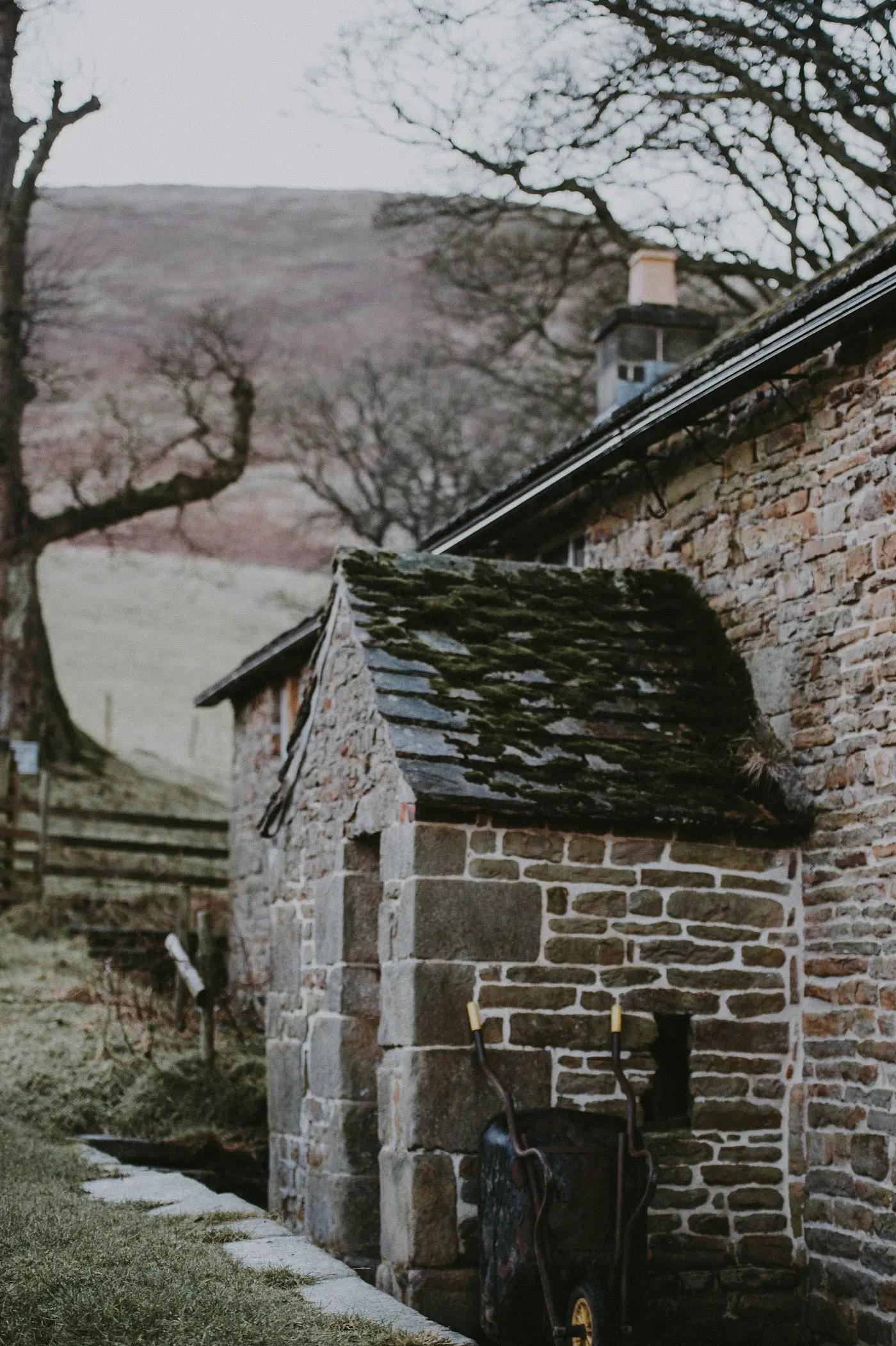
Todmorden sits at the head of the Calder Valley on the boundary between Yorkshire and Lancashire - technically more Lancashire in terms of its OL14 postcode, but culturally and historically Calderdale, and belonging to West Yorkshire metropolitan county since 1974. The town straddles the county line so conspicuously that the Grade I listed Todmorden Town Hall, built in 1875, sits directly on the boundary, with half the building in each historic county. That borderland character - between two counties, between industrial valley floor and Pennine moorland, between the accessible and the remote - runs through everything about gardening here too.
Todmorden is one of the most challenging gardening environments in the Yorkshire coverage area. The combination of altitude, high rainfall (over 1,200mm in most years, more than double the rainfall of the dry east coast), Millstone Grit acid soil, and a growing season shortened by late spring frosts and early autumn ones means that gardening practices that work well in Leeds, Sheffield, or even Halifax need significant adjustment to succeed here. At the same time, the conditions that make some things difficult make others possible that you cannot achieve easily in the lower-lying towns - acid-loving plants are in their element in OL14, and the community growing culture here, rooted in the internationally known Incredible Edible initiative, has produced some genuinely impressive productive gardening in conditions that most textbooks would describe as marginal.
The Soil and Climate of Todmorden Gardens
The soil in Todmorden gardens is defined by Millstone Grit - the coarse Carboniferous sandstone that forms the backbone of the Pennine ridge from the Peak District northwards. On the steep valley sides and upper slopes, the soil is thin, stony, fast-draining, and strongly acid: pH values of 4.5 to 5.5 on untreated upper-slope gardens are common, with some exposed moorland-fringe plots running below 4.5 where the grit is closest to the surface. These are soils with limited nutrient-holding capacity, easily leached by Todmorden's high rainfall, and naturally dominated by the acid-tolerant vegetation of the upland Pennine fringe.
In the valley bottom around the Calder and along the valley floor, the soil changes to a deeper, more developed alluvial material with better organic matter content and slightly less extreme acidity - typically pH 5.0 to 6.0 on most valley-floor gardens. The drainage here is slower, particularly in the lowest-lying plots where the Calder's historic flood plain creates conditions that can stay wet for extended periods after significant rain. The valley bottom has its own flood risk, historically significant in Todmorden, which affects what investments in permanent garden features are wise in the lowest-lying areas.
High rainfall and the leaching problem
Todmorden receives over 1,200mm of rainfall annually - and in wet years considerably more. That rainfall, falling on thin Millstone Grit soils with limited organic matter to hold nutrients, leaches available nutrients progressively through the growing season. Potassium, calcium, and magnesium are particularly susceptible to leaching in high-rainfall acid conditions. The practical result is that OL14 gardens often respond much better to regular feeding with a balanced fertiliser than gardeners in drier, lower-altitude Yorkshire towns would expect. Applying organic matter - compost, well-rotted manure - to Todmorden borders and lawns every year is not just a nice-to-have on this soil; it is the primary mechanism for maintaining fertility against the constant leaching effect of the valley rainfall.
Todmorden's Gardening Culture - Incredible Edible and Beyond
Todmorden is the origin of the Incredible Edible project, the community food growing initiative that began in 2008 when local residents started planting edible plants in public spaces around the town - on road verges, around the police station, in the railway station beds, in the town centre planters. The project, led originally by Pam Warhurst and Mary Clear, grew into an internationally known model of community gardening and has been replicated in hundreds of communities worldwide.
The practical lessons embedded in Incredible Edible are directly relevant to private Todmorden gardeners. The project demonstrated that productive food growing in the Upper Calder Valley conditions is genuinely achievable with the right plant selection and growing approach: raised beds that lift the root zone above the waterlogged valley soil, hardy vegetable varieties bred for wet and cool conditions, fruit trees selected for late blossom timing to reduce frost-damage risk, and a pragmatic acceptance that the growing season here is shorter than in the lowlands - plan accordingly rather than fighting it. The community also developed a culture of shared knowledge about what actually works in OL14 conditions that is a genuine local resource.
For private garden owners, the Incredible Edible legacy means there is a higher-than-average local knowledge base about productive gardening in these conditions. A gardener who has worked in Todmorden for several years will have practical experience of what succeeds here that no amount of general horticultural training will substitute for.
What Todmorden Gardens Look Like
Todmorden's housing is dramatically terraced up the steep valley sides - long rows of back-to-back and through terraces climbing the grit slopes, with gardens (where they exist) that can be almost vertical in character. The rear terraced garden on a valley-side Todmorden property can be a genuine engineering proposition: stepped retaining walls, narrow terraced levels with limited flat space, and access through the property or through narrow back-lane gateways. These are gardens where a gardener with specific hillside and restricted-access experience is genuinely necessary rather than merely preferable.
The valley-floor properties along the canal and the main road have flatter gardens but face the drainage challenge of the valley bottom - alluvial soils close to the Calder that drain slowly and carry genuine flood risk in significant rainfall events. The historic Calder floods have affected valley-floor properties in Todmorden repeatedly and any garden investment in this zone needs to be made with flood resilience as a design criterion.
There is also a character of garden in Todmorden that is not common in most other Yorkshire towns: the self-consciously wild and productive garden that reflects the community growing culture of the town. Raised bed kitchen gardens, fruit trees, composting systems, wildflower areas, and productive hedging (hazel, elder, fruit bushes) are more common in OL14 than in most comparable Yorkshire communities. A gardener covering Todmorden should be comfortable working with and around this style of productive, somewhat informal garden rather than imposing a conventional suburban maintenance approach.
What Gets Booked in Todmorden
Lawn maintenance in Todmorden requires adapting to the reality that fine grass lawns are difficult to maintain in these conditions. The combination of high rainfall, acid soil, and a shortened growing season consistently favours moss, algae, and coarse grass over fine lawn species. Many Todmorden gardens that have been managed for a long time have transitioned to a practical grass-and-moss sward that is kept mown to a reasonable appearance rather than attempting a fine lawn renovation programme that the soil conditions work against at every turn. Garden maintenance on OL14 lawns is often about managing what the conditions will support rather than fighting to maintain a standard that the environment cannot sustain without constant intervention. A realistic discussion with a gardener about what is achievable in your specific OL14 garden is worth having before committing to any renovation programme.
Productive garden support is a service that gets booked in Todmorden more than in most other areas in the coverage. Raised bed construction and maintenance, fruit tree pruning (the fruit tree pruning guide for Yorkshire covers the timing and approach for the varieties that perform well at altitude), soft fruit management, and compost bin construction and management are all requested more regularly in OL14 than in the lowland towns. A gardener covering Todmorden who understands productive growing in high-altitude, high-rainfall conditions is significantly more useful than one whose expertise is limited to ornamental maintenance.
Border management on Todmorden valley-side gardens involves a specific weed challenge: rosebay willowherb, buddleia, and self-seeded sycamore colonise acid Millstone Grit soil aggressively in the warm season and can overtake a neglected border remarkably quickly. Weed control on Todmorden's thin grit soils is physically easier than on Coal Measures clay - roots extract more cleanly - but the regrowth pressure is high given the vigour of the valley-side invaders. Consistent management through the season is more effective than a single annual clearance.
Garden clearance on hillside Todmorden terrace gardens is the most physically demanding clearance work in the Yorkshire coverage area. The combination of steep slopes, restricted access through narrow back-lane gates, and the vigorous self-seeded woody growth that colonises neglected valley-side gardens means that a Todmorden clearance job requires more time and physical effort per square metre than an equivalent flat suburban job. Garden clearance in OL14 runs £220-£450 for a medium terrace garden with restricted access; larger, more neglected plots on steep ground run higher. Always get a fixed price after a site visit - a hillside clearance estimate without viewing the access is unreliable in either direction.
Hedge trimming on valley-side Todmorden properties involves working on slopes and at heights that flat gardens do not present. Established blackthorn, hawthorn, and beech hedges on the grit slopes trim well and are physically robust; some properties have elder and hazel in the boundary that require different management to formal clipped hedging. Hedge trimming in OL14 runs £42-£100 per visit, with steep-slope and restricted-access positions at the higher end.
What Does a Gardener Cost in Todmorden?
Todmorden rates carry a genuine remoteness premium. The upper Calder Valley is at the end of the valley from the main service hubs of Halifax and Huddersfield, and gardeners covering OL14 have longer travel distances than those working in the more densely settled parts of West Yorkshire. The physically demanding character of the work on hillside gardens - and the specialist knowledge required to garden effectively in these conditions - also justifies rates at the upper end of the Calderdale range. These rates are not a premium for its own sake: they reflect the actual cost of delivering quality work in a challenging environment.
| Job type | Todmorden (OL14), 2026 | Notes |
|---|---|---|
| Hourly rate (maintenance) | £28-£42/hr | Upper end for hillside terrace gardens and restricted access |
| Day rate | £150-£200 | Remoteness and hillside work add to day rate versus lower-valley towns |
| Fortnightly maintenance visit | £44-£75 | Slope and access premiums on terrace garden visits |
| One-off lawn cut | £35-£65 | Steep gradient gardens at higher end |
| Lawn renovation or overseeding | £110-£230 | Grit soil requires organic matter improvement before overseeding |
| Fruit tree pruning (per tree) | £70-£140 | Valley-side access and older trees at higher end |
| Hedge trimming | £42-£100 | Steep-slope positions and mixed native hedging at higher end |
| Garden clearance (medium plot) | £220-£450 | Hillside carry-out, narrow back-lane access, woody scrub growth |
Seasonal Guide for Todmorden Gardens
Spring (March to May)
Last frost in Todmorden averages significantly later than in the lowland towns - late April is not unusual on higher slopes, and even the valley floor can see late frosts in May in cold years. Do not plant tender bedding until at least the third week of May in OL14. The growing season is genuinely shorter here: plan accordingly. Mowing can start in late April on lower gardens in a mild year, but upper-slope gardens may not be ready until early May in a cold wet spring. The Yorkshire garden jobs by season guide gives a useful general framework, but OL14 gardeners need to add two to four weeks to the spring dates and subtract the same from autumn dates.
Summer (June to August)
The best growing months. Todmorden summers can be surprisingly warm in the valley bottom in sheltered conditions, but the upper slopes remain exposed to westerly winds and are rarely as warm as the comparable low-lying gardens. Productive growing - vegetables and soft fruit - is at its peak. Mowing at a maintained height, consistent irrigation on thin grit-soil upper-slope gardens in dry spells. Book autumn maintenance slots in August - OL14 gardeners with the right skills and experience are a limited resource and availability can be tighter than in the more densely served parts of Calderdale.
Autumn (September to November)
First frosts in Todmorden come earlier than in the lowlands - protect tender plants from late September onwards on upper slopes. Fruit harvest and pruning schedule: apple and pear varieties suited to altitude (late-blooming varieties that miss the April frosts, hardy rootstocks) are harvested through September and October. Overseeding lawn bare patches in early September while soil temperature is still adequate. Leaf clearance is important - the valley's deciduous trees drop significant volumes, and leaves on thin grit-soil lawns compact the surface and compound moss pressure. The autumn garden care guide for Yorkshire gives the seasonal framework; add a week or two earlier to the timing for OL14 conditions.
Winter (December to February)
Todmorden winters can be wet and occasionally severe. Valley-floor gardens in the Calder flood risk zone can flood during significant rainfall events - particularly relevant for any permanent planting or hard landscaping investment in the lowest-lying properties. Plan spring projects and book maintenance gardeners in February. A gardener with specific OL14 experience and knowledge of the community growing culture here is worth enquiring for specifically - they will understand your garden context far better than a generalist from the lower valley.
Frequently Asked Questions
How much does a gardener cost in Todmorden OL14?
Hourly rates run £28-£42 for general garden maintenance. Fortnightly visits run £44-£75. Clearance on medium terrace plots runs £220-£450. Day rates run £175-£300. The remoteness premium is real and justified by travel time and the physical demands of hillside work. See the Yorkshire gardener cost guide for full regional comparison.
What is the soil like in Todmorden gardens?
Millstone Grit on upper slopes: thin, acid (pH 4.5-5.5), fast-draining, nutrient-poor. Valley-floor alluvial: deeper, less extreme acidity (pH 5.0-6.0), slower drainage, flood risk on lowest-lying plots. High rainfall leaches nutrients from both soil types, making regular organic matter addition more important here than in drier Yorkshire areas.
What is the Incredible Edible movement and is it relevant to my Todmorden garden?
Incredible Edible originated in Todmorden in 2008 - community food growing in public spaces that became an internationally known model. For private gardeners, its most useful legacy is demonstrating that productive growing works well in OL14 with the right plant selection and raised-bed approach. A gardener experienced in Todmorden will know what grows here and what does not. The fruit tree pruning guide covers the approach for hardy varieties suitable for valley altitude.
What grows well in Todmorden gardens?
Hardy vegetables (leeks, kale, chard, broad beans, brassicas), soft fruit (currants, gooseberries, raspberries), acid-loving ornamentals (rhododendrons, azaleas, heathers, pieris). Robust rye-based grass mixes hold better than fine-leaf species in the wet, cool Pennine conditions. See the Yorkshire borders and planting guide for plant selection advice on challenging upland soils.
Is the growing season shorter in Todmorden than in the rest of Yorkshire?
Yes - by two to four weeks compared to the Leeds, Sheffield, or York lowlands. Last frosts run later in spring and first frosts earlier in autumn. Plan plant selection and sowing dates accordingly. Tender bedding is rarely safe before mid to late May in OL14. The seasonal garden jobs guide gives a useful base framework; add two to four weeks to the spring opening dates for Todmorden conditions.
Further reading
- Fruit tree pruning in Yorkshire
- Borders and planting in Yorkshire
- Weed control in Yorkshire gardens
- Autumn garden care in Yorkshire
- Gardeners in Hebden Bridge
- Gardeners in Sowerby Bridge
- Gardeners in Halifax
Gardeners near Todmorden
We cover Todmorden and the surrounding OL14 area. Gardeners working Todmorden typically also cover Hebden Bridge, Sowerby Bridge, and the wider upper Calder Valley.
Find a gardener in Todmorden.
Tell us what you need and we put your enquiry in front of a local gardener covering OL14. No call centres, no national franchise - one local gardener, direct contact.
Get a free assessment